


What Is a Marian Stole?
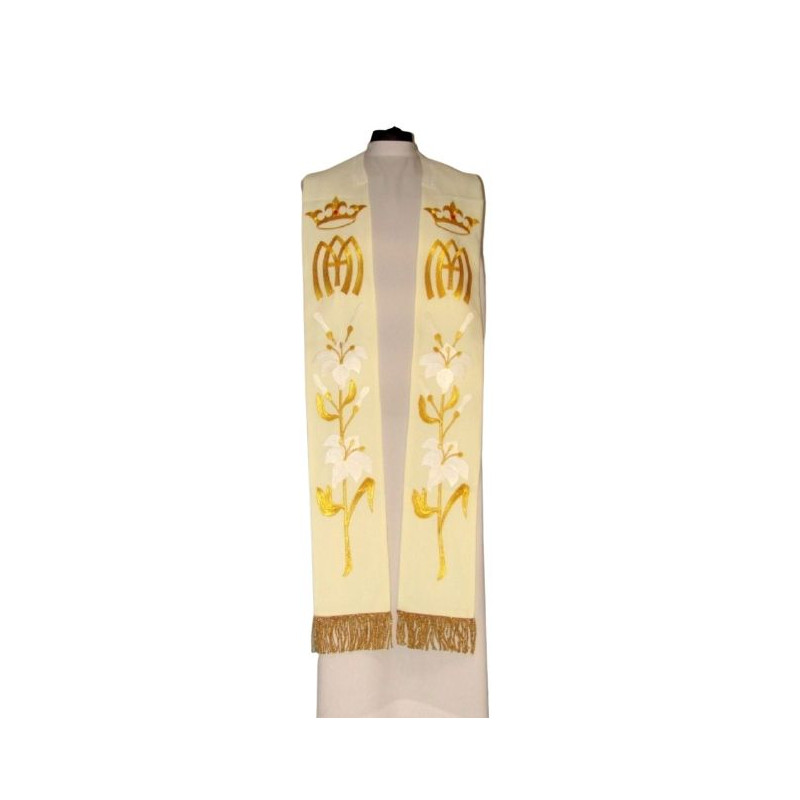
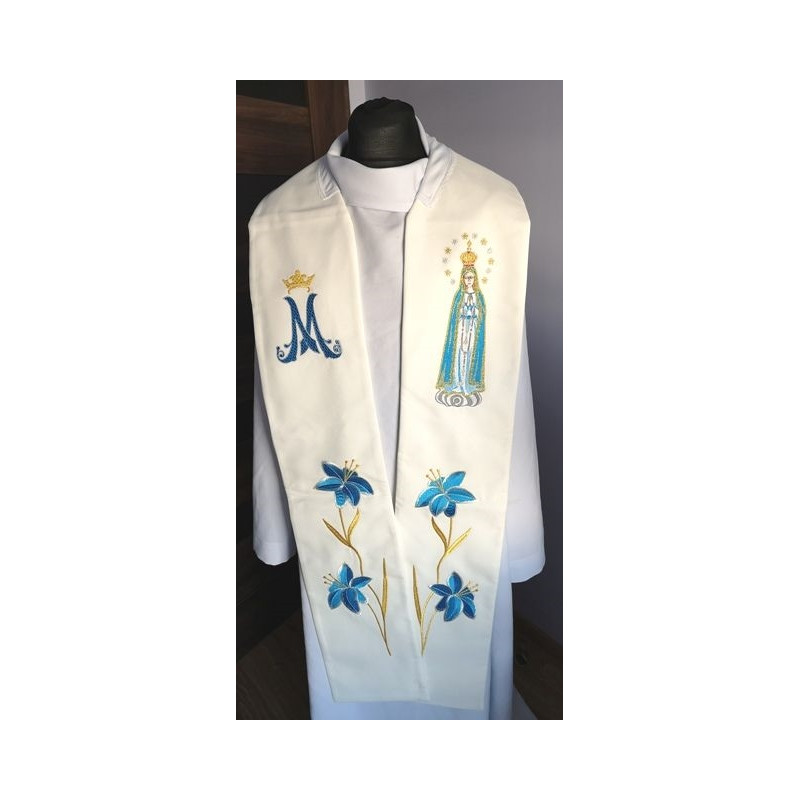
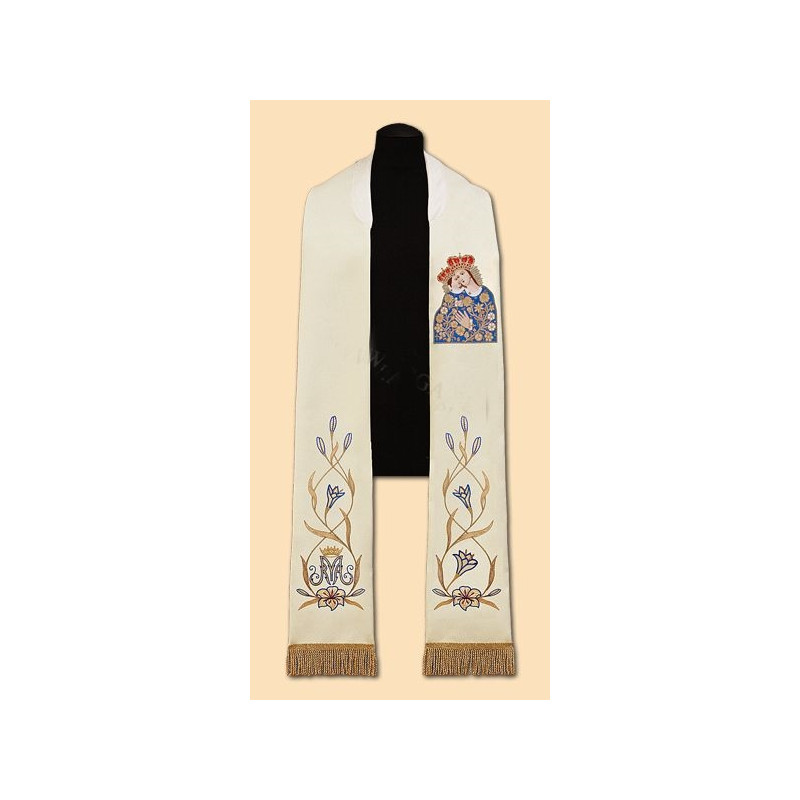
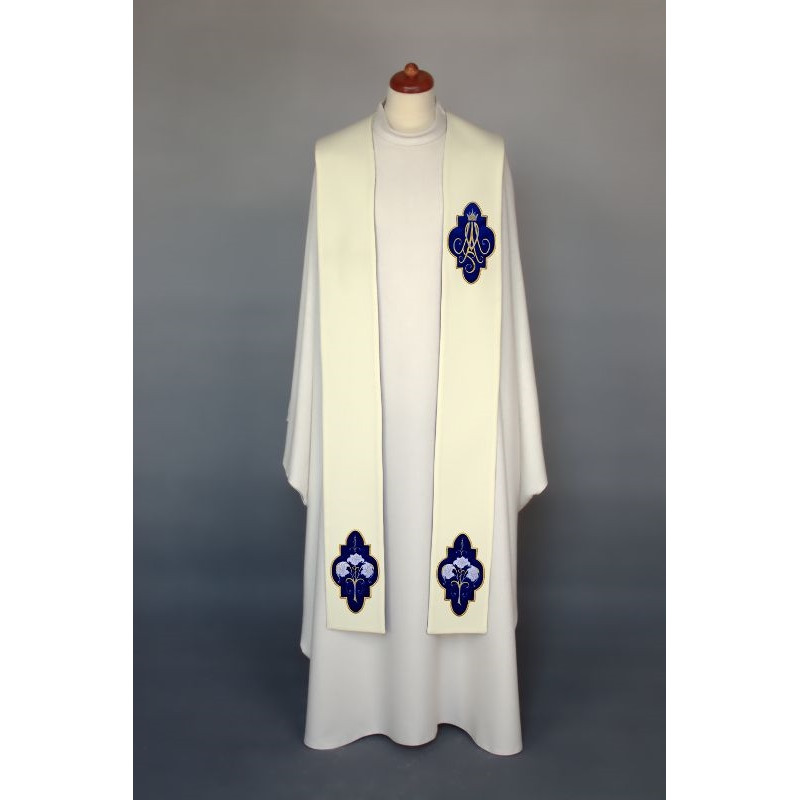
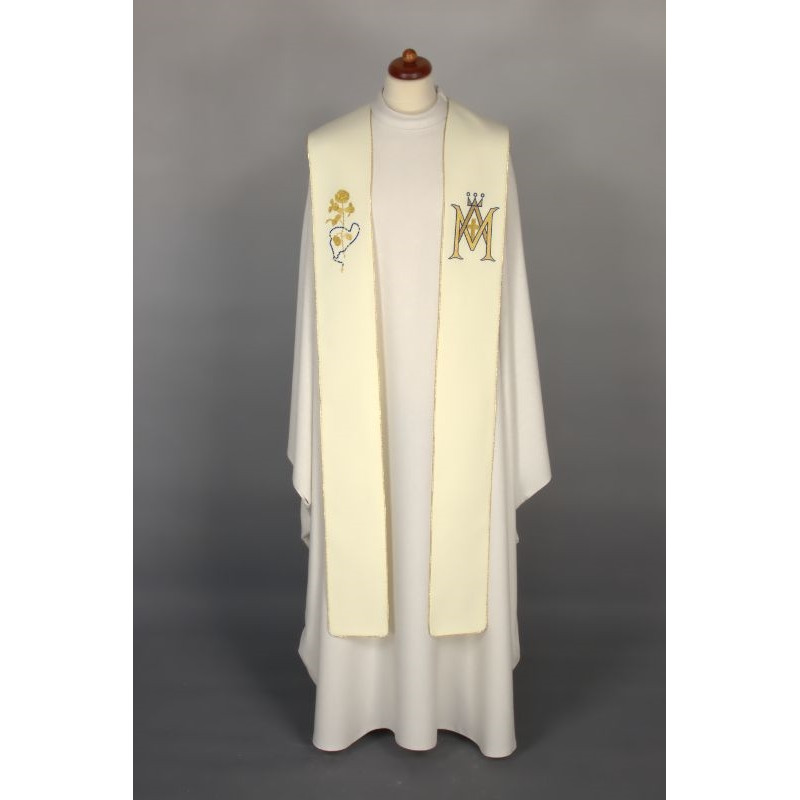
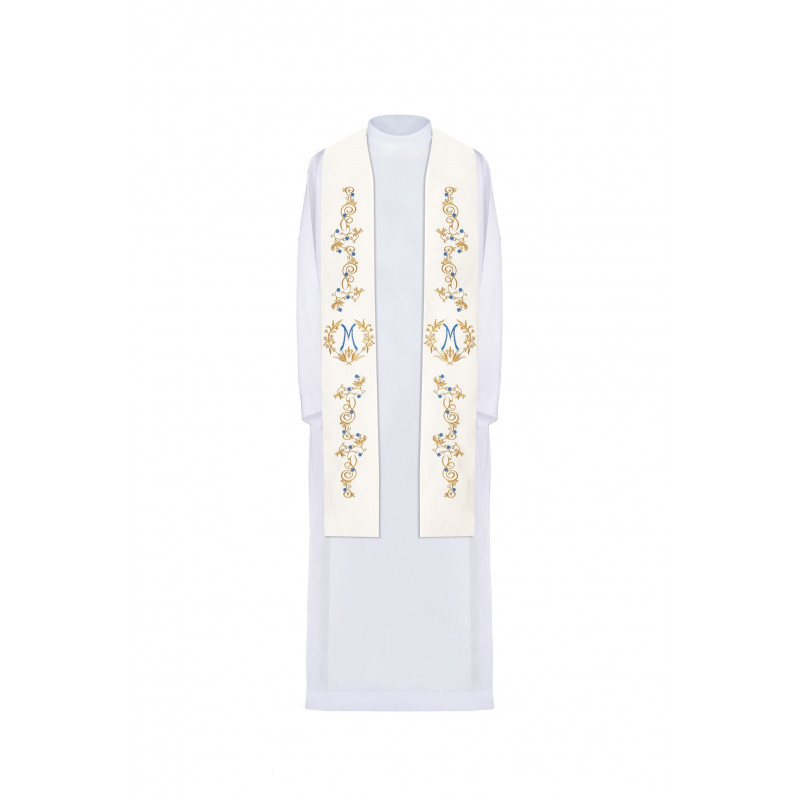
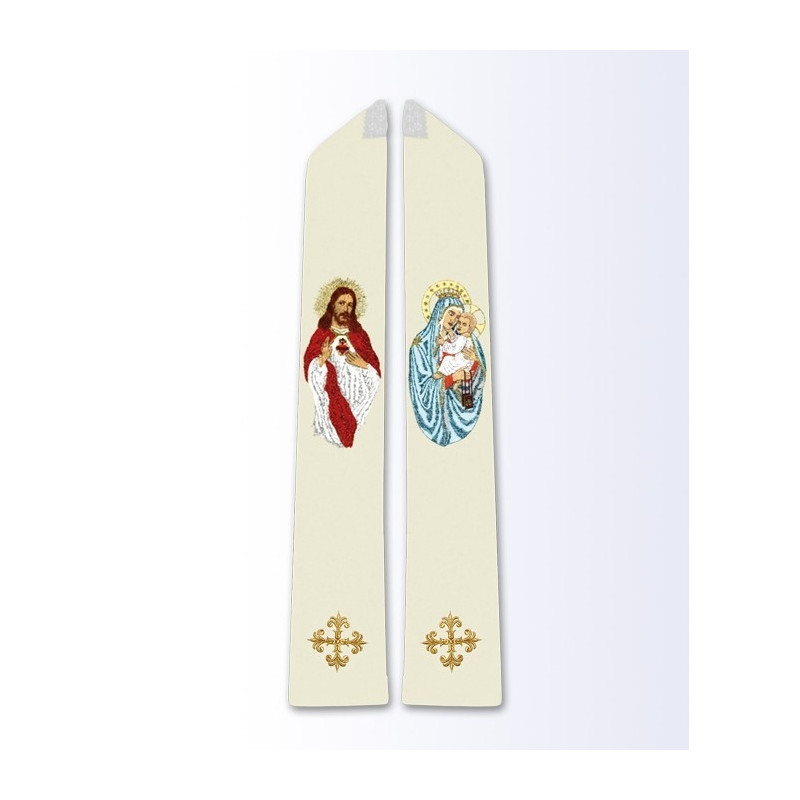
A Marian stole is an embroidered liturgical stole that shows the Blessed Virgin Mary or her symbols — the Immaculate Heart, the crowned monogram M, roses, lilies, or a crown of twelve stars. Catholic priests wear a Marian stole on the feasts and memorials of Our Lady, for May and October devotions, at Saturday votive Masses of the Blessed Virgin Mary, and at Marian shrines and pilgrimages. Deacons wear the same designs diagonally across the chest.
The stole itself is the oldest and most recognisable sign of ordained ministry — a narrow band worn around the neck that symbolises the yoke of Christ and the authority of Holy Orders. A Marian stole carries a second meaning: it is a small banner of devotion to Mary, laid on the priest's shoulders wherever he celebrates.
What Does a Marian Stole Symbolize
Every Marian stole preaches without words. The image of Our Lady proclaims the two great truths of Marian devotion: that Mary is the Mother of God — Theotokos, as defined at the Council of Ephesus in 431 — and that she is the first and most perfect disciple, whose "yes" at the Annunciation opened the way of salvation. A priest wearing her image carries Mary's fiat into the liturgy; he stands at the altar as she stood at the foot of the Cross.
There is also a practical dimension: on a busy Sunday, a stole embroidered with the Immaculate Heart or a crowned M instantly tells the congregation which mystery of Our Lady the day celebrates. The vestment becomes a short, wordless homily about the Mother of God.
Marian Colors: Blue, White, Gold, and Ecru
Blue is the colour most closely tied to Mary. In medieval art her mantle was painted with ultramarine — the most precious pigment of the age — and "Marian blue" remains the traditional colour of the Immaculate Conception and of many Marian sanctuaries. Blue is not one of the standard liturgical colours, but it is widely used for Masses of Our Lady by local indult and for devotional occasions.
White and gold are the standard vestment colours for the feasts of the Blessed Virgin Mary (GIRM 346). White expresses joy and purity; gold is reserved for the most solemn celebrations. A white or gold Marian stole is always liturgically safe for a feast of Our Lady.
Ecru and ivory are the quiet, elegant option: warm, neutral tones that suit parish life, May devotions, and weddings celebrated under Our Lady's patronage. Several designs in this collection can also be ordered in other liturgical colours, and selected models (for example Our Lady of Perpetual Help) are available in blue and white.
Symbols Embroidered on Marian Stoles
- The Immaculate Heart of Mary — a heart encircled with roses, crowned with flames, often pierced by a sword (Luke 2:35). It is shown with the Heart of Jesus as the emblem of the twin devotions of Fatima.
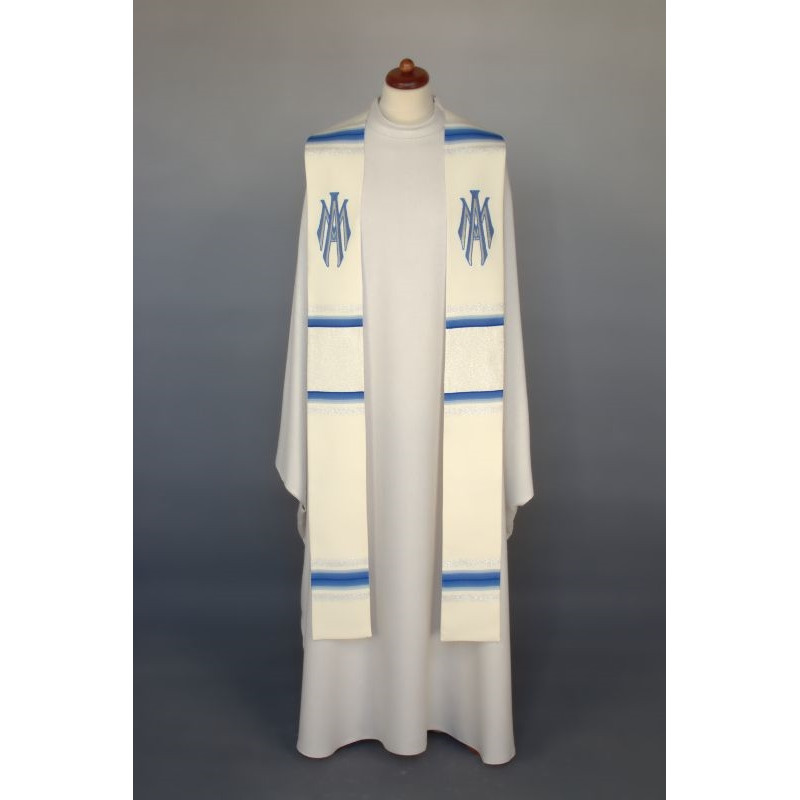
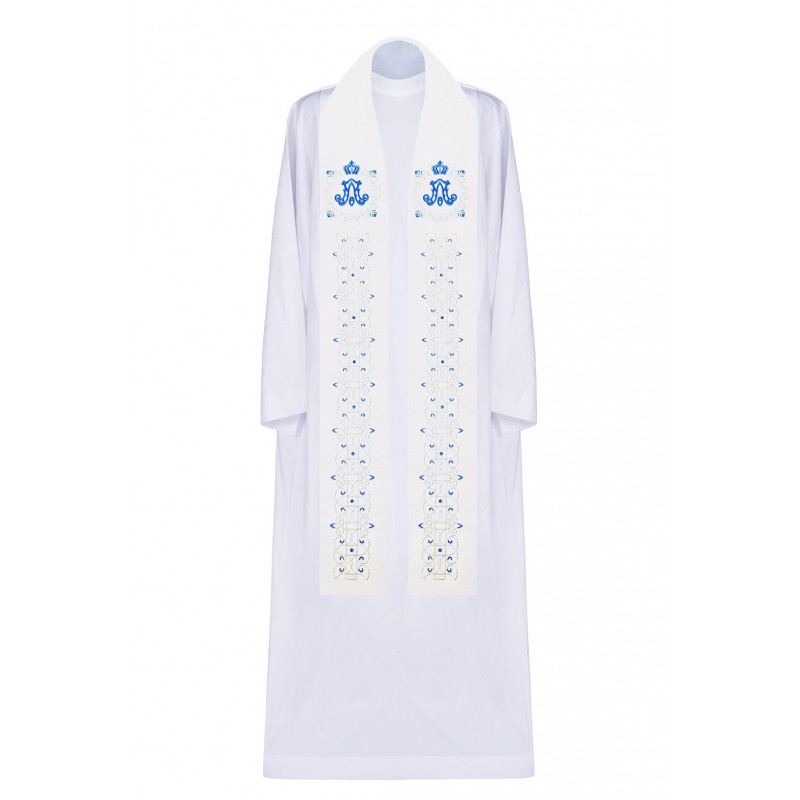
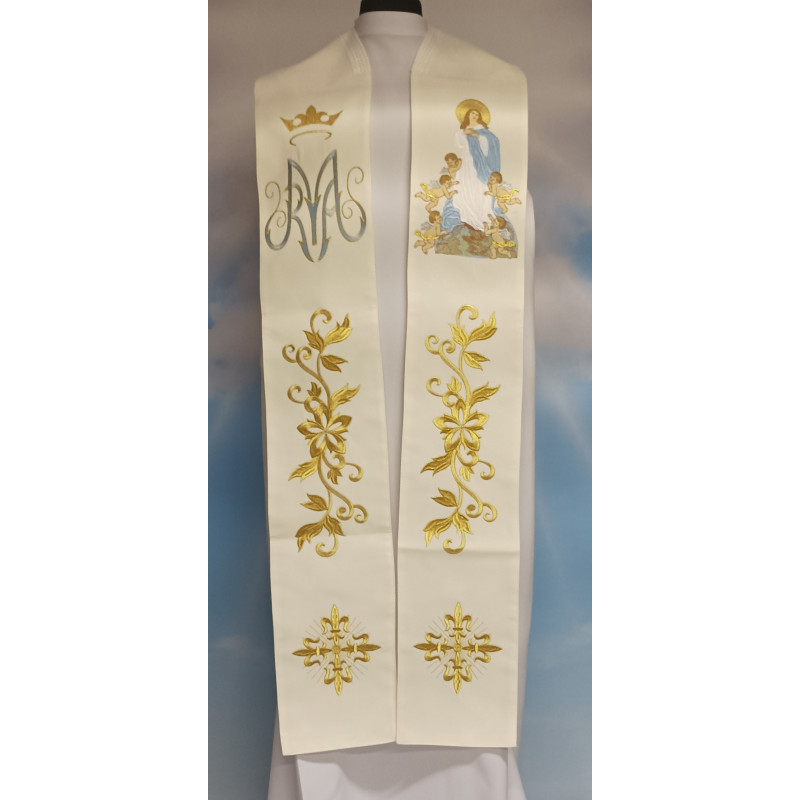
- The monogram M with a crown — Mary as Queen of Heaven. The M stands for Maria; read with the cross it is also explained as Auspice Maria — "under Mary's protection".
- Roses — Mary as the Mystic Rose, and the rosary itself; the flower most often linked with Fatima and Lourdes.
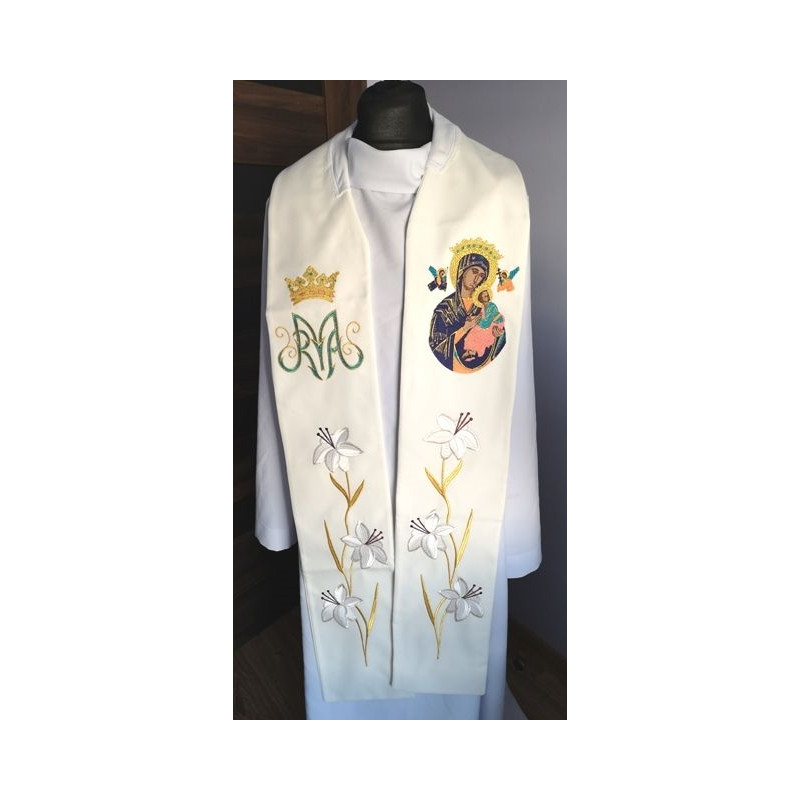
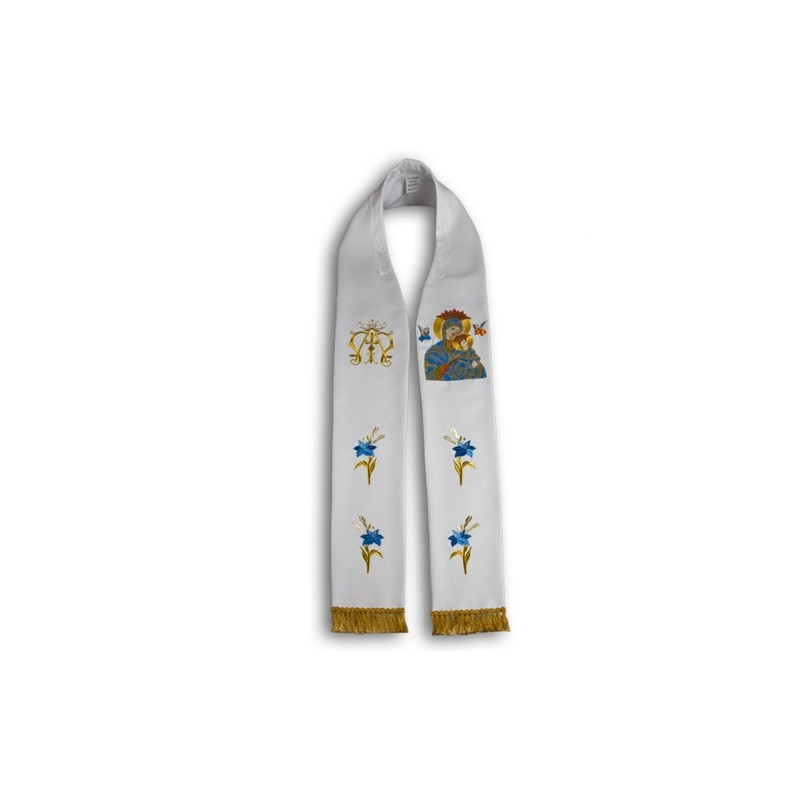
- Lilies — purity and the Annunciation; lilies accompany many images of Our Lady, including the icon of Our Lady of Perpetual Help.
- The crown of twelve stars — from Revelation 12:1, "a woman clothed with the sun … on her head a crown of twelve stars".
- The star — Stella Maris, "Star of the Sea", the sailor's title of Mary used since the early Middle Ages.
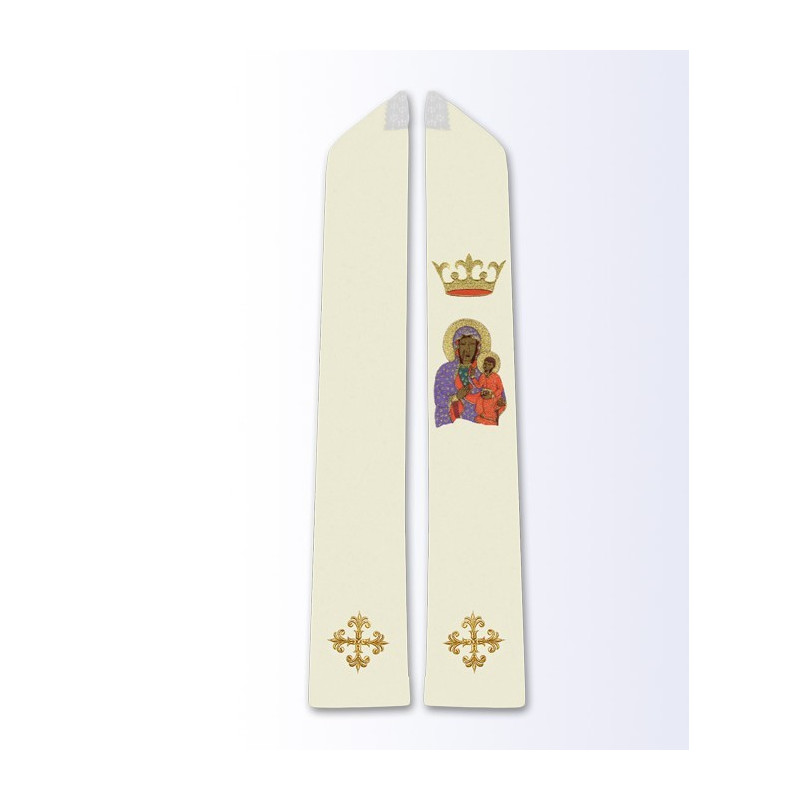
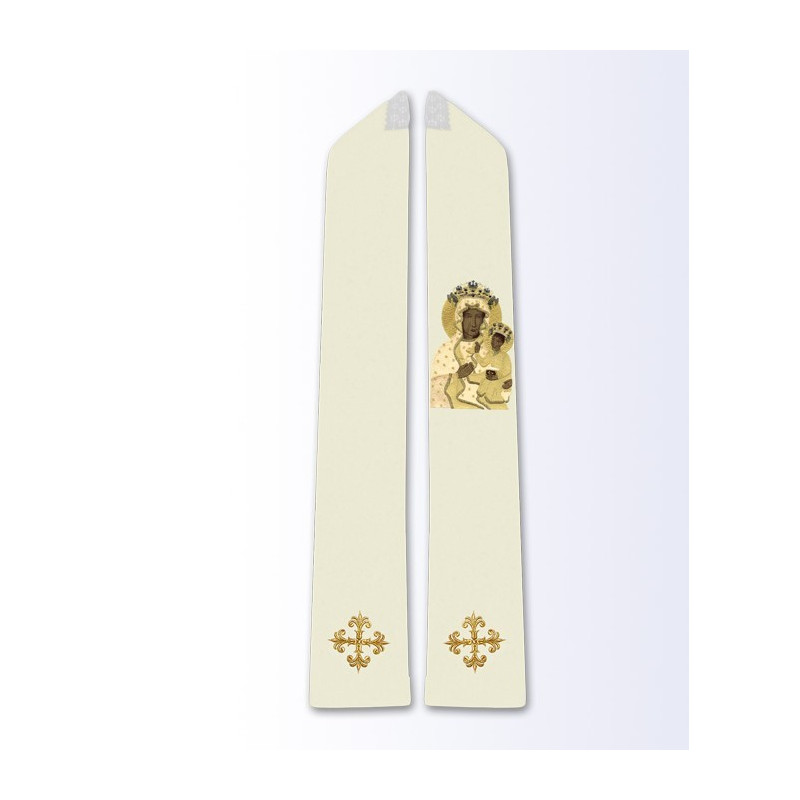
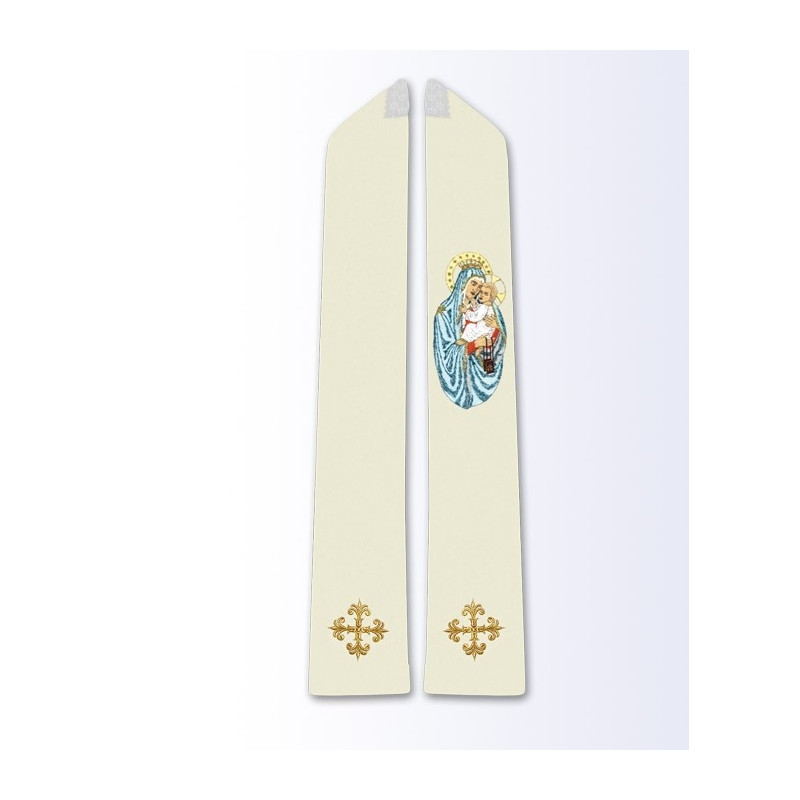
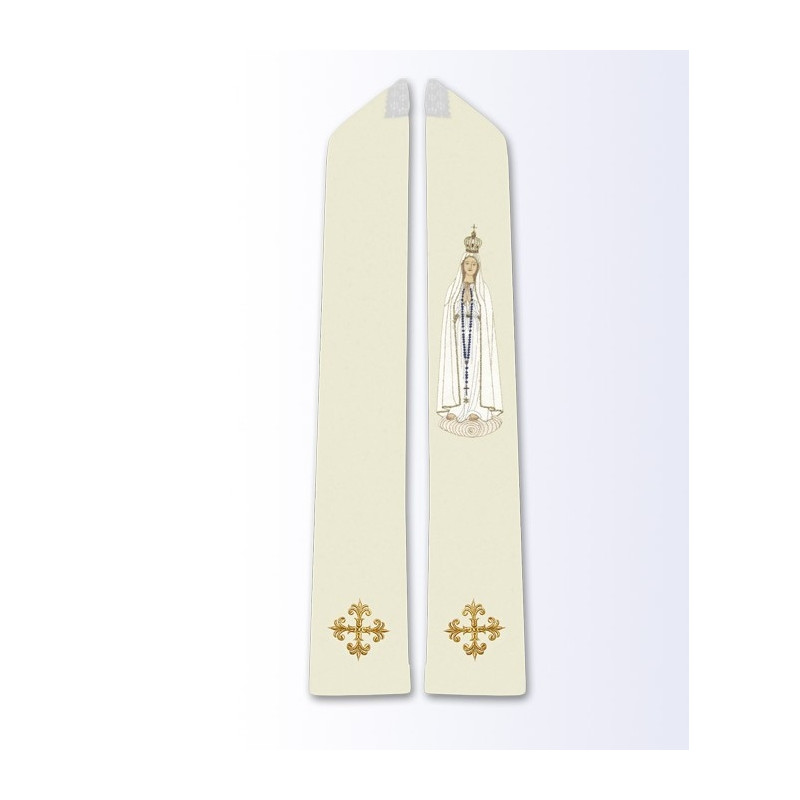
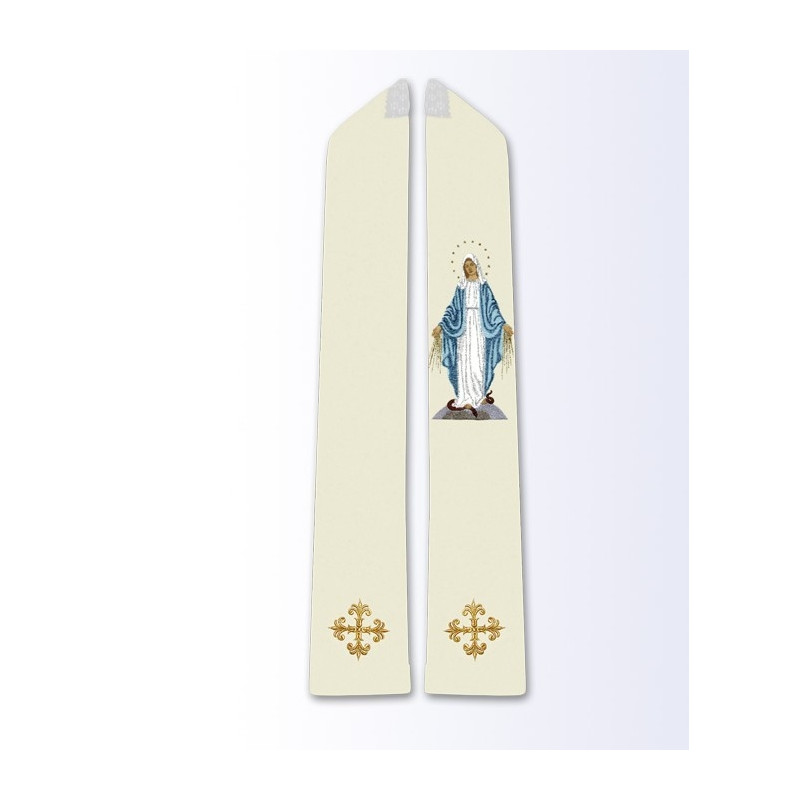
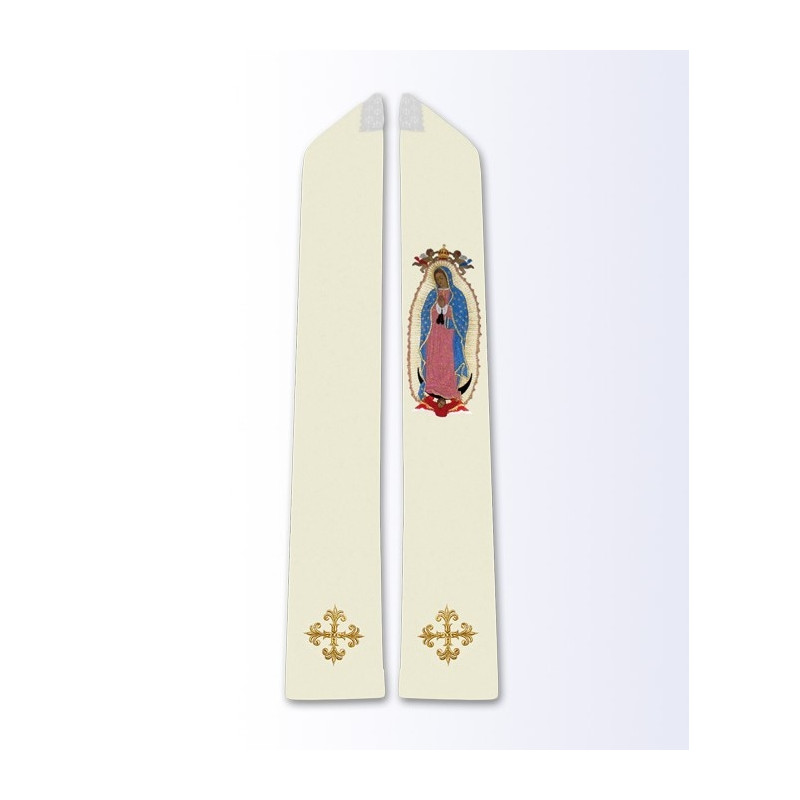
- Portraits of Our Lady — Fatima, Lourdes, Guadalupe, Częstochowa, Perpetual Help: the shrines of the world embroidered on a stole.
When Is a Marian Stole Worn
A Marian stole is proper for any Mass or devotion in honour of the Blessed Virgin Mary. The principal occasions are:
| Date | Feast | Notes |
|---|---|---|
| 1 January | Solemnity of Mary, Mother of God | white or gold |
| 11 February | Our Lady of Lourdes | World Day of the Sick |
| 25 March | The Annunciation | white |
| 13 May | Our Lady of Fatima | start of the May devotions |
| 31 May | The Visitation | white |
| 27 June | Our Lady of Perpetual Help | white or blue |
| 16 July | Our Lady of Mount Carmel | white (Scapular devotion) |
| 15 August | The Assumption | solemnity, white or gold |
| 22 August | Queenship of Mary | white |
| 26 August | Our Lady of Częstochowa | patroness of Poland |
| 8 September | The Nativity of Mary | white |
| 15 September | Our Lady of Sorrows | white or violet |
| 7 October | Our Lady of the Rosary | peak of the October devotions |
| 21 November | The Presentation of Mary | white |
| 8 December | The Immaculate Conception | white; blue by privilege |
| 12 December | Our Lady of Guadalupe | white or gold |
Beyond the calendar: Saturday votive Masses of Our Lady, First Saturday devotions, novenas, Marian pilgrimages and shrine visits, the blessing of Marian images, and May and October prayer services. The stole can match the white or gold of the day, or — at shrines and devotional Masses — the blue so often associated with Our Lady.
Marian Devotions in This Collection
This category gathers 29 embroidered designs from $96, covering the devotions most loved by priests and parishes:
- Our Lady of Częstochowa — the Black Madonna of Jasna Góra, in an amber robe and in her millennium dress: two designs.
- Our Lady of Fatima — ecru stole with the Fatima image and lilies.
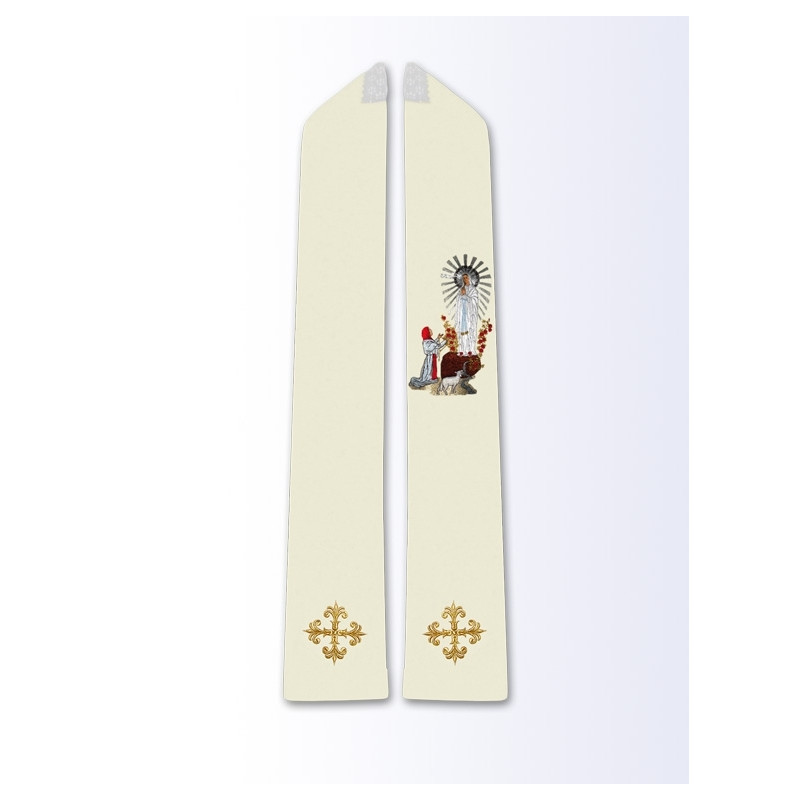
- Our Lady of Lourdes — the grotto apparition of 1858.
- Our Lady of Guadalupe — the Patroness of the Americas.
- Our Lady of Perpetual Help — the Byzantine icon with lilies and two further designs.
- The Immaculate Heart of Mary — the Heart of Mary stole.
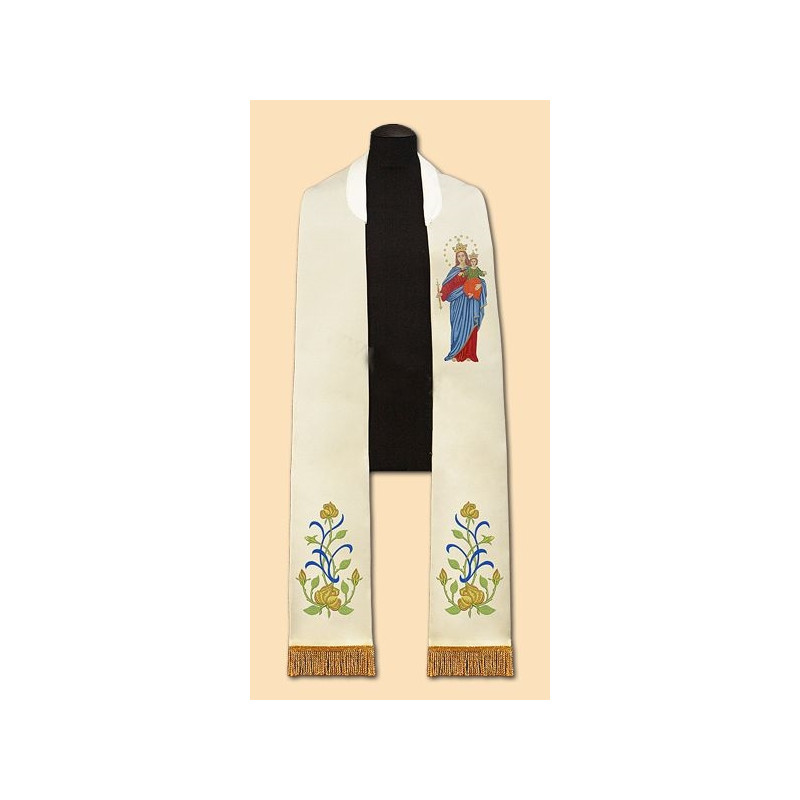
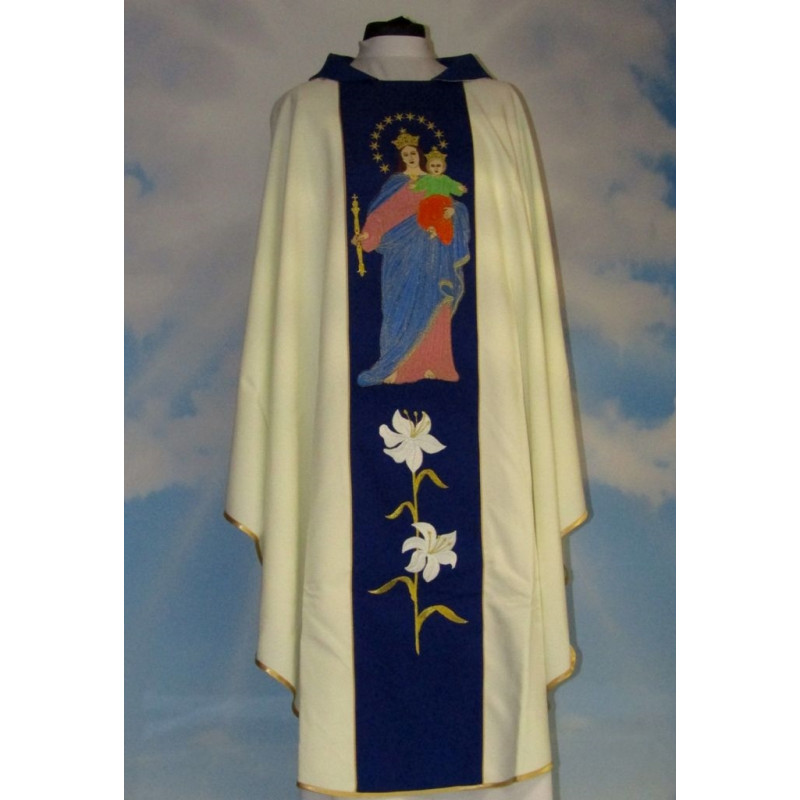
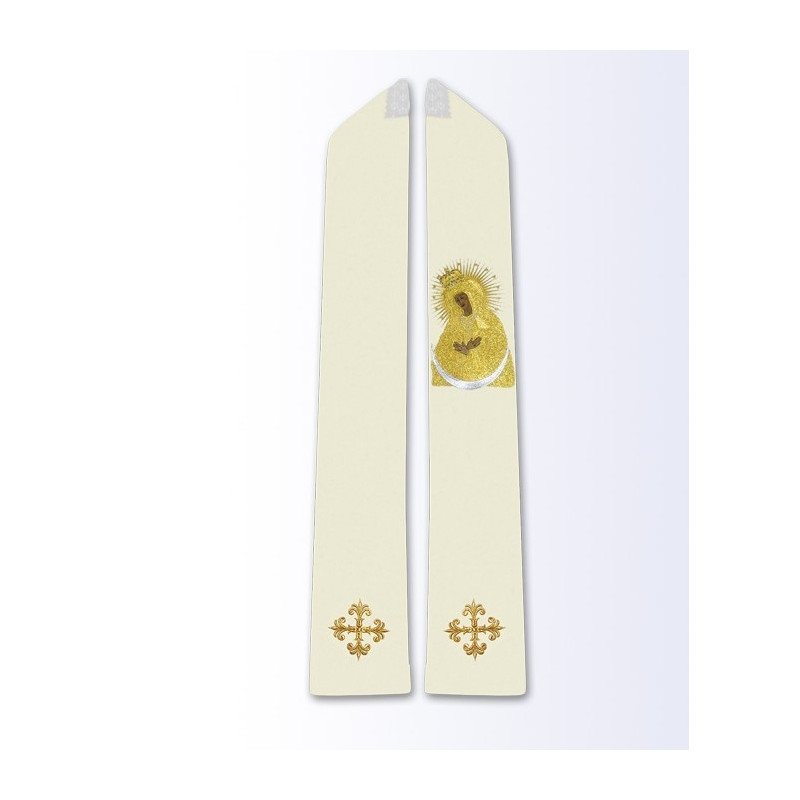
The range also includes Our Lady of Ostrobramska (the Madonna of Vilnius), Our Lady of Calvary, Our Lady Help of the Faithful, the Immaculate Mother of God, the Assumption, the Scapular of Our Lady, and an ecru chasuble with Our Lady Help of the Faithful — for a complete matching set, see Marian chasubles.
Priest Stole or Deacon Stole
Marian designs appear on both priest and deacon stoles, but they are worn differently. A priest wears the stole hanging straight down over both shoulders, crossed over the chest only when the rubrics call for it; a deacon wears it diagonally, from the left shoulder to the right hip. The length is similar — around 130 cm per side — but the cut and the way it fastens differ. Our dedicated deacon stoles are cut for the diagonal wear; the Marian stoles in this category are the priest's straight-hanging style, unless the product description says otherwise.
Sizes, Fabrics, and Craftsmanship
Standard sizes across the collection: 16 cm × 130 cm (6.3 × 51.2 in) on the Tczew-made stoles, 17 cm × 128 cm with tassels on the Asga designs, and 19 cm wide × about 116–119 cm per side on the Miller stoles with a sewn-in collar. The chasuble in this category measures 160 × 130 cm.
The fabrics are chosen for the sacristy, not the museum: smooth, stain- and crease-resistant weaves (cotton–polyester blends on several models), suitable for standard washing and ironing; selected designs add velvet appliqués. The embroidery is worked in metallic and high-quality threads, and the Perpetual Help and Fatima stoles carry an embroidered golden cross at the neck. Tassels and collars can be added on request, and every stole is made in Poland — in our workshop tradition going back to 2009. Selected designs are presented in a gift box with a display window.
How to Care for a Marian Stole
Store the stole rolled or flat — never hung by one end, which stretches the fabric. The smooth weaves used in this collection tolerate standard washing and ironing; for embroidered panels, wash gently, iron on the reverse at low temperature, and never press directly on metallic thread. Stoles kept in a confessional or a sacristy drawer benefit from a breathable cotton bag.
Frequently Asked Questions About Marian Stoles
What Is Marian Blue?
Marian blue is the deep, luminous blue associated with the Blessed Virgin Mary in art and devotion. It takes its name from ultramarine, the precious lapis pigment used in the Middle Ages for Mary's mantle. In the liturgy, blue is not a standard colour, but it is used for Masses of Our Lady by local privilege — most famously for the Immaculate Conception in Spain and its former territories — and it remains the favourite colour of Marian shrines and devotional vestments.
What Are the Marian Colors?
In devotional art: blue (her mantle and purity), white (her holiness), gold (her queenship), and the red of the Immaculate Heart's flames. In the liturgy: white and gold are the vestment colours for feasts of the Blessed Virgin Mary, while blue appears at Marian shrines and by indult. See also our guide to why blue is Our Lady's colour.
When Does a Priest Wear a Marian Stole?
On the feasts and memorials of Our Lady — from the Solemnity of Mary, Mother of God (1 January) and Our Lady of Fatima (13 May) to the Assumption (15 August), Our Lady of the Rosary (7 October), the Immaculate Conception (8 December) and Our Lady of Guadalupe (12 December) — as well as for May and October devotions, First Saturdays, Saturday votive Masses, and pilgrimages to Marian shrines.
Do Deacons Wear Marian Stoles?
Yes. Deacons may wear Marian stoles — in the diagonal deacon style, over the left shoulder and fastened at the right hip. Our deacon stoles include Marian designs cut for this way of wearing.
What Symbols Appear on Marian Stoles?
The most common are the Immaculate Heart of Mary, the crowned monogram M, roses, lilies, the crown of twelve stars from Revelation 12:1, the star Stella Maris, and embroidered portraits of Our Lady — Fatima, Lourdes, Guadalupe, Częstochowa, and Perpetual Help.
What Does the M with a Crown Mean?
The M stands for Maria, and the crown declares Mary's title as Queen of Heaven. Combined with a cross, the emblem is also read as Auspice Maria — "under the protection of Mary" — a motto of Marian consecration.
How Long Is a Marian Stole?
The standard priest stole in this collection measures about 130 cm (51 inches) from the neck to the tip on each side, in a width of 16–17 cm; the wider Miller designs measure about 116–119 cm per side in a 19 cm width. Deacon stoles are cut from the same length for diagonal wear.
What Fabric Are Marian Stoles Made Of?
Our Marian stoles are sewn from smooth, stain- and crease-resistant fabrics — several models in cotton–polyester blends — chosen so that they can be washed and ironed after regular parish use. Selected designs use velvet appliqués, and all embroidery is worked in metallic or high-quality threads. Each product description states the composition of that model.
Why Does a Priest Wear a Stole?
The stole is the sign of ordained ministry and of the authority of Holy Orders; it represents the yoke of Christ. When a priest vests he prays: "Restore to me, O Lord, the stole of immortality which I lost through the deceit of our first parents." A Marian stole adds the priest's personal devotion to the Mother of God to that sign.
Can a Priest Celebrate Mass Without a Stole?
No — the stole is required for the celebration of Mass and for the sacraments; it is worn over the alb and under the chasuble. A priest may wear the stole over an alb or surplice without a chasuble for sacraments celebrated outside Mass, such as confession, baptism, or the anointing of the sick.
Can a Marian Stole Be Washed?
Yes — the smooth weaves used in this collection are suitable for standard washing and ironing; several product descriptions say so explicitly. Wash embroidered stoles gently, iron on the reverse at low heat, and avoid pressing directly on metallic thread or velvet appliqués.
Is a Marian Stole a Good Gift for a Priest?
It is one of the classic gifts for a priest: suitable for ordination, first Mass, priestly jubilees, name days, and Christmas. Several designs come in a gift box with a display window, and any stole can be adjusted — tassels and collars sewn on request.
Related Reading
Explore the full range of embroidered liturgical stoles, the matching Marian chasubles (92 designs from $139, each with a matching stole), and our icons of Our Lady for the sacristy and home.
From the blog: Stole Colors by Liturgical Season, Marian Vestments: When to Wear Them and Which Colour, and Blue Chasuble Meaning: Why Blue Is Our Lady's Colour.
