
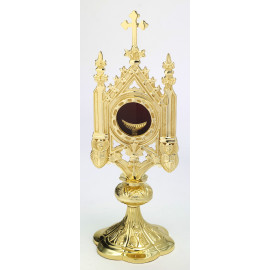
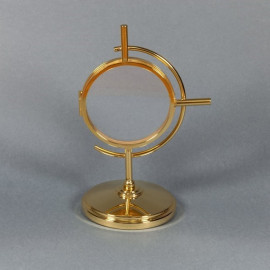
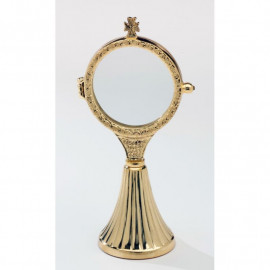
What Is a Monstrance?
A monstrance (also called an ostensorium) is a sacred vessel used in the Catholic Church for the exposition and Benediction of the Blessed Sacrament. The word comes from the Latin "monstrare," meaning "to show," reflecting its purpose of displaying the consecrated Host for adoration.
Design and Symbolism
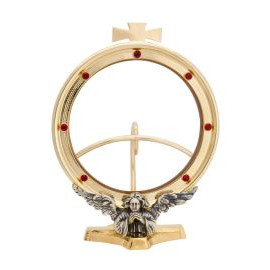
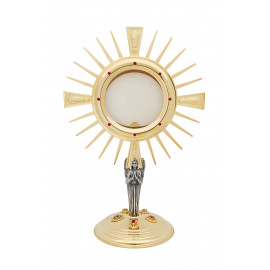
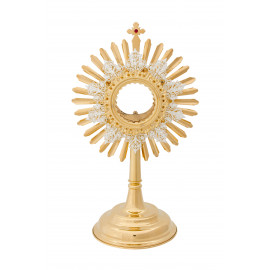
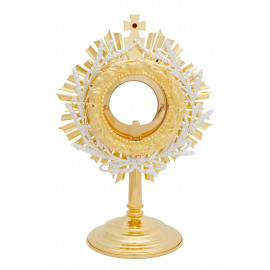
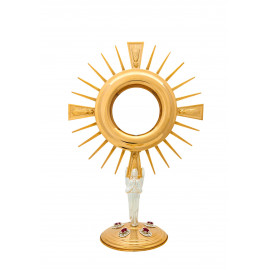
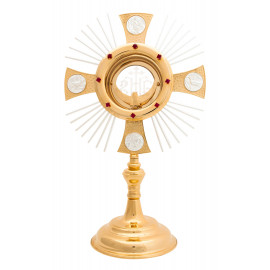
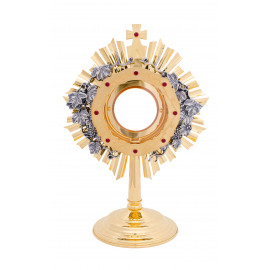
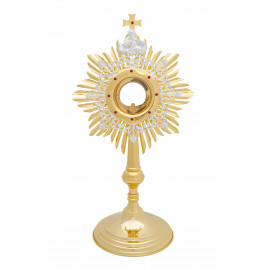
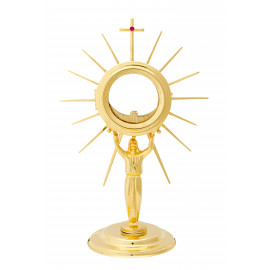
Traditional monstrances feature a central glass luna (holder) for the Host, surrounded by a sunburst design of rays symbolizing the light of Christ. The base is typically decorated with religious symbols, and the entire piece is crafted from brass, silver, or gold-plated metal.
Types of Monstrances
- Chapel monstrances — smaller, designed for personal or small-group adoration
- Processional monstrances — larger, with a sturdy base and handle for carrying in processions
- Tabor monstrances — designed for permanent exposition in a tabernacle or adoration chapel
Our Collection
Our monstrances are handcrafted by skilled artisans using traditional methods. Available in brass, silver-plated, and gold-plated finishes, with options for custom engraving and personalization.
Ostensoria: Another Name for a Monstrance
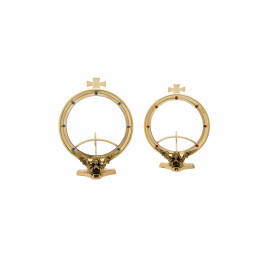
Ostensoria (singular: ostensorium or ostensory) is the traditional name for what we now usually call a monstrance — the vessel used to expose the consecrated host for veneration. Both words express the same purpose of "showing": monstrance comes from the Latin monstrare, and ostensorium from ostendere. In modern usage "ostensorium" refers specifically to the vessel used for the exposition of the Blessed Sacrament, while a monstrance may also serve as a reliquary for the public display of relics. Chapel-size ostensoria are the smaller designs, usually 17–25 cm (7–10 in) tall, made for adoration chapels, side altars and home oratories.
For a closer look at the history and use of the vessel, read our guide: What Is a Monstrance and How Is It Used in Eucharistic Adoration?Chapel Monstrance Sizes, Materials and Prices
A chapel monstrance is a smaller monstrance designed for a chapel, adoration room or side altar rather than for large processions. Our collection offers 14 chapel monstrances and ostensoria priced from $242 to $2,698, with heights from 17 cm to 52 cm and luna sizes for hosts of 125 mm and 145 mm. Each piece is made of brass with a gold-plated finish for a warm, durable shine.
Larger processional monstrances have a sturdy base and a handle for carrying the Blessed Sacrament, while tabor monstrances (also called a monstrance throne or stand) are designed for permanent exposition in a tabernacle or adoration chapel — see our monstrance tabor designs.
Parts of a Monstrance
Every monstrance is built from the same parts: the base (the foot that supports the vessel), the stem with its node, the luna or lunette — the glass holder in which the consecrated host is placed — and the rays of the sunburst design that surround it. A cross or crown usually tops the design, and a glass cover protects the host. The word "luna" comes from the crescent-shaped metal ring that holds the host inside the lunette; if a luna is lost or damaged, replacement lunas are available separately.
Neo-Gothic and Traditional Monstrance Styles
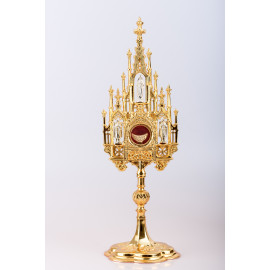
Monstrances come in several styles. The classic sunburst design surrounds the host with radiating rays; neo-gothic monstrances add pointed arches and tracery inspired by medieval cathedrals; traditional designs use baroque scrollwork and figures. A good example from our collection is the Neo-Gothic monstrance 40 cm, with gothic detailing and a luna for hosts up to 3 cm in diameter.
How Much Does a Monstrance Cost?
A Catholic monstrance typically costs between $242 and $2,698 at our shop, depending on size, finish and craftsmanship. Chapel-size monstrances with a gold-plated brass finish start at $242; larger designs of 40–52 cm range from about $1,500 to $2,698. Solid silver and hand-engraved monstrances cost more. All orders over $100 ship free.
What Is the Difference Between a Monstrance and an Ostensorium?
They are the same vessel. "Monstrance" and "ostensorium" (plural: ostensoria) both name the sacred vessel used to display the consecrated host during Eucharistic adoration and Benediction. "Ostensorium" is the older term and refers only to the vessel of exposition, while "monstrance" can also describe a vessel that holds relics for veneration — see our liturgical reliquaries.
Is It Okay to Have a Monstrance in Your Home?
Yes — keeping a monstrance in a home chapel or oratory is acceptable when it is treated with reverence as a sacred object. Chapel-size monstrances of 17–25 cm are made for exactly this setting. Remember that the Blessed Sacrament itself may only be exposed by a priest or deacon and is reserved in a tabernacle, so in the home a monstrance is kept as a devotional object of prayer rather than used for public exposition.
Why Do Catholics Use a Monstrance?
Catholics use a monstrance to make the consecrated host — the Real Presence of Christ in the Eucharist — visible for adoration, Benediction and processions. The sunburst design expresses the light of Christ, and the elevated vessel allows the faithful to gaze upon the Blessed Sacrament in prayer, a devotion practiced since the Middle Ages.
Why Does the Priest Not Touch the Monstrance?
The priest does handle the monstrance — what he never touches with bare hands is the consecrated host, which is placed in the luna with the greatest reverence. When the monstrance is carried in procession or used for Benediction, the priest covers his hands with a humeral veil (monstrance veil), a sign that the blessing comes from Christ himself.
Do I Need a Monstrance Veil or Cover?
A monstrance veil (also called a humeral veil) is used whenever the Blessed Sacrament is carried or blessed with the monstrance — during processions, Forty Hours devotion and Benediction. It is a wide shoulder veil with pockets for the hands, usually matching the liturgical color of the day. Browse our embroidered monstrance veils.
What Is a Monstrance Stand or Throne?
A monstrance stand — also called a throne or tabor — is the elevated support on which the monstrance is placed for exposition in a chapel or on the altar. Tabor stands make the Blessed Sacrament clearly visible during longer periods of adoration. See our tabor and monstrance stands.