
What Are Collarettes and Collars?
Collarettes and collars — also called clerical collars, Roman collars, priest collars, or informally dog collars — are the white bands worn by Catholic priests, deacons, and seminarians as the visible sign of ordained ministry. They attach to a clergy shirt or cassock in several styles: tab collars, insert collars, banded collars, and full collarettes.
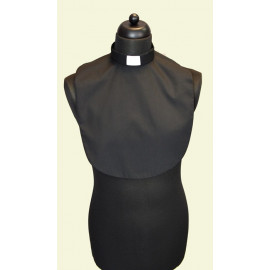
There are two main ways a collar attaches: tab collars (which fasten to the outside of the shirt with studs, pins, or buttons) and insert collars (which slide into a fabric tunnel built into the shirt's stand). A full collarette or dickey is a separate white band worn over a regular shirt — useful for travel, hot climates, and days away from the sacristy.
Every priest and deacon needs a supply of quality collars. They wear out with regular use and should be replaced when they become discolored, cracked, or no longer sit snugly.
The same garment is known by several names: clerical collar, Roman collar, clergy collar, priest collar, minister collar, and — informally — dog collar. The detachable white collar appeared in the mid-19th century (around 1865) and remains one of the most recognizable pieces of Christian clerical clothing.
Types of Clerical Collars: Tab, Insert, Banded and Full Collarette
Four collar systems cover almost everything sold today. Each has its own shirt construction, its own tradition, and its own practical advantages.
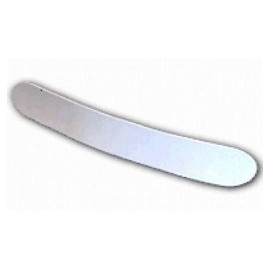
Tab collar — a small white tab, usually plastic, fastened at the front of the shirt with studs, pins, or buttons. The shirt has a hidden slot or a raised stand that holds the tab in place. This is the most common style in the United States: quick to attach, easy to replace, and very flat under a cassock or vestments.
Insert collar — a white insert that slides into a fabric tunnel built into the shirt's stand. The insert is held by the shape of the stand rather than by fasteners. This is the standard system in Europe and a favorite for all-day wear: inserts sit flush and are inexpensive to replace when they discolor.
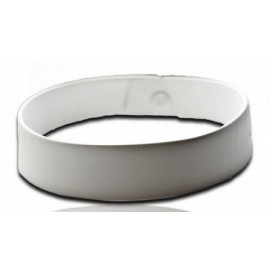
Banded (full) collar — a complete white ring that closes at the back of the neck. It is the traditional style of Anglican and Episcopal clergy and is often worn with choir dress. Also called a neckband, full collar, tunic collar, or "full Roman" collar.
Tonsure collar — a round, tunnel-like neckband with a circular opening at the throat, into which a full collar insert is fitted. The name refers to the historic tonsure of clerics. It gives a very traditional, closed look and is common in some religious orders.
The white tabs themselves are often sold as collar tabs or replacement tabs, so it pays to keep spares on hand. Catalogues also list brothers collarettes and Roman collarettes — collarette variants worn by religious brothers and clergy — under the same family of products. For a deeper comparison of the four systems, see our guide to clerical collar types.
Who Wears a Clerical Collar?
Catholic priests, deacons, and seminarians wear the clerical collar as part of their everyday clerical dress; bishops and cardinals wear it with a cassock, and religious brothers wear a collar with their habit or clerical shirt. In the United States, the bishops have directed that, outside liturgical functions, priests' usual attire is a black suit with a Roman collar — the collar remains the standard sign of priestly identity.
Clergy of other traditions — Anglican, Episcopal, Lutheran, Methodist, and some other Protestant ministers — also wear a white collar, which is why the garment is often called a minister collar or pastor collar. Many women clergy wear collarettes and collars as well, in the same styles and sizes as their male colleagues.
Roman Collar vs. Anglican Collar
The Roman collar and the Anglican collar are both white clerical bands; the difference lies in the shirt and the way the collar is fastened. Catholic clergy typically wear a black shirt with a tab collar or insert collar, which creates a white square at the throat. Anglican clergy more often wear a full banded collarette that wraps around the neck, often on a black or colored clerical shirt. The name Roman collar also reflects its origin: the white band became standard Catholic clerical dress in the 19th century.
Collar Sizes and Fit
Clerical collars are sized by neck circumference. Our collars and dickeys come in sizes from 38 cm to 52 cm (15 to 20.5 inches): the Vatican double collar is available from 38 to 52 cm, and the clergy dickey with velcro comes in eight sizes from 38 to 52 cm in white and black, with a velcro closure at the back for fine adjustment. To choose the right size, measure around the base of the neck and add about 1 cm (0.5 in) of comfort. Match the collar to your shirt: tab collars need a tab-collar shirt, insert collars need slots in the shirt band, and collarettes fit neckband shirts.
How to Put On and Care for a Clerical Collar
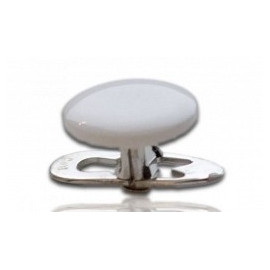
Tab collars: slide the tab into the shirt's slot or stand and fasten the studs, pins, or buttons at the front. A plastic collar button or clip holds the white collar in place when the shirt uses a button system.
Insert collars: slide the white insert into the fabric tunnel of the shirt's stand until it sits flush; the shape of the stand holds it without fasteners.
Collarettes and dickeys: put the band around the neck like a bib, tuck it under the shirt collar, and adjust the velcro at the back. No special shirt is needed.
Care: plastic inserts and tabs wipe clean with a damp cloth; cotton dickeys wash with the rest of the laundry and should be dried flat. Keep a rotation of two or three collars so a fresh one is always ready, and replace a collar as soon as it discolors or cracks — with daily wear that is typically every three to six months.
Materials: Plastic, Celluloid and Cotton
Plastic is the modern standard for inserts, tabs, and collar buttons: it is durable, easy to clean, and holds its shape. Vintage and traditional collars were made of celluloid, a glossy early plastic that looks elegant but yellows and cracks over time — which is why most clergy now prefer modern plastic inserts. Full dickeys are usually sewn from shirt cotton, sometimes with a velcro closure for adjustability. Whichever material you choose, keep spares: the collar is the most visible part of the whole outfit.
Why Priests Wear a Collar
The collar is the most visible sign of ordained ministry: it identifies the wearer as a priest, deacon, or seminarian and marks his availability for pastoral care, confession, and prayer. It is often described as the opposite of a "do not disturb" sign — a public invitation to be approached. The white color echoes baptismal purity and the light of Christ, and against a black shirt it reads instantly, in any country and any language, as Catholic clergy.
Can Anyone Wear a Roman Collar?
In the Catholic Church the clerical collar belongs to ordained ministry. It is worn by bishops, priests, and deacons, and by seminarians as they prepare for ordination; the laity do not wear it as ordinary dress. In other Christian traditions the white collar is worn by ordained ministers and, in some churches, by licensed lay ministers. Because the collar is a sign of office, wearing it without holding that office can be misleading — which is why it is normally worn only by clergy and candidates for ordination.
Collars and Accessories: Prices and Options
Our range is small, practical, and priced for everyday replacements — four items from $3.00 to $38.00, shipping worldwide (free over $100):
| Item | Style | Sizes | Price |
|---|---|---|---|
| Tab insert collar | tab / insert | 16 × 3 cm | $3.00 |
| Plastic collar button | accessory | — | $20.00 |
| Double collar, Vatican model | double collar | 38–52 cm | $22.00 |
| Clergy dickey with velcro | dickey | 38–52 cm | $38.00 |
The Italian-made collars and buttons come from a specialist workshop; dickeys are sewn from shirt cotton with a velcro closure. Every order ships from our workshop with tracked delivery.
Frequently Asked Questions About Collarettes and Collars
Q: What is a priest's collar called?
A priest's collar is most often called a clerical collar or Roman collar. Other common names are clergy collar, priest collar, and minister collar; informally it is sometimes called a dog collar.
Q: What are the different types of clerical collars?
There are four main types: the tab collar (a white tab fastened with studs, pins, or buttons), the insert collar (a white insert sliding into a fabric tunnel), the banded or full collar (a complete white ring closed at the back), and the tonsure collar (a round tunnel neckband worn with a full insert). A collarette or dickey is a separate white band worn over a regular shirt.
Q: What is the difference between a Roman collar and an Anglican collar?
Both are white clerical bands. The Roman collar is usually a tab or insert set into a black Catholic clergy shirt, creating a white square at the throat, while the Anglican collar is often a full banded collarette that wraps around the neck. The choice is mainly a matter of shirt style and tradition.
Q: Do deacons and seminarians wear clerical collars?
Yes. In the Catholic Church, deacons and seminarians wear the clerical collar with a clergy shirt or cassock, as do priests and bishops. Anglican, Lutheran, and Methodist clergy also wear white collars, which is why the garment is often called a minister collar.
Q: Which clergy wear collars?
In the Catholic Church: bishops, priests, deacons, seminarians, and religious brothers. Beyond it: Anglican and Episcopal priests, many Lutheran and Methodist ministers, and clergy of other Protestant traditions — including women clergy, who wear the same styles and sizes.
Q: Why do priests wear a clerical collar?
The collar is the most visible sign of ordained ministry: it identifies the wearer as a priest, deacon, or seminarian and marks his availability for pastoral care and prayer. It has been standard Catholic clerical dress since the mid-19th century.
Q: How much does a clergy collar cost?
At Best Catholic Shop, collar options start at $3.00 for a tab insert collar. A Vatican double collar is $22.00, a clergy dickey with velcro $38.00, and a plastic collar button $20.00 — the same prices apply whether you search for a clergy collar, a pastor collar, or a minister collar. All items ship worldwide from our workshop.
Q: What size clerical collar do I need?
Measure around the base of your neck and add about 1 cm (0.5 in) of comfort. Our collars and dickeys come in neck sizes from 38 to 52 cm (15 to 20.5 in); the velcro dickey adjusts for a fine fit. If you are between sizes, choose the larger one.
Q: How do you put on a clerical collar?
Slide a tab into the shirt's slot and fasten the studs or pins; slide an insert into the fabric tunnel of an insert-collar shirt; or put on a collarette or dickey over a regular shirt and adjust the velcro at the back. All three take seconds once the shirt system matches the collar.
Q: Do women clergy wear collarettes?
Yes. Women priests, pastors, and ministers wear collarettes, tab collars, and insert collars in the same styles and neck sizes as men — a white collar on a clerical shirt reads identically regardless of who wears it.
Q: How often should a clerical collar be replaced?
With daily wear, expect to replace a collar every three to six months. Replace it when it discolors, cracks, or no longer sits snugly against the neck — and keep two or three spares on hand so a fresh one is always ready.
Q: How do I choose the right collar for my shirt?
Match the system: tab collars work with tab-collar shirts, insert collars with shirts that have slots in the stand, and collarettes and dickeys with any shirt. Then check the size — measure your neck and add about 1 cm. Plastic inserts are the durable, easy-to-clean standard; keep spares of the tab or insert you wear most.
Browse Our Collar Collection
Explore our selection of collarettes and collars in tab, insert, and collarette styles, available in standard neck sizes. Keep your clerical wardrobe fresh and professional — and pair your collar with our clergy shirts and birettas. For more help, read our guides: Clerical Collar Types: Tab, Insert, Banded and Tonsure Explained, Clergy Shirts: A Complete Guide, and How to Choose a Cassock, and Why Do Catholic Priests Wear a Roman Collar?.
