
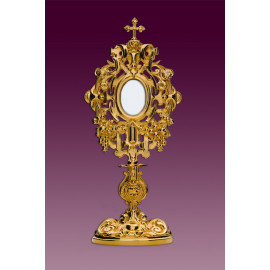
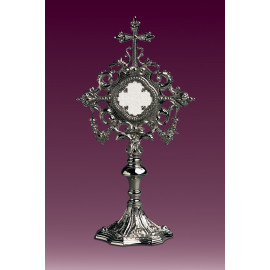
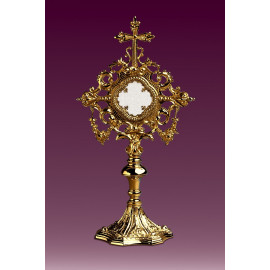
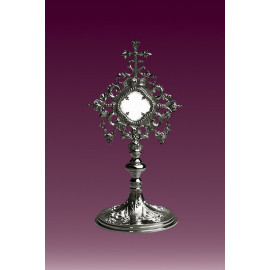
Catholic Reliquaries: Sacred Vessels for the Relics of Saints
A Catholic reliquary is a vessel made to hold, protect and display the relic of a saint. Relics are not worshipped; they are honored because the bodies of the saints were temples of the Holy Spirit and because the Church believes in the resurrection of the body. The reliquary is the vessel that makes that honor possible — it keeps the relic safe, lets the faithful see it, and marks it as something set apart for God.
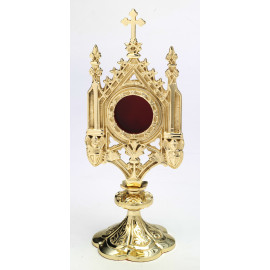
Our collection covers the full range used in Catholic parishes, chapels and homes: small brass relic capsules for a single fragment, theca-style reliquaries for personal devotion, cross-shaped and gothic reliquaries for the altar, and large gilded display reliquaries for shrines and side chapels. All 98 designs are made in our workshop in Poland and ship from stock.
What Is a Liturgical Reliquary?
A liturgical reliquary is the vessel used in Catholic worship to contain a relic. The word comes from the Latin reliquiae, “remains,” and the vessel may be as simple as a sealed brass capsule or as elaborate as a gilded chasse with glass, stones and a carved base. What makes it a reliquary is not the price but the purpose: it holds a relic and presents it for veneration.
Relics are grouped into three classes. A first-class relic is part of a saint’s body — bone, hair or blood. A second-class relic is an item the saint owned or used, such as clothing, a book or a rosary. A third-class relic is an object touched to a first-class relic. Reliquaries can hold any class; the choice of size and style depends on the relic’s dimensions and on where the reliquary will be used.
The Church’s teaching is clear that relics are not magical objects. The Catechism of the Catholic Church (CCC 1674) lists veneration of relics among the popular devotions that express the faith, and the General Instruction of the Roman Missal (GIRM 302) assumes that the altar contains a relic. The reliquary serves that faith: it protects the relic and gives the faithful a dignified way to honor the saint who is honored in it.
Reliquary, Relic Box, Theca, Chasse and Feretory: The Names Explained
Catalogues and older inventories use several words for the same family of objects. Knowing them makes it easier to search for the right vessel and to describe what you already have.
Reliquary is the broad term: any container made to hold a relic. Relic box or relic capsule usually means the simple, functional container used to store or transfer a relic — often a small brass cylinder kept in the sacristy. A theca is a small, brooch-like reliquary worn on the breast or sewn into a vestment to hold a tiny fragment. A chasse (French châsse) is a box-shaped reliquary in the form of a house, with a sloping roof and often a glass front — one of the most common medieval forms. A feretory is a portable shrine, or the chapel in which relics are kept and carried in procession; the word comes from the Latin feretrum, a bier.
Types of Catholic Reliquaries
Reliquaries are usually classified by shape and by the way the relic is displayed. The list below covers the forms you will meet in parish inventories and in our catalogue.
Capsule and Relic Box Reliquaries
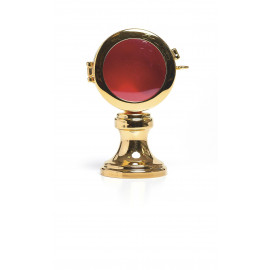
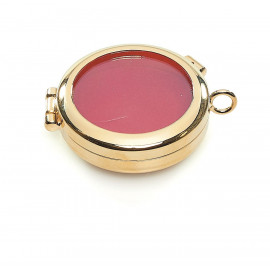
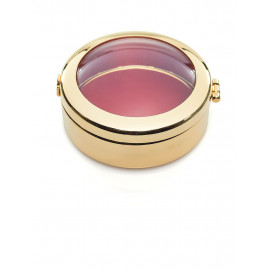
A capsule is the smallest practical reliquary: a brass cylinder or box with a screw or hinged closure, often with a glass window. It is used to store a single relic, to transfer a relic safely, or to keep a first-class relic in the sacristy. Our capsules range from 4 cm to 8 cm in diameter and from $80 to $143.
Theca Reliquaries
A theca is a small reliquary designed to be worn or carried. It may be a pendant, a brooch-like case, or a tiny hinged box sewn into a vestment. Theca reliquaries are usually made for third-class relics or very small first-class fragments and are popular for personal devotion.
Chasse Reliquaries
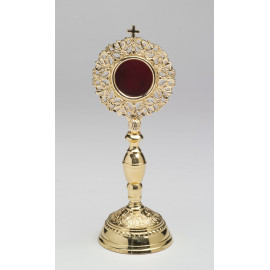
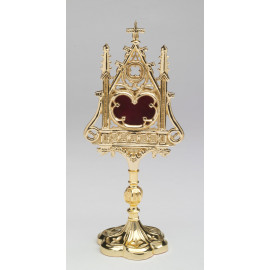
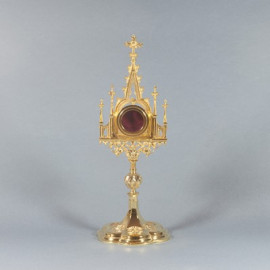
A chasse is a house-shaped or casket-shaped reliquary, often with a sloping roof and a glass front. The form was developed in the Middle Ages for the public display of a saint’s relics and remains one of the most recognizable reliquary shapes. A chasse is normally placed on an altar, a plinth or a shrine.
Feretory Reliquaries
A feretory is a portable reliquary shrine — large enough to be carried in procession and often glazed so the faithful can see the relic as it passes. The same word can mean the chapel where such a shrine is kept. Feretories are associated with major relics and with the dedication of churches.
Arm and Head Reliquaries
In medieval Europe, reliquaries were often shaped like the part of the body they contained: an arm reliquary for a forearm bone, a head or bust reliquary for a skull, a foot reliquary for a foot. These forms are historical and museum pieces today; they are not the kind of reliquary normally bought for a parish altar. Their existence explains why older inventories sometimes describe a reliquary by its shape rather than by its size.
Cross and Pendant Reliquaries
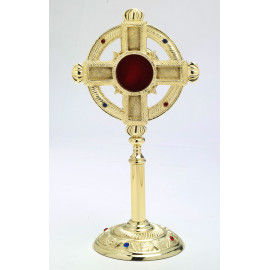
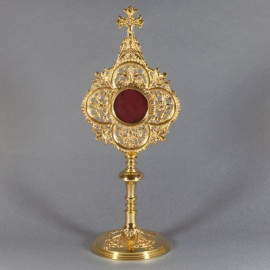
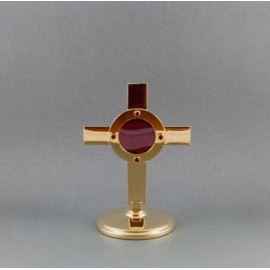
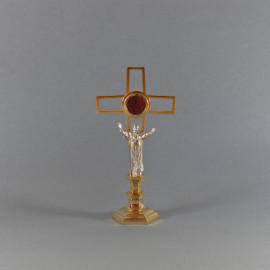
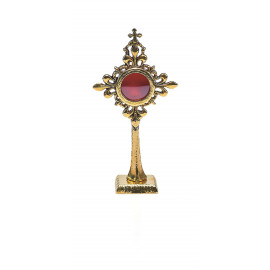
A cross reliquary holds the relic inside a cross-shaped housing, usually with a glass window on the front. A pendant reliquary is a small cross or locket worn on a chain. Both forms are common for personal devotion and as gifts; our cross-shaped reliquary is 21 cm high and is intended for a home altar or a small chapel.
Ostensorium-Style and Display Reliquaries
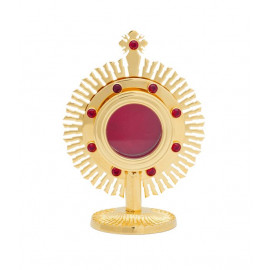
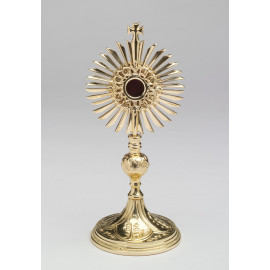
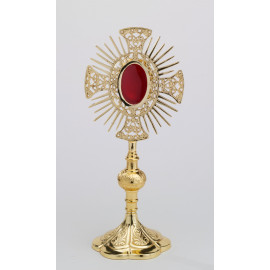
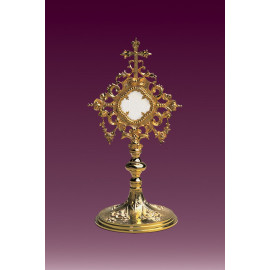
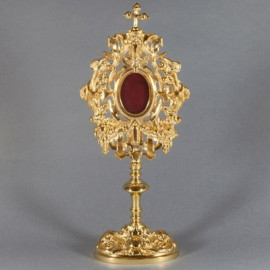
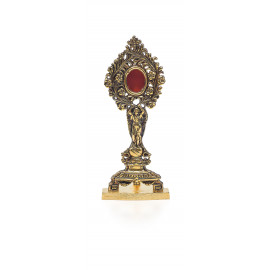
An ostensorium-style reliquary borrows the sunburst or tower form of a monstrance but is made for a relic rather than for the Blessed Sacrament. Display reliquaries are the larger, more ornate vessels intended for a shrine, a side chapel or a cathedral: they combine a glass window, a decorated frame and a weighted base so the relic can be seen from a distance.
Materials and Finishes
The material affects the look, the weight, the care and the price. Our reliquaries are made in the finishes below; the same design may be available in more than one finish.
| Finish | Look and use | Care | Typical price |
|---|---|---|---|
| Polished brass | Warm gold tone; the standard parish finish; durable and affordable | Dry soft cloth; avoid abrasive polish on lacquered surfaces | $80–$600 |
| Gold-plated / gilded brass | Bright gilded surface for altar and display use; often combined with stones | Dry cloth only; do not rub the gilding | $143–$1,178 |
| Bronze, gold-plated | Cast, heavier body with a gilded surface; a substantial, traditional look | Dry cloth; keep away from damp | $213–$484 |
| Copper, patinated | Warm brown patina; sculptural pieces such as tree or figure reliquaries | Do not polish the patina; dust only | $1,085–$1,170 |
| Nickel-plated | Silver-tone, cool finish; a lower-cost alternative to silver plate | Dry cloth; avoid ammonia cleaners | $426–$520 |
| Silver-plated | Bright silver tone, sometimes on a wooden body | Silver cloth; store dry | $275–$1,178 |
“Gilded” means covered with a thin layer of gold or a gold-coloured finish over brass or bronze. It is not solid gold. That is normal for liturgical vessels: the point is a dignified appearance and a surface that can be maintained, not bullion value. If a reliquary will be handled often, a polished brass or nickel finish is the most forgiving; if it will be displayed behind glass, a gilded or silver-plated finish gives the strongest visual presence.
How to Choose the Right Size
Size is the first practical decision. Measure the relic — or the sealed theca that contains it — before you choose. The outside height of a reliquary tells you how it will look; the internal capsule diameter tells you whether the relic will fit.
| Type | Typical size | Best for | Price range |
|---|---|---|---|
| Capsule / relic box | 4–8 cm (1.6–3.1 in) diameter | One relic, transfer, sacristy storage | $80–$143 |
| Personal and small reliquary | 9.5–20 cm (3.7–7.9 in) | Home altar, private devotion, gifts | $117–$353 |
| Altar reliquary | 20–30 cm (7.9–11.8 in) | Parish altar, side chapel, dedication | $242–$653 |
| Large display reliquary | 30–40 cm (11.8–15.7 in) | Shrine, cathedral, major relic | $540–$1,178 |
For a relic that is already sealed in a theca, choose a reliquary whose cavity is slightly larger than the theca. For a first-class fragment, a capsule or a small theca is usually enough. For a relic that will be venerated by a congregation, choose a display reliquary with a glass front and a base that sits securely on an altar or plinth.
How Much Does a Reliquary Cost?
Prices are driven by size, material, the amount of handwork and the finish. In our current collection of 98 reliquaries, the range is $80 to $1,178, and the distribution is roughly:
| Price band | Number of designs | What you get |
|---|---|---|
| Under $150 | 7 | Relic capsules and small boxes, 4–8 cm |
| $150–$299 | 34 | Small to medium reliquaries, 9.5–22 cm, brass and gilded |
| $300–$599 | 41 | Altar reliquaries, 20–35 cm, often with stones or a gothic form |
| $600 and above | 16 | Large display and sculptural reliquaries, 26–40 cm |
Examples from the collection: a 4 cm brass relic capsule is $80; a 17 cm round capsule reliquary is $134; a 22 cm gilded reliquary is $242; a 13 cm brass reliquary with gold plating is $351; a 32 cm brass reliquary, gold-plated, is $540; and the largest sculptural pieces reach $1,085–$1,178. For comparison, antique and museum reliquaries can run from a few hundred to tens of thousands of dollars, but they are a different purchase: you are buying art and provenance, not a vessel for parish use.
How to Place and Seal a Relic in a Reliquary
Placing a relic is a small ceremony of care, not a DIY craft project. The exact customs differ by diocese, but the sequence is usually the same:
- Confirm the documentation. A relic should have an authenticity certificate (often called an authentic) signed by the postulator or the competent ecclesiastical authority. Keep it with the reliquary.
- Do not open a sealed theca. If the relic is already sealed in a theca or capsule, leave the seal intact. The seal is part of the authentication.
- Place the sealed relic in the cavity. Set it into the reliquary’s capsule or recess so that it cannot move. Cotton or archival tissue may be used to cushion it; do not glue the relic itself.
- Close and, if required, seal the reliquary. Many sacristies use a wax seal and a thread across the closure, with a stamp or sigil. Follow the diocesan custom; if you are unsure, ask the chancellor’s office.
- Record what you did. Note the date, the relic, the certificate number and the person who sealed it. Store the record with the certificate.
For a first-class relic, or for any transfer of a relic from one vessel to another, consult the diocese before you act. Canon law treats relics as sacred objects with their own rules, and a parish should not improvise.
Canon Law, Authenticity and the Sale of Relics
Two canons matter for anyone buying or keeping a reliquary. Canon 1190 §1 states that it is absolutely forbidden to sell sacred relics. That means the relic itself cannot be bought or sold; a reliquary, which is a vessel, can be. Canon 1237 requires that relics be authenticated and that the altar of a church contain a relic, usually in a sealed cavity in the altar stone — the sepulchrum.
This is why a reputable seller offers reliquaries, not relics, and why every relic should come with documentation from a church authority rather than from an online marketplace. If you already own a relic, keep its certificate with the reliquary and do not remove the seal. If you are offered a relic for sale, treat that as a warning sign, not a bargain.
Reliquary vs Tabernacle vs Monstrance
These vessels are often confused because they all hold something sacred and all can be made of gilded metal. They are not interchangeable.
| Vessel | What it holds | Typical use |
|---|---|---|
| Reliquary | A relic of a saint | Veneration in a church, chapel or home |
| Tabernacle | The reserved Blessed Sacrament | The heart of the sanctuary; reservation for the sick and adoration |
| Monstrance (ostensorium) | The Blessed Sacrament exposed in a lunette | Eucharistic adoration and Benediction |
| Ciborium | Hosts for Communion | Distribution and reservation of Communion |
| Pyx | A small number of hosts | Carrying Communion to the sick |
If you need a vessel for the Blessed Sacrament, see our chapel monstrances and ciboria. If you need a vessel for a saint’s relic, you are in the right place.
Antique and Used Reliquaries
Antique reliquaries are beautiful, but they are a different purchase from a new vessel for parish use. Before buying an antique or used reliquary, check four things: the authentication of the relic (if one is present), the integrity of the seal, the condition of the hinge, glass and gilding, and whether the piece has been repaired or adapted. Old gilding may contain lead; old glass may be thin; a missing seal may mean the relic cannot be identified.
For a parish that needs a reliable vessel for the altar, a new reliquary is usually the better choice: it is sound, it can be replaced consistently, and it comes with a known specification. For a collector or a museum, an antique reliquary is a work of art with a history of its own.
How to Care for a Reliquary
- Dust with a soft, dry cloth. Do not use abrasive polishes on gilded, silver-plated or lacquered surfaces; they remove the finish.
- Clean the glass with a cloth, not a spray. Apply glass cleaner to the cloth, not directly to the reliquary, so liquid does not reach the relic or the metal fittings.
- Keep it dry. Store reliquaries away from damp sacristy walls, heating vents and direct sunlight. Humidity damages gilding and glass.
- Handle with two hands. Large display reliquaries are top-heavy; lift them by the base, not by the frame.
- Keep the documentation. Store the certificate, the seal record and any inventory note with the reliquary, not in a separate file.
- Do not open a sealed relic. If the seal is broken or the glass is damaged, ask the diocese before attempting a repair.
Why Buy Reliquaries from Best Catholic Shop
Our reliquaries are made in our workshop in Poland, in the same tradition as the vestments and vessels we supply to parishes in the United States and Europe. We keep 98 designs in stock, from $80 capsules to $1,178 display reliquaries, so a parish can find a vessel that fits the relic, the altar and the budget. Each piece is packed securely for transit, and U.S. orders over $100 ship free. Read more about our made-in-Poland workshop, our shipping policy and our returns policy.
Frequently Asked Questions About Reliquaries
How much does a Catholic reliquary cost?
In our collection, Catholic reliquaries range from $80 for a 4 cm brass relic capsule to $1,178 for a large silver-plated display reliquary. Most altar reliquaries fall between $242 and $653. The price depends mainly on size, material, gilding and handwork; antique and museum pieces can cost far more because you are paying for art and provenance.
Can you buy a Catholic relic?
No. Canon 1190 §1 forbids the sale of sacred relics. Relics are normally obtained through a diocese, a religious order or a shrine, and they should always come with an authenticity certificate. A reliquary — the vessel — can be bought and sold; the relic inside it cannot.
Is it illegal to sell relics?
In the Catholic Church, the sale of sacred relics is forbidden by canon law (Canon 1190 §1). The rule is religious rather than civil, but it is binding on Catholics and it is why reputable church suppliers sell reliquaries and not relics. If you are offered a relic for sale, ask for its documentation and consult the diocese.
What is the difference between a reliquary and a relic box?
The terms overlap, but a relic box or capsule is usually the simple container used to store or transfer a relic, while a reliquary is the finished, display-worthy vessel — a brass altar reliquary, a gilded chasse, a theca or a feretory. If the vessel is meant for public honor and display, “reliquary” is the usual word; “relic box” describes storage.
What is an arm reliquary?
An arm reliquary is a reliquary shaped like a forearm, made in the Middle Ages to hold an arm bone or another relic of a saint. Similar forms include head, bust and foot reliquaries. They are historical and museum objects today; for a parish altar, a cross, chasse or display reliquary is the usual choice.
What is a reliquary cross?
A reliquary cross is a cross-shaped vessel with a cavity and usually a glass window for a relic. It can be a small pendant for personal devotion or a larger standing cross for an altar or home chapel. Our cross-shaped reliquary is 21 cm high and is intended for a home altar or a small chapel.
What is a theca?
A theca is a small, brooch-like reliquary worn on the breast or sewn into a vestment to hold a tiny fragment of a first-class relic. The word is also used for a small hinged case that holds a relic. A theca is normally sealed and should not be opened.
What is a chasse?
A chasse (French châsse) is a box-shaped reliquary in the form of a house, with a sloping roof and often a glass front. It was one of the most common medieval reliquary forms and is still used for the public display of a saint’s relics.
What is a feretory?
A feretory is a portable reliquary shrine, large enough to be carried in procession, or the chapel in which such a shrine is kept. The word comes from the Latin feretrum, a bier. Feretories are associated with major relics and with the dedication of churches.
Do reliquaries need to be blessed?
It is a good practice to have a reliquary blessed by a priest, and many parishes do so before a relic is placed in it. A blessing sets the vessel apart for sacred use; it is not required for the reliquary to function as a vessel, but it is part of the Church’s ordinary care for sacred things.
Can I keep a reliquary at home?
Yes. Many Catholics keep a reliquary in a home altar or prayer corner for private devotion. Treat it with the reverence due to a sacred object, keep it in a secure and dry place, and remember that public veneration of a relic is normally reserved to a church or chapel with the permission of the diocese.
How do I choose the right size reliquary?
Measure the relic or the sealed theca that contains it, then choose a reliquary whose internal cavity is slightly larger. As a guide: capsules are 4–8 cm, personal reliquaries 9.5–20 cm, altar reliquaries 20–30 cm, and large display reliquaries 30–40 cm. The outside height matters for the setting; the internal diameter matters for the fit.
What materials are reliquaries made of?
Most liturgical reliquaries are made of brass, bronze or copper, often plated with gold, silver or nickel. Brass is the most common because it is durable and takes a gilded finish well; bronze gives a heavier cast body; copper can be patinated for a sculptural look; silver-plated and nickel-plated finishes give a cooler silver tone. Wood is sometimes used for the base or back of a reliquary.
How do I place a relic in a reliquary?
Confirm the authenticity certificate, leave any sealed theca intact, place the sealed relic in the cavity with archival cushioning, close the reliquary and — if diocesan custom requires it — seal the closure with wax and thread. Record the date, the relic and the certificate number, and keep the record with the certificate. For a first-class relic or a transfer, consult the diocese first.
Do reliquaries need to be sealed?
A reliquary should close securely so the relic cannot move or be lost. Many sacristies also seal the closure with wax and thread as a sign of authenticity and reverence. The exact custom varies by diocese; the important point is that the relic remains identified and protected.
What is the difference between a reliquary and a monstrance?
A reliquary holds the relic of a saint. A monstrance (also called an ostensorium) holds the Blessed Sacrament in a lunette for Eucharistic adoration and Benediction. The two vessels can look similar — both may be gilded and have a sunburst or tower form — but they are made for different contents and are not interchangeable.
Does every Catholic church have a reliquary?
Not every church has a freestanding reliquary, but every altar of a church is required to contain a relic, usually in a sealed cavity in the altar stone (Canon 1237). Many churches also keep a visible reliquary in a side chapel or shrine, so a parish reliquary is common even when it is not displayed on the main altar.
How should I clean and store a reliquary?
Dust with a soft, dry cloth; clean the glass with a cloth rather than a spray; avoid abrasive polishes on gilded, silver-plated or lacquered surfaces; keep the reliquary dry and out of direct sunlight; and store the certificate and seal record with it. Do not open a sealed relic. If the glass or seal is damaged, ask the diocese before attempting a repair.
Related Reading
Start here: What Are Catholic Relics? Classes, Veneration, and Reliquaries Explained, Types of Reliquaries: Chasse, Theca, Arm and Cross Reliquaries, How Much Does a Reliquary Cost? A 2026 Price Guide, and Reliquary vs Tabernacle vs Monstrance.
Practical guides: How to Place a Relic in a Reliquary, Can You Buy or Sell Catholic Relics?, Reliquary for Home, Antique and Used Reliquaries, and Famous Reliquaries in History.
Related vessels: The Complete Guide to Catholic Altar Vessels, How to Store Sacred Vessels Safely, How to Choose a Monstrance, and How to Set Up a Home Altar.
