





What Are Altar Bells?
Altar bells (also called sanctuary bells) are small bells rung during the consecration at Mass to draw the congregation's attention to the most sacred moment of the liturgy. They are typically rung three times at the elevation of the host and three times at the elevation of the chalice.
The use of bells at Mass dates back centuries. Before the liturgical reforms, the bells served as an audible signal that the consecration was taking place — especially important when the priest celebrated Mass facing away from the congregation. Today, they continue to serve as a reverent marker of the most sacred moment of the Mass.
Every parish needs quality altar bells. They are a small but important part of the liturgical celebration.
What Types of Altar Bells Are Available?
Altar bells come in several configurations:
Single altar bell — one bell, typically rung three times at each elevation. Simple and effective.
Set of three altar bells — three bells of different sizes, each producing a different tone. This is the most traditional setup and creates a richer sound.
Four-tone bell sets — four bells for the fullest range; a favorite for cathedrals and solemn liturgies.
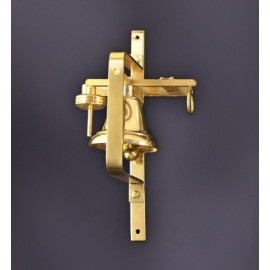
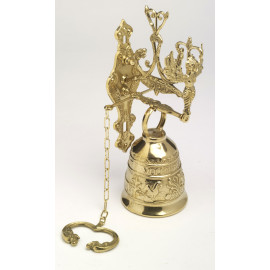
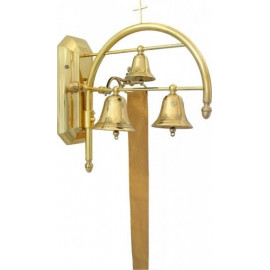
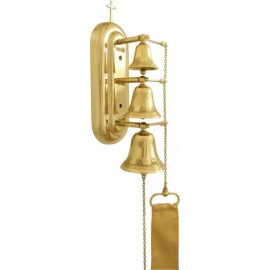
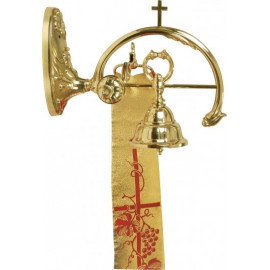
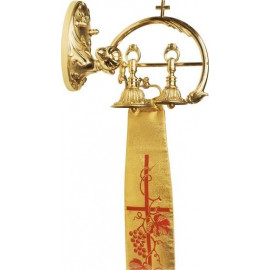
Wall-mounted sanctuary bells — one, two or three bells fixed to a brass backplate and rung with a pull chain or sash. Ideal for larger churches where the server stands away from the altar.
Hand-Held or Wall-Mounted? Two Kinds of Sanctuary Bell
A hand-held altar bell is carried by the altar server and rung directly — by far the most common choice in parish churches. It is portable, easy to use, and can be kept on the credence table or the altar step within easy reach. Hand-held bells are available as a single bell, a traditional set of three, or a four-tone set, starting at $133.
A wall-mounted sanctuary bell is fixed to a brass backplate and rung by pulling a chain or an embroidered sash. It suits larger churches, where a small hand bell would not carry through the sanctuary, and it is a traditional fixture of sacristies and side chapels. Our wall-mounted models come complete with a gold sash; the designs we carried ($847–$1,331) are currently out of stock and are shown in our catalog for reference.
If your server rings the bells from the sanctuary steps, a hand-held bell is usually the practical choice. If the bells hang permanently in the sanctuary or sacristy and are rung by a cord, choose a wall-mounted set.
How Do I Choose the Right Altar Bells?
- Consider the sound. The bells should be loud enough to be heard but not so loud that they are jarring.
- Check the handle. The handle should be comfortable to grip and securely attached to the bell.
- Think about the set. A set of three bells creates a more traditional and musical sound than a single bell.
- Match your other vessels. If your chalices and thuribles are brass, brass bells will give a unified look.
| Type | Bells | Best For | Price |
|---|---|---|---|
| Single hand-held bell | 1 | Small chapels, private Masses | $133 |
| Hand-held set of three | 3 | Parish churches, traditional use | $746 |
| Hand-held four-tone set | 4 | Cathedrals, solemn liturgies | $806 |
| Wall-mounted two-tone | 2 | Larger sanctuaries, sacristies | $847 |
| Wall-mounted single-tone | 1 | Chapels, side altars | $1,069 |
| Wall-mounted three-tone (vertical) | 3 | Traditional settings, side chapels | $1,210 |
| Wall-mounted three-tone | 3 | Large churches, solemn liturgies | $1,331 |
Hand-embroidered bell sashes in the liturgical colors cost $32–$42. Wall-mounted sanctuary bells are currently out of stock — contact us for availability.
Browse Our Altar Bell Collection
Explore our selection of altar bells in single, three-bell and four-tone configurations, and wall-mounted sanctuary bells with gold sashes. Find the right bells for your parish's liturgical celebrations. We also offer altar bell and gong sets, candlesticks, and sanctuary lamps.
When Are Sanctuary Bells Rung During Mass?
Sanctuary bells are rung three times at the elevation of the Host and three times at the elevation of the Chalice — the two most sacred moments of the Mass. In many parishes the bell is also struck once as the celebrant begins the Eucharistic Prayer, announcing that the consecration is approaching. An altar server usually rings the bells, keeping them on the credence table or on the altar step within easy reach.
The exact pattern is a matter of local custom. Some churches ring a single bell three times at each elevation; others use a set of three bells and strike them in sequence for a fuller, more musical sound. The purpose is always the same: to focus the attention of the faithful on the miracle of transubstantiation — the Real Presence of Christ on the altar.
What the GIRM Says About the Bells
The General Instruction of the Roman Missal (GIRM) — the Church's official guide to the celebration of Mass — mentions the bells in paragraph 150: "A little before the Consecration, if appropriate, a minister rings a small bell as a signal to the faithful." It adds that, according to local custom, the bell is also rung as the priest shows the host and then the chalice.
Notice the words "if appropriate": ringing the bells is recommended and customary, but not strictly obligatory. The usual moment for the signal is when the priest extends his hands over the bread and wine (the epiclesis), announcing that the consecration is approaching. This signal was written into the Roman Missal in the 1962 revision; the 1970 Missal leaves the number of rings at the elevations to local custom.
History of the Sanctuary Bell
The ringing of a bell at the consecration probably began in the 13th century, when much of the Mass was said quietly in Latin and rood screens often blocked the congregation's view of the altar. The bell told the faithful exactly when to look up and adore — a "joyful noise to the Lord" at the most solemn moment of the liturgy. The practice was not written into the original 1570 Roman Missal and only became a fixture of papal Masses in modern times, but it had long since become universal in parish churches.
By the Middle Ages the sanctuary bell was firmly established in Western worship. The pre-1970 editions of the Roman Missal directed that the altar bell be rung continuously while the priest recited the Sanctus, and again at the elevation of the Host and the Chalice. The practice carried into the modern Mass, where the bell remains one of the most recognizable sounds of Catholic liturgy.
When Are Sanctuary Bells Silent?
In the Roman Rite, altar bells are not rung from the end of the Gloria in excelsis at the Mass of the Lord's Supper on Holy Thursday until the Gloria of the Easter Vigil on Holy Saturday. This period — the Paschal Triduum — is the most solemn of the liturgical year, and the silence of the bells marks the Church's mourning at the death of Christ.
During those days a wooden clapper, called a crotalus, is sometimes used in place of the bells, most famously on Good Friday. Its plain, unadorned sound matches the austerity of the day. The bells return at the Easter Vigil, when they ring out again at the Gloria as a sign of the Resurrection.
In some places it is a local custom — though not required by liturgical law — to also refrain from ringing altar bells during the season of Advent as a mark of restraint. Where the custom is kept, the bells sound again through the Gloria of Midnight Mass on Christmas Eve.
Sanctuary Bells at Benediction and Eucharistic Adoration
Altar bells are also rung during Eucharistic adoration and at Benediction of the Blessed Sacrament. A single bell is often struck as the priest lifts the monstrance to bless the congregation, and in many churches a small bell announces the beginning of adoration. The sound serves the same purpose as at Mass: to draw the faithful's attention to the Real Presence of Christ in the Blessed Sacrament.
Sanctuary Bell vs Altar Gong
A sanctuary bell rings when its internal clapper strikes the bell wall; a church gong is struck from the outside with a wooden mallet and produces a deeper, longer-sustaining tone. Larger sanctuaries often choose a gong because its sound carries farther than a hand bell. Both are hand-cast from solid brass, and many parishes use a bell for the consecration and a gong for processions and adoration — browse our altar bells and church gongs.
Materials and Finishes: Polished and Lacquered Brass
Our sanctuary bells are cast in solid brass, then polished and finished with a clear protective lacquer that is heat-cured onto the surface. That finish is why a good brass bell keeps its shine for years without polishing — and why it should be cared for with dry methods only: dust it with a soft cotton cloth and avoid water and chemical cleaners, which can dull the lacquer. Larger bells produce deeper notes, and a three- or four-tone set sounds in sequence at the elevation, creating the traditional "three rings" heard in most parishes.
Bell Sashes and the Liturgical Colors
Many sanctuary bells are fitted with a bell sash — a hand-embroidered ribbon that hangs from the bell. The sash is both decorative and practical: on wall-mounted bells, the sash is the pull by which the bell is rung. Sashes are made in the liturgical colors — green, purple, red and cream, with gold and multicolor sets — so the bells can change with the season: green for Ordinary Time, purple for Advent and Lent, red for Pentecost and martyrs' feasts, white or gold for Christmas and Easter.
Sanctus Bells in the Anglican and Lutheran Traditions
Ringing a bell at the consecration is not only a Catholic practice. In the Anglican tradition — especially in Anglo-Catholic parishes — the sanctus bell is rung three times: once before the Words of Institution and once at each elevation of the host and chalice; it may also announce the moment when the faithful come forward for Communion. Some Anglican churches use a large gong struck with a mallet instead. In Lutheran churches, altar bells are rung at the two points of the Words of Institution to signify the real presence.
Frequently Asked Questions About Sanctuary Bells
What Are Catholic Church Bells Called?
The bells used inside the church during Mass are called sanctuary bells, altar bells, sanctus bells, sacring bells, communion bells or mass bells — all names for the same small hand-held instrument or set of bells on a handle. The large bells in a steeple or tower are simply church bells: a different kind of bell, rung to call the faithful to worship rather than at the consecration.
What Is a Sacring Bell?
A sacring bell is an old name for the sanctuary bell, from the word "sacring" — the consecration. Other traditional names include sanctus bell, mass bell and saints' bell. Whatever the name, it is the same instrument: a small brass bell or set of bells rung at the elevation of the Host and the Chalice.
How Many Bells Should a Sanctuary Bell Set Have?
A single bell is enough for a small chapel, a private Mass or a travel kit. A set of three bells is the most traditional choice for a parish church — the bells sound in sequence and produce a fuller, more musical tone. Four-tone sets give the fullest range for cathedrals and solemn liturgies.
Why Do Some Catholic Churches Not Use Bells?
The use of altar bells is a matter of local custom — the current Roman Missal does not require them. Some parishes ring a bell only at the elevation, some use a gong instead, and a few have dropped the practice altogether. The bells remain common because they serve a practical purpose: they let everyone in the church know that the consecration is taking place.
How Many Times Are the Bells Rung at Mass?
The traditional pattern is three times at the elevation of the host and three times at the elevation of the chalice. The GIRM leaves the number to local custom — some parishes ring a single bell at each elevation, others ring three. Many parishes also ring one signal shortly before the consecration, at the epiclesis, to let the congregation know that the most sacred moment of the Mass is approaching.
Do Catholics Ring Bells During Advent?
There is no universal rule silencing altar bells in Advent. In some places, local custom refrains from ringing them during the season as a mark of restraint, with the bells returning at the Gloria of Midnight Mass on Christmas Eve. The silence required by liturgical law is the Paschal Triduum — from the Gloria of Holy Thursday to the Gloria of the Easter Vigil.
Who Rings the Sanctuary Bells?
An altar server or another minister, usually standing at the credence table or the altar step. The bells are kept within easy reach, and the server rings them at the signal before the consecration and at each elevation. A smooth, unhurried ring is more reverent than a hurried jangle — servers should practice the motion before Mass.
What Do Sanctuary Bells Sound Like?
A hand-held sanctuary bell gives a clear, bright ring with a pure note. Sets of three or four bells are tuned to different notes and sound in sequence, producing the fuller, "musical" effect most people associate with the consecration. Larger bells ring deeper; a church gong, struck with a mallet, sounds deeper and longer still.
Can You Use a Gong Instead of a Bell?
In practice, yes — gongs are widely used in larger churches today, and many parishes combine both: bells at the consecration and a gong for processions and adoration. Historically, in 1898 the Congregation of Sacred Rites declared a gong an inappropriate substitute for the altar bell — but where a deeper sound is needed to carry through a large sanctuary, a gong is a common and accepted choice today.
Are Sanctuary Bells Required at Mass?
No. The GIRM says a bell is rung "if appropriate" — the practice is recommended and almost universal, but not obligatory. Parishes ring the bells because they serve a real purpose: they tell everyone in the church, including those who cannot see the altar clearly, that the consecration is taking place.
How Much Do Sanctuary Bells Cost?
At Best Catholic Shop, a single hand-held brass sanctuary bell starts at $133, a traditional set of three bells is $746, and a four-tone set costs $806. Hand-embroidered bell sashes in the liturgical colors cost $32–$42. Wall-mounted sanctuary bells with a gold sash ($847–$1,331) are currently out of stock.
Related Guides
Read more in our guides to the types of altar bells and their uses in Catholic worship, the meaning behind the altar bells at the consecration, and when to ring the bells at Mass. You can also browse our full range of altar bells and church gongs and altar candlesticks.
Complete the sanctuary with a sanctuary lamp burning before the tabernacle.
Related Reading
For the vessels that hold the relics of saints, see our reliquaries.
Sanctuary bells are often rung at the elevation, below the altar crucifix — see our crosses and crucifixes.
