

What Is a Liturgical Chalice?
A liturgical chalice is the sacred vessel used by the priest during the celebration of Mass to hold the wine that becomes the Blood of Christ at the consecration. It is one of the most important and recognizable items in Catholic worship — the vessel that holds the Precious Blood during the Eucharistic liturgy.
The chalice has been part of the Mass since the Last Supper, when Jesus "took the cup" and said "This is my blood." The Church's rubrics, as outlined in the General Instruction of the Roman Missal (GIRM), are clear: the chalice must be made of precious metal, or at least lined with precious metal on the inside. That is not just tradition — it is about showing proper reverence for the Eucharist, the source and summit of the Christian life.
Every parish needs a quality chalice. Whether you are outfitting a new parish, replacing an old chalice, or adding to your sacristy collection, choosing the right chalice matters for both liturgical and practical reasons.
What Types of Liturgical Chalices Are Available?
When you are shopping for a Catholic chalice, you will run into several main options. Here is what I have found works best for different situations:
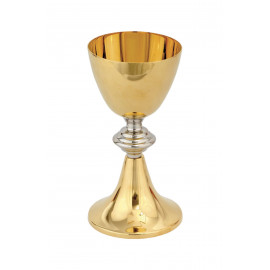
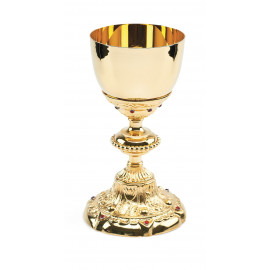
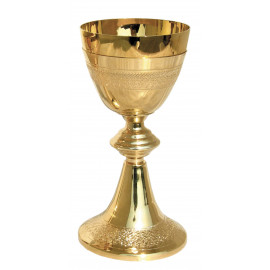
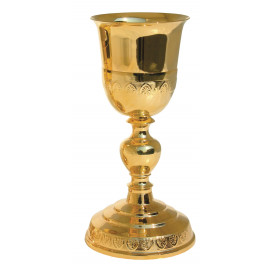
Brass chalices are the most common and affordable choice for parishes. They are durable, look great, and when gold-plated, they meet all the Church's requirements for sacred vessels. Most parishes I have worked with go with brass chalices — it is the sweet spot between quality, durability, and price. A good brass chalice can last for generations with proper care.
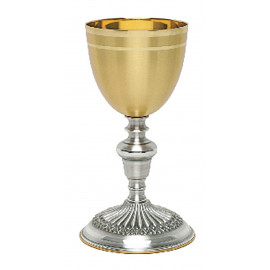
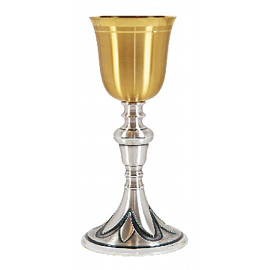
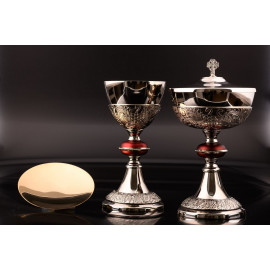
Silver-plated chalices give you a more elegant and refined appearance. They are usually a bit more expensive but the finish is stunning and appropriate for Sunday Mass, solemnities, and special liturgical celebrations. Silver-plated chalices are often chosen by churches that want something a step up from basic brass.
Solid silver or gold chalices are the premium option for cathedral churches and special occasions. These are typically custom-made or hand-crafted and can cost significantly more. They are beautiful, but honestly, a good brass chalice does the same job liturgically.
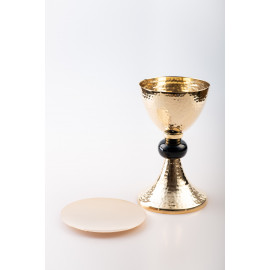
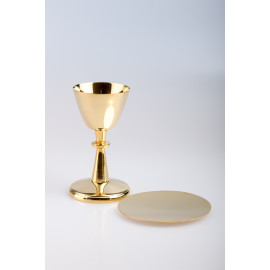
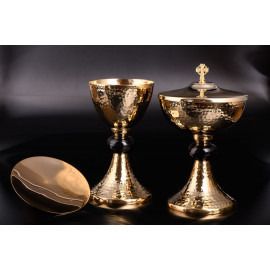
Chalice and paten sets — many churches buy a matching chalice and paten set for a unified look on the altar. Sets ensure the materials, finish, and decorative style coordinate perfectly.
How Do I Choose the Right Chalice for My Parish?
Here is what I tell people when they are picking out an altar chalice:
- Weight matters. A chalice that feels light and hollow will feel cheap. Look for something with some heft to it. A quality chalice should feel substantial in your hand.
- Check the plating. The gold or silver finish should be even, without bubbles, scratches, or thin spots. Look inside the bowl — that is where cheaper chalices cut corners.
- The base should be stable. A narrow base tips over too easily. Make sure it is wide enough to stay upright on the altar.
- Interior must be precious metal. Canon law requires the inside of the chalice (the part that touches the Precious Blood) to be gold or silver plated. This is non-negotiable for liturgical use.
- Consider the size. A standard chalice holds about 6-10 ounces of wine. Larger chalices are available for concelebrated Masses.
| Material | Price Range | Best For | Durability |
|---|---|---|---|
| Brass, gold-plated | $80–$200 | Daily Mass, new parishes | High |
| Silver-plated brass | $150–$350 | Sunday Mass, special occasions | High |
| Solid silver | $400–$800+ | Cathedral churches, gifts | Very High |
What Material Should a Chalice Be Made Of?
The General Instruction of the Roman Missal (GIRM) specifies that chalices should be made of precious metal. In practice, this means:
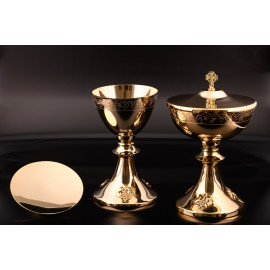
Brass with gold plating is the most popular choice for parishes. It is affordable, durable, and meets all liturgical requirements. The gold plating on the interior bowl ensures proper reverence for the Precious Blood.
Silver-plated brass offers a more elegant appearance while remaining affordable. The silver finish is beautiful and appropriate for solemn celebrations.
Solid silver is the traditional choice for cathedral churches and special occasions. It is expensive but stunning and will last for generations.
How Do You Care for a Chalice?
Looking after your chalice is not complicated. After each Mass, the priest or deacon wipes it with a purificator. For regular cleaning, use a soft cloth and mild soap if needed. Avoid abrasive cleaners — they will scratch the plating. Store it in a safe place, ideally in a sacristy cabinet or chalice case. If the plating starts to wear thin inside the bowl, it is time to have it re-plated. Do not wait until the base metal shows through.
What Are the Parts of a Liturgical Chalice?
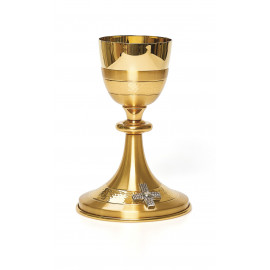
A liturgical chalice consists of four parts: the cup (bowl) that holds the wine, the stem, the knop — the knob at the middle of the stem — and the foot (base) that rests on the altar. The knop is not just decoration: it gives the priest a firm grip during the consecration and the elevation, which is why traditional chalices always have a pronounced node on the stem.
When you examine a chalice, check all four parts. The inside of the cup must be gold- or silver-plated, because that is the surface that touches the Precious Blood. The stem should feel solid, not hollow. The foot should be wide enough that the chalice stands steady on the altar — a narrow base tips over too easily, especially when the chalice is full.
Chalice Sizes — How to Choose the Right One
Our chalices range from 13 cm (5.1 in) mini and travel models to 26 cm (10.2 in) baroque sets. A standard communion chalice holds about 6–10 ounces of wine. As a rule of thumb: 16–18.5 cm chalices work well for daily Mass, 20–22 cm is the most popular size for Sunday Mass, and 22–26 cm suits solemn celebrations. Larger bowls are available for concelebrated Masses with several priests.
If you are buying for a parish, the 20–22 cm size with an 8–10 oz bowl is the safe choice — comfortable to hold and large enough for a normal congregation. For a travel kit or a sick-call set, a 13 cm mini chalice is the practical option.
Chalice Decoration and Symbolism
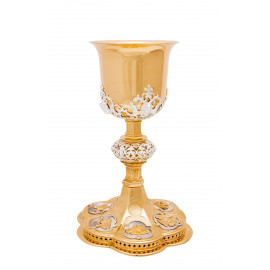
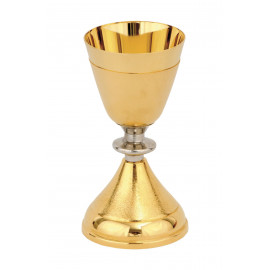
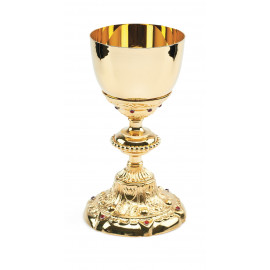
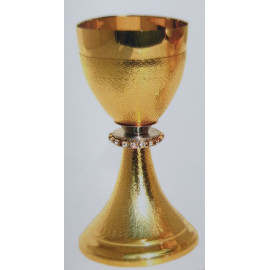
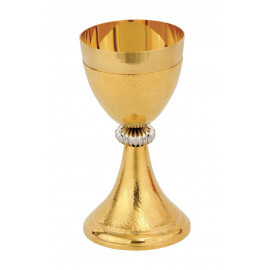
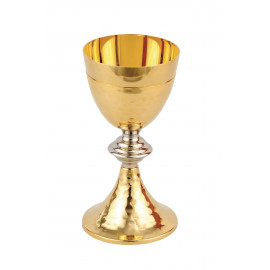
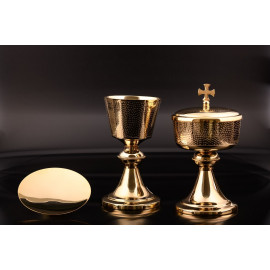
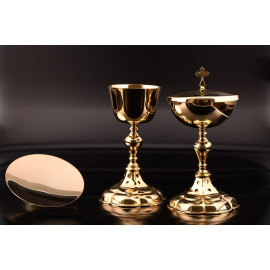
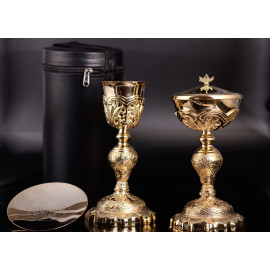
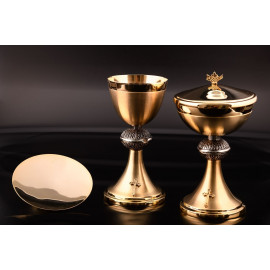
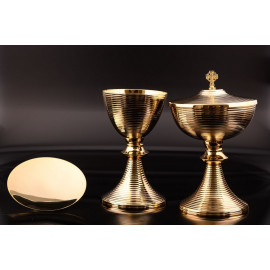
Chalices are traditionally decorated with Christian symbols that point to the Eucharist: the IHS monogram (the name of Jesus), the cross, grapevines and wheat, and on some designs the symbols of the four Evangelists. In our collection you will find chalices with hammered and fluted finishes, embossed patterns, two-tone gold/silver plating, Maltese crosses, satin gold plating, and baroque models set with imitation rubies.
The decoration is not only aesthetic — a chalice marked with the IHS monogram or a cross is instantly recognizable as a sacred vessel, and many parishes choose one design for daily Mass and a more ornate one for Sundays and solemnities.
Chalice Sets: Paten, Ciborium, and Case
A chalice is rarely used alone. On the altar it is paired with a paten — the small plate that holds the host — and in most parishes also with a ciborium for the communion of the faithful. We offer complete sets: chalice + paten, chalice + ciborium + paten, and full sets with carrying cases, so the materials and finish match perfectly.
Buying a set is usually the best value for a new parish or a complete sacristy renewal, and it also makes a memorable ordination gift or jubilee present for a priest. If you are unsure which combination you need, see our guide to the difference between a chalice and a paten.
Chalice Linens: Veil, Pall, Purificator, and Burse
The chalice works together with a set of linens and covers: the chalice veil covers the prepared chalice before Mass, the pall rests on the cup, the purificator is used to wipe the chalice during Mass, and the burse carries the corporal. Many parishes order them as a chalice linen set in the liturgical color of the season.
Frequently Asked Questions About Chalices
Q: Can I use any cup as a chalice?
A: Technically, the Church requires that chalices be made of precious metal (or at least lined with it). While any cup could hold wine, using a proper chalice shows reverence for the Eucharist and follows liturgical law as specified in the GIRM.
Q: How much should a good chalice cost?
A: For most parishes, a $100–$200 brass chalice with gold plating offers excellent quality. You do not need to spend hundreds unless you want something custom or solid silver. A quality brass chalice can last for decades with proper care.
Q: Does a chalice need to be blessed?
A: Yes, chalices should be blessed by a bishop or priest before use. The blessing sets the vessel apart for sacred use and is a requirement for liturgical vessels.
Q: How many chalices does a parish need?
A: At minimum, one chalice for Mass. Many parishes have two or more — a simpler one for daily Mass and a more ornate one for Sundays and solemnities. Having a backup chalice is also practical in case one needs cleaning or repair.
Q: Do Catholic chalices have to be gold?
A: No. The Church requires that a chalice be made of precious metal, or at least that the inside of the cup — the part that touches the Precious Blood — be lined with precious metal. In practice, a brass chalice with a gold-plated interior fully meets this requirement. Solid gold chalices exist, but they are not necessary for a reverent celebration of Mass.
Q: What is a traditional Catholic chalice?
A: A traditional Catholic chalice has a gold- or silver-plated cup, a stem with a knop for a secure grip, and a wide, stable foot — often decorated with the IHS monogram, a cross, or vine and wheat motifs. Traditional designs include baroque and gothic styles; our brass vs silver chalice guide explains which materials parishes usually choose.
Q: What chalice did Jesus use at the Last Supper?
A: The Gospels do not describe the cup used at the Last Supper — Scripture says only that Jesus "took a cup." Several churches, most famously the Cathedral of Valencia, preserve cups venerated as the Holy Chalice, but the Church has never defined which one it was. What matters for the liturgy is that the chalice used at Mass continues the cup of the Last Supper, which is why it is treated with such reverence.
Q: What is the difference between a chalice and a ciborium?
A: Both are sacred vessels, but they serve different purposes: the chalice holds the wine that becomes the Blood of Christ, while the ciborium is a covered vessel that holds the consecrated hosts. A chalice has a tall stem and a cup shaped for pouring; a ciborium is wider and shallower, with a lid. See our full comparison: chalice vs ciborium.
Browse Our Chalice Collection
Take a look at our full selection of liturgical chalices. We carry brass, silver-plated, and solid metal options at every price point. Every chalice in our collection meets the Church's requirements for sacred vessels. Whether you are outfitting a new parish or replacing an old chalice, you will find something that fits your needs and budget. We also offer matching patens and complete chalice sets.
Chalice Guides and Resources
Want to go deeper before you choose? These guides answer the most common questions we get from parishes and priests:
- How to clean and polish a chalice
- Brass vs silver chalice — which is better for your parish?
- Gold-plated vs silver-plated chalice
- Chalice and paten — how they are used together
- Chalice vs ciborium — what's the difference?
- The complete guide to Catholic altar vessels
- How to store sacred vessels safely
- The ultimate gift guide for priests
For the washing of hands at Mass, pair your chalice with a matching lavabo set — the ewer and basin used at the Lavabo rite before the Consecration.