
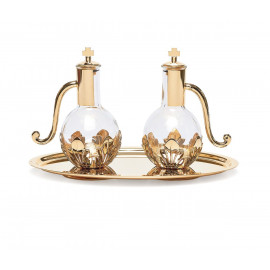
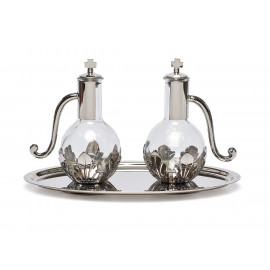
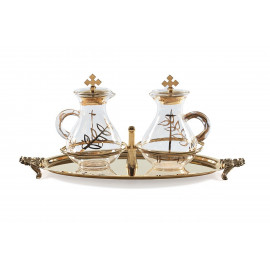
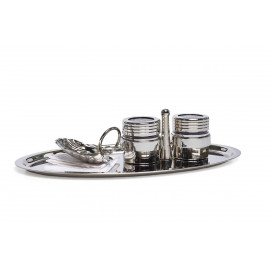
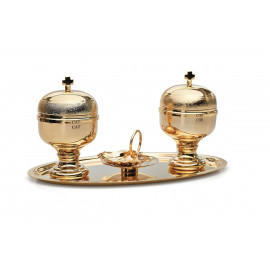
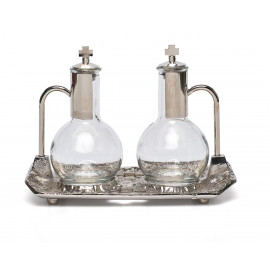
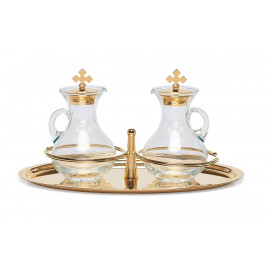
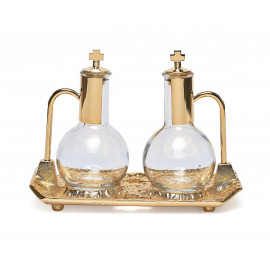
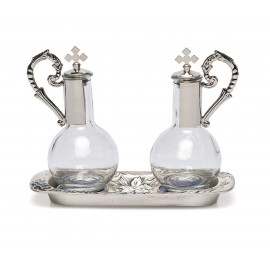
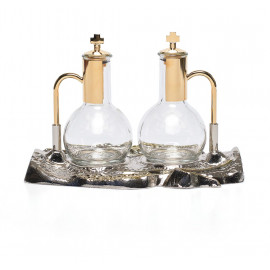
What Are Liturgical Cruets?
Altar cruets — also called Mass cruets or communion cruets — are the small stoppered jugs that carry the wine and water offered at Mass. The General Instruction of the Roman Missal places them among the vessels brought to the altar during the Offertory procession. Every complete set holds two cruets: one for the wine that becomes the Precious Blood, and one for the water that the priest adds to the chalice and uses for the ablution. They are among the most used sacred vessels in any parish, so parishes usually keep several sets on the credence table and in the sacristy.
Components of a Cruet Set
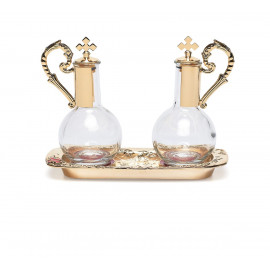
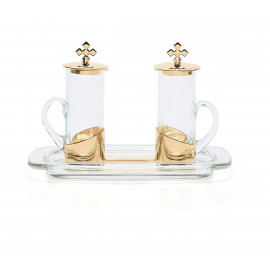
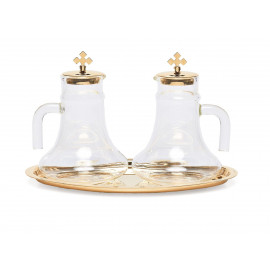
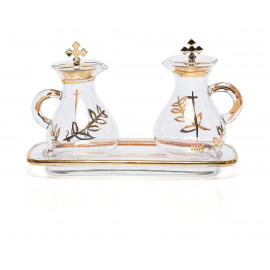
A standard liturgical cruet set consists of the following:
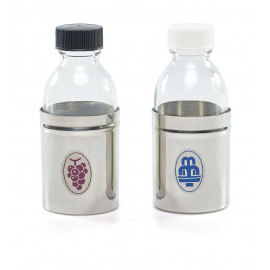
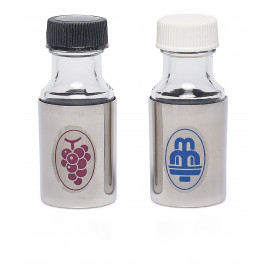
- Wine cruet — typically marked with a "V" (vinum) or a red indicator, or fitted with a red-glass body.
- Water cruet — typically marked with an "A" (aqua) or a blue indicator.
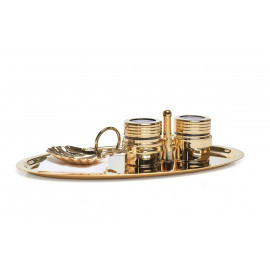
- Cruet tray — a decorative tray that holds both cruets during the Offertory procession and protects the altar and credence table.
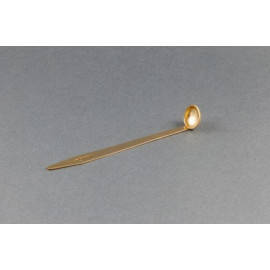
- Optional accessories — a stopper or lid for each cruet, a small water spoon, and sometimes a funnel.
The tray is not merely ornamental: it keeps drips of wine and water off the sanctuary floor and lets the server carry both cruets in a single, dignified motion. Catholic Supply and most sacristans treat the set — two cruets plus tray — as a single unit for ordering and storage.
Materials: Glass, Crystal, Brass & Silver
Cruets are made in several materials, each with its own character and price:
- Glass and crystal — the most common choice, because the clear body and capacity gradations let the sacristan check the fill level at a glance. Hand-blown crystal sets are the traditional standard in American churches.
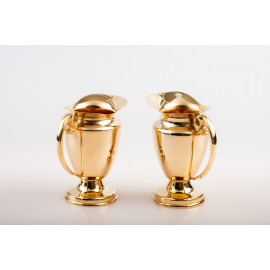
- Brass — durable and economical, often polished to a high shine; brass cruets pair well with traditional altars.
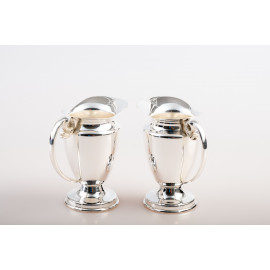
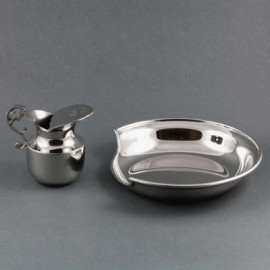
- Silver-plated — for solemn feasts and cathedrals, chosen for its brightness and weight.
- Ceramic and stoneware — a smaller category favored for its Italian craft tradition.
Because clear glass reveals the color of the contents, the wine cruet is frequently made in red glass and the water cruet in clear or blue glass, so the two are never confused even in dim sacristy light. Italy remains the leading source of hand-made liturgical cruets, and several of the sets we carry are produced in historic Italian workshops.
How Cruets Are Used at Mass
At the Offertory, an altar server carries the cruets and tray to the credence table and presents the wine cruet to the priest, who pours the wine into the chalice. The server then presents the water cruet so the priest can add a few drops of water — a symbol of the faithful united to Christ. After Communion, the priest purifies the chalice using the water cruet, and any remaining wine and water are consumed. Because the cruets touch the sacred species, they are treated as sacred vessels: they should be handled reverently, kept only for liturgical use, and never used for everyday liquids.
Care & Cleaning
Glass and crystal cruets should be hand-washed with mild detergent and warm water, then dried immediately to prevent water spots and mineral haze. Metal cruets should be polished regularly with a soft cloth and non-abrasive polish to preserve their luster; silver-plated sets should also be stored in a tarnish-resistant pouch. Stoppers and spouts should be rinsed after every Mass, since dried wine leaves a sticky film that can crack glass or discolor metal. Never wash cruets in a dishwasher, and never store them filled.
How to Choose a Cruet Set
When you choose, match the material to your altar's furnishings and to how often the set will be used. Glass or crystal suits daily Mass and lets servers see the fill level; brass or silver-plated suits solemn celebrations and traditional sanctuaries. Check the capacity (from around 30 ml for individual communion sets up to full-size Mass cruets) and confirm the set includes a matching tray — a tray is what makes the set practical for the Offertory procession. Sets with clearly marked or color-coded wine and water cruets reduce the risk of mix-ups for new altar servers.
What are cruets used for during a Catholic Mass?
Cruets hold the wine and water used at Mass. At the Offertory the wine is poured into the chalice and becomes the Precious Blood at the Consecration; the water is added to the chalice and later used in the priest's ablution and the purification of the vessels.
What is the purpose of cruets in the Catholic Church?
The purpose of cruets is to carry and present the bread's wine and the water reverently to the altar. They are among the vessels named in the Order of Mass and are kept on the credence table so the Offertory can be performed with dignity and without delay.
What is the difference between a cruet, a ciborium and a paten?
A cruet is a small jug for wine and water; a ciborium is a lidded vessel that holds the consecrated hosts; a paten is the flat plate that holds the bread and, in many altars, rests on top of the chalice. Each has a distinct role, and a complete altar vessel set includes all three types.
How much wine and water do cruets hold?
Capacity ranges from small 30 ml and 125 ml bottles used for individual or travel communion sets up to full-size Mass cruets that hold hundreds of millilitres. For a normal parish Mass, a set of full-size cruets on a tray is standard; small bottles are handy for the Communion of the sick and for outdoor liturgies.
Are cruets marked for wine and water?
Yes. The wine cruet is usually marked "V" (vinum) or coloured red, and the water cruet "A" (aqua) or coloured blue or clear. Marking or colour-coding the two cruets prevents the server or priest from confusing them during the Offertory.
What is the priest's ablution and how do cruets relate to it?
The ablution is the washing of the priest's fingers and the purification of the chalice after Communion. Water from the cruet is poured over the priest's fingers and into the chalice; cruets therefore supply the water used in this rite, which is why they are treated as sacred vessels.
Can cruets be used for baptism and the Communion of the sick?
Yes. Small cruets, often paired with a baptismal bowl or pitcher, are widely used to carry the water for baptism and for the Communion of the sick, where a compact set is easier to transport than full-size Mass cruets.
What is a cruet tray for?
The tray holds both cruets together so a server can carry them in one trip and keeps drips of wine and water off the altar, credence table and floor. A matching tray also gives the set a finished, unified look on the sanctuary.
How should cruets be stored between Masses?
Empty the cruets, rinse the stoppers and spouts, dry everything thoroughly, and store the set — with its tray — in a closed sacristy cupboard reserved for sacred vessels. Do not store cruets filled, and keep silver-plated sets in a tarnish-resistant pouch or bag.
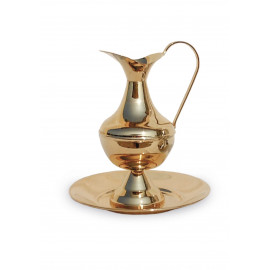
Every sanctuary also needs a lavabo set — the ewer and basin for the washing of the priest's hands at Mass — and lavabo towels to complete the cruets and trays kept on the credence table. Pair your cruets with a chalice and holy oil stock for a fully furnished altar.
