
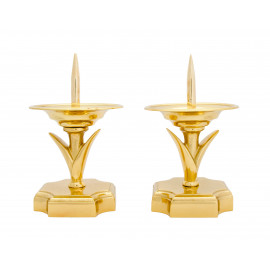
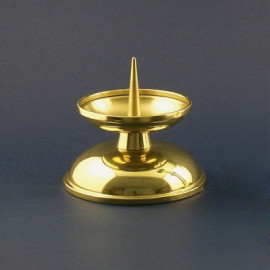
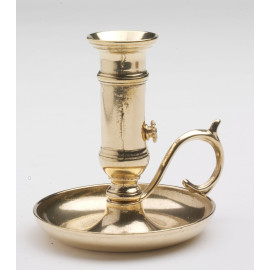
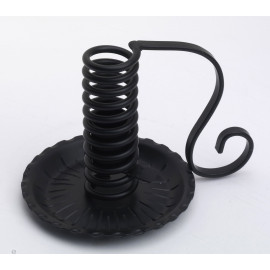
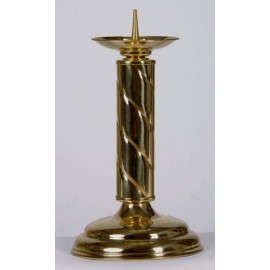
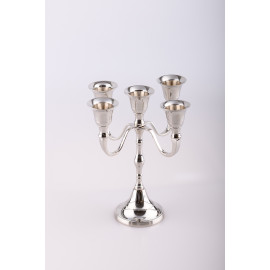
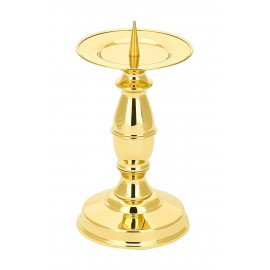
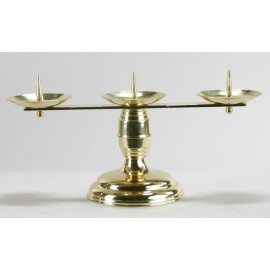
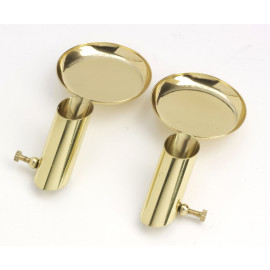
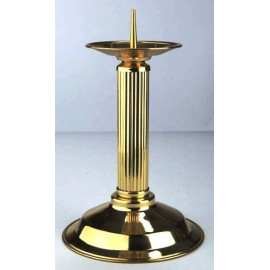
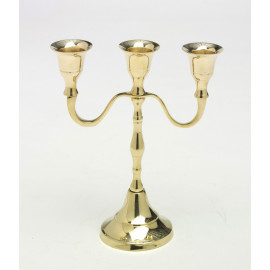
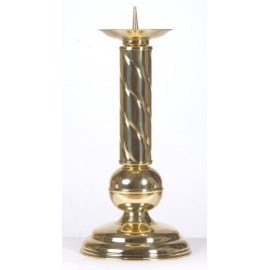
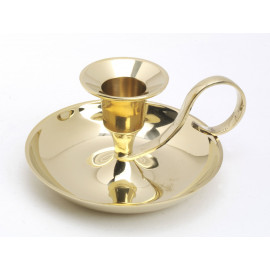
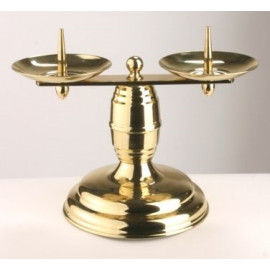
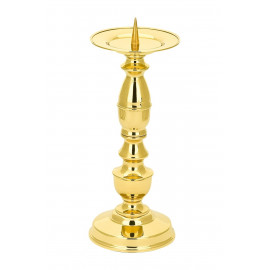
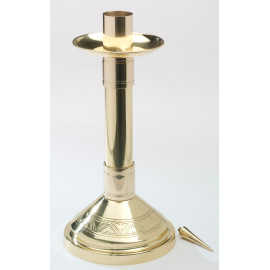
What Are Altar Candlesticks?
Altar candlesticks are the liturgical candle holders placed on or near the altar during Mass and other services. They are not decorative extras: the General Instruction of the Roman Missal (GIRM, no. 117) requires candlesticks with lighted candles at every Mass — at least two, and four or six on Sundays and solemnities. The candle itself symbolizes Christ, the Light of the World, while the candlestick exists to hold it safely, steadily and worthily.
Our collection includes 49 altar candlesticks from 4 cm to 55 cm, priced from $32 to $406. You will find single altar candlesticks, pairs and sets, pricket holders, multi-candle designs, acolyte candlesticks and small holders for side altars and home prayer corners. Most pieces are made of brass sheet, cast brass or solid brass, polished and then lacquered and heat-baked so that they keep their finish with normal sacristy care.
Altar Candlestick vs Candelabra vs Pricket vs Acolyte vs Paschal
The words are often used interchangeably, but they describe different objects. The table below shows the difference at a glance.
| Type | What it holds | Where it is used |
|---|---|---|
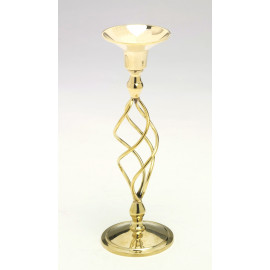
| Altar candlestick | One candle, usually in a socket | On or near the altar; side altars; chapels |
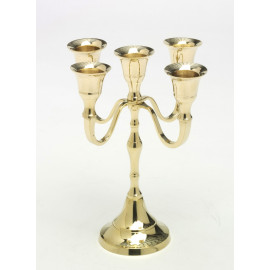
| Candelabra | Two or more candles on one base | High Mass, Benediction, adoration, processions |
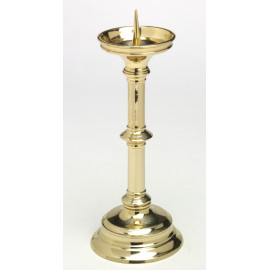
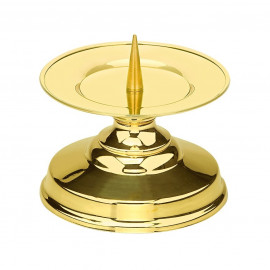
| Pricket | One taper impaled on a metal spike | Side altars, home altars, slim candles |
| Acolyte candlestick | One candle or oil insert, carried by a server | Processions, Gospel procession, server ministry |
| Paschal candlestick | The large Paschal candle | Easter Vigil, Eastertide, baptisms, funerals |
| Sanctuary lamp | Oil or candle, usually red | Near the tabernacle; marks the Blessed Sacrament |
A single candlestick is the standard on the altar itself; a candelabra is chosen when more light or a more solemn display is wanted. A pricket is a candlestick with a spike instead of a socket, and an acolyte candlestick is designed to be carried. The Paschal candlestick is a tall stand for the Easter candle, and the sanctuary lamp is a separate vessel that burns near the tabernacle.
How Many Candles Should Be on a Catholic Altar?
GIRM 117 sets the minimum: at least two lighted candles for any Mass. Four or six are customary for Sunday Mass and solemnities, and the older custom of seven candles is still followed in many places when the diocesan bishop celebrates. The number is not arbitrary — it signals the solemnity of the celebration and the presence of Christ in the liturgy.
| Celebration | Usual number of candles |
|---|---|
| Weekday Mass | At least 2 |
| Sunday Mass | 4 or 6 |
| Solemnity or very solemn celebration | 6 (or more where customary) |
| Mass celebrated by the diocesan bishop | 7 in the older custom |
For a parish, the practical choice is usually a set of two, four or six matching candlesticks. A set should be equal in height and design; a mismatched pair is immediately visible in photographs and in the sanctuary. If you are buying for a side altar or a chapel, two candlesticks are enough.
Why Are There Six Candles on a Catholic Altar?
Six candles are a sign of solemnity. The fuller light expresses the Church's joy on Sundays and the greatest feasts, and the arrangement usually places three candles on each side of the cross. The custom grew from the ancient Roman practice of honoring the pope and bishops with seven candles, which is why seven may still be used when a bishop celebrates.
What Do the Candles on the Altar Symbolize?
The candles represent Christ as the Light of the World, the joy of the Resurrection, and the prayers of the faithful rising to God. They also express vigilance and reverence: the flame is living light, not a decoration, which is why the Church asks for real candles rather than imitation flames at Mass.
Which Candle on the Altar Is Lit First?
Customs vary. In many sacristies the candles are lit from the cross outward, so that the candles nearest the cross are lit first and the outer candles last. The safest rule is to follow the practice of your parish and to light the candles before the celebration begins. Never blow a candle out in the sanctuary; use a candle snuffer to avoid splashing wax and smoke.
Parts of an Altar Candlestick
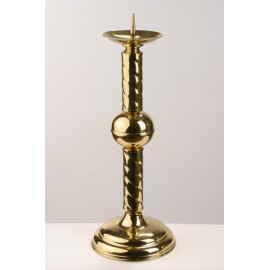
A well-made candlestick has a stable base, a stem, a node or knop for handling, and a socket or pricket for the candle. The base carries the weight; the stem gives height; the node makes the piece easier to lift; the socket holds the candle upright. Many liturgical candlesticks also have a drip pan to catch wax and a candle follower — a metal disc that slides down the candle as it burns.
What Is a Candle Follower?
A candle follower is a metal disc with a hole in the centre that sits on top of the candle and slides down as the candle burns. It reduces wax drips, keeps the flame centred and makes the candle burn more evenly. Followers are sized to the candle diameter, so order them together with the candles or check the socket size before buying.
Altar Candlestick Sizes: From 5 cm to 55 cm
Height is the first decision. Small candlesticks suit side altars, home altars and slim candles; medium candlesticks are the working size for most parish altars; large candlesticks are made for cathedrals, high altars and solemn celebrations. The table below uses the real range in our collection.
| Size band | Best for | Products | Price range |
|---|---|---|---|
| Small: 4–15 cm | Side altars, home altars, Advent wreaths, St. Blaise blessing, slim candles | 20 designs | $32–$379 |
| Medium: 16–30 cm | Parish altars, chapels, pairs, three- and five-candle sets | 19 designs | $77–$363 |
| Large: 31–55 cm | Cathedrals, high altars, solemn Mass, solid brass | 10 designs | $222–$406 |
How Tall Should Altar Candlesticks Be?
There is no single rule, but proportion matters. On a parish altar, candlesticks between 15 cm and 30 cm are the common working size; on a high altar or cathedral, 30–55 cm gives the candles the presence they need. The candlesticks should be tall enough to be seen from the nave but not so tall that they hide the crucifix or the altar cross. Pairs must be exactly equal in height.
What Is a 5-Inch Altar Candlestick?
A 5-inch candlestick is about 12.7 cm high. In our collection the closest sizes are the 12 cm brass holders and the 15 cm altar candlesticks. They are used for slim candles, side altars, home prayer corners and small chapels where a full-height candlestick would be out of proportion. If a product description gives both centimetres and inches, trust the centimetres and measure your candle before ordering.
Socket and Candle Fit: 7/8", 1½", 2", 3", and 4 cm
The socket is the cup at the top of the candlestick. Its inner diameter must match the candle diameter, with a little clearance so the candle can be seated without forcing. Common liturgical sockets are 7/8 inch (about 2.2 cm), 1½ inch (about 3.8 cm), 2 inch (about 5 cm) and 3 inch (about 7.6 cm). Some of our candlesticks use a 4 cm socket; others use a pricket for taper candles.
- 7/8 inch — standard taper and many devotional candles.
- 1½ inch — the common parish altar candle.
- 2 inch and 3 inch — larger altar and cathedral candles.
- 4 cm — the socket on our brass candlestick with a 4 cm opening.
- Pricket — a spike for candles that are pressed onto the holder, usually slim tapers.
How Do I Measure a Candlestick Socket?
Measure the inside diameter of the socket, not the outside. Use a ruler or calipers across the widest internal point, and compare it with the diameter of the candles you intend to use. If the candle is slightly narrow, a candle follower or a socket insert can take up the slack; if it is too wide, the candle will sit unstable and drip. When in doubt, choose a pricket or ask us before ordering.
What Is a Pricket Candlestick?
A pricket candlestick has a sharp metal spike instead of a socket. The candle is pressed onto the spike, which holds it upright from below. Pricket holders are simple, stable and ideal for slim taper candles. Our 9 cm brass pricket and 6 cm pricket with drip pan are the two smallest examples in the collection.
Materials and Finishes: Brass, Bronze, Gold-Plated, Nickel, Silver, and Wood
Brass is the workhorse of the sacristy: durable, warm in tone and easy to maintain. Bronze is darker and heavier, and it ages with a rich patina. Gold plating gives a liturgical finish for solemn settings; nickel and chrome plating give a bright silver look; silver plate is traditional for the finest pieces. Wood is lighter and quieter, and it suits chapels and home altars.
| Material or finish | Look | Care | Best for |
|---|---|---|---|
| Brass sheet | Warm gold, lighter weight | Dust; wipe wax; avoid abrasives on lacquer | Parish altars, side altars, value |
| Cast brass | Solid detail, medium weight | Dust; mild soap; soft cloth | Ornate designs, prickets |
| Solid brass | Heavy, stable, premium | Dust; occasional polish if unlacquered | Cathedrals, high altars, large sets |
| Bronze | Dark, patinated, heavy | Dry cloth; avoid harsh chemicals | Traditional and antique-style settings |
| Gold-plated | Bright liturgical gold | Special cloth; no abrasive polish | Solemn altars, cathedrals |
| Nickel or chrome | Bright silver | Soft cloth; mild soap | Modern chapels, silver-look sets |
| Silver plate | Soft silver sheen | Silver cloth; avoid water spots | Fine altars, formal settings |
| Wood | Matte, warm, light | Dry cloth; keep away from wax | Chapels, home altars, rustic interiors |
What Is the Difference Between Brass Sheet and Solid Brass?
Brass sheet is formed from sheet metal; it is lighter and less expensive, and it is the usual material for large parish sets. Solid brass is cast or machined from solid metal; it is heavier, more stable and more expensive. Our solid brass candlesticks weigh about 2 kg at 32–40 cm and about 4 kg at 55 cm, which makes them very stable on a high altar.
Why Are Brass Candlesticks Lacquered?
The lacquer — sometimes called vernix — seals the polished brass so that it does not tarnish quickly. Our brass pieces are polished, coated with a clear lacquer and heat-baked, which gives a durable finish that needs only dusting and occasional wiping. Do not use abrasive polish on a lacquered candlestick; it will cut through the coating and leave dull patches.
Brass vs Bronze vs Gold-Plated
Choose brass for the best balance of price, weight and maintenance; it is the standard for parish use. Choose bronze when you want a darker, older, more monumental look and you are prepared for a heavier piece. Choose gold-plated brass when the altar calls for a bright liturgical finish and the budget allows it. Nickel or chrome plating is the practical choice for a silver look without the cost of silver.
Pricket Candlesticks: What They Are and When to Use Them
A pricket candlestick holds a candle on a spike rather than in a socket. The form is ancient, and it is still practical: there is no socket to match, the candle sits straight, and the spike works with a wide range of taper diameters. Pricket holders are often used on side altars, in chapels, in home prayer corners and for devotional candles. Our pricket models are 6 cm and 9 cm high, both in polished brass with a lacquered finish; the 6 cm model has a drip pan.
Acolyte and Processional Candlesticks
Acolyte candlesticks are the tall candlesticks carried by altar servers in processions. They are usually lighter than altar candlesticks, with a long stem and a base that is easy to grip. Some models use an oil insert rather than a wax candle. Our 44 cm acolyte candlestick has a 180 ml oil insert and a 16 cm lamp shade; with the shade it stands 44 cm high. It is sold as a single piece, so order two for a procession.
Altar Candelabra and Multi-Candle Holders
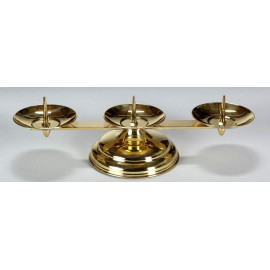
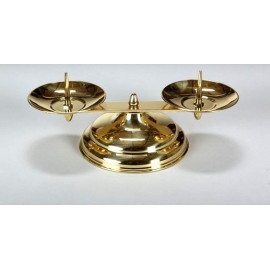
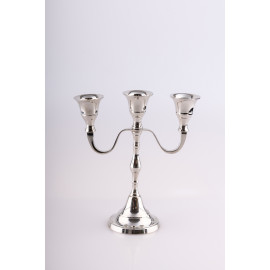
A candelabra carries two or more candles on one base. It is used where more light or a more solemn display is wanted: High Mass, Benediction of the Blessed Sacrament, Eucharistic adoration and processions. Our collection includes a brass candelabrum, a double altar candlestick and a triple altar candlestick, as well as three-candle and five-candle candlesticks for lean candles.
What Is the Difference Between a Candlestick and a Candelabra?
A candlestick holds a single candle. A candelabra is a branched holder that carries two or more candles on one base. Both are liturgical objects; the candelabra is used where more light is wanted, while single candlesticks remain the standard on the altar itself. The word candelabrum is the Latin singular; candelabra is often used for the plural or for the object itself.
Paschal Candlestick and the Easter Vigil
The Paschal candle is the large candle blessed and lit at the Easter Vigil. It stands in a tall holder — the Paschal candlestick — and remains in the sanctuary throughout Eastertide; after Pentecost it is usually moved to the baptistery and lit at baptisms and funerals. The stand must be stable, tall enough to make the candle visible, and designed so that the candle can be replaced safely.
What Is a Paschal Candlestick?
A Paschal candlestick is a tall stand made to hold the Paschal candle. It is usually between 1.2 m and 1.8 m high, with a wide base and a socket sized to the candle. It is not the same as an altar candlestick: the Paschal candle is much larger, and the stand is a permanent piece of sanctuary furniture. For the candle itself — its meaning, blessing and decoration — see our Paschal Candle guide.
How to Choose Altar Candlesticks for Your Church
Start with the number of candles the celebration requires, then work through height, socket, material, stability and style. A practical checklist:
- Count the candles. Two for weekday Mass, four or six for Sundays and solemnities, seven where the bishop's custom is followed.
- Measure the altar. Candlesticks should be in proportion to the altar and the crucifix; pairs must be equal in height.
- Match the socket to the candle. Measure the candle diameter and the socket's inner diameter.
- Choose the material. Brass for parish work, solid brass for large altars, bronze for a darker look, gold plate for solemn settings.
- Check stability. A wide, weighted base matters more than ornament; a tall candlestick with a small base is a safety risk.
- Buy in sets. Two, four or six matching pieces look correct and simplify storage and replacement.
- Plan the care. Lacquered brass needs dusting; unlacquered brass needs occasional polish; gold plate needs a soft cloth only.
Should Altar Candlesticks Be Bought in Pairs?
Yes, for the altar. Candlesticks are read as a pair or a set, and a height or design mismatch is immediately visible. Buy two for a side altar, four or six for a parish altar, and a single piece only for a chapel, a home altar or a specific devotional use.
How Stable Should an Altar Candlestick Be?
It should not rock or tip when a candle is inserted or lit. Look for a wide base, a weighted foot and a socket that holds the candle vertically. Solid brass models at 2–4 kg are the most stable; sheet-brass models are lighter, so check the base diameter and avoid very tall, narrow designs in busy sacristies.
Altar Candlestick Prices
In our collection, small candlesticks (4–15 cm) run from $32 to $379, medium candlesticks (16–30 cm) from $77 to $363, and large candlesticks (31–55 cm) from $222 to $406. Multi-candle pieces run from about $238 to $363. The price reflects the material, the weight, the amount of handwork and the finish.
| Type | Typical price | What drives the price |
|---|---|---|
| Small pricket or slim-candle holder | $32–$96 | Size, simple construction |
| Medium altar candlestick | $77–$298 | Height, socket, brass weight |
| Large solid brass candlestick | $290–$406 | Solid brass, gold plating, 2–4 kg |
| Double or triple candlestick | $322–$363 | Multiple sockets, wider base |
| Acolyte candlestick with oil insert | $266 | Oil insert, shade, portability |
Why Do Altar Candlestick Prices Vary So Much?
Two candlesticks of the same height can differ by hundreds of dollars because one is made of thin brass sheet and the other of solid cast brass. Weight, hand-finishing, gold plating, the number of sockets and the complexity of the design all affect the price. For parish use, the heavier piece is usually the better long-term buy because it is more stable and more resistant to dents.
Are Cheap Brass Candlesticks a False Economy?
Sometimes. A very light candlestick with a small base can tip, and thin lacquer can wear through at the socket. For occasional home use, a light piece is fine; for a parish sacristy, choose a weighted base and a socket that fits your candles. The cost of replacing a fallen candle and damaged vestments is higher than the difference in price.
How to Clean and Care for Brass and Gilded Candlesticks
Dust weekly with a soft cloth. Remove wax after the candle has cooled: let it harden, lift it with a plastic scraper, then wipe with warm water and a little mild soap. Never use a knife, a scouring pad or an abrasive polish on a lacquered or gold-plated surface. Dry the piece immediately and store spare candlesticks wrapped in soft cloth so that the bases do not knock together.
How Do I Remove Candle Wax from a Brass Candlestick?
Wait until the wax is cool and hard. Lift the bulk with a plastic scraper or your fingernail, then soften the residue with a cloth dipped in warm — not boiling — water. A little mild soap helps. Avoid sharp metal tools, and do not use a heat gun on lacquered brass; the lacquer can blister.
Do Brass Altar Candlesticks Need Polishing?
Lacquered brass needs no polish; dusting and a damp cloth are enough. Unlacquered brass will tarnish and can be polished with a brass polish, but test on a hidden area first. Gold-plated and silver-plated pieces should be cleaned only with products made for those finishes.
Antique and Used Altar Candlesticks: What to Check
Antique candlesticks can be beautiful and well made, but they need a careful inspection. Check that the base is flat and does not rock, that the socket is not worn oval, that there are no cracks or old solder repairs, and that the piece is heavy enough for its height. If the lacquer is flaking, the brass underneath may be pitted. Antique pieces may also be smaller than modern candles expect, so measure the socket before buying candles.
Are Antique Altar Candlesticks Safe to Use?
They can be, if they are stable and structurally sound. A wide base, a secure socket and a sound stem are the essentials. Have any loose joints repaired by a metalsmith before use, and do not use a candlestick that rocks or has a cracked base. For a parish, a new solid brass piece is often the safer choice; for a home or a historic chapel, a well-inspected antique can be appropriate.
Why Buy Altar Candlesticks from Best Catholic Shop
We stock 49 altar candlesticks in one place, from small pricket holders to 55 cm solid brass candlesticks, with prices from $32 to $406. The collection includes brass sheet, cast brass and solid brass, gold-plated and nickel-plated finishes, single pieces, pairs, double and triple candlesticks, acolyte candlesticks and multi-candle designs. Several models are made by a Polish brass workshop; the product description states the origin where it is known.
Every piece is packed for shipping and can be combined with the rest of the sanctuary: candle snuffers, sanctuary bells, sanctuary lamps, altar crosses, altar cloths, chalice linens, menorahs and reliquaries. Free shipping applies to orders over $100; see the shipping page for lead times.
Frequently Asked Questions
Q: What are altar candles called?
A: Altar candles are simply called altar candles. The holder is an altar candlestick or altar candle holder; a branched holder is a candelabra; a holder with a spike is a pricket; the tall stand for the Easter candle is a Paschal candlestick.
Q: What are the candle holders in a church called?
A: They are called candlesticks or altar candlesticks. A single holder is a candlestick, a branched holder is a candelabra, a spike holder is a pricket, and the large stand for the Paschal candle is a Paschal candlestick. The lamp near the tabernacle is a sanctuary lamp.
Q: What are acolyte candlesticks?
A: Acolyte candlesticks are the tall candlesticks carried by altar servers in processions. They are lighter than altar candlesticks and may use a wax candle or an oil insert. Our 44 cm acolyte candlestick has a 180 ml oil insert and a 16 cm shade.
Q: What size candle fits my candlestick?
A: Measure the inside diameter of the socket and match it to the candle diameter. Common sizes are 7/8 inch, 1½ inch, 2 inch and 3 inch; some of our holders use a 4 cm socket or a pricket. If the candle is slightly narrow, a candle follower or insert can help.
Q: Do altar candlesticks need maintenance?
A: Lacquered brass needs only dusting and occasional wiping. Unlacquered brass needs occasional polishing. Gold-plated and silver-plated pieces should be cleaned only with products made for those finishes. Store spare pieces wrapped in soft cloth.
Q: Can I use LED or oil candles in altar candlesticks?
A: Battery LED candles are not a liturgical substitute for lighted candles at Mass. Oil or liquid-wax candles may be used where the diocesan bishop permits them, and the holder must be designed for the insert. Check the socket or insert size before buying.
Q: Are antique altar candlesticks worth buying?
A: They can be, if the base is stable, the socket is sound and there are no cracks or old repairs. Antique pieces may be smaller than modern candles expect, so measure the socket first. For parish use, a new solid brass candlestick is often the safer choice.
Related Reading
Continue with our guides: how many candles on a Catholic altar, altar candlestick buying guide, candlestick vs candelabra, what is a pricket candlestick, how to clean brass altar candlesticks, altar candlestick size guide, acolyte and processional candlesticks, Paschal candlestick guide and Paschal Candle guide.
For the rest of the sanctuary, see candle snuffers, sanctuary bells, sanctuary lamps, altar crosses, altar cloths and reliquaries.
