





What Is an Embroidered Dalmatic?
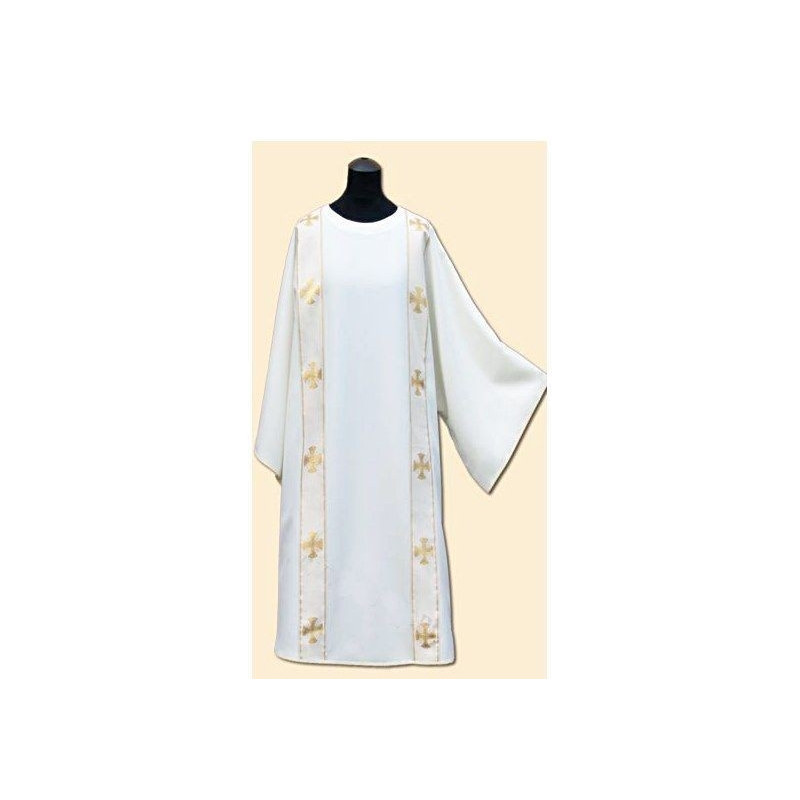
An embroidered dalmatic is the wide-sleeved outer vestment worn by deacons in the Catholic Church — the deacon's counterpart to the priest's chasuble. It is worn over the alb and the stole at Mass, and it changes colour with the liturgical season, just like the chasuble.
The dalmatic takes its name from Dalmatia, the Roman province on the eastern Adriatic coast where this long tunic first became popular in the 4th century. By the early Middle Ages it had become the proper vestment of the deacon, symbolising the joy of the diaconate and the charity that should mark the deacon's service of the Gospel, the altar and the poor.
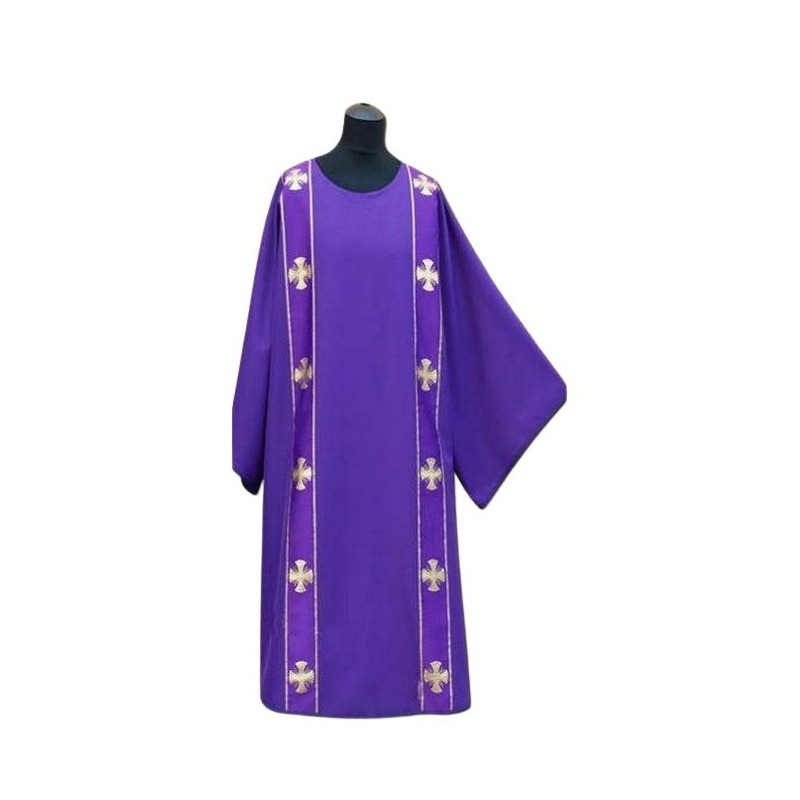
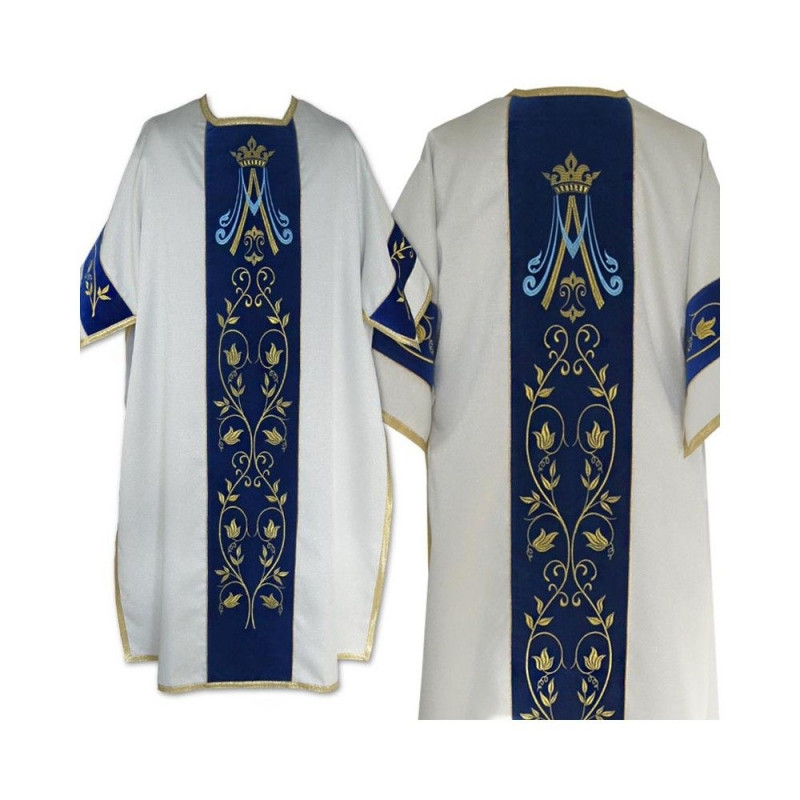
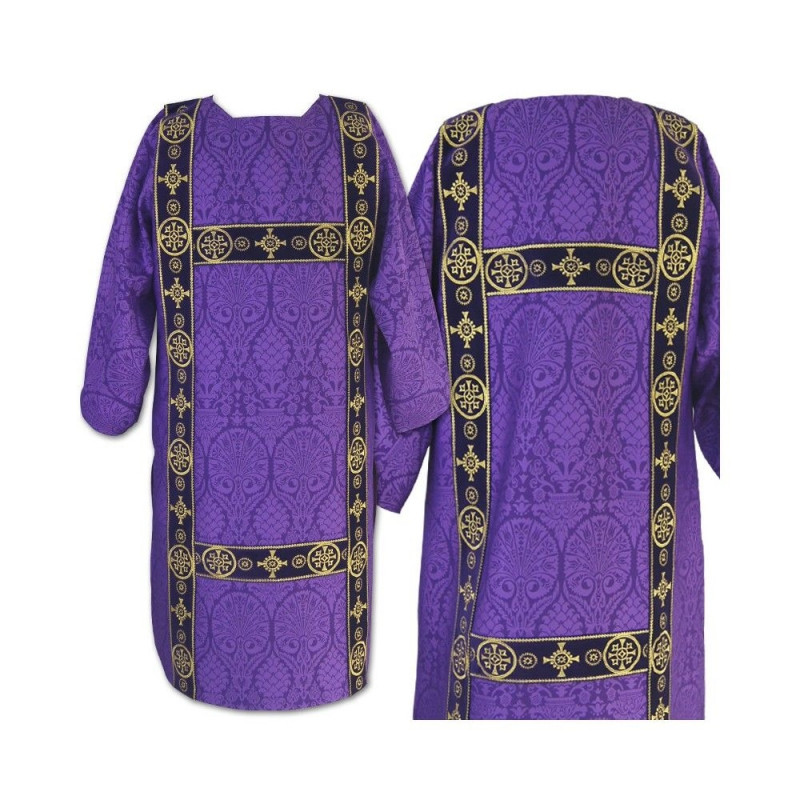
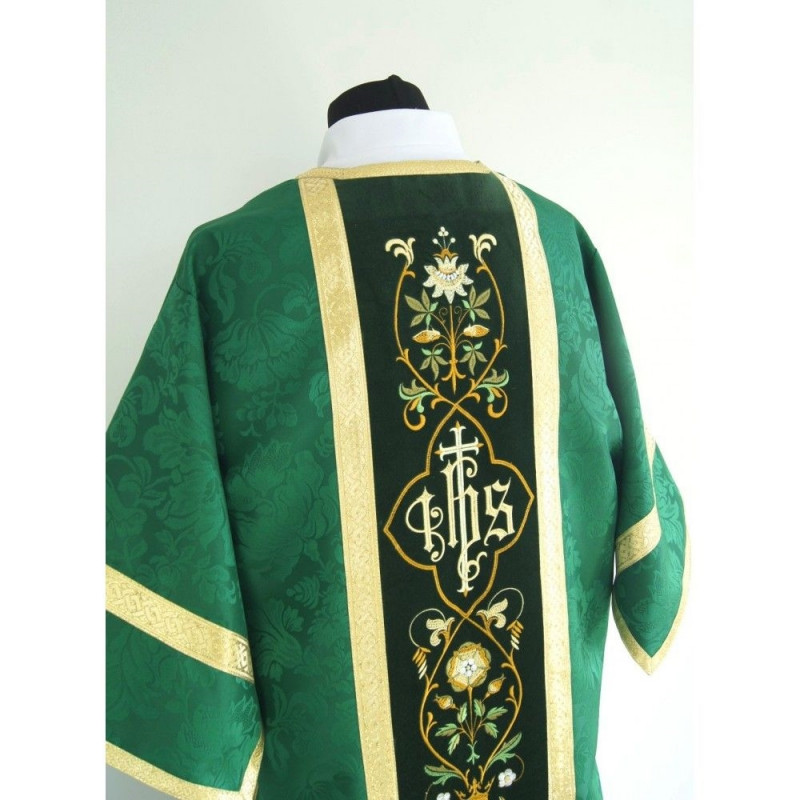
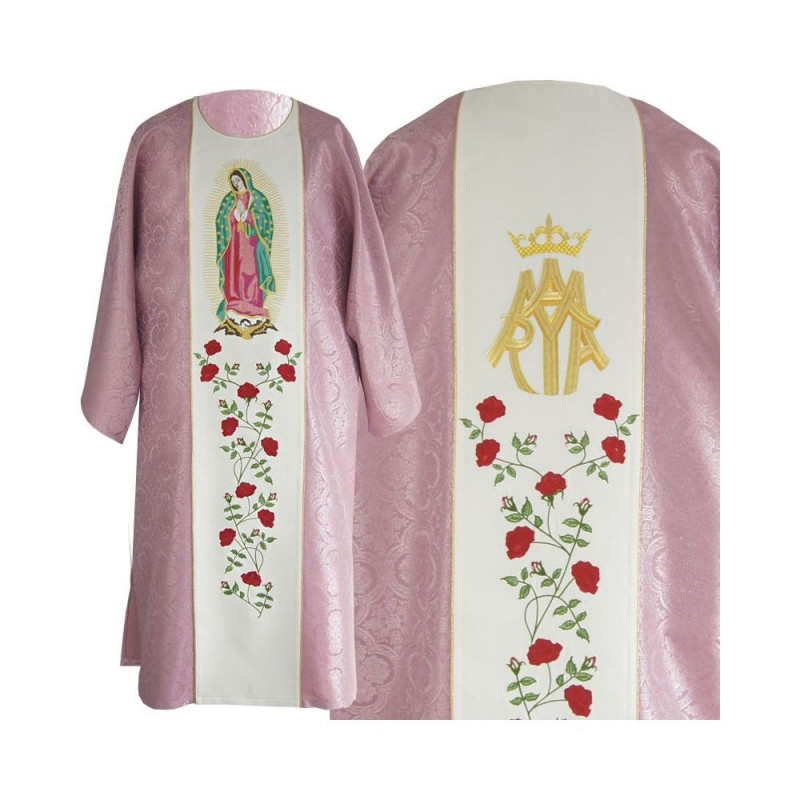
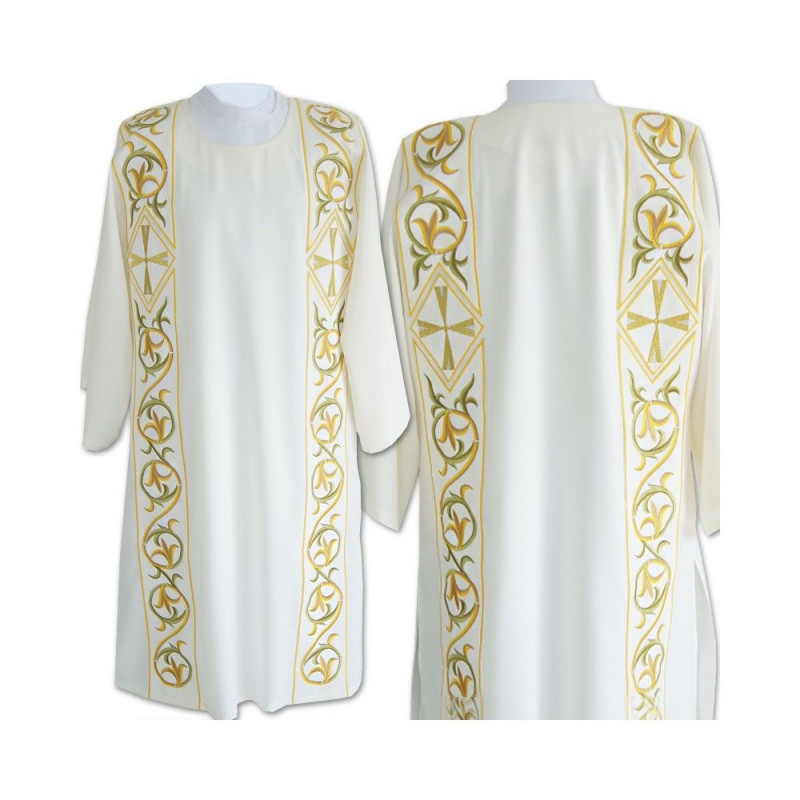
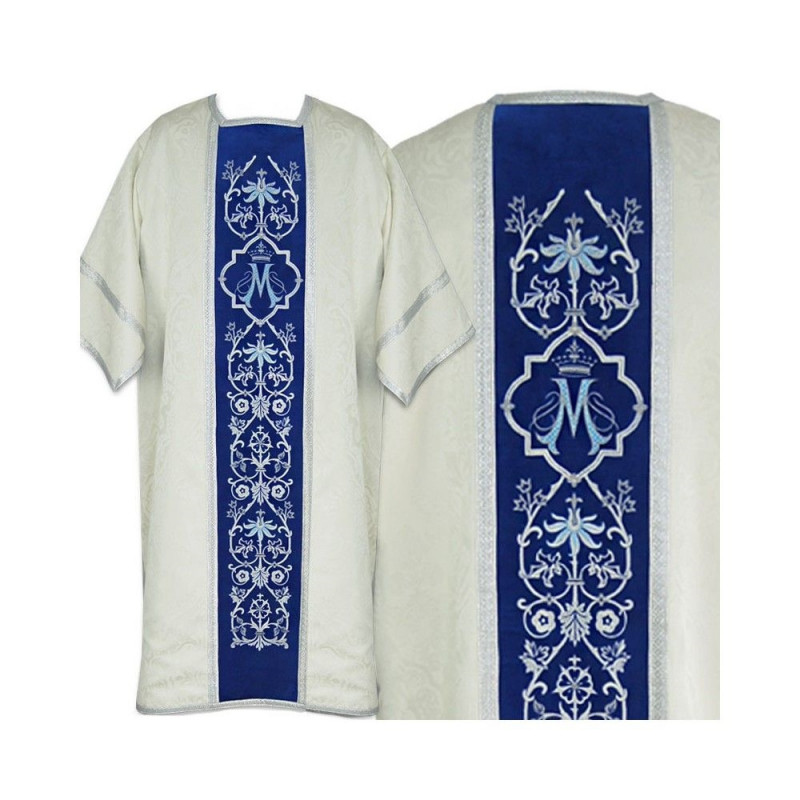
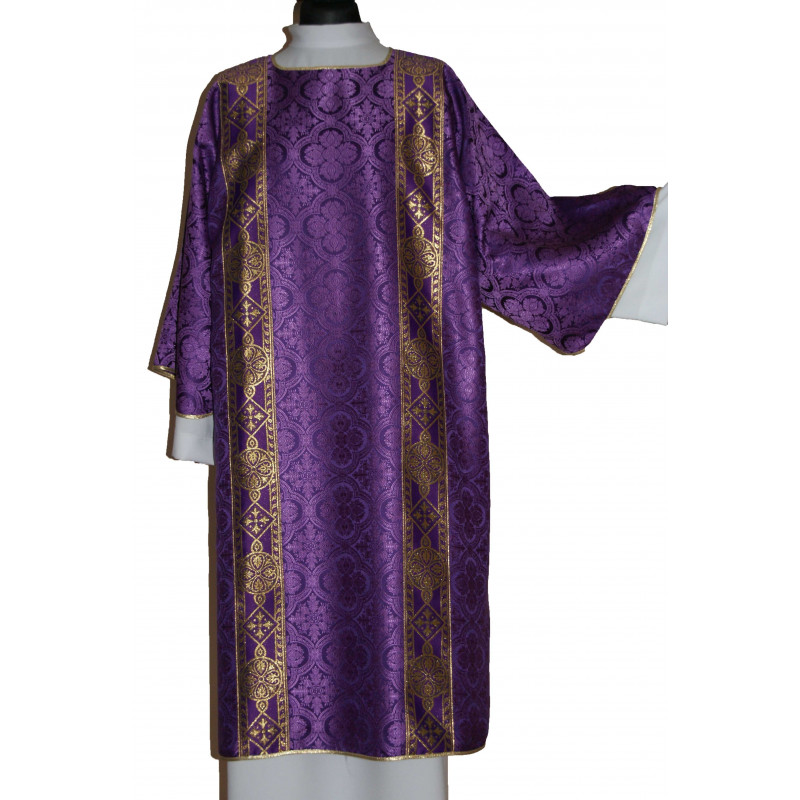
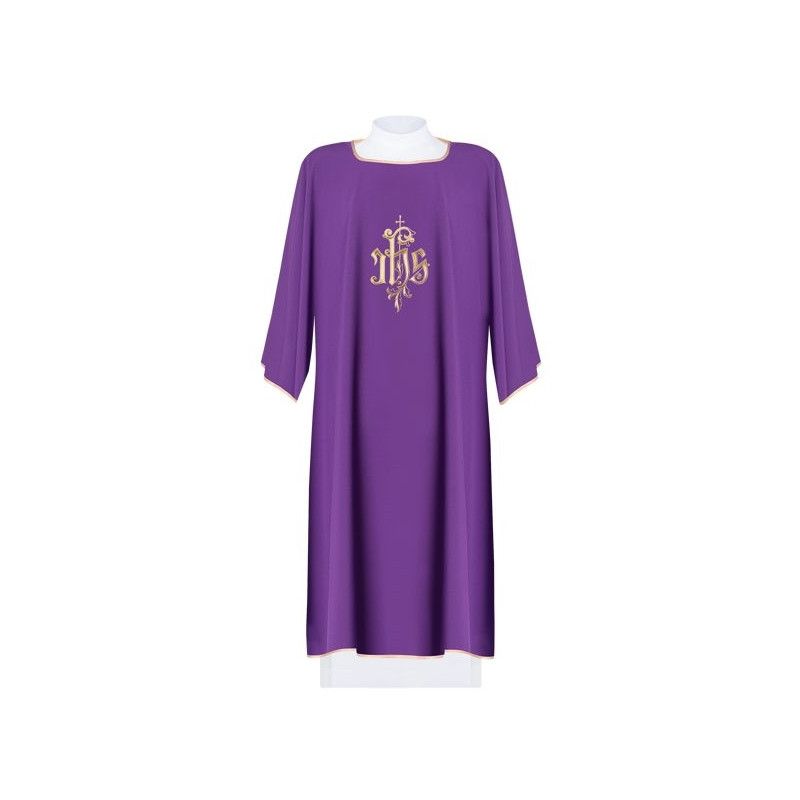
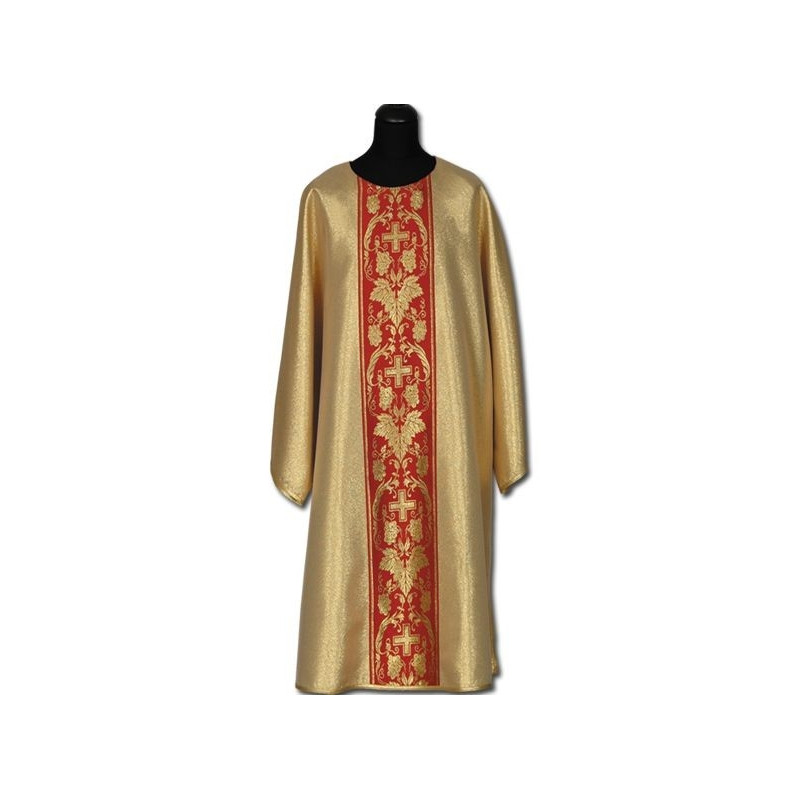
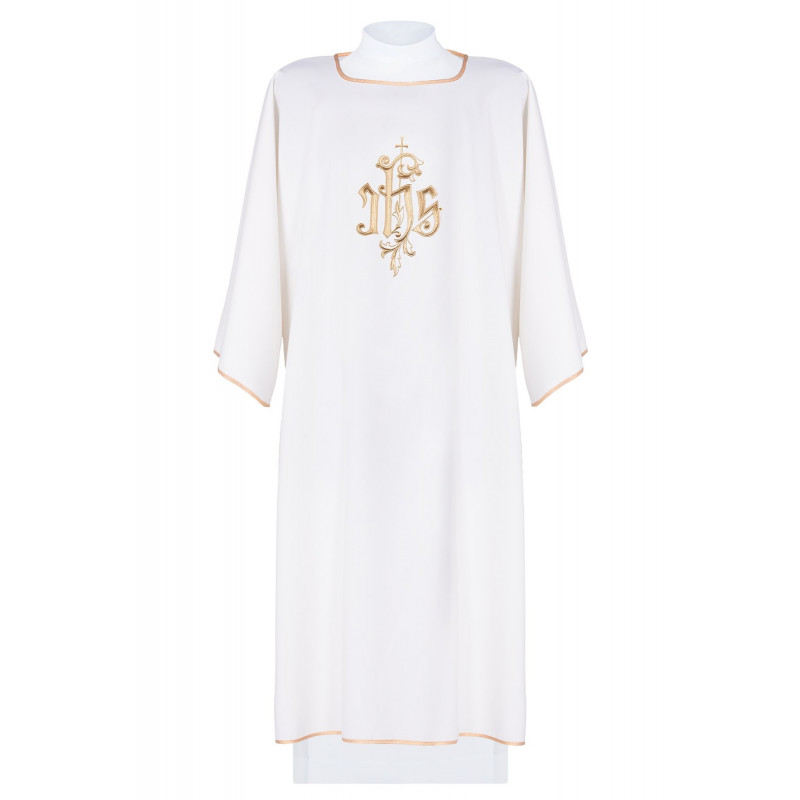
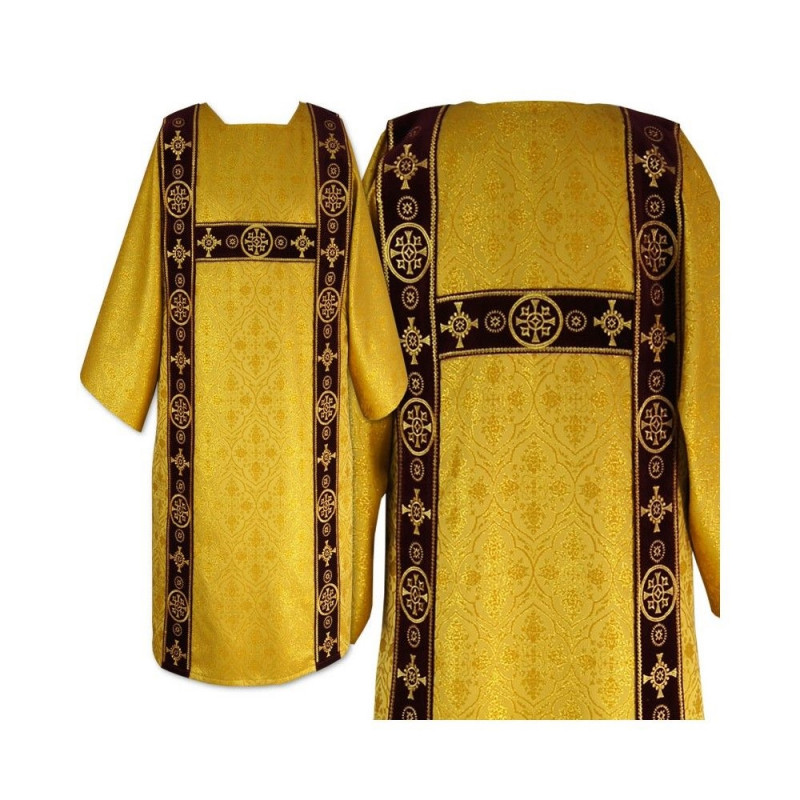
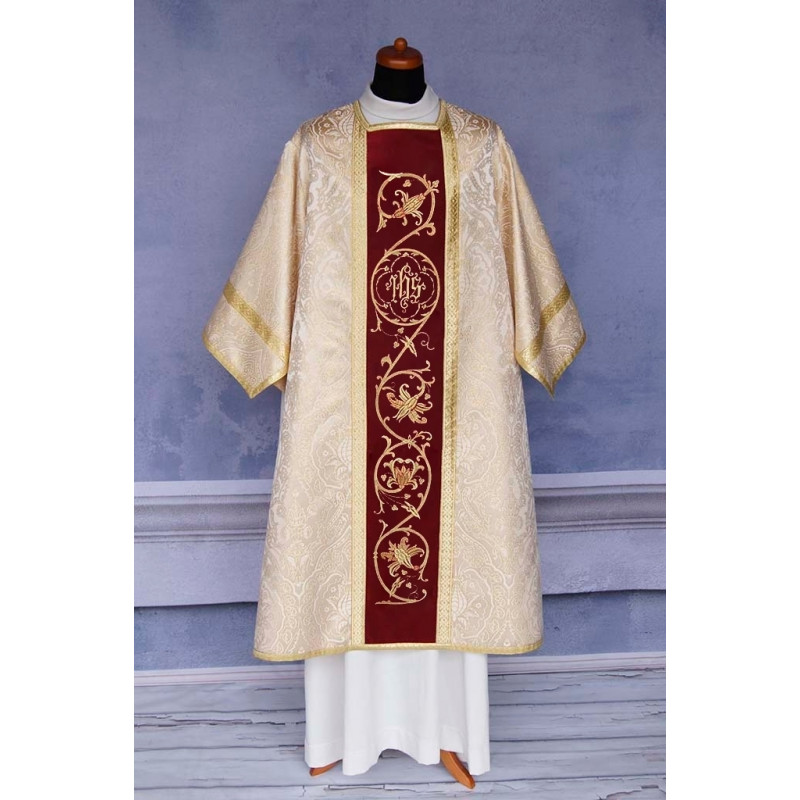
Embroidered dalmatics add solemnity to the liturgy: the decoration — crosses, IHS monograms, orphrey bands or Marian motifs — is embroidered onto the front, back and sleeves of the vestment. Every dalmatic in our collection is a complete liturgical garment, most with a matching deacon stole included.
Dalmatic vs Chasuble vs Tunicle
The three vestments are related but distinct:
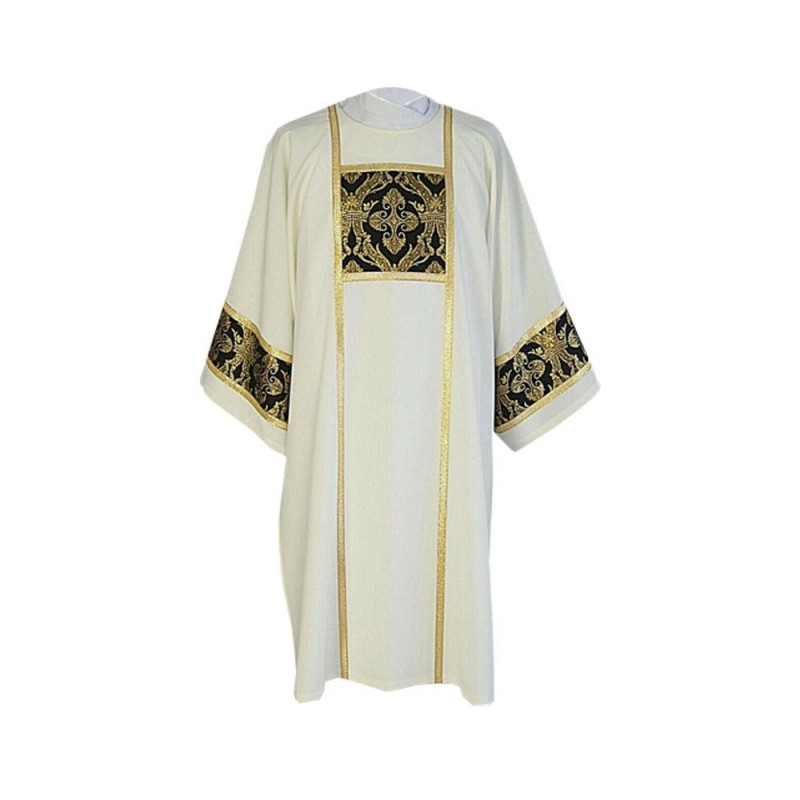
- Dalmatic — worn by the deacon. Wide sleeves, side openings, decorated with vertical bands (clavi) and embroidery; the outer vestment at Mass.
- Chasuble — worn by the priest celebrant. Sleeveless, it covers the whole body and is the outermost vestment of the Mass.
- Tunicle — the dalmatic's "little sister". Narrower in the sleeves and simpler in decoration, it was historically worn by the subdeacon (in the Traditional Latin Mass) and by bishops under the dalmatic at pontifical functions.
At a solemn Mass the priest wears a chasuble and the deacon wears a matching dalmatic — many of our dalmatics are cut from the same fabrics as our embroidered chasubles, so a parish can assemble a complete matching vestment set. Read the full comparison in our guides: dalmatic vs chasuble and dalmatic vs tunicle.
Gothic vs Roman Dalmatics
Two great traditions of vestment design meet in our collection:
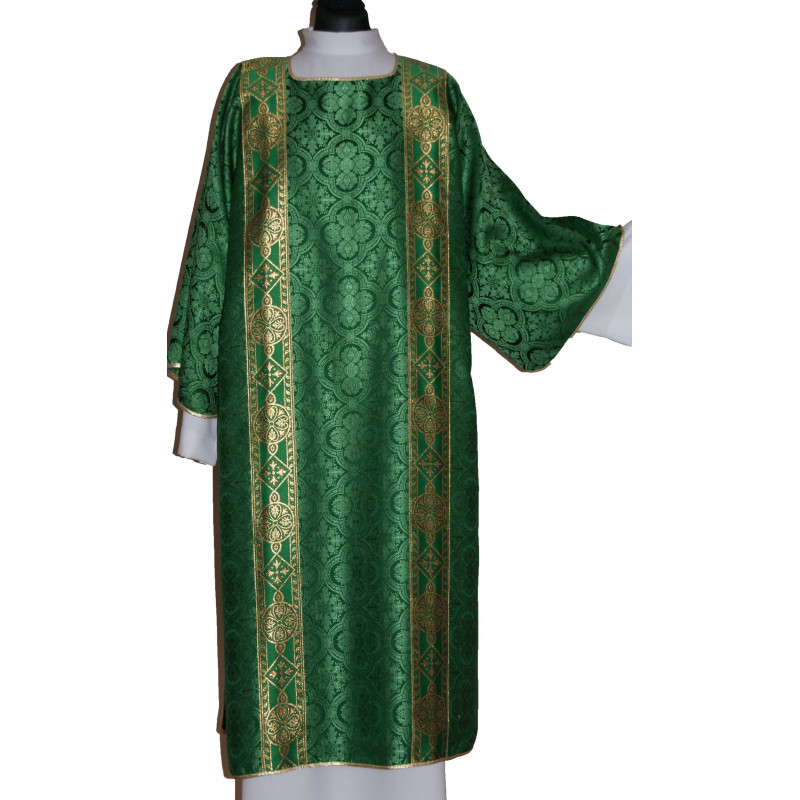
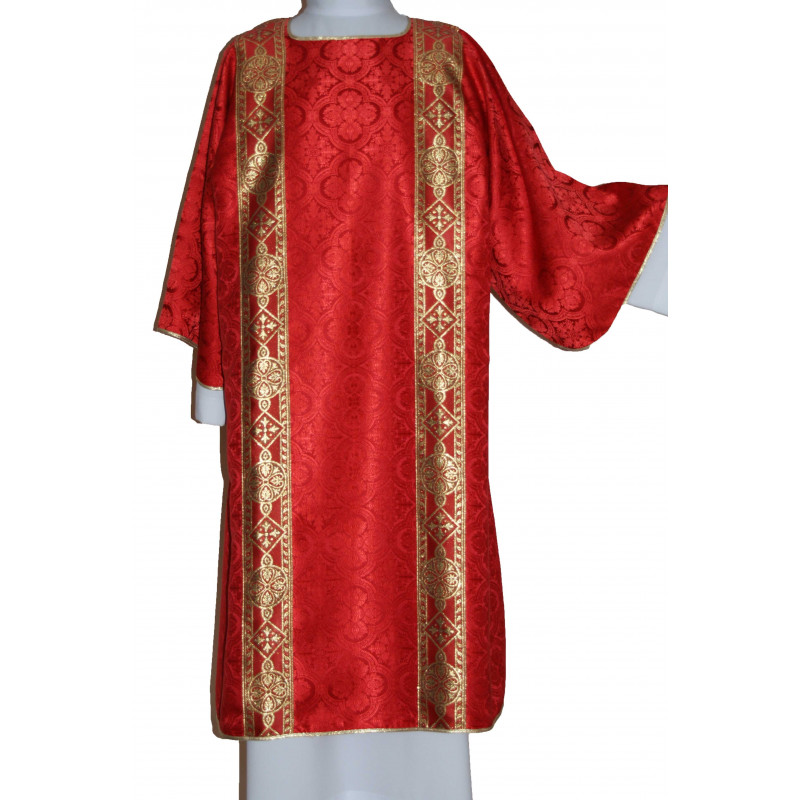
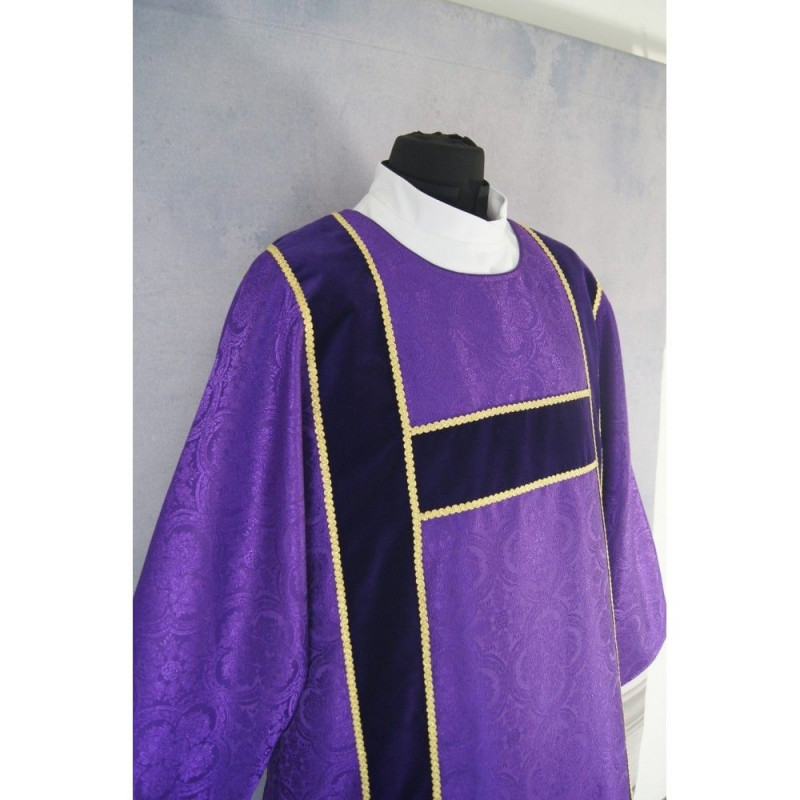
Gothic dalmatics — with a Y-shaped orphrey over the shoulders and down the front and back, a hood-like fold at the neck, and rich jacquard, damask or velvet-striped fabrics with metallic-thread embroidery. Our Gothic dalmatics (about a dozen models, $234–$371) are the most ornate pieces we carry.
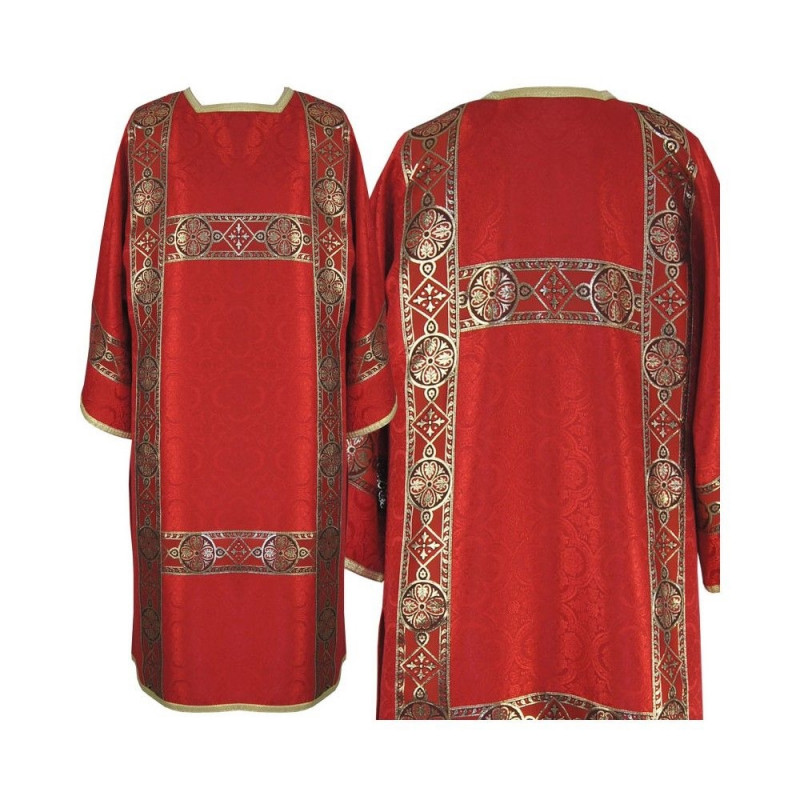
Roman dalmatics — with a straight cross or straight bands on the front, simpler ornament and a lighter drape. Our Roman dalmatics ($200–$355) include jacquard and stretch-fabric models with woven stripes, plus a glitter-fabric model with IHS embroidery.
Both styles are correct for the Ordinary Form of the Mass; the choice is a matter of your church's artistic tradition and should follow the style of the parish's chasubles. Compare them in our guide: Gothic vs Roman dalmatics.
Styles in Our Collection
Our 45 dalmatics cover the full range of deacon ministry:
- IHS embroidered dalmatics (6 models, $161–$169) — the Holy Name monogram embroidered in gold on smooth, washable fabric; the classic everyday-solemnity dalmatic, with an inner stole in the set.
- Marian dalmatics (4 models, $149–$371) — ecru, pink and Gothic-pattern designs with Marian motifs for feasts of Our Lady.
- Gothic jacquard, damask and velvet-striped dalmatics ($234–$371) — the ornate end of the range, with woven patterns and metallic embroidery.
- Plain dalmatics in every liturgical colour ($148–$192) — smooth, airy fabric for weekly parish use, in green, red, white, purple and violet.
- Lector's dalmatics ($70) — a light, simple vestment often used for lectors and altar servers; the most affordable way to begin.
Fabrics: Jacquard, Damask, Brocade and Velvet
The fabric determines how a dalmatic drapes, wears and cleans:
- Jacquard — patterns woven into the cloth (often floral) that will not fade or wash out; the most common fabric in our collection.
- Damask — a reversible figured fabric with a subtle sheen; our Gothic "embroidered with gold" dalmatic is cut from stain- and crease-resistant damask.
- Brocade — a raised, richly patterned weave, often with metallic thread, used for the most festive dalmatics.
- Velvet — usually as decorative stripes and bands that add depth to the embroidery.
Most of our dalmatics are cut from durable polyester (PE) blends: they resist creasing and dirt, keep their colour, and tolerate standard washing and ironing at low temperature — practical for a vestment worn every week.
Liturgical Colours for Every Season
Dalmatics follow the same colour rules as chasubles (GIRM 345–346):
- White — Christmas, Easter, feasts of the Lord and of saints.
- Red — Pentecost, Good Friday, Palm Sunday, feasts of martyrs.
- Green — Ordinary Time.
- Violet — Advent and Lent.
- Rose — Gaudete and Laetare Sundays.
- Black — funerals and All Souls (where customary).
- Gold — solemnities, as an optional festive colour.
Our collection covers green, red, white, purple/violet, gold, ecru and Marian pink — see the grid above. Several models are made to order in any liturgical colour; if a colour is not listed, contact us before ordering.
Sizes and Fit
Our dalmatics follow standard European deacon sizing: length 123–127 cm (48–50 in), width 128–150 cm (50–59 in), and sleeves 34–64 cm depending on the model. A dalmatic should reach roughly to the knees and allow full freedom of arm movement over the alb — the deacon must be able to carry the Gospel book and assist at the altar without restriction. Lining and size adjustment are available on request on most models.
The Matching Deacon Stole
Most of our dalmatics — 32 of the 45 — come complete with a matching deacon stole cut from the same fabric. The stole is the sign of the deacon's order: it is worn diagonally, crossed over the left shoulder, underneath the dalmatic. Buying the dalmatic and stole as a set guarantees a perfect match of colour and embroidery — see our step-by-step guide, how to wear a dalmatic.
Who Wears a Dalmatic
- Deacons — at Mass, solemn processions, Benediction of the Blessed Sacrament, baptisms, weddings and funerals celebrated with a deacon.
- Bishops — under the chasuble at solemn pontifical Masses (the "pontifical dalmatic"), a sign of the fullness of Holy Orders.
- The Pope — as Bishop of Rome, wears a dalmatic under the chasuble on the most solemn occasions.
- Priests — only exceptionally, when concelebrating in place of a deacon; normally the priest wears the chasuble.
How to Care for an Embroidered Dalmatic
Unlike antique silk vestments, most modern dalmatics are easy to maintain: our jacquard, damask and PE fabrics tolerate standard washing and ironing at low temperature. Iron on the reverse to protect the embroidery, and never press metallic-thread motifs directly. Store the dalmatic on a wide hanger or folded flat with acid-free tissue — never on a narrow wire hanger, and never in a damp sacristy cupboard. For travel, use a garment bag. More detail: caring for embroidered vestments and storing liturgical vestments.
Prices in Our Collection
Dalmatics are priced by fabric and decoration. Our current range:
| Tier | Price | Typical models |
|---|---|---|
| Everyday | $70–$169 | Lector's dalmatic; plain dalmatics in every colour; IHS-embroidered models |
| Mid-range | $178–$242 | Sets with stole and decorative bands; Gothic jacquard (Model 43) |
| Ornate | $300–$371 | Gothic jacquard, damask and velvet-striped dalmatics |
Free shipping applies to orders over $100. Matching cinctures and copes are available to complete the vestment set; for Marian Masses, pair a dalmatic with our Marian chasuble.
Frequently Asked Questions About Dalmatics
Q: What is the difference between a dalmatic and a chasuble?
A: The chasuble is the sleeveless outer vestment of the priest celebrant; the dalmatic is the wide-sleeved vestment of the deacon. At a solemn Mass both are worn together, usually in the same fabric and colour.
Q: What is the difference between a dalmatic and a tunicle?
A: The tunicle is a narrower, more simply decorated version of the dalmatic, historically worn by the subdeacon in the Traditional Latin Mass and by bishops under the dalmatic at pontifical functions. In modern use the two are often indistinguishable.
Q: Who can wear a dalmatic?
A: Ordained deacons wear it at Mass and sacramental celebrations; bishops wear a pontifical dalmatic under the chasuble; the Pope wears one as Bishop of Rome. A priest wears a dalmatic only exceptionally.
Q: Can a priest wear a dalmatic?
A: A priest may wear a dalmatic under the chasuble when concelebrating or when no deacon is present, but this is uncommon. Normally the priest wears the chasuble and the dalmatic is reserved to the deacon.
Q: Do all deacons need a dalmatic?
A: The dalmatic is the proper vestment of the deacon at Mass. Most deacons who serve regularly own at least one, and parishes typically keep several in the four main liturgical colours.
Q: Does the pope wear a dalmatic?
A: Yes. As Bishop of Rome, the Pope wears a dalmatic under the chasuble at solemn pontifical Masses, together with the other pontifical vestments.
Q: Why does a deacon wear a dalmatic?
A: The dalmatic symbolises the joy of the diaconate and the charity that should mark the deacon's service — of the Gospel, the altar and the poor. It is the deacon's distinctive garment at the liturgy.
Q: Do deacons wear dalmatics outside of Mass?
A: Yes — a dalmatic may be worn at solemn processions, Benediction of the Blessed Sacrament, baptisms, weddings and funerals celebrated with a deacon. Outside liturgical functions deacons wear clerical dress, not vestments.
Q: How is "dalmatic" pronounced?
A: /dælˈmætɪk/ — "dal-MAT-ik", with the stress on the second syllable.
Q: What does the word "dalmatic" mean?
A: The word comes from Dalmatia, the Roman province on the eastern Adriatic coast where this long, wide-sleeved tunic was first worn in the 4th century. It became the distinctive vestment of the Christian deacon.
Q: How much does a dalmatic cost?
A: Our dalmatics range from $70 (a lector's dalmatic) to $371 (ornate Gothic jacquard and damask models). Most embroidered dalmatics cost between $148 and $199, and most include a matching deacon stole.
Q: Do your dalmatics come with a matching stole?
A: Most of them do — 32 of our 45 dalmatics include a matching deacon stole, cut from the same fabric. The stole is worn crossed over the left shoulder under the dalmatic.
Q: What sizes are your dalmatics?
A: Our dalmatics measure 123–127 cm (48–50 in) in length, 128–150 cm (50–59 in) in width, with sleeves 34–64 cm depending on the model. Size adjustments and linings are available on request.
Q: Can a dalmatic be machine washed?
A: Most of our dalmatics are made from modern jacquard, damask and PE fabrics that tolerate standard washing and ironing at low temperature. Iron on the reverse, and store on a wide hanger or folded flat.
Q: What fabrics are your dalmatics made of?
A: The collection uses jacquard (woven floral patterns), damask, brocade and velvet-striped fabrics — mostly durable polyester blends that resist creasing and dirt. See the fabric section above for details.
Q: What is a pontifical dalmatic?
A: A pontifical dalmatic is the dalmatic worn by a bishop under the chasuble at solemn pontifical Masses, matching the colour of the day. It is usually plainer than the deacon's dalmatic.
Q: How do I choose the right dalmatic?
A: Match the style to your church's chasubles (Gothic, Roman or plain), choose fabrics you can maintain, and start with the colours you use most — white, green, red and violet. For a first set, a plain or IHS-embroidered dalmatic with a matching stole is the most versatile choice.
Browse Our Dalmatic Collection
Explore our selection of embroidered dalmatics for deacons — 45 vestments in all liturgical colours, most with a matching deacon stole. Complete the set with chasubles for the priest, a cincture and a cope for processions.
Related Reading
What is a dalmatic and who wears it? — the complete guide. Dalmatic vs chasuble — who wears what at Mass. Dalmatic vs tunicle — the two sister vestments compared. Gothic vs Roman dalmatics — choosing a style for your parish. How to wear a dalmatic — the deacon's vesting order, step by step.
Related: at Benediction and Vespers a deacon may wear a cope instead of the dalmatic; at Marian Masses the dalmatic is worn alongside the priest's Marian chasuble.
