
What Is a Holy Water Pot (Aspersorium)?
A holy water pot — in liturgical use called an aspersorium — is the vessel that holds the water a priest sprinkles with the aspergillum during the Rite of Asperges, the blessing of homes, and the sprinkling of the faithful. The word aspersorium comes from the same Latin verb as the sprinkler, aspergere, "to sprinkle": the aspersorium holds the water, the aspergillum throws it. During the Asperges the priest carries the aspersorium in one hand and the aspergillum in the other, and between uses the sprinkler rests inside the pot.
Aspersorium, Stoup, or Font — the Names Explained
The three names are often used loosely, but they describe different vessels:
- Aspersorium — a portable pot or bucket, carried by the priest for sprinkling; often fitted with an insert or sponge that holds the aspergillum.
- Stoup — a small vessel, usually wall-mounted, fixed at the church or home entrance for the faithful to bless themselves.
- Holy water font — the general name for the vessel that holds holy water, from the small entrance stoup to a large church font.
Types of Holy Water Pots
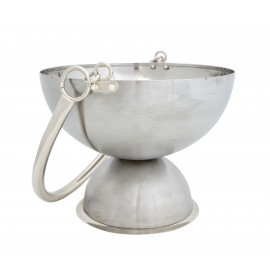
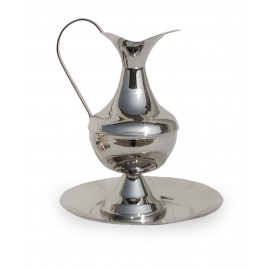
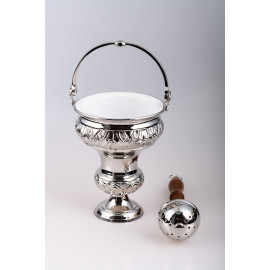
Our range covers the forms most used in parishes and homes: a stainless steel kettle ($201) for carrying and pouring water, a polished nickel bowl-jug, 19 cm ($242), for the sacristy, and a complete pot-and-sprinkler set ($383) — a 30 cm brass pot, nickel-plated in silver, with a 29 cm sprinkler with a wooden handle. The set’s pot has a protective inner bowl and a sponge dropper inside, and the sprinkler has a hanging handle so the two pieces stay together.
Materials and Craftsmanship
Holy water vessels must be non-corrosive and easy to keep clean. Ours are made from brass, nickel-plated metal, and stainless steel, turned and polished by hand — in Poland and Italy, in the same workshops that produce our chalices and censers. Brass gives a warm gold tone, nickel plating a bright silver one, and stainless steel is the practical choice for everyday carrying. Because the materials are noble metals rather than coatings over base metal, the vessels keep their finish for decades.
Pairing a Pot with an Aspergillum
Any of our sprinklers pairs with these vessels, but two combinations are traditional: a brass sprinkler with a brass pot for the warm gold look, or a nickel-plated sprinkler with a silver-toned pot. A 12–17 cm sprinkler suits the kettle and the bowl-jug; the largest sprinklers pair best with the deep 30 cm set pot. If you are outfitting a sacristy from scratch, the pot-and-sprinkler set is the complete solution — see the full range of aspergillums here.
How to Use and Care for a Holy Water Pot
Fill the pot with water blessed by a priest, and keep the sprinkler resting in it or beside it. Refresh the water regularly — at least monthly, or sooner if it becomes cloudy — pouring the old water into a sacrarium or onto the ground, never down the drain. Between uses, keep the vessel covered where possible; before storing it for a long period, empty it and dry it thoroughly so no moisture dulls the finish. Wipe brass and nickel surfaces with a soft cloth; a light silver polish is enough for silver-toned pieces, and abrasive cleaners should be avoided.
Holy Water in the Life of the Church
The aspersorium belongs to a family of holy water vessels: the font at the entrance of the church, where the faithful bless themselves; the small stoup at the door of the home; and the pot that carries the water for blessings. Its great moment is the sprinkling rite — the Asperges before Sunday Mass and the Vidi Aquam in Eastertide — when priest, sprinkler, and pot together renew the memory of Baptism. The same vessels serve at the blessing of homes and graves, in processions, and in family prayer: read our guides to what an aspergillum is, to choosing a holy water font, and to blessing your home with holy water.
What is an aspersorium?
An aspersorium is the vessel — a pot, bucket, or bowl — that holds the holy water a priest sprinkles with the aspergillum. The word comes from the Latin aspergere, "to sprinkle."
Is a stoup the same as an aspersorium?
Not quite. A stoup is fixed (usually wall-mounted) at the entrance for the faithful to bless themselves; an aspersorium is portable and travels with the priest for the sprinkling rite.
What holds the holy water in a Catholic church?
At the entrance, a stoup or font holds holy water for the congregation. For the sprinkling rites, the priest uses a portable pot — the aspersorium — carried together with the aspergillum.
How often should holy water be changed?
Refresh it regularly — at least monthly, or sooner if it becomes cloudy or develops an odor. The old water is poured into the sacrarium or onto the ground, never into the drain.
What size holy water pot do I need?
For a home or a small chapel, a 1–2 liter pot with a 9–17 cm sprinkler is ample. For a parish church, choose a deeper aspersorium that lets a 20–26 cm sprinkler rest inside it between uses.
