
What Is a Candle Snuffer?
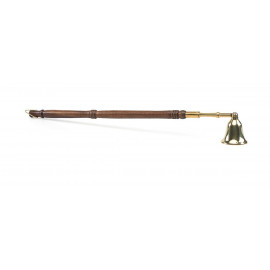
A candle snuffer (also called a candle extinguisher or douter) is a liturgical tool used to extinguish burning candles safely during and after Mass. It consists of a small bell- or cone-shaped cup attached to a long handle, placed over the flame to cut off its oxygen supply and put the candle out gently — without splattering wax, smoke or disturbing the sanctuary.
What Is a Candle Snuffer Called?
The tool is known by several names. Candle snuffer is the most common today, while candle extinguisher is the formal liturgical term and douter is the older name for a bell-shaped cone on a handle. Church suppliers and sacristy catalogues often list the same item under "snuffer," "extinguisher" or "candle lighter and snuffer set."
Why Use a Candle Snuffer Instead of Blowing?
Snuffing is safer and more dignified than blowing out a candle. Blowing can spray hot wax, scatter the wick and push smoke and odour into the sanctuary. A candle snuffer extinguishes the flame quietly, keeps the altar clean and preserves the reverent atmosphere of the liturgy.
Types of Candle Snuffers
- Single candle snuffer — a bell or cone on a handle, for extinguishing one candle at a time.
- Multi-candle snuffer — a wider cup that covers several candles at once, useful on large altar candelabra.
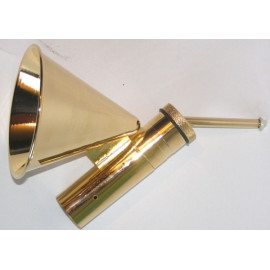
- Snuffer and lighter set — a matched pair: a refillable oil lighter to light the candles and a snuffer to extinguish them, the standard sacristy combination.
Materials, Sizes and Finish
Our candle snuffers are crafted from polished brass, silver-plated metal and bronze, with a comfortable handle and a properly sized cup for standard altar candles. Handles range from a compact 15 cm snuffer-and-lighter set up to a 37 cm (14.6 inches) extinguisher for reaching tall candles. Polished brass resists tarnish and holds its finish for years of daily sacristy use.
How to Snuff an Altar Candle Safely
Hold the handle near its end and lower the cup directly over the flame from the side, so the cone covers the burning wick without touching the wax. Wait a moment until the flame goes out, then lift it away. Never press the cup onto the candle or tip it, and never leave the snuffer resting on a hot candle. For multiple candles, work from the farthest to the nearest so your hand stays clear of the flames.
Candle Snuffer vs. Candle Lighter
A candle lighter lights the flame; a candle snuffer puts it out. Many sacristies keep both, and matched snuffer and lighter sets are the most practical choice. By contrast, a wick dipper bends the wick into the melted wax to extinguish it — clean, but not suited to tall altar candles, where a long-handled snuffer is safer.
Care and Maintenance
Wipe the cup after each use once it has cooled, using a soft cloth and, for brass, a little brass polish. Store the snuffer hanging or lying flat so the cone is not dented. A well-kept brass snuffer lasts for decades — see our guide to the Paschal candle and how to choose one for related altar practice.
Frequently Asked Questions
Is it better to use a candle snuffer?
Yes — for altar and devotional candles a snuffer is better than blowing them out. It prevents hot wax from splattering, avoids smoke and a smouldering wick, and keeps the sanctuary clean and reverent.
Why use a candle snuffer instead of blowing it out?
Blowing a candle out sprays wax, scatters the wick and produces smoke and odour. A snuffer cuts off the oxygen and extinguishes the flame quietly, so nothing is disturbed.
What can I use instead of a candle snuffer?
A wick dipper or a small metal cup on a handle will also work, but for tall church candles a long-handled candle extinguisher is the safest and most dignified option. Improvised covers risk dripping wax onto the altar.
What is the best candle snuffer?
The best snuffer is the one sized to your candles: a 15 cm set for a home altar, a 37 cm extinguisher for tall sanctuary candles, in polished brass or silver plate for durability. Matching the snuffer to candle height matters more than any particular model.
What is the 3-hour rule for candles?
The "3-hour rule" is a candle-care tip, not a liturgical law: burn a candle no longer than about three hours per session so the wax pool does not tunnel and the wick stays trim. It is a maintenance guideline for even burning.
Do candle snuffers work on any candle?
A snuffer works on almost any candle — tapers, pillar and votive candles — as long as the cup is wide enough to cover the flame and the handle is long enough to reach it safely.
Related Reading
For the vessels that hold the relics of saints, see our reliquaries.
For the candles on and around the altar, see our altar candlesticks.
