







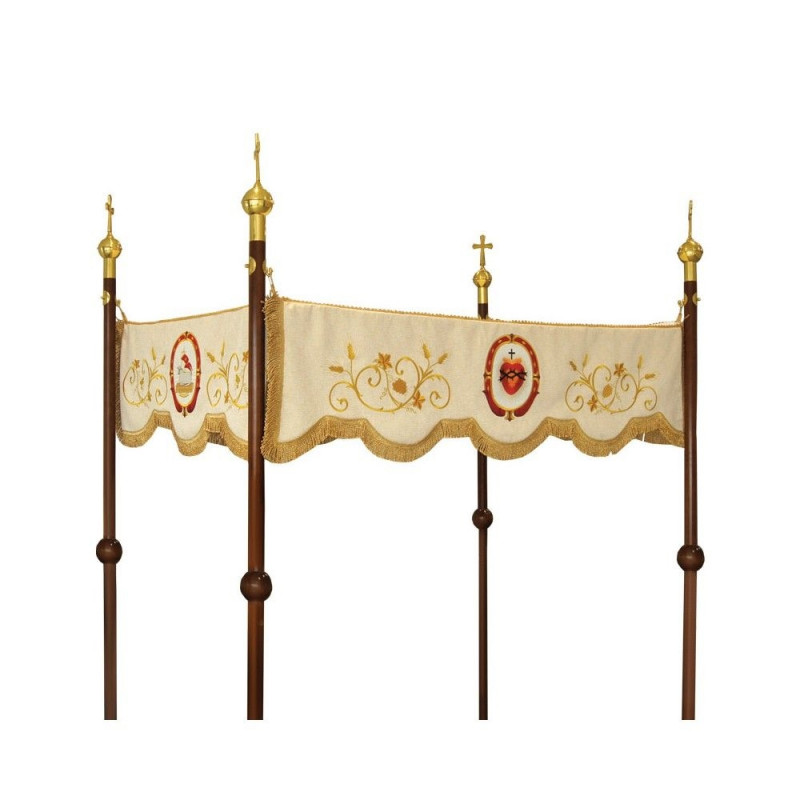

What Is a Processional Canopy (Baldachin)?
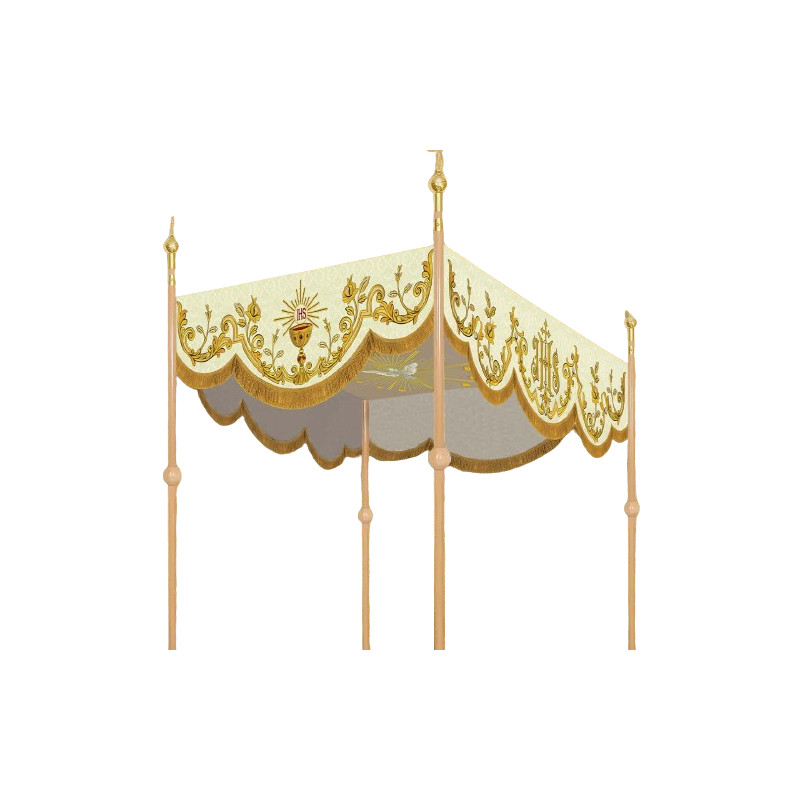
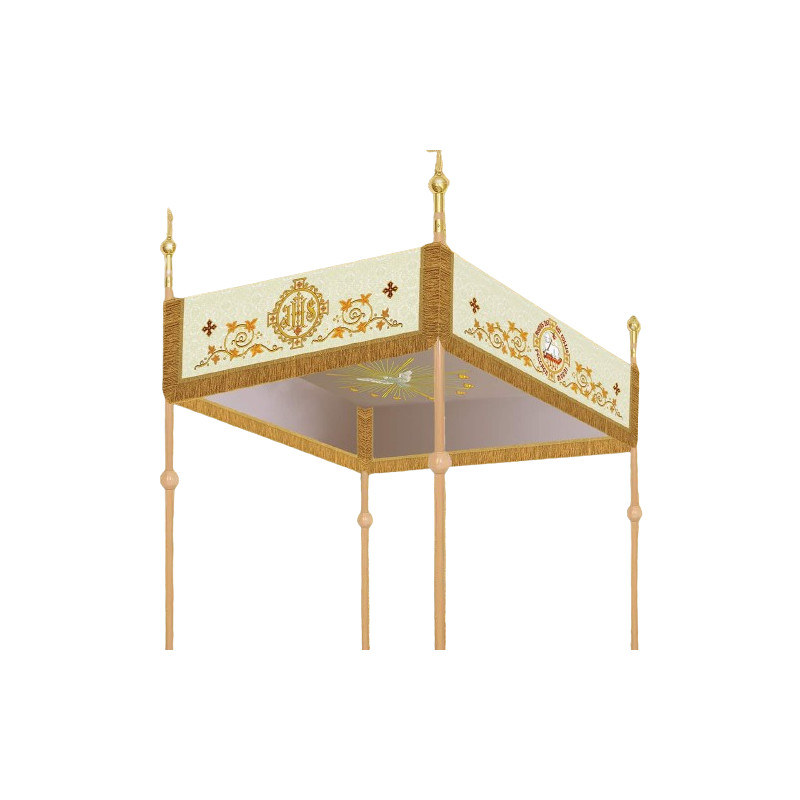
A processional canopy (also called a baldachin or baldaquin) is a ceremonial canopy carried over the Blessed Sacrament during processions. It is a symbol of honor and reverence, traditionally used when the Eucharist is carried in procession — such as during Corpus Christi, Benediction, or Viaticum (Communion for the dying).
The baldachin has its origins in the canopies carried over kings and important figures in the ancient world. In the Church, it is used to honor Christ present in the Eucharist. The canopy is typically made of rich fabric (silk or brocade) and is supported by poles carried by servers or lay ministers.
Every parish that offers Eucharistic processions needs a quality processional canopy. It is an important symbol of reverence for the Blessed Sacrament.
What Types of Processional Canopies Are Available?
Processional canopies come in several options:
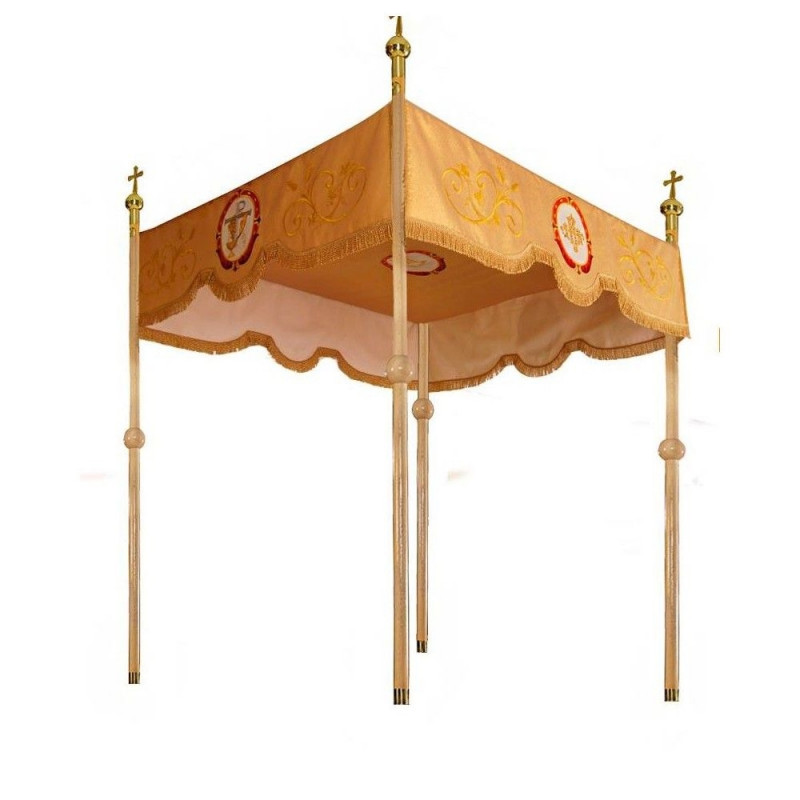
Standard baldachins — the traditional design with four or six poles and a fabric canopy. These are the most common type for parish processions.
Ornate baldachins — feature embroidered or brocade fabric with decorative trim. These are chosen for solemn occasions and cathedral use.
White baldachins — the most common color, appropriate for Eucharistic processions and Benediction. Some churches also have colored baldachins for specific occasions.
How Do I Choose the Right Processional Canopy?
- Consider the size. The canopy should be large enough to cover the monstrance or ciborium being carried. Standard size is about 4-6 feet square.
- Check the pole length. The poles should be long enough for the carriers to hold comfortably while walking. Typically 6-8 feet long.
- Think about the fabric. Silk and brocade are the most traditional and beautiful. Polyester blends are more durable and affordable.
- Look for quality construction. The poles should be sturdy, the fabric should be securely attached, and the canopy should be easy to assemble and disassemble.
| Type | Poles | Best For | Price Range |
|---|---|---|---|
| Standard baldachin | 4 or 6 | Parish processions | $599–$1,450 |
| Ornate baldachin | 6 | Solemnities, cathedral use | $1,300–$2,850 |
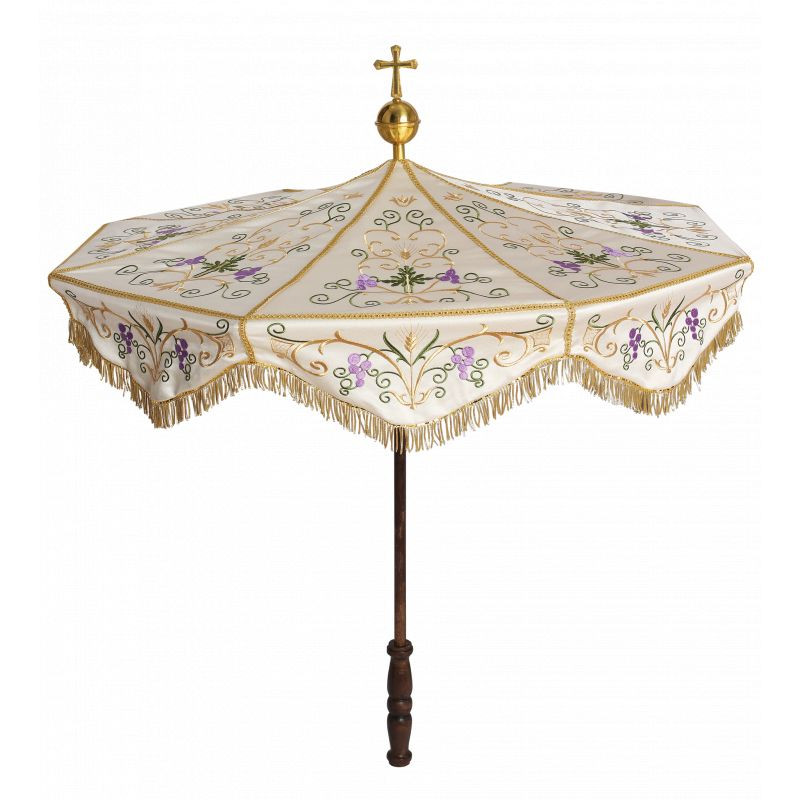
| Umbrella-type canopy | Built-in handle | Outdoor processions, portability | $1,230–$1,840 |
Baldachin, Ciborium, or Ombrellino? Key Differences
A baldachin (also spelled baldacchino or baldaquin) is the general name for a canopy of honor — historically carried over kings and prelates, and today over the Blessed Sacrament. A processional canopy is the portable form, carried on four or six poles during processions. When a canopy is permanently built over a fixed altar in stone, marble, or wood, it is called a ciborium. A small, umbrella-shaped canopy used to honor the Blessed Sacrament or a bishop is called an ombrellino (also umbraculum) — the umbraculum appears in the papal coat of arms and marks a church as a basilica. If you need the canopy that is carried over the Blessed Sacrament in a Eucharistic procession, you need a processional baldachin.
Materials and Construction
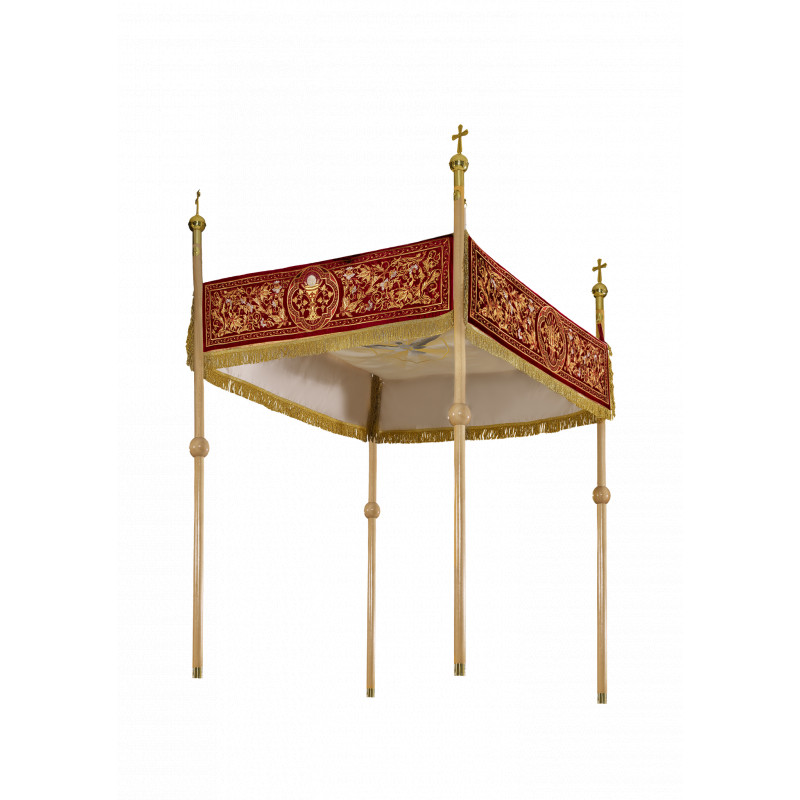
Processional canopies are made of rich fabrics — satin, velvet, brocade, or damask — with a waterproof top layer that protects the canopy and the Blessed Sacrament from rain. Each canopy combines a stiffened fabric top, an internal frame, and four or six poles (also called spars or staves) that the carriers hold. Our canopies are finished with gold tassels or fringes, cross finials, and hand embroidery, so they look as solemn as the vestments worn beneath them.
Colors, Motifs, and Liturgical Symbols
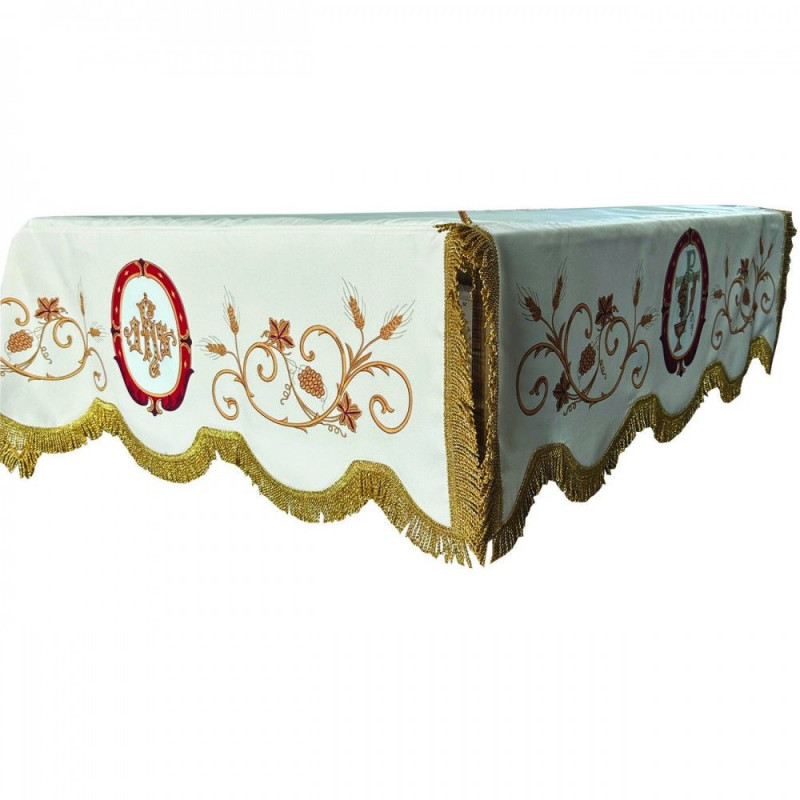
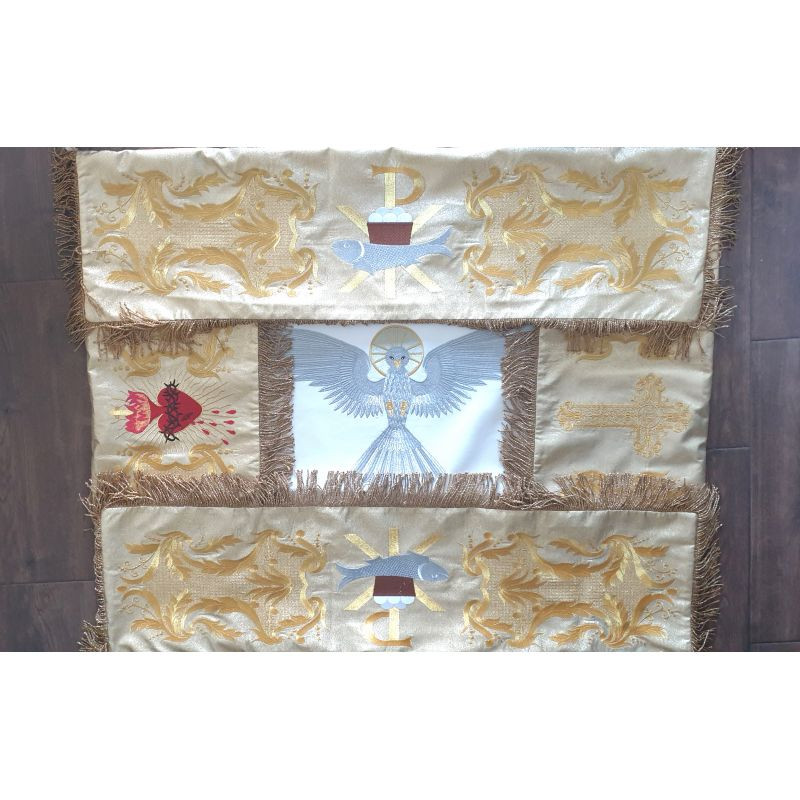
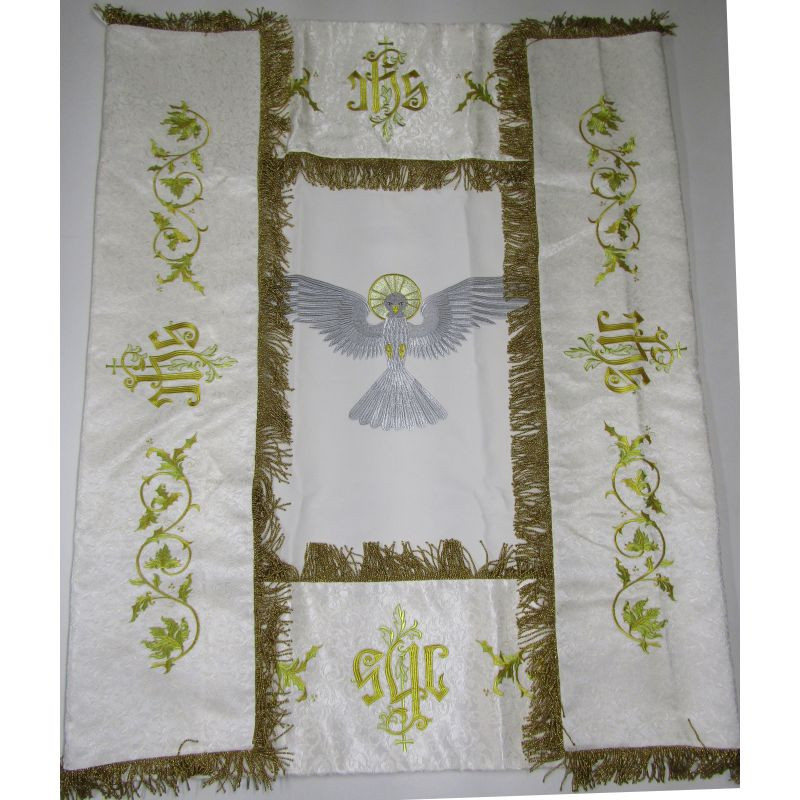
The most common color for a processional canopy is ecru or white, appropriate for Eucharistic processions and Benediction, but canopies are also made in red, burgundy, maroon, and gold for solemn occasions. The sides of the canopy are embroidered with Eucharistic symbols: the IHS monogram, the chalice with the host, the Lamb of God, the Holy Spirit dove, the heart of Jesus, the Chi Rho, angels, and grapes and wheat. Floral motifs and Marian symbols are used for processions in honor of Our Lady.
How Much Does a Processional Canopy Cost?
At Best Catholic Shop, processional canopies range from $599 to $3,350 depending on size, fabric, and embroidery — standard foldable canopies start at $599, richly embroidered models run from about $1,300 to $2,850, and the exclusive velvet canopy is $3,350. Carrying accessories are available separately: processional canopy poles $899 and gloves $25. The price depends mainly on the fabric (satin and velvet cost more than basic blends), the amount of hand embroidery, the size (from 110 × 140 cm to 140 × 160 cm), and the frame. Canopies are typically supplied without spars — order the pole set if you do not already have one. We ship free on orders over $100.
Sizes and How a Canopy Is Carried
Our processional canopies measure from 110 × 140 cm (43.3 × 55.1 in) to 140 × 160 cm (55.1 × 63 in) — the canopy must be large enough to cover the monstrance or ciborium carried beneath it. Poles are typically 6–8 feet long, and the canopy is carried by four or six servers who walk in step; the longer the route, the more important the stiffness and stability of the frame. Foldable and umbrella-type canopies are easier to store and transport — the umbrella type uses a single central pole with twisted handles (about 70 cm / 155 cm), which makes it a practical choice for outdoor Corpus Christi processions.
Frequently Asked Questions About Processional Canopies
Is a processional canopy the same as an ombrellino?
No — they are related but different. An ombrellino (umbraculum) is a small, umbrella-shaped canopy, while a processional canopy (baldachin) is the larger, rectangular canopy carried on four or six poles. Both honor the Blessed Sacrament; the umbrella type is lighter and easier to carry, which is why we also offer processional canopies of the umbrella type.
What is the canopy over an altar called?
A canopy over a fixed altar is called a baldachin; when it is a permanent architectural structure supported by columns, it is more precisely called a ciborium. The portable canopy used in processions is a processional baldachin — a processional canopy.
What is the point of an Eucharistic procession?
An Eucharistic procession is a public act of faith and reverence: the Blessed Sacrament is carried outside the church so the whole community can honor Christ's presence and receive a blessing. The processional canopy shields the monstrance and marks the solemnity of the moment — a sign that Christ the King is passing through the streets.
What is the order of an Eucharistic procession?
Customarily, a cross-bearer leads, followed by candle-bearers and the faithful, then the clergy, and finally the priest carrying the Blessed Sacrament under the processional canopy, with incense carried before the Blessed Sacrament. Four or six servers hold the poles and walk in step around the priest.
Can a processional canopy be used outdoors?
Yes — it is made for outdoor use. The top of every canopy is covered with a waterproof material that protects against rain, and the fabric is chosen for durability. For long outdoor routes, lighter umbrella-type canopies and foldable frames are the most practical choice.
Do processional canopies come with poles?
Most of our canopies are supplied without spars; a separate set of processional canopy poles is available for $899, together with gloves for the carriers ($25). Umbrella-type canopies have a built-in central pole with twisted handles. If you are not sure which option fits your parish, read our guide to choosing a processional canopy.
Browse Our Processional Canopy Collection
View our selection of processional canopies (baldachins) in standard, ornate, and umbrella types — 36 designs, available with 4 or 6 poles. Honor the Blessed Sacrament with a quality processional canopy. We also offer monstrances, humeral veils, and copes. For help deciding, read how to choose a processional canopy (baldachin) for your church and the role of processions in Catholic worship.
Processions begin with the cross — see our crosses and crucifixes for altar, hand, and wall crosses.
