
What Is a Roman Chasuble?
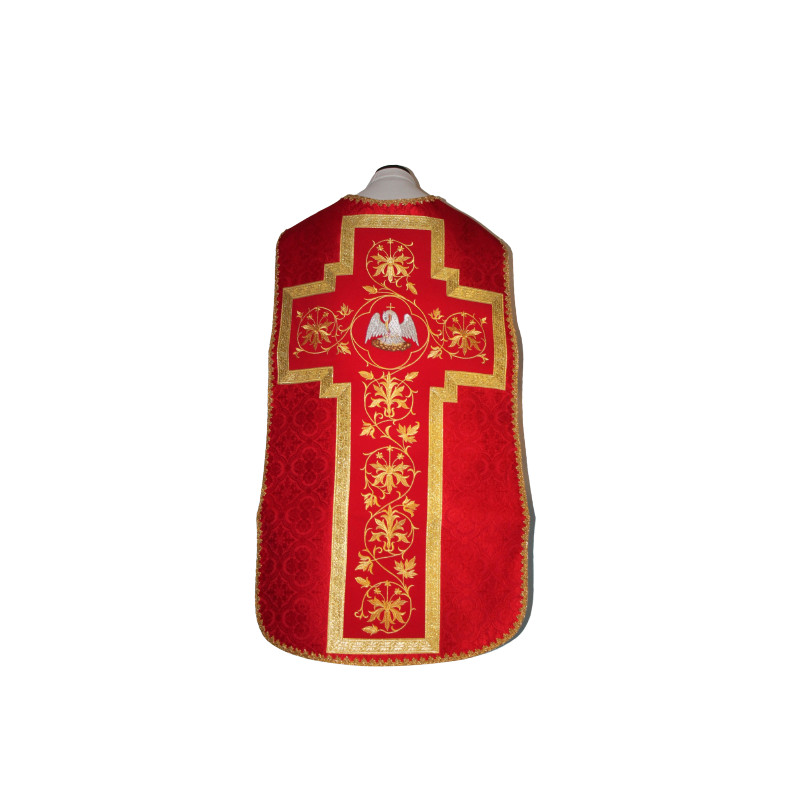
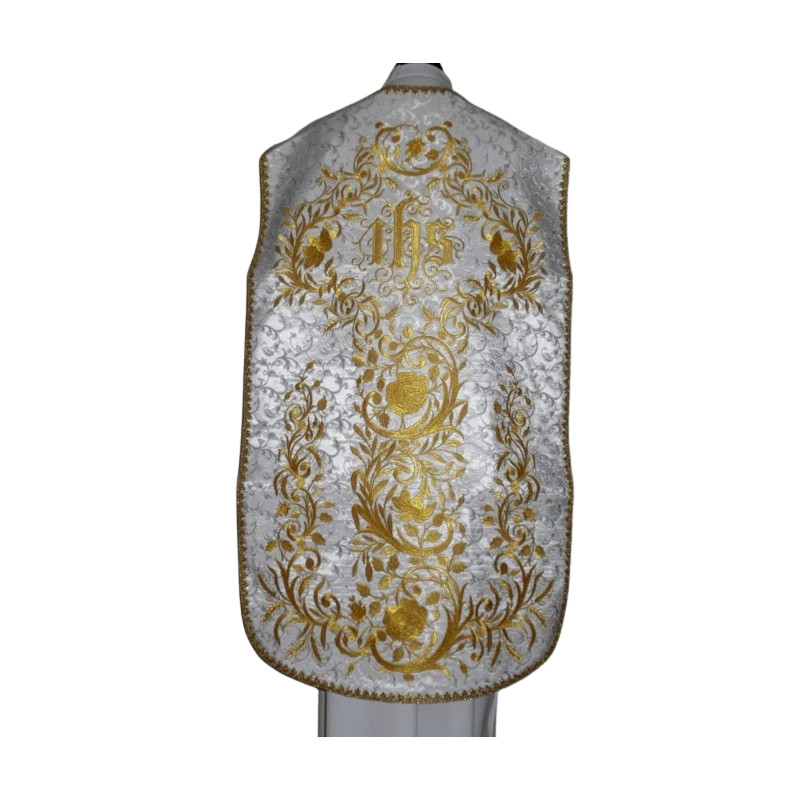
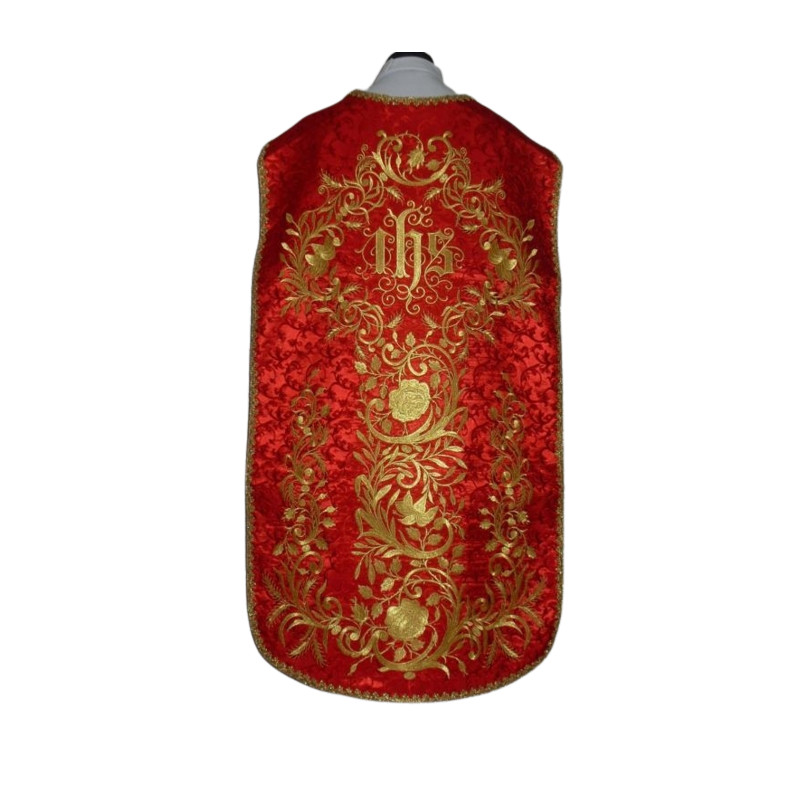
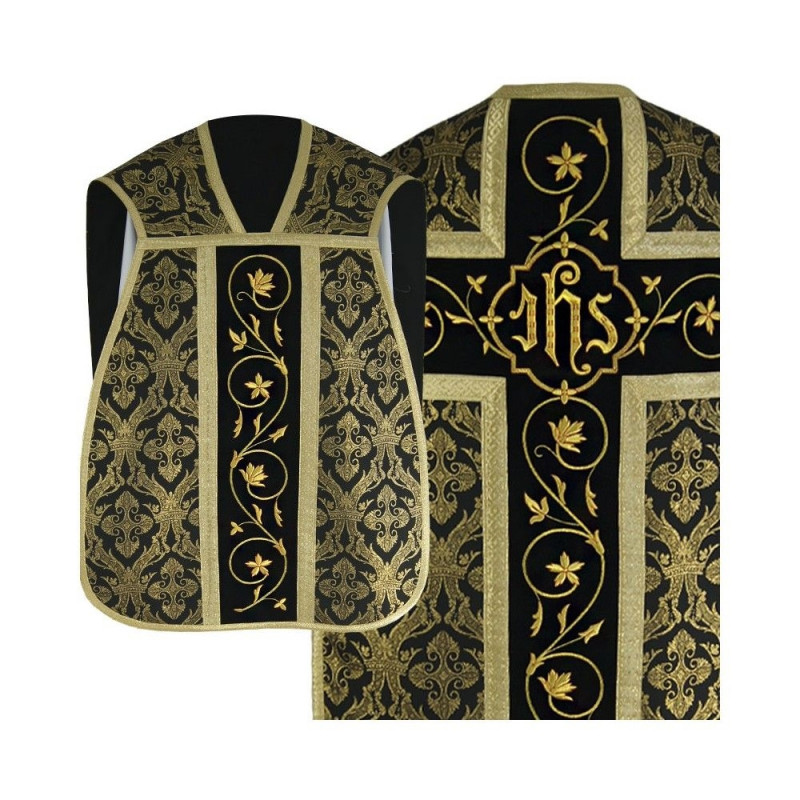
A Roman chasuble (also called a Latin chasuble or, in its most fitted form, a fiddleback chasuble) is the outermost vestment worn by a Catholic priest at Mass. It is placed over the alb and the stole, and its color follows the liturgical season. The English word comes from the Latin casula ("small hooded cloak"); in the Roman tradition the garment developed from the paenula, an everyday outer cloak of antiquity.
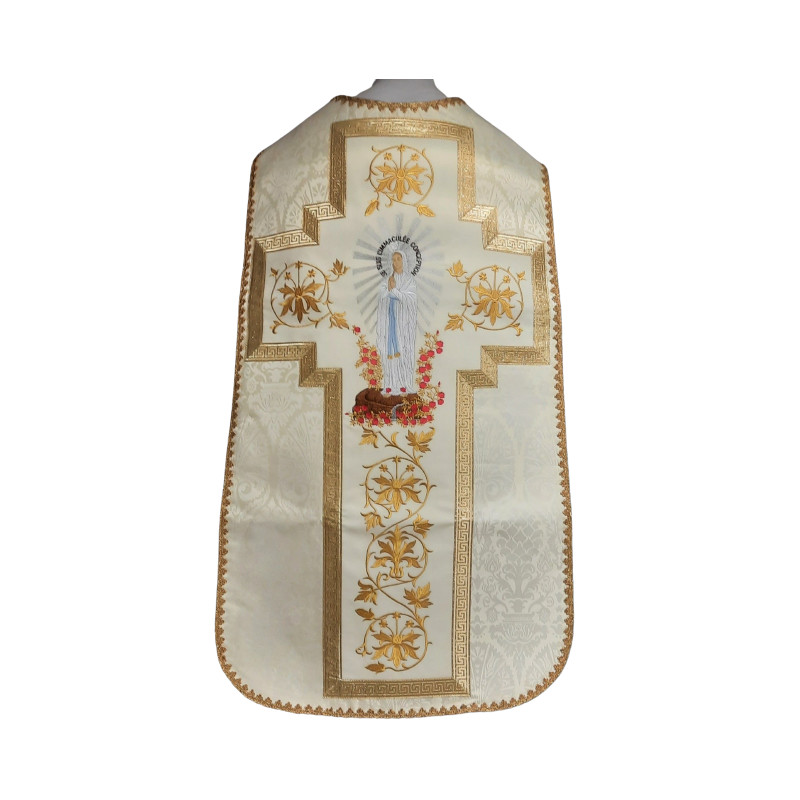
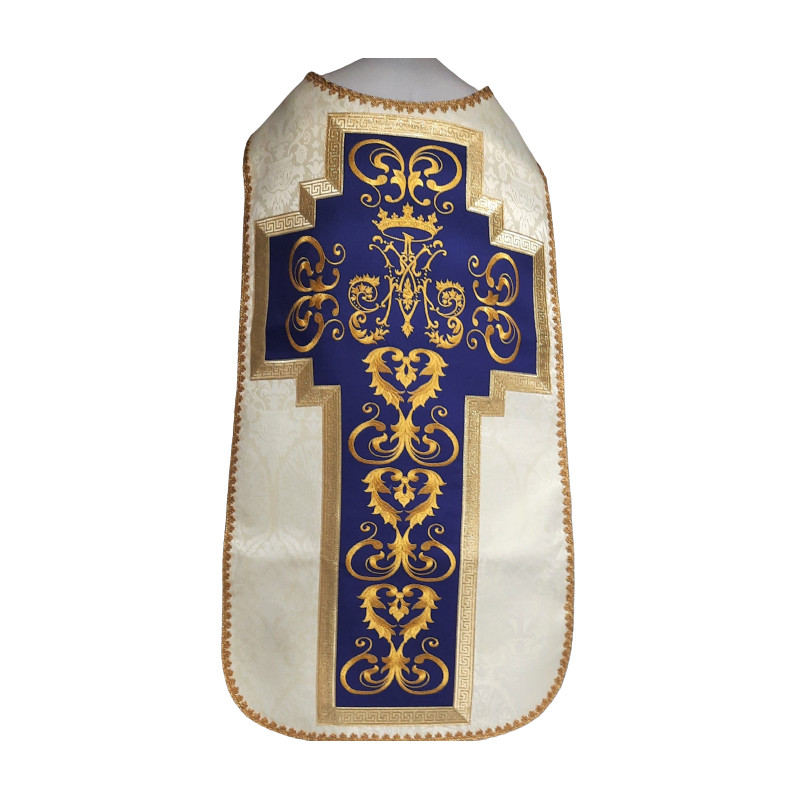
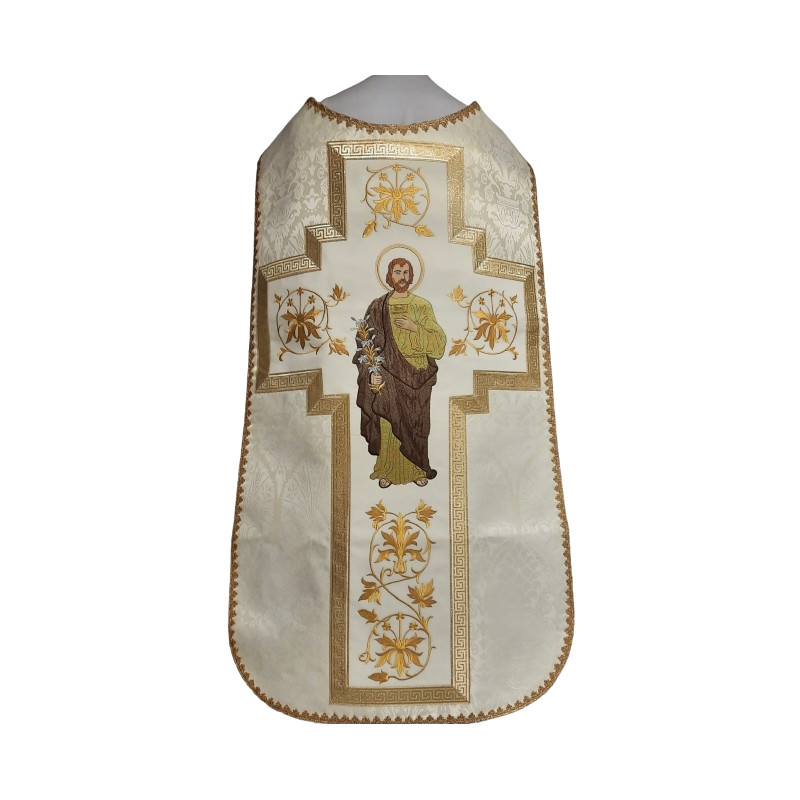
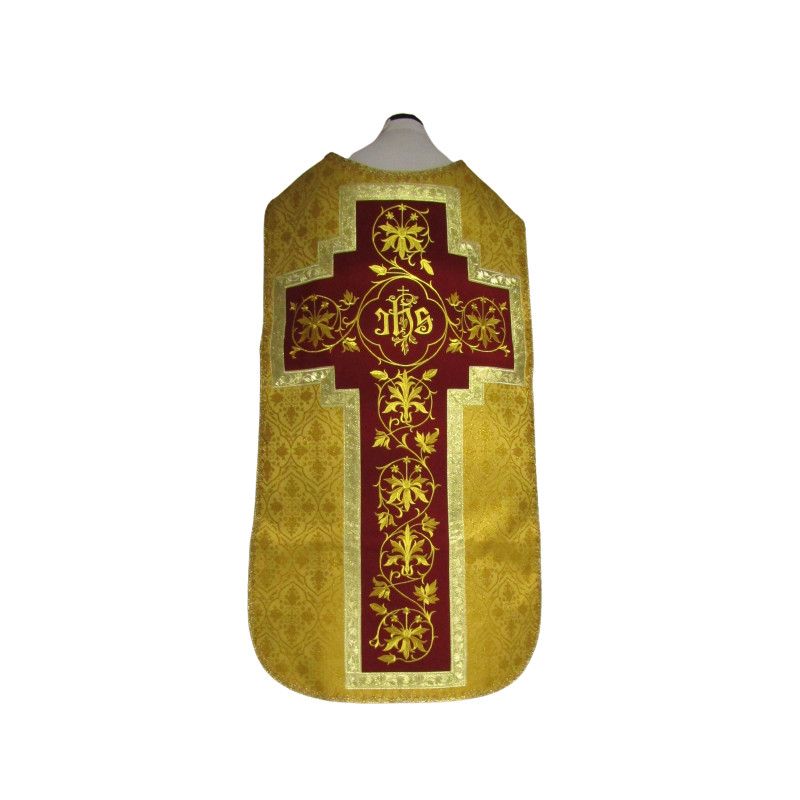
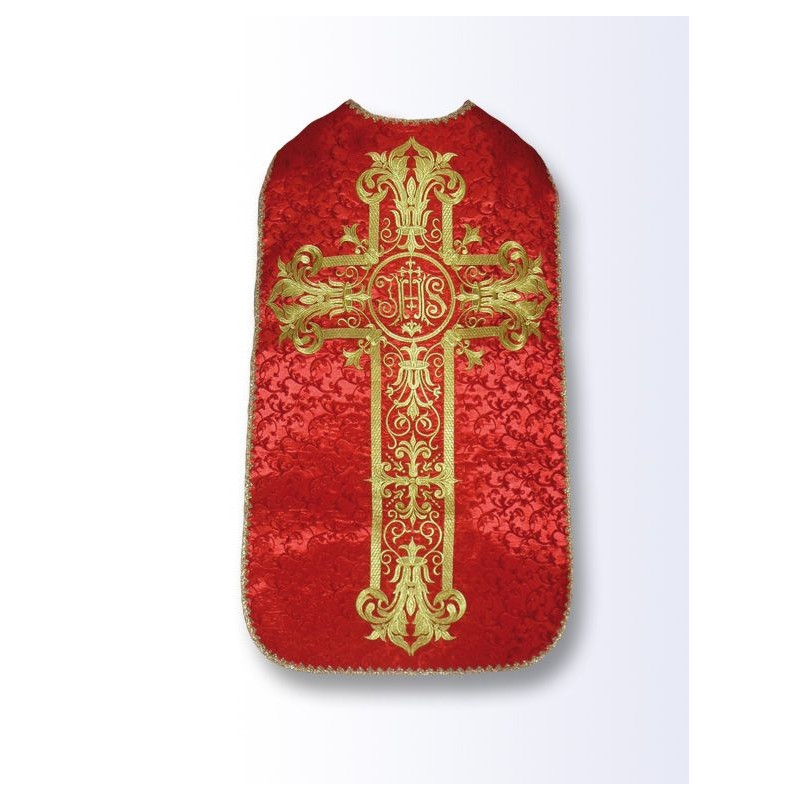
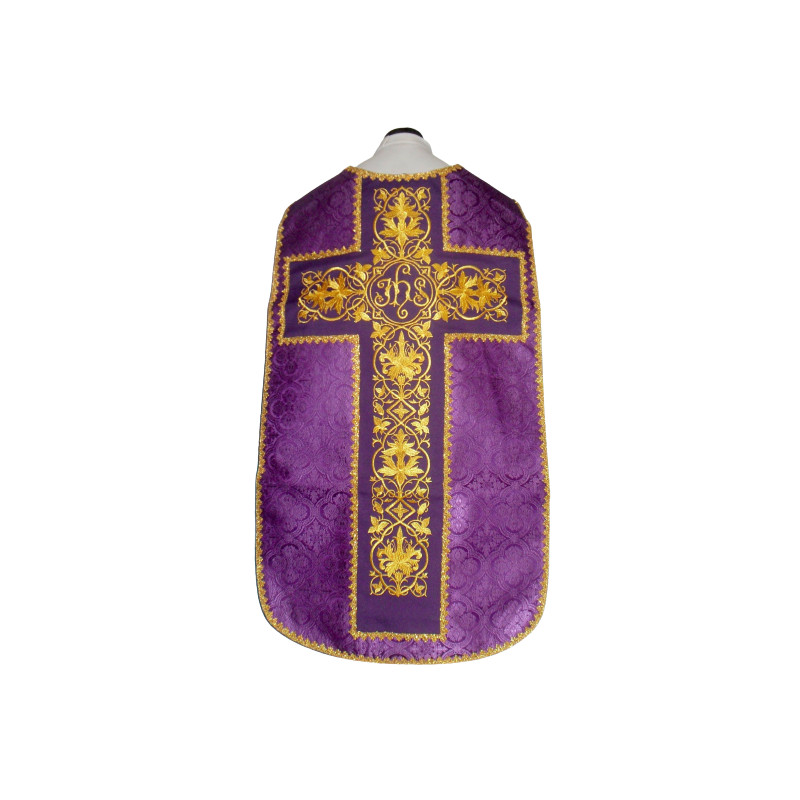
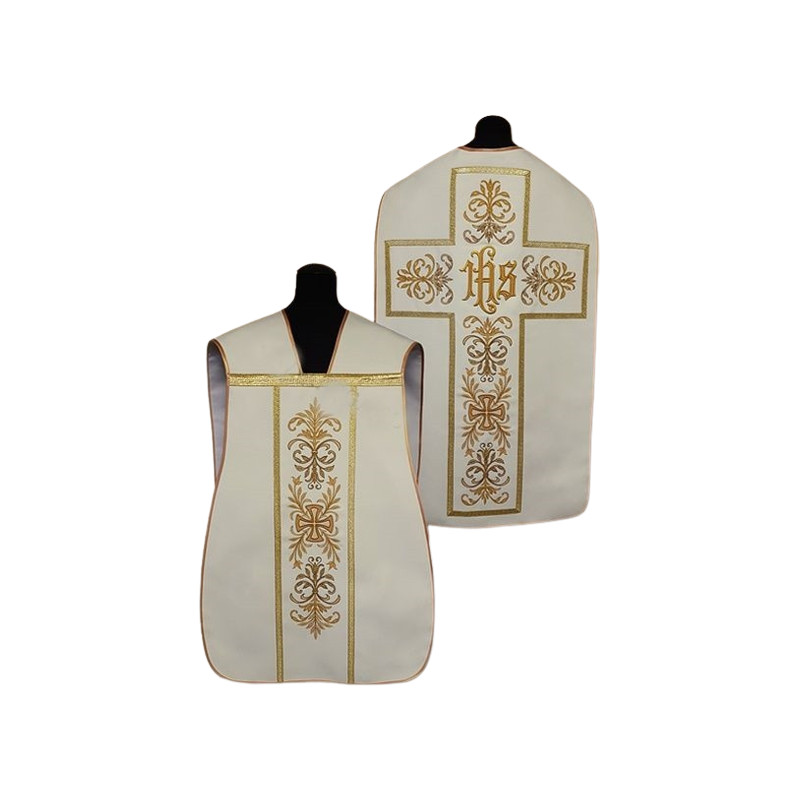
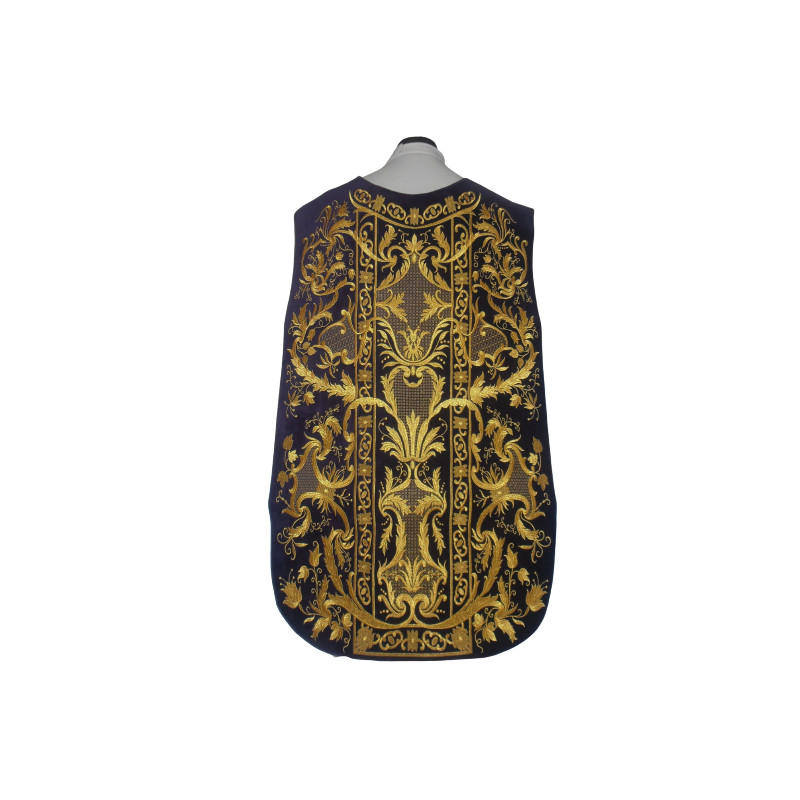
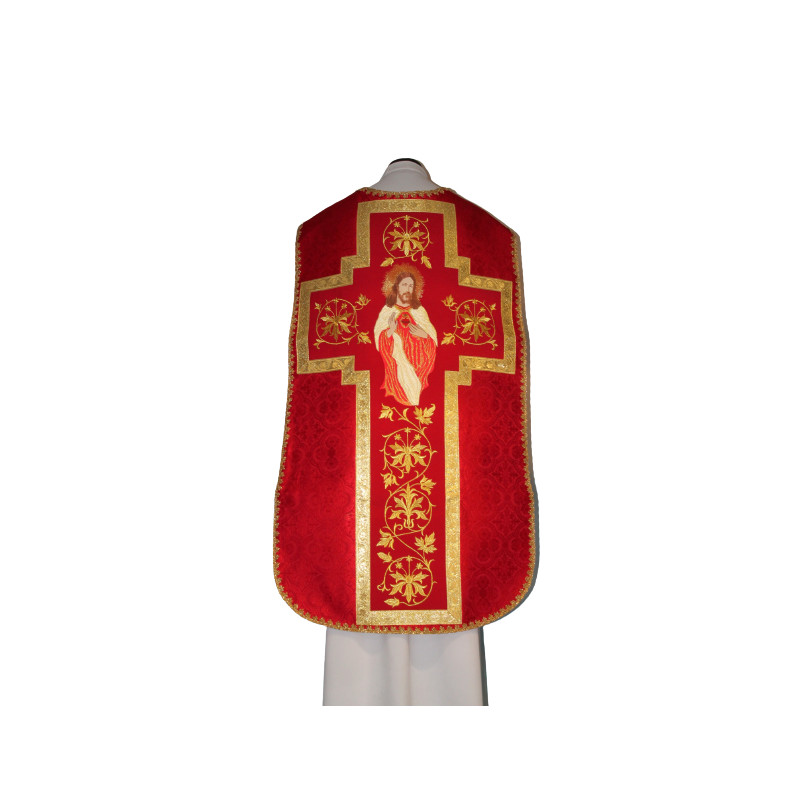
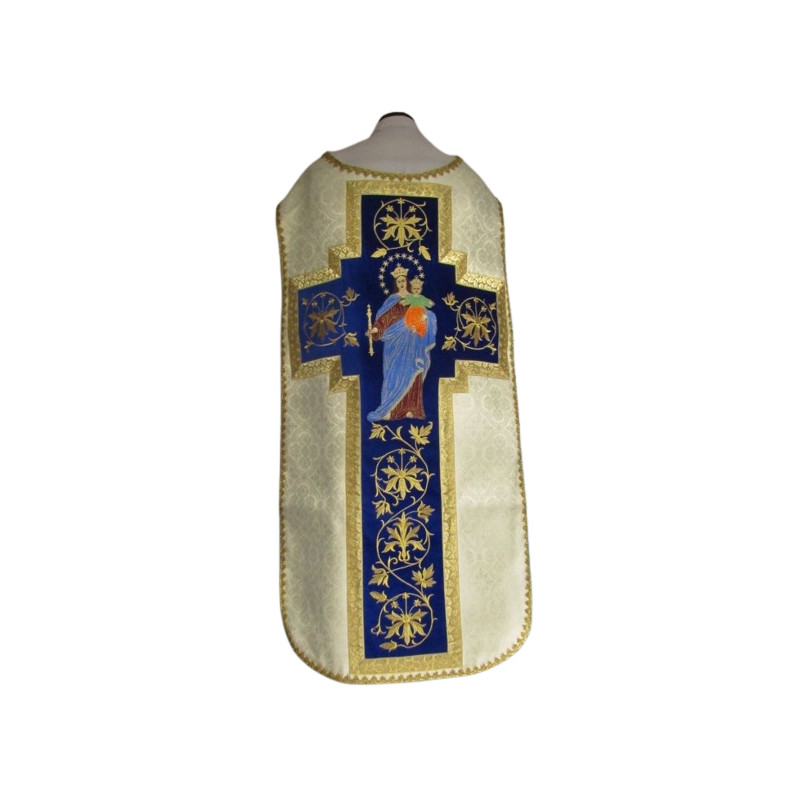
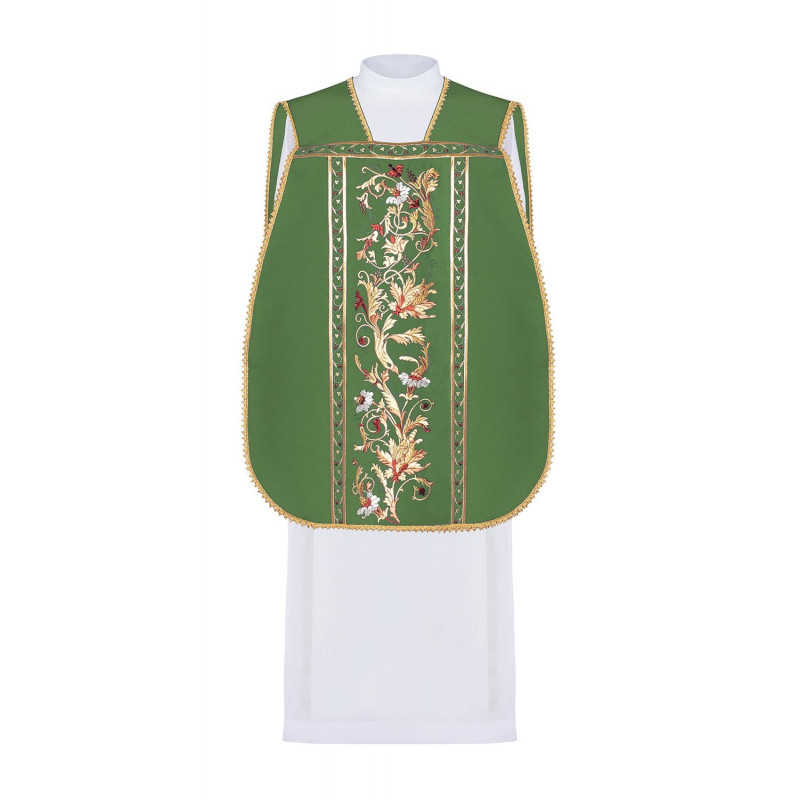
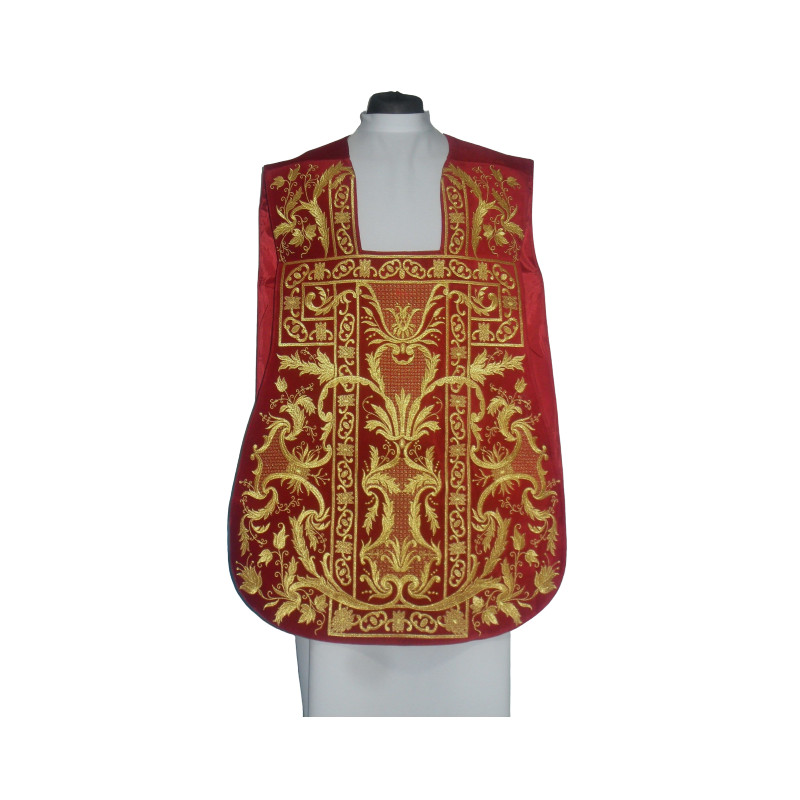
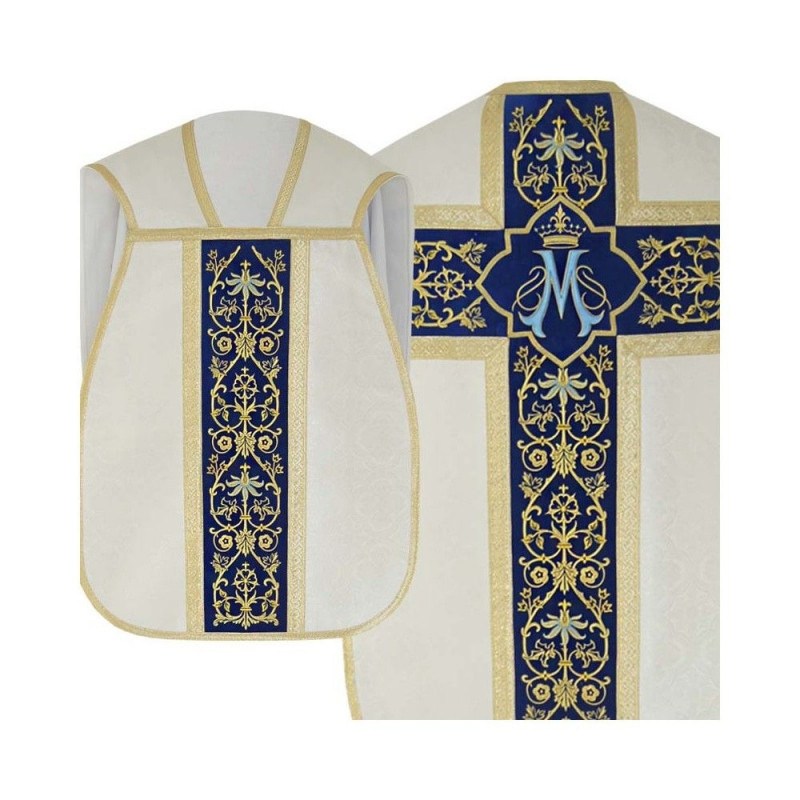
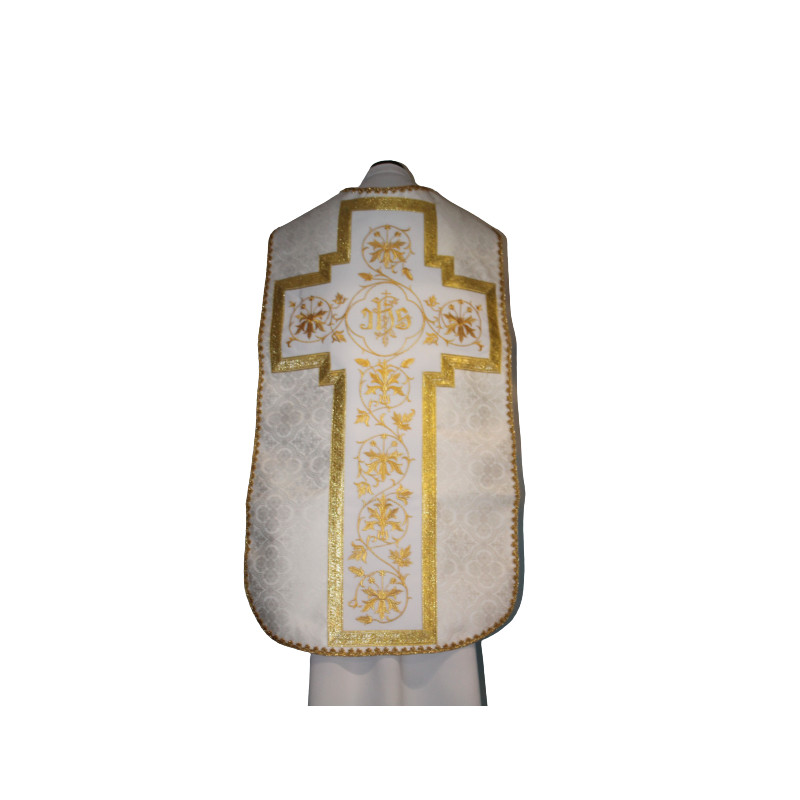
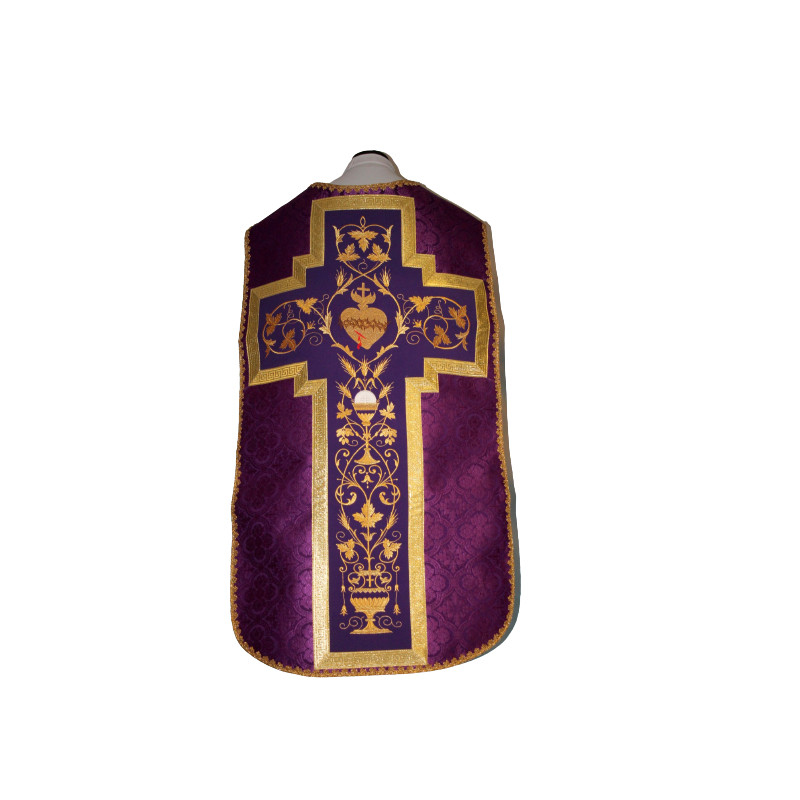
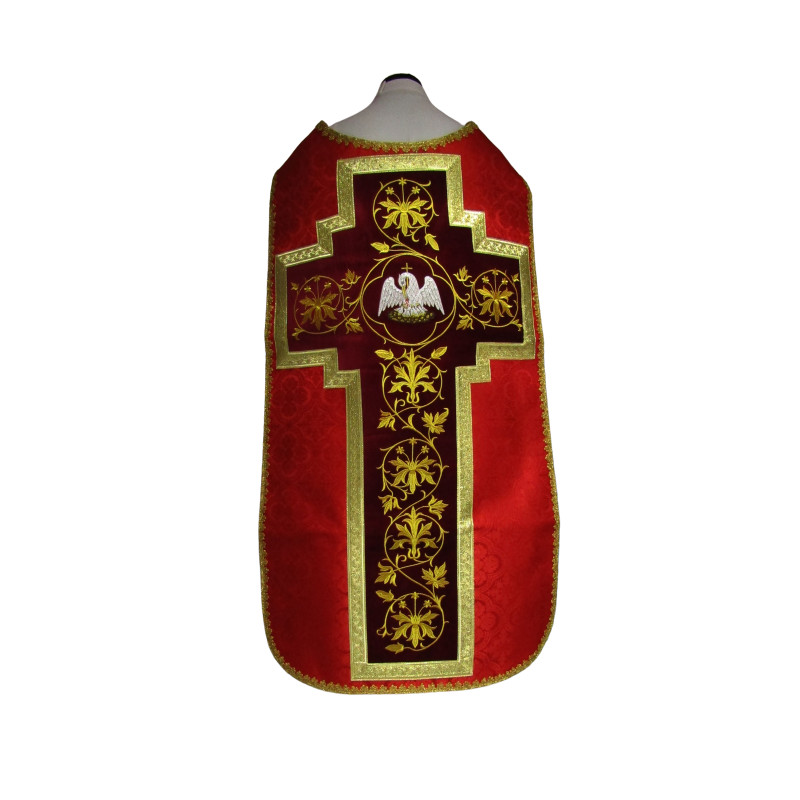
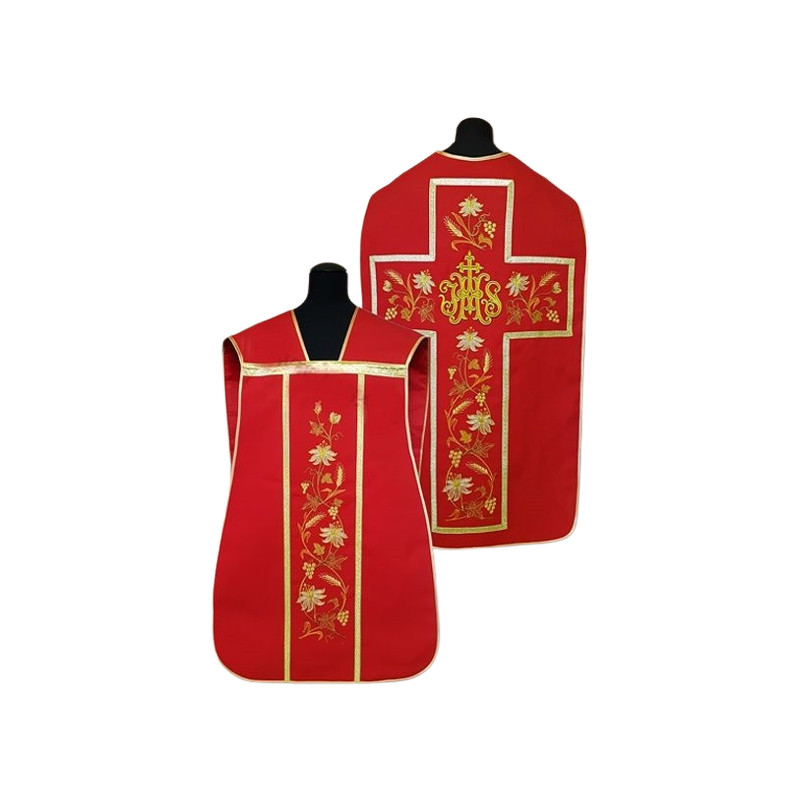
Where the Gothic chasuble is wide and flowing, the Roman cut is tailored and close-fitting: the front panel is shorter and narrower, and the back is shaped in a cross or "T" with embroidered orphreys running down the front and back. The chasuble is traditionally understood as the "yoke of Christ" — the vesting prayer asks that the priest may bear it with joy — and as a sign of the charity that should mark the celebration of the Eucharist.
Our collection includes 99 Roman chasubles from $165 to $1,412, embroidered in our Polish workshop and available in all liturgical colors. Most models include a matching stole; 22 sets are complete with a maniple, burse and chalice veil.
Roman vs Gothic vs Semi-Gothic vs Conical
Chasubles differ mainly in cut. The Roman style is the traditional fitted form used for the Traditional Latin Mass; the other cuts are variations in width and drape.
| Style | Shape | Typical use |
|---|---|---|
| Roman (fiddleback) | Close-fitting, shorter and narrower front, cross-shaped back | Traditional Latin Mass, solemn celebrations |
| Semi-Gothic | Mid-width, full-length front panel | All Masses, modern parishes — see semi-Gothic chasubles |
| Gothic | Wide, flowing, full yoke | Novus Ordo, concelebrations |
| Conical | Bell-shaped, no defined yoke | Contemporary designs |
The whole family is collected in our embroidered liturgical chasubles category.
Fiddleback Chasubles: The Most Fitted Roman Cut
A fiddleback chasuble is the most closely fitted version of the Roman cut — the name comes from the shape of its back, which resembles the back of a violin (fiddle). The style developed in the 18th and 19th centuries for practicality and dignity, and today it is a hallmark of the Traditional Latin Mass.
In everyday speech "Roman" and "fiddleback" are often used interchangeably. Our Roman chasubles feature the traditional fitted Roman cut with embroidered orphreys; see the full explanation in our guide fiddleback chasuble explained.
What Are Roman Chasubles Made Of?
Fabrics are chosen for drape, durability and how well they hold embroidery. In this collection you will find:
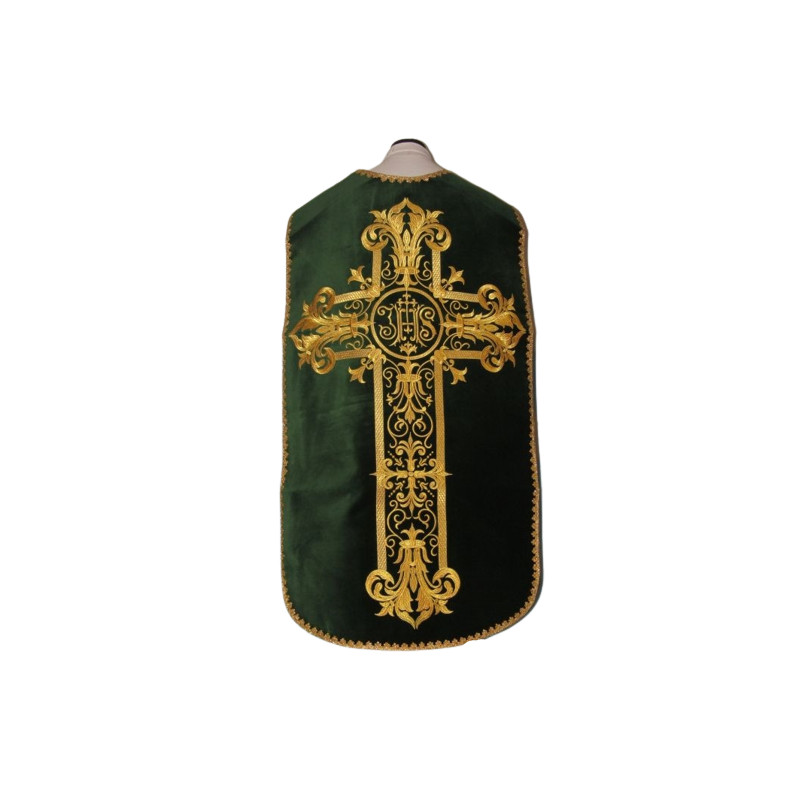
- Velvet — 43 models; deep color, soft pile, ideal for solemn vestments
- Damask — 23 models; breathable woven fabric with a subtle pattern
- Jacquard — 20 models; richly patterned weave with golden ornament
- Brocade — 6 models; metallic thread for festive seasons
- Elano-wool and wool blends — light, breathable 80% PE / 20% wool fabrics
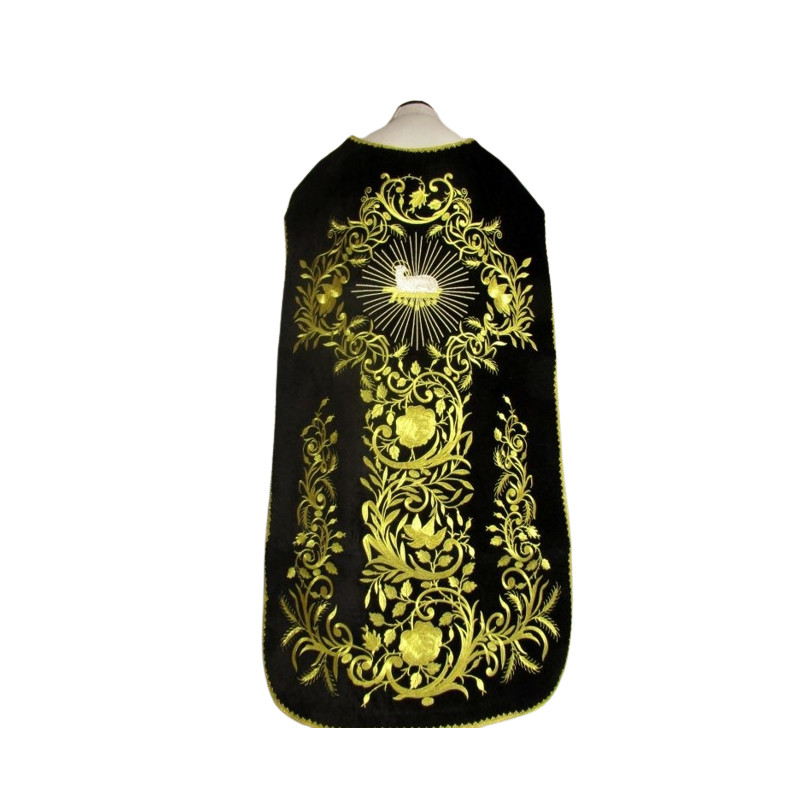
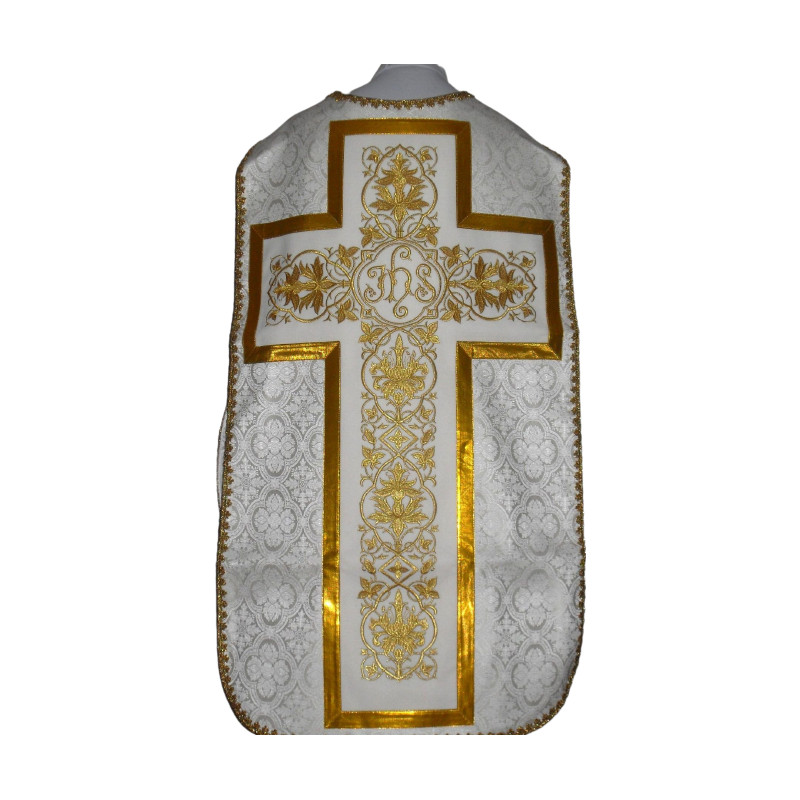
Every chasuble in this category is embroidered — with IHS monograms, crosses, rosettes, eucharistic motifs, the Heart of Jesus, Marian symbols or images of saints.
The Parts of a Roman Chasuble
The distinguishing feature of the Roman cut is the orphrey — the decorated band running over the shoulders and down the front and back, usually ending in a cross or an embroidered image. The front and back panels may carry an image of Christ, a saint, or a symbol such as IHS or a rosette.
The full traditional set of vestments for a Roman Mass adds:
- a matching stole (included with most of our chasubles),
- a maniple worn on the left arm,
- a burse for the corporal,
- and a chalice veil.
22 of our Roman chasubles are sold as complete sets with stole, maniple, burse and chalice veil. Underneath, the priest wears an alb and cincture.
Liturgical Colors and When to Wear Them
Roman chasubles are made in every liturgical color, so one style can serve the whole year:
| Color | When it is worn |
|---|---|
| White / gold | Christmas, Easter, feasts of the Lord, Mary and saints |
| Red | Pentecost, Palm Sunday, Good Friday, feasts of martyrs |
| Green | Ordinary Time |
| Violet / purple | Advent and Lent |
| Rose | Gaudete and Laetare Sunday |
| Black | Funeral Masses (where customary) |
Seasonal selections: Christmas chasubles, Easter chasubles, wedding chasubles, Marian chasubles and chasubles with saints.
Sizes and Measurements
Most of our Roman chasubles are made in one standard size — approximately 104–105 cm (about 41 in) long — with the fitted cut that leaves the arms free. Because we are the manufacturer, custom lengths and widths are available on request; contact us before ordering if the celebrant is unusually tall or short.
When choosing, check: the length you need (standard 104–105 cm), the liturgical color, whether you want the chasuble alone or a full set with stole, maniple, burse and veil, and the fabric weight for your climate.
How Much Do Roman Chasubles Cost?
Price depends on the fabric, the amount of embroidery and whether the vestment is sold alone or as a complete set. In our collection:
| Price range | Models |
|---|---|
| $165–$249 | 10 |
| $250–$399 | 17 |
| $400–$499 | 30 |
| $500–$699 | 7 |
| $700–$999 | 31 |
| $1,000 and up | 4 |
A simple damask chasuble starts at $165; heavily embroidered velvet sets for solemn celebrations reach $1,412. See the full breakdown in our guide how much does a chasuble cost.
Made in Poland — Our Own Workshop
Our Roman chasubles are sewn and embroidered by Polish vestment makers and finished in our workshop in Lublewo Gdańskie, Poland. Working directly with the workshop means consistent quality, honest fabric descriptions and the ability to make custom liturgical colors, sizes and embroidered images. See Made in Poland for details.
How to Choose a Roman Chasuble
Practical checklist for priests and sacristans:
- Color: order for the seasons your parish uses most, or build a full set of colors.
- Cut: Roman for the Traditional Latin Mass; compare cuts in Roman vs Gothic chasuble.
- Fabric: damask for everyday solemnity, velvet or brocade for great feasts.
- Set: check whether the stole is included, and whether you need the full maniple/burse/veil set.
- Care: see our complete guide for priests and sacristans.
Caring for an Embroidered Roman Chasuble
Embroidered vestments should be stored on a padded hanger in a breathable vestment bag, away from direct sunlight and damp. Spot clean with a soft cloth; do not machine wash, bleach, wring, or iron directly over embroidery. For deeper cleaning, use a specialist dry cleaner. More in our guide how to care for embroidered vestments.
Shipping and Returns
In-stock Roman chasubles are dispatched within 72 hours; delivery to the United States via FedEx typically takes 2–5 business days. Orders over $100 ship free within the United States. Made-to-order and custom items add 3–14 business days for production. Returns follow our returns policy; personalized and custom-made vestments are excluded.
Related Reading
- How to Choose a Chasuble: Complete Guide for Priests and Sacristans
- The History of the Chasuble: From Ancient Rome to Modern Altars
- Fiddleback Chasuble: Why It's Called That and How It Differs from a Roman Chasuble
- Roman Chasuble vs Gothic Chasuble: Key Differences Explained
- Parts of a Chasuble: Orphreys, Cross, Stole, Maniple and Burse Explained
- Cope vs Chasuble: What's the Difference and When to Wear Each
- More from this family: all embroidered chasubles · semi-Gothic chasubles · Gothic chasubles · Marian chasubles · chasubles with saints · wedding chasubles · linen chasubles
Frequently Asked Questions
What is the difference between a Roman chasuble and a Gothic chasuble?
A Roman chasuble is tailored and close-fitting, with a shorter, narrower front and a cross-shaped back; a Gothic chasuble is wide and flowing with a full yoke. The Roman cut is traditional for the Latin Mass, while the Gothic cut is common at Novus Ordo Masses and concelebrations. The semi-Gothic style sits between the two.
What is a fiddleback chasuble?
A fiddleback chasuble is the most fitted version of the Roman cut, named for the violin-shaped back. It developed in the 18th–19th centuries and is strongly associated with the Traditional Latin Mass. In practice, "Roman" and "fiddleback" are often used interchangeably.
What does a Roman chasuble symbolize?
The chasuble is traditionally seen as the "yoke of Christ" — the vesting prayer asks that the priest bear it with joy — and as a symbol of charity, the "seamless robe" of Christ, and the charity that should clothe the celebration of the Eucharist.
How much does a Roman chasuble cost?
In our collection, Roman chasubles range from $165 for a simple damask model to $1,412 for heavily embroidered velvet sets. Most models cost between $400 and $999. Price depends on the fabric, the amount of embroidery, and whether the chasuble is sold alone or as a full set with stole, maniple, burse and chalice veil.
Where can I buy a Roman chasuble?
You can order directly from our collection — every Roman chasuble is embroidered in Poland and shipped worldwide, with free shipping within the United States on orders over $100. Custom colors, sizes and images are available because we work directly with the vestment workshop.
What are the different types of chasubles?
The main types are Roman (fiddleback), semi-Gothic, Gothic and conical chasubles, plus monastic variants. They differ in width, drape and the shape of the back. Our guide How to Choose a Chasuble compares them in detail.
What is the difference between a cassock and a chasuble?
A cassock is the long, everyday garment worn by clergy, usually black; a chasuble is the outermost liturgical vestment worn only for Mass, over the alb and stole. The cassock is worn under the vestments, not instead of them.
Can a priest say Mass without a chasuble?
The chasuble is the proper vestment of the priest celebrant at Mass (see the General Instruction of the Roman Missal, no. 336), worn over the alb and stole. Concelebrating priests may in some cases wear only the stole, but for the principal celebrant the chasuble is the norm.
Do Catholic priests buy their own vestments?
Often yes. While many parishes keep a vestment set, priests frequently buy their own chasubles — personally or with the help of parishioners — especially for the Traditional Latin Mass and for specific colors or feasts. Ordination and anniversary gifts are common occasions.
Did Pope Francis ever wear a Roman chasuble?
Pope Francis typically wore the Gothic style. The fitted Roman (fiddleback) cut is more closely associated with his predecessor Benedict XVI and with celebrations of the Traditional Latin Mass.
What colors do Roman chasubles come in?
All liturgical colors: white and gold, red, green, violet, rose and black. Each color is worn in its own season — red for Pentecost and martyrs, violet for Advent and Lent, green for Ordinary Time, white or gold for Christmas and Easter.
What is included with a Roman chasuble set?
A full traditional set includes the chasuble, a matching stole, a maniple, a burse for the corporal and a chalice veil. Most of our Roman chasubles include the matching stole; 22 models are complete sets with all five pieces.
What size is a Roman chasuble?
Most of our Roman chasubles are approximately 104–105 cm (about 41 inches) long in a standard one-size cut. Because we work directly with the workshop, custom lengths and widths can be ordered — contact us before purchase.
How do I clean and store an embroidered Roman chasuble?
Store it on a padded hanger in a breathable vestment bag, away from sunlight and moisture. Spot clean with a soft cloth, avoid bleach and never iron directly on the embroidery; for deeper cleaning use a specialist dry cleaner.
Are Roman chasubles machine washable?
No. Embroidered chasubles should not be machine washed — the embroidery, trim and lining can be damaged. Spot clean gently or use professional dry cleaning, and always test any product on a hidden area first.
Can I order a custom Roman chasuble?
Yes. As a direct partner of the vestment workshop we can arrange custom sizes, liturgical colors, fabrics and embroidered images (for example a parish patron or a Marian image). Contact us with your requirements and we will confirm price and lead time.
