
What Is an Incense Boat?
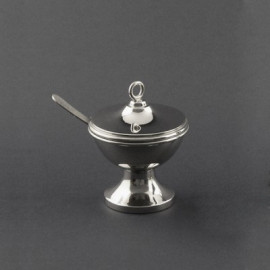
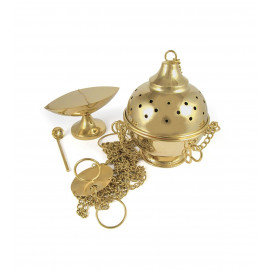
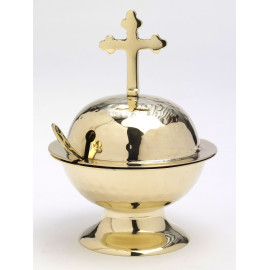
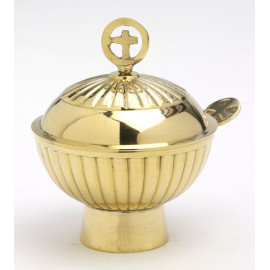
An incense boat (also called a navicula) is a small vessel used to hold incense grains before they are placed in the thurible. It is called a "boat" because of its traditional boat-like shape. The incense boat is always used together with a thurible and an incense spoon.
The name comes from Latin: navicula means "little ship" — French and Italian sacristies still call the vessel the navette or navicella. In older English inventories it appears as the "incense ship," which is why the incense boat meaning is simply the container that carries loose incense to the censer.
During Mass, the thurifer brings the incense boat to the celebrant. The priest takes a spoonful of incense from the boat, places it in the thurible, and blesses it. The boat keeps the incense clean, organized, and ready for use. Most boats open on one side; larger Gothic models open on both sides so the spoon can be reached from either hand.
Every parish that uses incense needs a quality incense boat and spoon set. They are essential for the proper use of incense in the liturgy.
What Types of Incense Boats Are Available?
Incense boats come in several options:
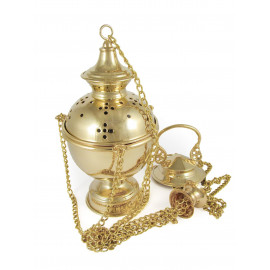
Brass incense boats — the most common type. Durable, attractive, and when paired with a matching thurible, they create a unified look.
Silver incense boats — more ornate and expensive. Often chosen for cathedral churches or special occasions.
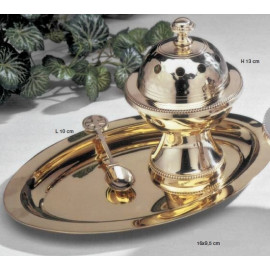
Boat and spoon sets — many churches buy the incense boat, spoon, and thurible as a matching set for a coordinated appearance.
Typical prices in our current collection:
| Item | Typical Price | Best For |
|---|---|---|
| Thurible (brass or nickel-plated) | from $97 | Parish churches, regular use |
| Thurible (gilded or silver-plated) | up to $1,008 | Solemnities, cathedral use |
| Incense boat | $92–$443 | Holding incense grains during Mass |
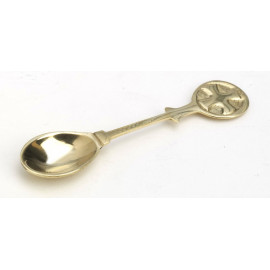
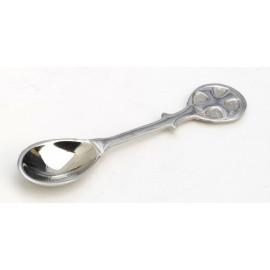
| Incense spoon | from $10 | Transferring incense to the thurible |
| Thurible + boat set | $145–$264 | New parishes, matched pair |
| Complete set (thurible + boat + spoon) | $203–$282 | Complete sacristy setup |
How Do I Choose the Right Incense Boat?
- Match your thurible. If you have a brass thurible, get a brass incense boat for a unified look.
- Check the lid. The lid should fit securely to prevent incense from spilling.
- Consider the size. The boat should hold enough incense for a typical Mass without being too bulky.
- Look for a quality spoon. The spoon should be the right size for the boat and thurible.
Browse Our Incense Boat Collection
Browse our selection of incense boats and spoons in brass and silver-plated finishes. Complete your thurification set with a matching incense boat. We also offer thuribles, incense charcoal, and aspergillums.
Is a Thurible the Same as a Censer?
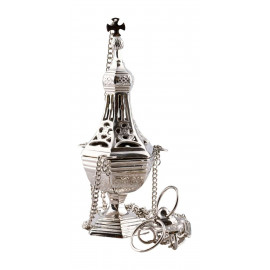
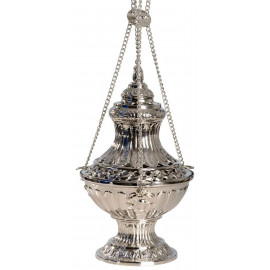
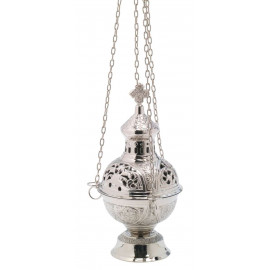
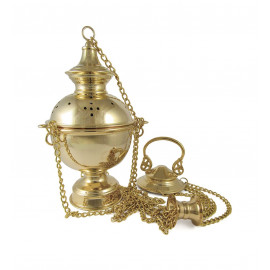
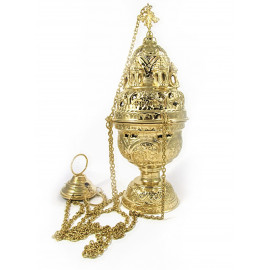
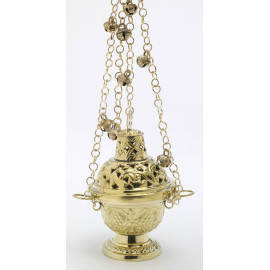
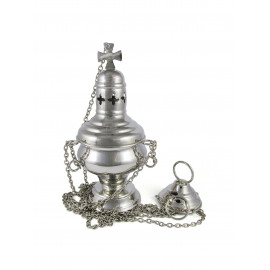
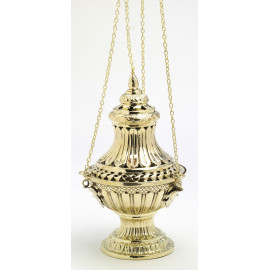
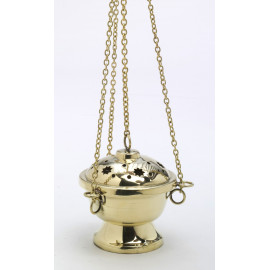
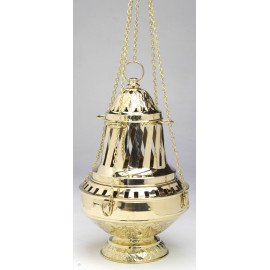
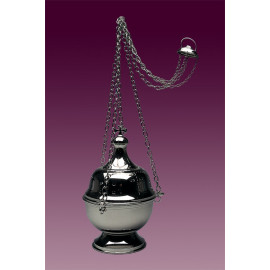
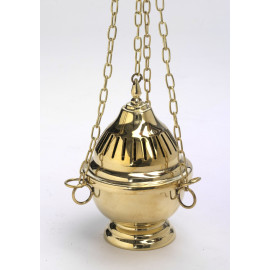
Yes — a thurible is a censer. "Censer" is the general name for any vessel used to burn incense, while "thurible" refers specifically to the metal censer suspended from chains that is swung during Mass, processions, and Benediction. In everyday Catholic usage the two words are interchangeable, which is why thuribles are also listed as incense burners.
That is also why the same pair of vessels is listed in catalogs as a "censer and boat" set — the censer (thurible) plus the incense boat (navicula). Compared side by side, a censer and a thurible differ only in the chains and the liturgical use: a thurible is a censer made to be swung. Smaller table censers and incense burners for home use follow the same idea without chains.
During the liturgy the thurible is swung in sets of three — toward the Blessed Sacrament, the altar, the cross, the Gospel, the celebrant, or the people — and the smoke of the incense symbolizes prayer rising to God (Psalm 141:2; Revelation 8:4). The altar server who carries the thurible is called the thurifer; the server who carries the incense boat beside him is the boat bearer.
What is the difference between a thurible and a thurifer?
A thurible is the vessel; a thurifer is the person. The thurifer is the altar server who carries the thurible, adds incense to it, and swings it at the proper moments of the Mass. Our guide to training a new thurifer covers both roles in practice.
What is another name for a thurible?
The most common alternative name is censer. In liturgical Latin the thurible is the turibulum, from thus ("incense"); "incense burner" and "hanging censer" are the everyday names, and in Eastern Catholic and Orthodox usage you will also meet the word "kadilo."
How do you pronounce thurible?
THUR-uh-bul, with the stress on the first syllable — the same pattern as thurifer (THUR-ih-fer). The word comes from Latin thus, incense, so the "th" is the ordinary English sound, not the Greek theta.
What is the point of a thurible?
The point of a thurible is to burn incense, whose smoke symbolizes the prayers of the faithful rising to God. Incense also honors what it is directed toward — the Blessed Sacrament, the altar, the Gospel, the cross, or the body of the deceased at a funeral Mass.
How many times do you swing the thurible?
In the Roman Rite the thurible is normally swung three times toward a person or object, and with three sets of three swings when the Blessed Sacrament is exposed. The thurifer's pattern at each moment of the Mass is covered step by step in our guide to how to use a thurible during Mass.
What is a boat bearer?
The boat bearer is the altar server who carries the incense boat and spoon, walking beside the thurifer and presenting the boat to the priest or deacon when incense is added to the thurible. Our guide to training a new thurifer also covers the boat bearer's duties.
Thuribles for Home Use
You do not need a cathedral sacristy to pray with incense. A small thurible — 11 to 13 cm high — is light enough to swing indoors, and the nickel-plated 11 cm thurible costs $97. Many families also keep a small censer or incense burner on the home altar for stick or resin incense; browse our incense burners for home use.
For a home setup you need three things: a small thurible or censer, self-igniting charcoal discs, and loose incense. The home altar guide shows where the censer fits into a family prayer corner, and our beginner's guide to incense at home walks through the whole routine step by step.
Can Catholics use a thurible at home?
Yes. Incense is a sacramental — something the Church blesses and uses for prayer — and burning it privately is not reserved to clergy. Catholics commonly use a small thurible at home for evening prayer, novenas, or the Liturgy of the Hours; no special permission or blessing is required for private use. When charcoal is inconvenient, a simple censer for resin or stick incense works just as well.
What Size Thurible Do You Need?
Size decides where a thurible belongs: a 41 cm censer suits a cathedral procession, an 11 cm thurible suits a home chapel. A quick guide to our current stock:
- 11–13 cm (small / mini): home altars, small chapels, and young servers — from $97, e.g. the brass thurible 11 cm.
- 15–18 cm (standard parish): the workhorse size for weekday and Sunday Mass — $104–$179.
- 20–26 cm (large parish): big sanctuaries and solemn liturgies — $179–$375.
- 28–41 cm (XXL / cathedral): processions and high solemnities — $210–$1,008, e.g. the XXL nickel thurible 33 cm ($459) or the 41 cm nickel-plated thurible ($403).
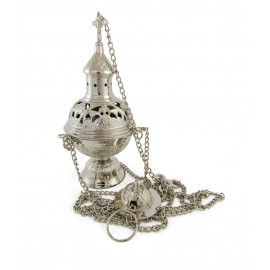
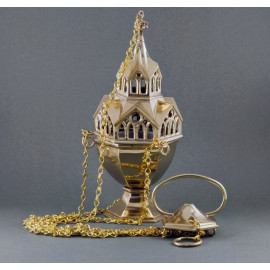
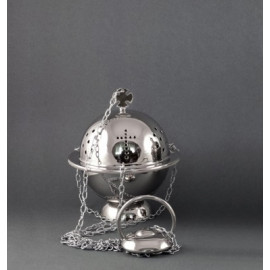
Style matters as much as size: neo-Gothic thuribles with vertical tracery suit traditional sanctuaries, while smooth round censers match modern churches. If you are matching existing metalwork, our guide to choosing a thurible compares brass, bronze, and silver finishes in detail.
How Much Does a Thurible and Boat Cost?
A complete thurible and boat set costs between $145 and $282 in our current collection. Individual pieces range from $10 for an incense spoon to $1,008 for a large gilded thurible:
- Thuribles: from $97 for a small thurible (nickel-plated brass) up to $1,008 for a large gilded censer
- Incense boats: $92–$443 depending on finish and size
- Incense spoons: from $10
- Thurible and boat sets: from $145 (with spoon, from $203)
Brass and nickel-plated thuribles are the most economical choice for parish use, while gilded and silver-plated pieces cost more because of the hand-finishing. If you are planning a purchase for a parish, see our guide to choosing a thurible and our guide to budgeting for liturgical supplies.
Brass, Bronze, or Silver-Plated?
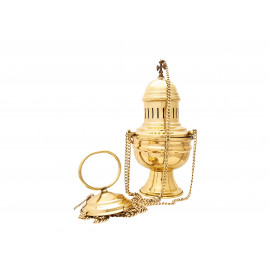
Most thuribles and incense boats are made of brass, bronze, or silver-plated metal. Brass is the most common: durable, easy to polish, and affordable. Bronze is heavier and darker, with a traditional look for solemn churches. Nickel plating gives a bright, silver-like finish at a lower price, while gilded and silver-plated thuribles are reserved for solemnities and cathedral use.
Whatever the finish, match the boat and thurible finishes — brass with brass, silver-plated with silver-plated — for a unified set at the credence table. Compare materials in detail in How to Choose a Thurible: Brass, Silver, or Bronze?
Thurible, Boat & Spoon Guides
Using incense well takes practice. These guides from our blog cover the practical side of thurible and boat care:
- How to use a thurible during Mass: step-by-step guide
- How to choose a thurible: brass, silver, or bronze?
- How to clean and maintain a thurible
- How to train a new thurifer
- The history of incense in Catholic worship
- The role of processions in Catholic worship
Incense rises before the Blessed Sacrament reserved in the tabernacle, marked by the sanctuary lamp that burns day and night.
Related Reading
For processions with incense and Benediction, see our Catholic copes.
