






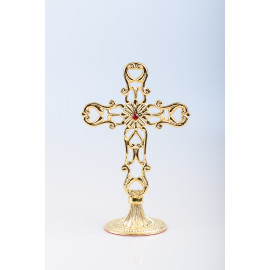

What Is the Difference Between a Cross and a Crucifix?
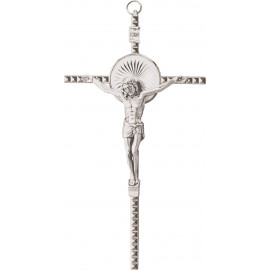
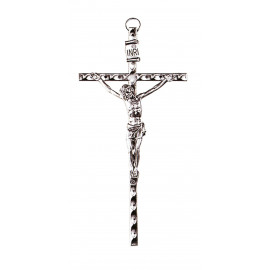
A cross is the Christian symbol of the instrument of the Passion — two beams of wood, without the figure of Christ. A crucifix is a cross that carries the corpus: the image of Jesus crucified, usually with the INRI title above His head (Latin Iesus Nazarenus Rex Iudaeorum — "Jesus the Nazarene, King of the Jews"). Both are central symbols of the Catholic faith: the cross shows how Christ died, the crucifix also shows who died for us. For the altar, the Church asks for a cross "with the figure of Christ crucified upon it" (General Instruction of the Roman Missal, no. 117). Read the full explanation in our guide: Cross vs Crucifix: What's the Difference?
Types of Crosses and Crucifixes in This Collection
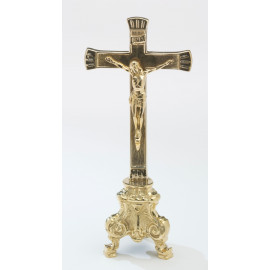
- Altar crosses and crucifixes — placed on or near the altar as its principal ornament; often paired with candlesticks.
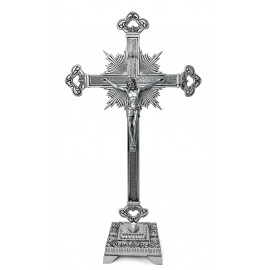
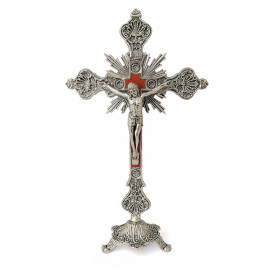
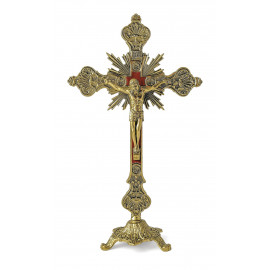
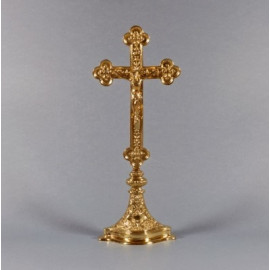
- Standing crucifixes — 19–32 cm pieces with a base, for altars, desks, shelves, and home shrines.
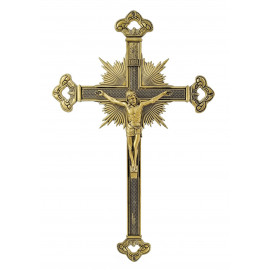
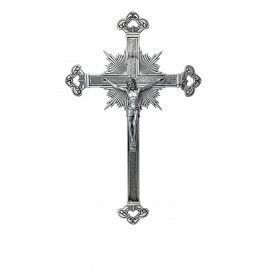
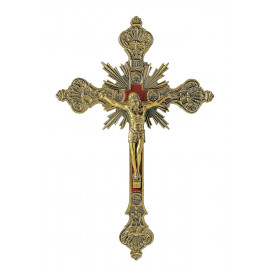
- Hanging (wall) crucifixes — 30 cm oxidized gold or silver crucifixes with a hanging ring, plus small metal crucifixes with a hook.
- Hand cross — a 44 cm brass crucifix with a wooden handle, carried by a priest for blessings.
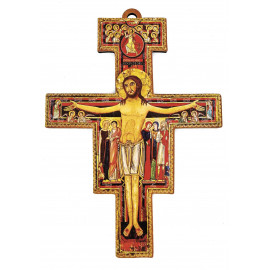
- San Damiano (Franciscan) crosses — the icon cross before which St. Francis of Assisi prayed.
- Tau crosses — T-shaped crosses of the Franciscan tradition, worn on a thong.
- Papal cross — a cross with three crossbars.
All 25 pieces are listed below. Twenty of them are true crucifixes with the corpus of Christ; the five plain crosses are clearly described as crosses without a corpus. A guide to the types of Catholic crosses explains the names and meanings in detail.
Altar Crosses and Crucifixes
The General Instruction of the Roman Missal (no. 117) directs that "there is also to be a cross, with the figure of Christ crucified upon it, either on the altar or near it" — and it is to be "clearly visible to the assembled congregation." For a church altar, size matters: the cross should be proportionate to the altar and read clearly from the nave. Our altar-grade pieces include the altar crucifix set with two candlesticks (26 cm gilded brass, $290), the brass altar cross (39 cm, $484), modern standing crosses in polished gold-plated brass (19–25 cm, $111–$217), and the priest's hand cross (44 cm, $343). Pair them with our altar candlesticks, a missal stand, the sanctuary lamp, and sanctuary bells.
Standing Crucifixes for Altars, Desks, and Shelves
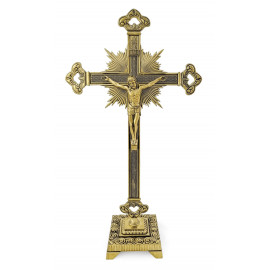
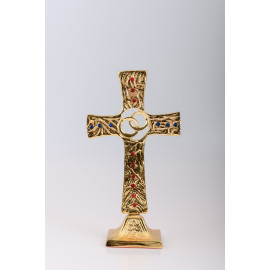
Standing crucifixes have a weighted base so they can sit directly on an altar, credence table, desk, or shelf. The four 32 cm models ($75–$92) are richly decorated and finished in oxidized gold or oxidized silver — a deliberate aging process that protects the metal and gives it a warm, antique tone. The smaller modern crosses (19–25 cm, $111–$217) use polished, gold-plated brass with decorative stones and a solid base. A standing crucifix is also the natural centerpiece of a home altar; see our guide How to Set Up a Home Altar.
Hanging and Wall Crucifixes for Home, Chapel, and Church
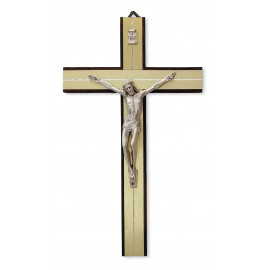
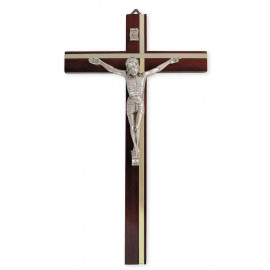
The 30 cm hanging crucifixes ($72–$76) come in oxidized gold and oxidized silver finishes with a ring for wall mounting — a classic size for a bedroom, entryway, or prayer corner. Smaller metal crucifixes (4–16.5 cm, $4–$10) have a hook for hanging on a wall or a cord, and the wooden models (20–30 cm, $31–$44) combine dark or olive wood with a silver-tone corpus inlaid into the wood. Wondering where a crucifix should hang? Our guide Where to Hang a Crucifix in Your Home covers the traditions.
The Priest's Hand Cross
The hand cross is a crucifix with a handle, held by a priest when he gives blessings — at the end of Mass, during house blessings, and in processions. Our 44 cm brass hand crucifix with a wooden handle is a piece of professional liturgical equipment: substantial in the hand, easy to raise, and finished with the same attention as our altar pieces.
The San Damiano Cross (Cross of St. Francis)
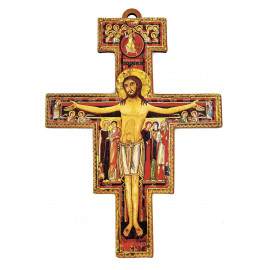
The San Damiano cross is the large Romanesque icon cross before which St. Francis of Assisi was praying when he heard the call to "rebuild my Church." Unlike a realistic crucifix, it shows Christ triumphant — alive, robed, with arms open. We offer two laminated-wood San Damiano crosses (14 × 10 cm and 8 × 6 cm, $5 each), both with a hanging hook; they are a classic Confirmation gift. Read the full story: The San Damiano Cross: Meaning and History.
The Tau Cross
The Tau is the cross shaped like the letter T — the sign St. Francis adopted as his personal seal, linked to the biblical mark of salvation in Ezekiel 9:4. Franciscans and pilgrims wear it as a simple, discreet profession of faith. Our olive wood Tau crucifix (4 cm) comes with a brown thong and a silver-tone strap, ready to wear. More in our guide: The Tau Cross: Meaning and Who Wears It.
Wooden and Olive Wood Crucifixes
Wood gives a crucifix warmth and texture that metal alone cannot. Our wooden crucifixes use an inlay technique — recesses cut into the wood and filled with cut pieces of silver-tone metal — so the corpus and ornaments sit flush with the surface. Choose dark wood, olive wood, or a wooden cross decorated with images of the Roman basilicas; all are available in 20 cm, 25 cm, and 30 cm heights ($31–$44).
Materials, Finish, and Care
Brass pieces are polished and, where noted, gilded; oxidized gold and silver are covered with a thin, deliberate layer of oxides that protects the metal and produces an aged look. Most crosses are protected with varnish and need almost no maintenance — dust with a soft, dry cloth. For stubborn spots, wipe with a cloth barely dampened in warm water with a drop of mild soap, then dry immediately; avoid abrasive polishes, ultrasonic cleaners, and soaking. Full instructions: How to Clean and Care for a Brass Crucifix.
Sizes and Prices at a Glance
| Type | Height / size | Price |
|---|---|---|
| Tau crucifix, olive wood, with thong | 4 cm (1.6 in) | $4 |
| Metal crucifixes with hook (with INRI, with rays, papal) | 11–16.5 cm (4.3–6.5 in) | $4–$10 |
| San Damiano crosses, laminated wood | 8 × 6 cm, 14 × 10 cm | $5 |
| Wooden and olive wood crucifixes (inlaid metal, basilicas) | 20–30 cm (7.9–11.8 in) | $31–$44 |
| Hanging crucifixes, oxidized gold / silver | 30 cm (11.8–11.9 in) | $72–$76 |
| Standing crucifixes with base, oxidized gold / silver | 32 cm (12.5–12.6 in) | $75–$92 |
| Modern standing crosses, gold-plated brass, stones | 19–25 cm (7.5–9.8 in) | $111–$217 |
| Standing wedding cross with joined rings | 25 cm (9.8 in) | $111 |
| Altar crucifix with two candlesticks, gilded brass | 26 cm (10.2 in) + 13 cm | $290 |
| Priest's hand crucifix, brass, wooden handle | 44 cm (17.3 in) | $343 |
| Brass altar cross (plain cross, no corpus) | 39 cm (15.4 in) | $484 |
Eighteen of the 25 pieces are under $100; orders over $100 ship free within the United States.
How to Choose a Cross or Crucifix
- For a church altar — a crucifix with the corpus, proportionate to the altar and clearly visible to the congregation (GIRM 117); a matching candlestick set completes the arrangement.
- For a chapel, sacristy, or office — a standing crucifix with a base (19–32 cm) sits securely on any flat surface.
- For the home — a 30 cm hanging crucifix above a doorway or bed, or a small hook crucifix in each room; a standing crucifix for the prayer corner or home altar.
- For a priest or seminarian — the 44 cm hand cross for blessings, or a polished brass altar cross.
- As a gift — the San Damiano cross for Confirmation, the Tau cross for a Franciscan friend, the wedding cross with joined rings for a newly married couple.
Frequently Asked Questions
What Is the Catholic Crucifix Called?
It is simply called a crucifix — from the Latin cruci fixus, "(one) fixed to a cross." A crucifix used on the altar is an altar crucifix; a small one worn on a cord or chain is a crucifix necklace. The word distinguishes it from a plain cross, which has no corpus.
Why Do Catholics Use a Crucifix Instead of a Plain Cross?
The crucifix keeps the sacrifice of Christ visible: it is a vivid reminder of His Passion, death, and love for us — not a sign of defeat but of redemption. Catholics use crosses too, but on and near the altar the Church asks specifically for a cross with the figure of Christ crucified (GIRM 117).
Is It Okay for a Catholic to Wear a Crucifix?
Yes. Wearing a crucifix is a long-standing Catholic devotion — a public witness of faith and a personal reminder of the Passion. It is not superstition, and it is not required; many Catholics wear a crucifix necklace, and Franciscans traditionally wear the Tau cross on a thong.
What Is an Altar Crucifix?
An altar crucifix is a crucifix placed upon or near the altar, where it is often the principal ornament. Per the General Instruction of the Roman Missal (no. 117) it must bear the figure of Christ crucified and be clearly visible to the congregation.
What Is the Cross on the Altar Called?
It is called an altar cross or altar crucifix. "Altar cross" describes the shape; "altar crucifix" specifies that it carries the corpus. It usually stands at the center of the altar or behind it, often flanked by candlesticks.
What Are the Four Main Types of Crosses?
The four shapes most often named are the Latin cross (long lower arm — the standard Western form), the Greek cross (arms of equal length), the Tau cross (T-shaped, of the Franciscan tradition), and the papal cross (three crossbars). Dozens of further variants exist — Celtic, Maltese, patriarchal — but these four cover the shapes used most in Catholic worship.
Where Should a Crucifix Be Placed in a Home?
Traditionally above doorways and above beds, so that entering and leaving, waking and sleeping are marked by the sign of faith. A crucifix in the entryway blesses the comings and goings of the household; a crucifix in the bedroom invites prayer before sleep. In a prayer corner or home altar it should hold the most prominent place.
Should a Catholic Home Have a Crucifix?
It is a strong custom rather than an obligation — and a beautiful one. A crucifix makes the home's faith visible, accompanies daily prayer, and is a traditional gift for a new home. Many families keep one in the main living space and one in each bedroom.
What Should a Catholic Home Altar Have?
A home altar traditionally centers on a crucifix, with candles, a rosary, a Bible, and sacred images or icons arranged around it. Our guide How to Set Up a Home Altar walks through the arrangement step by step.
What Is the Meaning of the San Damiano Cross?
The San Damiano cross is the icon before which St. Francis of Assisi prayed when he heard Christ say, "Francis, go and repair my house." It shows the risen, triumphant Christ — eyes open, arms outstretched — surrounded by angels and saints. It is the model of the Franciscan cross. Read more in The San Damiano Cross: Meaning and History.
Who Can Wear a Tau Cross?
Any Christian may wear a Tau cross; it is most associated with Franciscans and members of Franciscan third orders, for whom it was St. Francis's personal sign. The T recalls the mark placed on the foreheads of the faithful in Ezekiel 9:4 — the sign of those who are saved.
Why Are Crosses Veiled During Lent?
In many parishes crosses and images are veiled in purple cloth from the Fifth Sunday of Lent (Passiontide) until the celebration of the Lord's Passion on Good Friday — a way of sharpening the anticipation of Easter by temporarily withdrawing the sacred images. The custom is optional and varies by parish. See Why Are Crosses Veiled During Lent?
How Do I Clean a Brass Crucifix?
Dust with a soft, dry cloth. For fingerprints or light tarnish, wipe with a cloth barely dampened in warm water with a drop of mild dish soap, then dry immediately. Avoid abrasive polishes, vinegar, ammonia, ultrasonic cleaners, and soaking — and note that varnished and oxidized finishes should only be dusted, never polished. Full guide: How to Clean and Care for a Brass Crucifix.
Related Reading
- Cross vs Crucifix: What's the Difference?
- Types of Catholic Crosses and Crucifixes: Names and Meanings
- How to Choose an Altar Cross or Crucifix
- Where to Hang a Crucifix in Your Home
- The San Damiano Cross: Meaning and History
- The Tau Cross: Meaning and Who Wears It
- Why Are Crosses Veiled During Lent?
- How to Clean and Care for a Brass Crucifix
- Stations of the Cross for churches and home · altar candlesticks · reliquaries · sanctuary bells · sanctuary lamps · missal stands · ciboria · processional canopies · rosaries
- Stations of the Cross: A Complete Guide to This Lenten Devotion
