
What Is a Liturgical Ciborium?
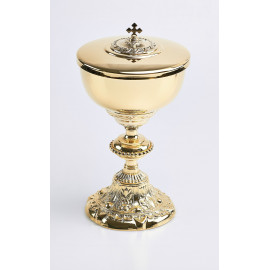
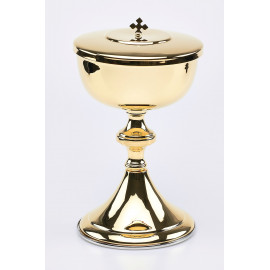
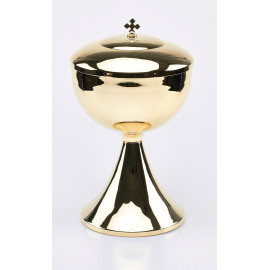
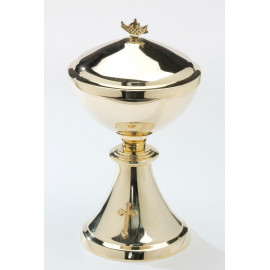
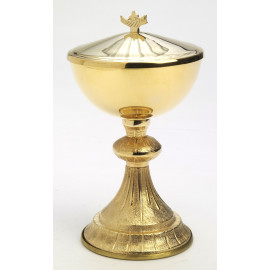
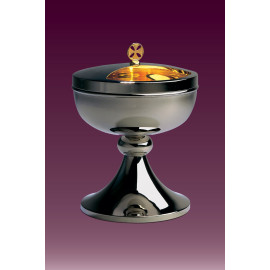
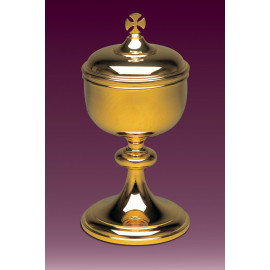
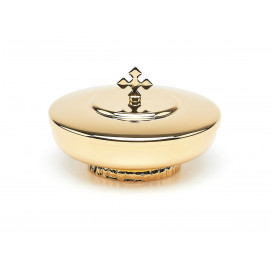
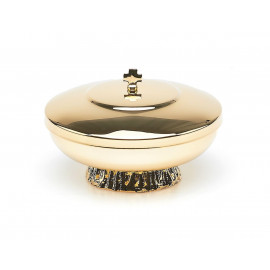
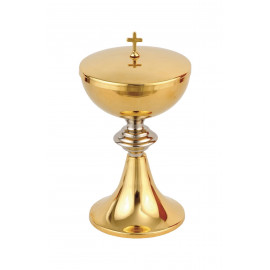
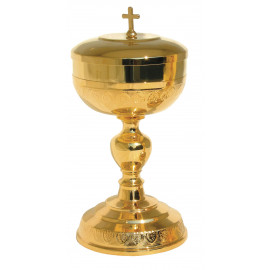
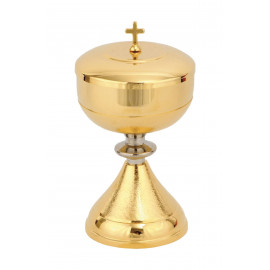
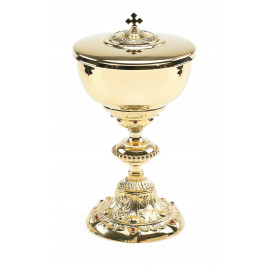
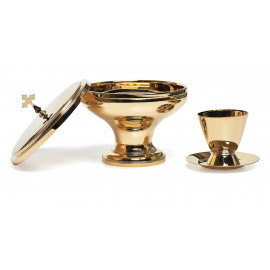
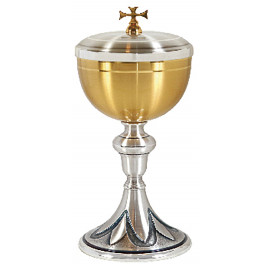
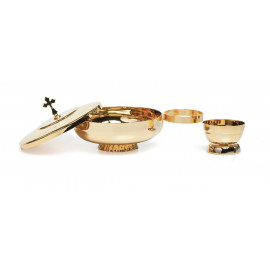
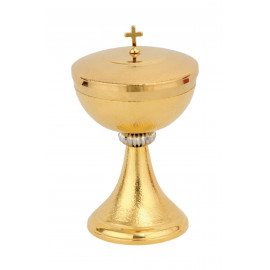
A liturgical ciborium is a covered sacred vessel used to hold the consecrated hosts — the Body of Christ — during and after the celebration of Mass. It looks like a wide chalice but with a lid, and that lid is what sets it apart from other sacred vessels. The cover protects the hosts from dust and shows reverence for the Real Presence of Christ in the Eucharist.
The word "ciborium" comes from the Greek word for cup. In early Christian art, it referred to a canopy over the altar. Over time, the name transferred to the vessel itself. Today, every church that reserves the Blessed Sacrament in the tabernacle uses a ciborium for the distribution and reservation of Holy Communion.
The ciborium serves two main purposes. First, it holds the hosts that will be distributed to the faithful during Holy Communion at Mass. Second, after Mass, any remaining consecrated hosts are placed in the ciborium (or a larger vessel called a custody) for reservation in the tabernacle for adoration and distribution to the sick.
What Types of Liturgical Ciboria Are Available?
Just like chalices, ciboria come in different materials and sizes. Here is what you will find in our collection:
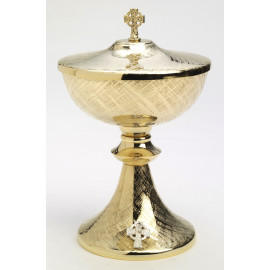
Brass ciboria are the most popular choice for parish use. They are affordable, durable, and when gold-plated, they meet all liturgical requirements for sacred vessels. Most parishes use brass ciboria for daily Mass and regular Communion distribution.
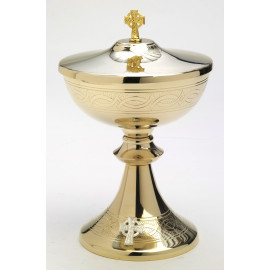
Silver-plated ciboria offer a more elegant and ornate appearance. They are a good choice for churches that want something that looks more elaborate for Sunday Mass, solemnities, and special liturgical celebrations.
Size matters. A small ciborium might hold 20-30 hosts — fine for a weekday Mass with a small congregation. A large ciborium can hold 200+ hosts for Sunday services or for reserving a significant number of hosts in the tabernacle for adoration and Communion to the sick.
How Do I Choose the Right Ciborium for My Church?
- Consider your congregation size. A small parish might only need a medium ciborium. A large church or cathedral will want a bigger one to accommodate the number of communicants.
- Check the lid fit. The lid should sit snugly without wobbling. A loose lid lets dust in and does not show proper reverence for the Blessed Sacrament.
- Interior must be precious metal. Same rule as chalices — the inside needs to be gold or silver plated to meet canon law requirements.
- Weight and stability. A ciborium that tips over easily during the distribution of Communion is a real problem. Look for a wide, stable base.
- Match your chalices. Many churches choose ciboria that match their chalices in material and finish for a unified look on the altar.
| Size | Capacity | Best For | Price Range |
|---|---|---|---|
| Small | 20-50 hosts | Weekday Mass, small chapels | $60–$120 |
| Medium | 50-150 hosts | Regular parish Masses | $100–$250 |
| Large | 150-300+ hosts | Sunday Mass, cathedrals | $200–$500+ |
What Material Should a Ciborium Be Made Of?
The Church requires that the interior of the ciborium be made of precious metal. Our collection includes:
Brass with gold plating — the most practical and popular choice. Durable, affordable, and meets all liturgical requirements.
Silver-plated brass — more elegant appearance for churches that want a more ornate ciborium for special celebrations.
How Do You Care for a Ciborium?
Ciboria are pretty straightforward to maintain. After Mass, any remaining hosts are reverently placed in the tabernacle. The ciborium itself should be wiped clean with a purificator and stored in a dry place. Avoid harsh chemicals — a soft cloth and mild soap are all you need. If the plating wears thin, have it re-plated by a professional who specializes in sacred vessels.
Frequently Asked Questions About Ciboria
Q: What is the difference between a ciborium and a tabernacle?
A: A ciborium is a portable vessel that holds hosts. A tabernacle is a fixed, locked box (usually on or near the altar) where consecrated hosts are reserved. After Mass, the ciborium containing remaining hosts is placed inside the tabernacle.
Q: Do I need more than one ciborium?
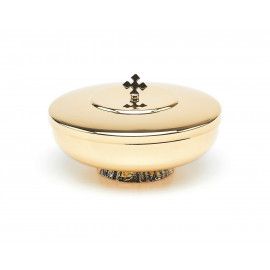
A: Many churches use a larger ciborium for the tabernacle and a smaller one for daily Mass. It is not required, but it is practical. A larger ciborium (sometimes called a custody) is often kept in the tabernacle, while a smaller one is used at Mass.
Q: Does a ciborium need to be blessed?
A: Yes, like all sacred vessels that hold the Eucharist, a ciborium should be blessed before use. The blessing sets it apart for sacred liturgical use.
Browse Our Ciborium Collection
Explore our selection of liturgical ciboria in brass, silver-plated, and various sizes. Every ciborium meets the Church's requirements for sacred vessels. Find the right size for your parish. We also offer matching chalices and custodies for a unified sacristy collection.