



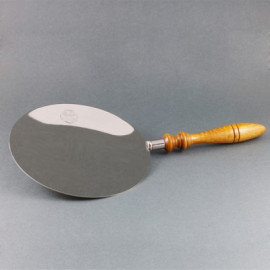


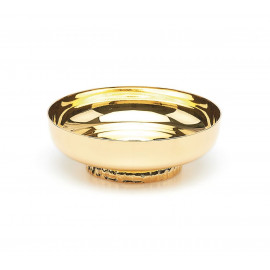
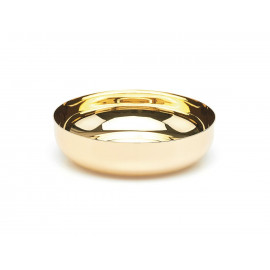
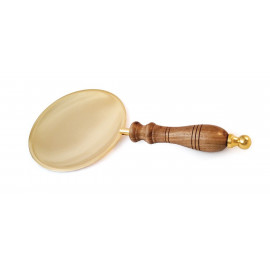


What Is a Liturgical Paten?
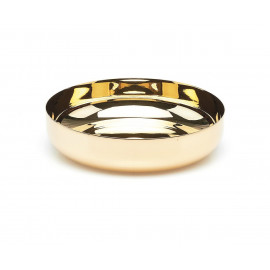
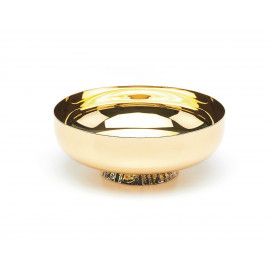
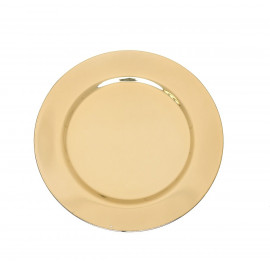
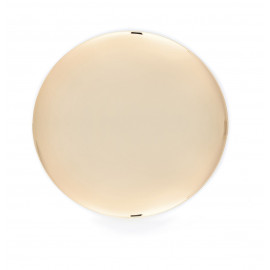
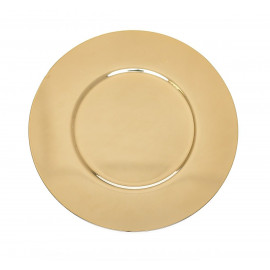
A liturgical paten is a small, flat plate used during the celebration of Mass to hold the large host that the priest consecrates for himself. It is one of the essential sacred vessels of the Catholic liturgy and is always used together with the chalice. In fact, the Church's rubrics treat the chalice and paten as an inseparable pair — you will rarely find one without the other.
During the offertory, the priest places the large host on the paten and holds both over the chalice during the consecration. After the consecration, the paten holds the consecrated host until the priest consumes it. Some patens have a small depression in the center to keep the host from sliding off, which is especially helpful during processions or outdoor Masses.
The paten has been part of the Mass since the earliest days of the Church. The General Instruction of the Roman Missal (GIRM) specifies that the paten, like the chalice, should be made of precious metal or at least lined with precious metal on the interior surface that contacts the consecrated host.
What Types of Liturgical Patens Are Available?
Patens are simpler than chalices or ciboria, but there are still important choices to make when selecting the right paten for your parish:
Flat patens are completely smooth with no depression. They are the most traditional style and work well for most churches. The flat surface allows the host to rest securely, and the priest can easily lift it during the consecration.
Depressed patens have a small indentation in the center that holds the host securely. This design is especially helpful during processions, outdoor Masses, or in churches where the altar may not be perfectly level. The depression prevents the host from sliding off during the liturgy.
Matching sets — many churches buy a paten that matches their chalice, with the same material, finish, and decorative style. This gives a unified and professional look on the altar. Our shop offers patens that coordinate with our chalice collections.
How Do I Choose the Right Paten for My Parish?
Here is what I tell people when they are picking out a paten:
- Match your chalice. If possible, get a paten in the same material and finish as your chalice. This creates a unified look on the altar and shows attention to liturgical detail.
- Size matters. The paten should be large enough to hold the large host comfortably but not so large that it is unwieldy. Standard patens are 3-6 inches in diameter.
- Interior must be precious metal. Same rule as chalices — the surface that touches the consecrated host must be gold or silver plated. This is a requirement of canon law and shows proper reverence for the Eucharist.
- Check the weight. A paten that feels too light will feel cheap. Look for something with some heft to it, similar to your chalice.
- Consider the finish. The plating should be even, without bubbles, scratches, or thin spots. Look at both sides — that is where cheaper patens often cut corners.
| Type | Diameter | Best For | Price Range |
|---|---|---|---|
| Small flat paten | 3-4 inches | Daily Mass, matching small chalices | $30–$80 |
| Medium depressed paten | 4-5 inches | Regular parish Masses | $50–$120 |
| Large flat paten | 5-6 inches | Sunday Mass, concelebrations | $80–$200 |
What Material Should a Paten Be Made Of?
Canon law requires that the interior surface of the paten (the part that touches the consecrated host) be made of precious metal. In practice, this means:
Brass patens with gold plating are the most common and affordable option. They are durable, look great, and meet all the Church's requirements. Most parishes choose brass patens for daily use.
Silver-plated patens offer a more elegant appearance. They are usually a bit more expensive but the finish is stunning. Good for churches that want something a step up from basic brass.
Solid silver patens are the premium option. These are typically custom-made or hand-crafted and can cost significantly more.
How Do You Care for a Paten?
Patens are easy to maintain. After Mass, wipe it with a purificator. For deeper cleaning, use a soft cloth and mild soap. Avoid abrasive cleaners — they will scratch the plating. Store it with your chalice — many churches keep them together in the sacristy. If the plating wears thin, have it re-plated by a professional. Do not wait until the base metal shows through.
Frequently Asked Questions About Patens
Q: Can I use a regular plate as a paten?
A: The Church requires that patens be made of precious metal (or lined with it). A regular plate does not meet liturgical requirements and does not show proper reverence for the Eucharist. Always use a proper liturgical paten.
Q: Do I need a separate paten for each chalice?
A: No, one paten per chalice is standard. For concelebrations, the main celebrant uses the paten and other concelebrants use the same one. Some churches have a larger paten for concelebrated Masses.
Q: What size paten should I buy?
A: The paten should be large enough to hold the large host comfortably. For most parishes, a 4-5 inch paten is the right size. If you use larger hosts, consider a 5-6 inch paten.
Q: Does a paten need to be blessed?
A: Yes, like all sacred vessels that contact the Eucharist, a paten should be blessed by a bishop or priest before use.
Browse Our Paten Collection
Shop our full selection of liturgical patens in brass, silver-plated, and various sizes. Find a paten that matches your chalice and meets all liturgical requirements. We offer flat and depressed styles at every price point, from budget-friendly options for daily Mass to ornate patens for Sunday celebrations.