









What Is a Liturgical Holy Oil Stock?
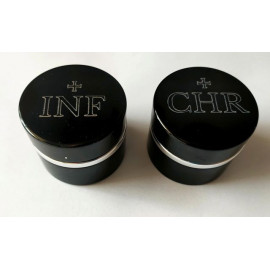
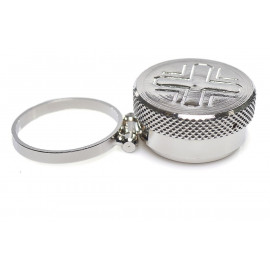
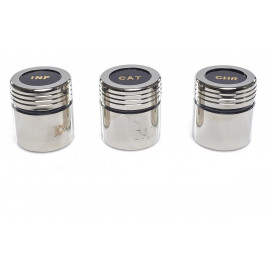
A liturgical holy oil stock (also called an oil vessel or oil container) is a sacred vessel used to store and dispense the holy oils used in the sacraments of the Catholic Church. There are three holy oils: Oil of the Catechumens (OC), used in baptism and ordination; Oil of the Sick (OS), used in the Anointing of the Sick; and Sacred Chrism (SC), used in baptism, confirmation, and holy orders.
These oils are blessed by the bishop at the annual Chrism Mass and distributed to parishes for use throughout the year. The oil stock is an essential item in every church sacristy. It keeps the oils clean, properly labeled, and ready for use in baptisms, confirmations, anointing of the sick, and ordinations.
Every parish needs a quality oil stock set. Proper storage of the holy oils shows reverence for these sacred substances and ensures they are readily available when the sacraments are celebrated.
What Types of Holy Oil Stocks Are Available?
Oil stocks come in different configurations to meet the needs of different parishes:
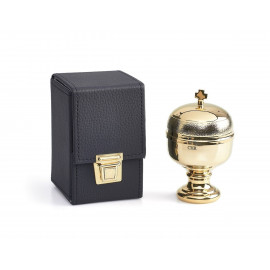
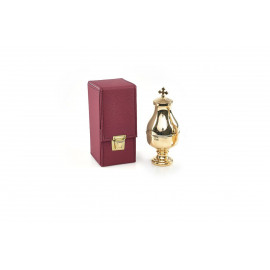
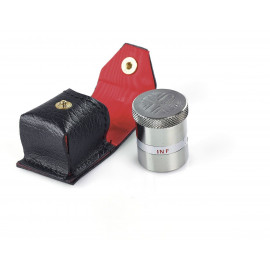
Single oil stock — holds one type of oil. Good for churches that want separate vessels for each oil or need to keep oils in different locations (for example, one in the sacristy and one in the baptismal area).
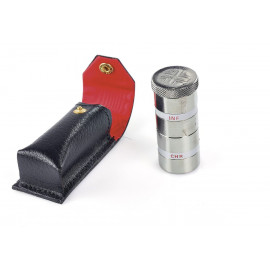
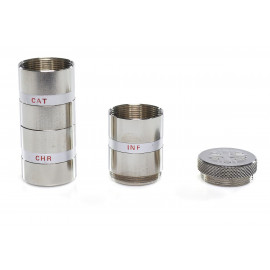
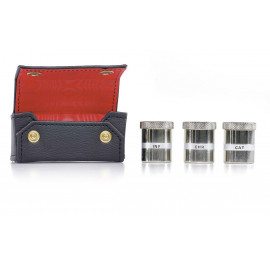
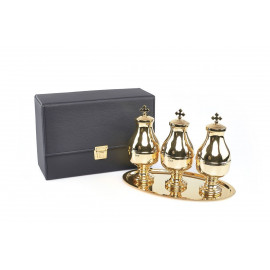
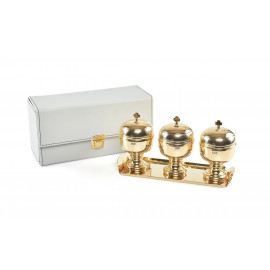
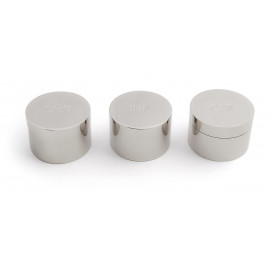
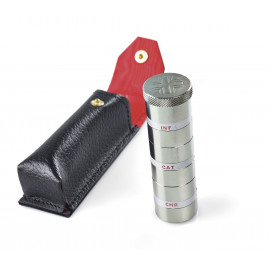
Triple oil stock — a single unit with three compartments, one for each oil (OC, OS, SC). This is the most common and practical setup for parishes because it keeps all three oils together and clearly labeled. A triple oil stock is easier to manage and less likely to result in confusion about which oil is which.
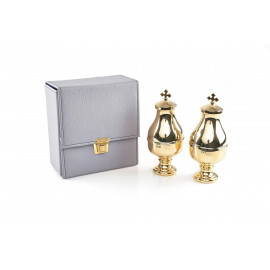
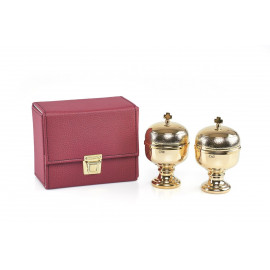
Brass oil stocks — the traditional choice. Durable, attractive, and when gold-plated, they look beautiful on the altar or in the sacristy. Brass oil stocks are the most popular choice for parish use.
Wall-mounted oil stocks — designed to be mounted on the wall near the baptismal font or in the sacristy. These save counter space and keep the oils in a designated, reverent location.
How Do I Choose the Right Holy Oil Stock?
- Triple vs. single. A triple oil stock is more convenient for most parishes. Single stocks are good if you need to keep oils in separate locations or want individual vessels for each oil.
- Check the labels. Each compartment should be clearly marked (OC, OS, SC) to avoid confusion. Using the wrong oil in a sacrament is a serious liturgical error.
- Consider the size. Make sure the stock holds enough oil for your parish's needs throughout the year. Most parishes receive enough oil at the Chrism Mass to last the year, so the stock needs to hold the full amount.
- Look for a secure closure. The caps should fit tightly to prevent spills and contamination. A loose cap can let dust in and cause the oil to spill.
- Consider the material. Brass is the traditional and most durable choice. Glass oil stocks are also available but are more fragile.
| Type | Compartments | Best For | Price Range |
|---|---|---|---|
| Single oil stock | 1 | Individual oil storage | $20–$50 |
| Triple oil stock | 3 (OC, OS, SC) | Parish sacristy | $50–$150 |
| Ornate triple stock | 3 (OC, OS, SC) | Cathedral churches | $100–$300+ |
How Do You Care for Holy Oil Stocks?
Oil stocks are relatively low-maintenance but require reverent handling. Wipe the exterior regularly with a soft cloth. When refilling, make sure the compartments are clean and dry before adding new oil. Store in a cool, dry place. If the oil becomes discolored or contaminated, it should be disposed of properly — burned, not poured down a regular drain. The sacrarium is the appropriate place for disposing of old oil that has been diluted with water during cleaning.
Frequently Asked Questions About Holy Oil Stocks
Q: How often should holy oils be replaced?
A: Holy oils should be replaced annually, typically at the Chrism Mass when the bishop blesses new oils. Old oil should be burned, not poured down a regular drain. This is a requirement of canon law.
Q: Can I use any container for holy oils?
A: The Church requires that holy oils be stored in proper vessels. A dedicated oil stock ensures the oils are kept clean, labeled, and reverently stored. Using improper containers risks contamination and confusion.
Q: Where should holy oil stocks be kept?
A: Holy oil stocks should be kept in a clean, dry, and reverent place — typically in the sacristy or near the baptismal font. They should be accessible to the priest and deacon but secure from accidental disturbance.
Browse Our Holy Oil Stock Collection
Shop our selection of liturgical holy oil stocks in brass and triple-compartment designs. Keep your parish's holy oils properly stored and labeled. We also offer pyxes and reliquaries for a complete sacred vessel collection.