



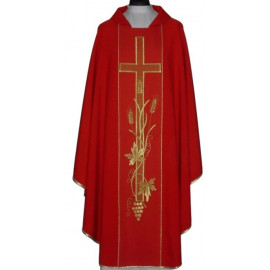


What Is an Embroidered Liturgical Chasuble?
An embroidered liturgical chasuble is the outermost vestment worn by the priest during the celebration of Mass. It is the most visible and recognizable priest vestment — the garment that covers the alb and stole, and it changes color with the liturgical season. The chasuble symbolizes the yoke of Christ and the charity that should adorn every priest who celebrates the Eucharist.
The chasuble has its roots in the Roman paenula, a common outer garment worn in the ancient world. Over time, it became specifically associated with the priesthood and the celebration of the Eucharist. Today, it is a powerful symbol of the priest's role as a representative of Christ at the altar.
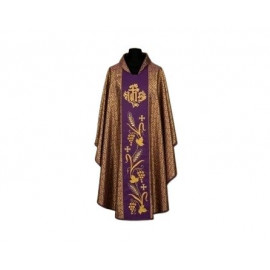
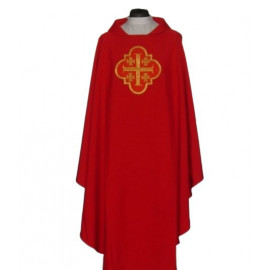
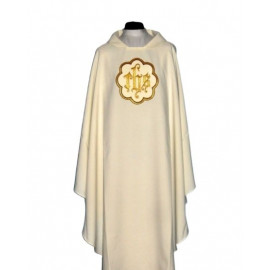
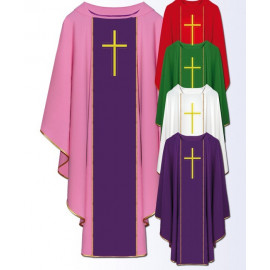
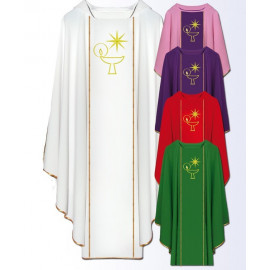
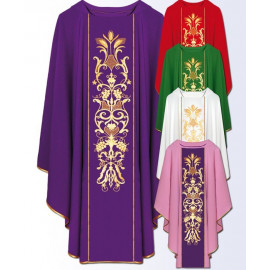
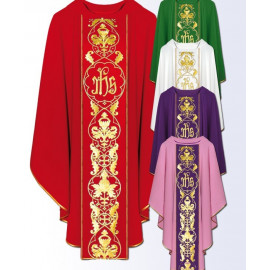
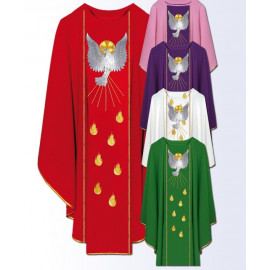
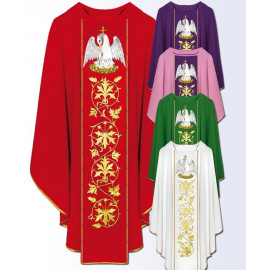
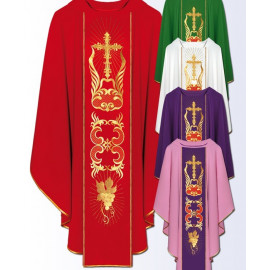
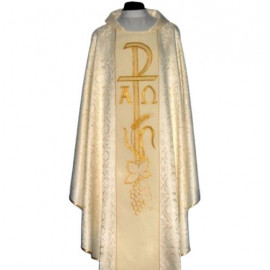
Embroidered chasubles add beauty and solemnity to the liturgy. The decorative embroidery — often featuring crosses, wheat, grapes, or other Eucharistic symbols — elevates the vestment from simple liturgical garment to a work of sacred art.
What Types of Embroidered Liturgical Chasubles Are Available?
Our embroidered liturgical chasubles come in several styles to suit different liturgical traditions and preferences:
Roman (Gothic) chasubles — the more fitted style with a narrower cut. These are popular for their elegant appearance and ease of movement during Mass. Roman chasubles are the most common choice for parishes that prefer a streamlined look.
Semi-Gothic chasubles — a middle ground between the full Gothic and Roman styles. They offer a bit more drape while still being manageable for the celebrant. Semi-Gothic chasubles are a good compromise for priests who want more of the traditional shape without the full weight.
Full Gothic chasubles — the traditional, wide-cut style that drapes over the shoulders. These are the most historically accurate but can be heavier to wear. Full Gothic chasubles are chosen by parishes that want the most traditional and solemn appearance.
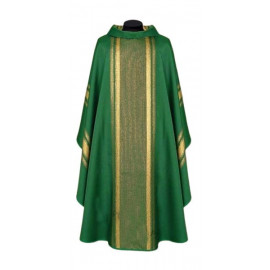
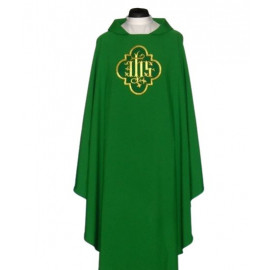
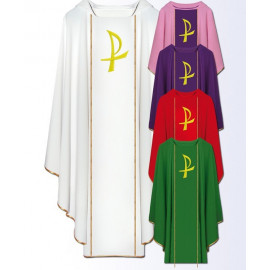
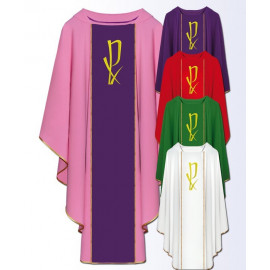
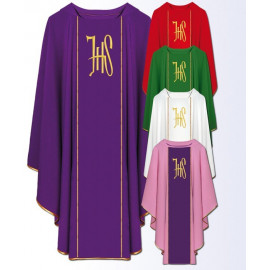
Embroidered chasubles — feature decorative embroidery on the front and back panels, often with orphrey bands (decorative strips of fabric) running vertically. The embroidery may include crosses, IHS or XP monograms, wheat and grapes, or other Eucharistic and liturgical symbols.
How Do I Choose the Right Embroidered Chasuble?
- Consider the liturgical colors. You will need chasubles in white, red, green, violet, and optionally black and rose. Many priests start with white and green as their first purchases, then add the others as budget allows.
- Check the embroidery quality. Look for even stitching, secure thread, and designs that will not fray after repeated use and cleaning. Quality embroidery will last for years.
- Think about weight. Heavily embroidered chasubles look beautiful but can be tiring to wear for long Masses. Consider a lighter option for daily use and a more ornate one for Sundays and solemnities.
- Match your stole. Many churches buy chasuble and stole sets for a unified look. Matching sets ensure the embroidery, color, and fabric coordinate perfectly.
- Consider the fabric. Polyester blends are durable and easy to care for. Silk blends are more elegant but require more careful handling. Wool blends are warm and traditional.
| Style | Weight | Best For | Price Range |
|---|---|---|---|
| Roman (fitted) | Light-Medium | Daily Mass, warm climates | $80–$200 |
| Semi-Gothic | Medium | Regular parish Masses | $120–$300 |
| Full Gothic | Medium-Heavy | Solemnities, cathedral use | $150–$400+ |
What Liturgical Colors Are Available?
Embroidered chasubles are available in all liturgical colors:
White (or gold) — used for Easter, Christmas, feasts of the Lord, feasts of the Blessed Virgin Mary, angels, and saints who were not martyrs.
Red — used for Palm Sunday, Good Friday, Pentecost, celebrations of the Lord's Passion, feasts of the apostles and evangelists, and celebrations of martyr saints.
Green — used during Ordinary Time, the longest liturgical season.
Violet (purple) — used during Advent and Lent, and for the sacrament of Reconciliation and funerals.
Black — optional, used for All Souls' Day and funerals.
Rose — optional, used on Gaudete Sunday (Third Sunday of Advent) and Laetare Sunday (Fourth Sunday of Lent).
How Do You Care for an Embroidered Chasuble?
Chasubles should be stored on wide hangers to maintain their shape. Avoid folding them sharply — roll them if you need to store them flat. For cleaning, most embroidered chasubles should be dry cleaned. Check the care label. If you are traveling with a chasuble, use a garment bag to protect the embroidery from snagging and dust.
Frequently Asked Questions About Chasubles
Q: How many chasubles does a priest need?
A: At minimum, a priest needs chasubles in the four main liturgical colors: white, red, green, and violet. Many priests also add black (for funerals and All Souls) and rose (for Gaudete and Laetare Sundays).
Q: Can deacons wear chasubles?
A: No, deacons wear dalmatics, not chasubles. The chasuble is specifically the vestment of the priest celebrant at Mass.
Q: What is the difference between a Roman and Gothic chasuble?
A: A Roman chasuble is more fitted and narrower, while a Gothic chasuble is wider and drapes more fully over the shoulders. The Semi-Gothic is a compromise between the two.
Browse Our Chasuble Collection
Explore our full selection of embroidered liturgical chasubles in Roman, Gothic, and Semi-Gothic styles. Available in all liturgical colors with matching stoles. Find the perfect chasuble for your ministry. We also offer dalmatics for deacons and copes for processions.