
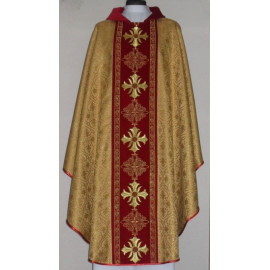
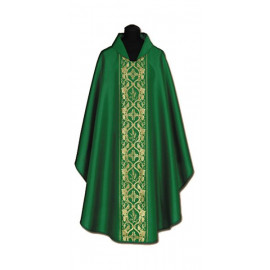
You've invested in beautiful vestments for your parish. Now how do you store them so they last? I've seen vestments ruined by improper storage — moth holes, crushed embroidery, tarnished metallic thread. It doesn't have to be that way.
Here's my guide to storing liturgical vestments properly.
The Golden Rules of Vestment Storage
Rule 1: Always clean before storing. Never put away a vestment that hasn't been cleaned. Body oils, sweat, and environmental dirt will damage the fabric over time.
Rule 2: Avoid plastic. Plastic garment bags trap moisture and prevent the fabric from breathing. Use cotton or muslin bags instead.
Rule 3: Don't crowd the closet. Vestments need space to hang without being crushed. If your vestment closet is packed tight, something has to go.
Storage Methods by Vestment Type
| Vestment | Best Storage | Avoid |
|---|---|---|
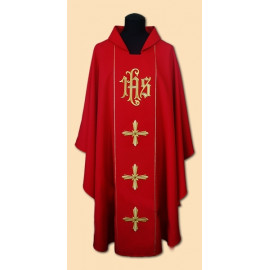
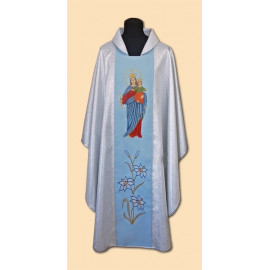
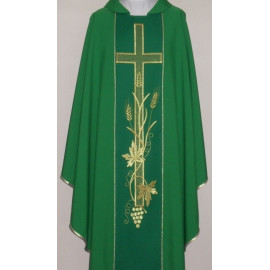
| Chasubles | Padded hangers, garment bags | Folding, wire hangers |
| Stoles | Rolling (not folding), flat drawer | Hanging by one end |
| Dalmatics | Padded hangers, garment bags | Crushing under other garments |
| Copes | Wide hangers, garment bags | Folding at the embroidery |
| Albs | Folded with tissue paper, drawer | Wire hangers (stretch the fabric) |
| Cinctures | Coiled, drawer or box | Tightly wound (causes creasing) |
The Best Hangers for Vestments
Use wide, padded hangers — the kind designed for suits and formal wear. A standard wire hanger will distort the shoulders of a chasuble and leave permanent marks. A wooden hanger is better but can still create pressure points.
I recommend padded vestment hangers with a non-slip coating. They're inexpensive and they protect the shape of the garment. You can find them at any clothing store or online.
Garment Bags: What to Look For
Choose breathable fabric bags — cotton or muslin. Avoid plastic or vinyl bags, which trap moisture and promote mold and mildew. The bag should be long enough to cover the entire vestment without bunching at the bottom.
For extra protection, place a sheet of acid-free tissue paper between the vestment and the bag. This prevents the fabric from sticking to the bag and adds a layer of cushioning.
Long-Term Storage
For vestments that won't be used for several months (like Christmas vestments stored during Ordinary Time), consider a cedar chest or a dedicated vestment cabinet. Cedar naturally repels moths and keeps the air fresh.
If you don't have a cedar chest, place cedar blocks or lavender sachets in the vestment closet. Avoid mothballs — the smell is hard to remove and can transfer to the vestments.
What I Recommend
For most parishes, I recommend: padded hangers for all hanging vestments, cotton garment bags for protection, and a dedicated vestment closet with cedar blocks. It's not expensive, and it will extend the life of your vestments by years.
Frequently Asked Questions
Q: Can I fold my chasuble for storage?
A: If you must, fold it along the seams — not across the embroidery. Place acid-free tissue paper between the folds. But hanging is always better than folding for chasubles.
Q: How do I prevent moths in my vestment closet?
A: Cedar blocks, lavender sachets, and regular inspection. Check your vestments every few months for signs of moth damage. If you find holes, isolate the affected garment and treat the closet.
Related Products
Keep your vestments in pristine condition with these storage essentials:
- Vestment Hangers — padded, wide hangers for all vestment types
- Embroidered Chasubles — protect your investment
- Embroidered Dalmatics — store properly to preserve embroidery
- Embroidered Copes — wide hangers recommended
- Embroidered Stoles — roll, don't fold
- Embroidered Mitres — store flat or in original box
Conclusion
Proper storage is one of the simplest ways to protect your investment in liturgical vestments. With the right hangers, bags, and environment, your vestments will look beautiful for years to come.
For more care tips, see our guide on how to care for embroidered vestments. Browse our full vestment collection — quality chasubles, stoles, dalmatics, and copes for every liturgical season.