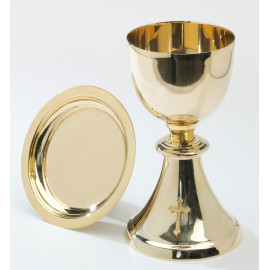
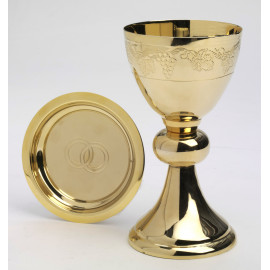
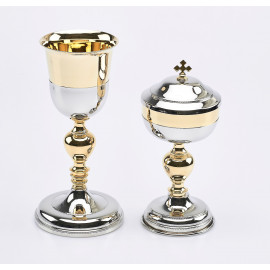
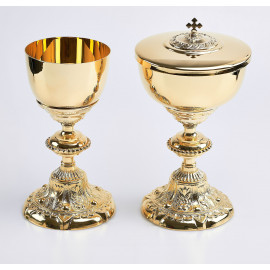
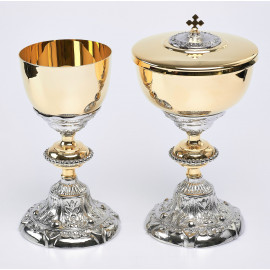
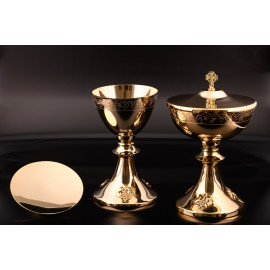
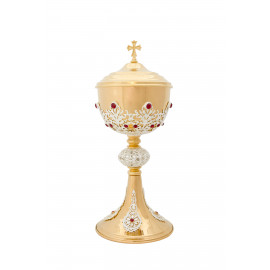
Sacred vessels — chalices, ciboria, monstrances, patens — deserve reverent care, including proper storage. I've seen too many sacristies where these precious items are tossed into drawers or left uncovered on shelves. Here's how to do it right.
General Storage Principles
- Clean before storing: Never put away a vessel that hasn't been cleaned and polished.
- Use protective cases: Most vessels come with boxes or cases. Use them.
- Keep in a locked cabinet: Sacred vessels are valuable and should be stored securely.
- Avoid humidity: Moisture causes tarnishing. Store in a dry, well-ventilated area.
Storage by Vessel Type
| Vessel | Storage Method | Notes |
|---|---|---|
| Chalice | Original box or padded case | Store upright, don't stack |
| Ciborium | Original box with lid closed | Keep the lid on to prevent dust |
| Monstrance | Glass display case or locked cabinet | Handle with care — glass lunette is fragile |
| Patens | Stacked with tissue paper between | Don't stack too high — they can chip |
| Pyx | Small box or pouch | Keep in a secure, accessible location |
| Reliquaries | Display case or locked cabinet | Handle with gloves to avoid fingerprints |
| Custody | Padded case, separate from monstrance | Store lunette separately in protective sleeve |
What I Recommend
Invest in a locked sacristy cabinet with padded shelves. Store each vessel in its original box or a padded case. Keep an inventory of what's stored where, and check the cabinet quarterly for signs of tarnishing or damage.
For parishes looking to expand their collection, we carry chalices in various styles, ciboria for Mass, chapel monstrances for Eucharistic adoration, and patens for the consecration. We also stock pyxes for Communion to the sick and holy oil stocks for the sacraments.
Frequently Asked Questions
Q: Can I store sacred vessels in the tabernacle?
A: The tabernacle is reserved for the Blessed Sacrament. Sacred vessels should be stored in the sacristy, not in the tabernacle.
Q: How do I prevent tarnishing on silver vessels?
A: Store in a low-humidity environment with anti-tarnish strips in the cabinet. Polish regularly with a quality silver polish. For gold-plated chalices, use a soft cloth and avoid abrasive cleaners.
Q: What should I do if a vessel is damaged?
A: Damaged sacred vessels should be repaired or, if beyond repair, disposed of reverently (buried or melted down). Contact a professional liturgical metalworker for repairs.
Related Products
Complete your sacred vessel collection with these essentials:
- Liturgical Chalices — for the consecration at Mass
- Liturgical Ciboria — for storing consecrated hosts
- Chapel Monstrances — for Eucharistic adoration
- Tabor Monstrances — brass monstrances for exposition
- Patens — for the consecrated host
- Catholic Pyx — for Communion to the sick
- Reliquaries — for sacred relics
- Holy Oil Stocks — for sacred oils
- Custodies — for the lunette
- Chalice Linen Sets — matching linens for your vessels
Conclusion
Proper storage extends the life of your sacred vessels and shows reverence for their sacred purpose. A little organization goes a long way.
Browse our collection of sacred vessels — chalices, ciboria, monstrances, and more. Don't forget matching chalice linen sets and chalice veils to complete your altar setup.