The Paschal candle is the large candle blessed and lit at the Easter Vigil. It represents Christ, the Light of the World, rising from the dead, and it remains in the sanctuary throughout Eastertide. If your parish celebrates the Easter Vigil, you need a Paschal candle and a stable Paschal candlestick to hold it. This guide explains the meaning, the blessing, the size, the stand and the practical choices a sacristan has to make.
What Is the Paschal Candle?
The Paschal candle is a large, decorated candle that represents the Risen Christ. It is blessed at the Easter Vigil, carried in procession into the darkened church, and lit from the new fire. It burns at every Mass throughout the Easter season, from Easter Sunday to Pentecost, and it is also lit at baptisms and funerals throughout the year.
The candle is marked with a cross, the Alpha and Omega, the current year and five grains of incense. The five grains recall the five wounds of Christ. The candle is not a decoration: it is a sign of the Resurrection and of the light of Christ in the life of the Church.
What Is a Paschal Candlestick?
A Paschal candlestick is the tall stand that holds the Paschal candle. It is usually between 1.2 m and 1.8 m high, with a wide, weighted base and a socket sized to the candle. It is not the same as an altar candlestick: the Paschal candle is much larger and heavier, and the stand is a permanent piece of sanctuary furniture. Some stands have wheels or a carrying handle so that the candle can be moved to the baptistery after Pentecost.
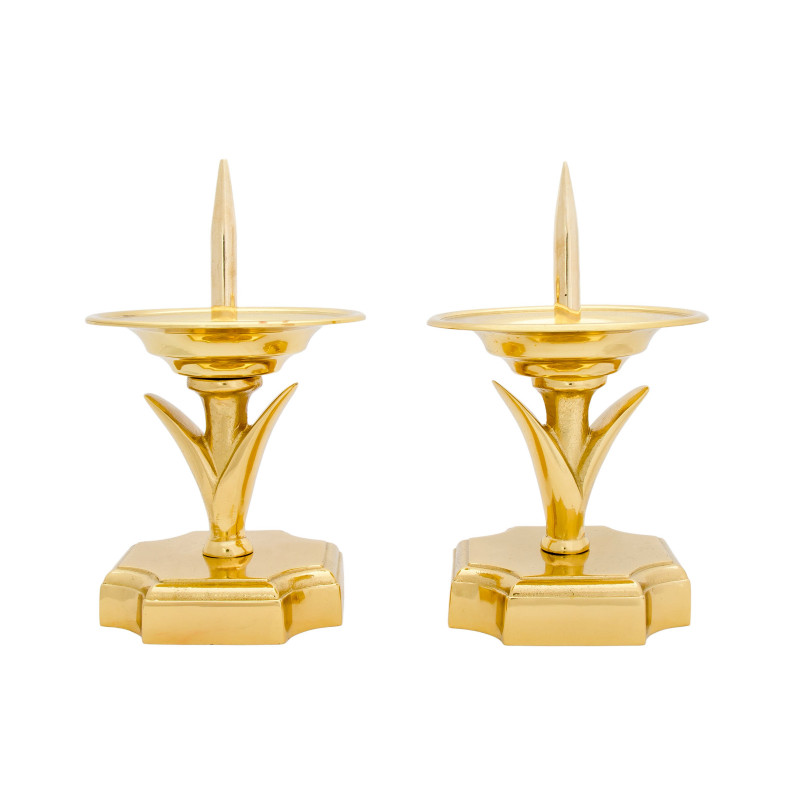
For the full range of altar candlesticks, including the smaller holders used on the altar itself, see our altar candlestick collection.
Symbolism of the Paschal Candle
- Christ, the Light of the World: the candle represents the Risen Christ, who dispels the darkness of sin and death.
- The five grains of incense: the five wounds of Christ — hands, feet and side.
- The Alpha and Omega: Christ is the beginning and the end.
- The current year: Christ is present in our time.
- The cross: the instrument of the Passion and the sign of victory.
How the Paschal Candle Is Blessed and Lit
At the Easter Vigil, the new fire is blessed outside the church and the Paschal candle is prepared. The priest traces the cross, the Alpha and Omega, the year and the five grains of incense. The candle is then lit from the new fire and carried into the darkened church. Three times the procession stops and the deacon or priest sings Lumen Christi — “The light of Christ” — and the people answer Deo gratias. The candle is placed in the Paschal candlestick, and the Exsultet, the great hymn of praise, is sung.
When Is the Paschal Candle Lit?
The Paschal candle is lit at the Easter Vigil and at every Mass during the Easter season. It is also lit at baptisms, where the newly baptized receive a candle lit from the Paschal candle, and at funerals, where it stands near the coffin as a sign of the resurrection. After Pentecost, it is usually moved to the baptistery and is no longer kept in the sanctuary.
How to Choose a Paschal Candle
| Factor | What to consider |
|---|---|
| Size | Most Paschal candles are 60–120 cm high. Choose a size that suits the stand and the sanctuary. |
| Material | Beeswax is traditional and burns cleanly; paraffin blends are more affordable. |
| Decoration | Hand-decorated candles are beautiful; printed designs are more affordable. |
| Year and symbols | The candle should carry the cross, Alpha and Omega, the year and the five grains. |
| Fit | The candle diameter must match the socket of the Paschal candlestick. |
How to Choose a Paschal Candlestick
Choose a stand that is stable, tall enough to make the candle visible and sized to the candle. The base should be wide and weighted; the socket should hold the candle upright; the stem should be strong enough for the weight. If the stand will be moved to the baptistery, look for wheels or a carrying handle. A wooden or stone stand may suit a historic interior; brass and bronze are durable and easy to care for.
Placement in the Sanctuary
During the Easter Vigil and Eastertide, the Paschal candle stands in a prominent place in the sanctuary, usually near the ambo or the altar. It should be visible from the nave and reachable for lighting. After Pentecost, it is moved to the baptistery, where it is lit at baptisms and funerals. Keep the candle away from curtains, banners and floral arrangements, and make sure the stand cannot be knocked over.
Care and Safety
Dust the stand regularly and remove wax after it cools. Check the socket and the base before each Easter season. When the candle is lit, keep it away from drafts and flammable decorations. Use a candle snuffer to extinguish it; never blow it out. If the candle burns down, replace it before it reaches the socket.
Frequently Asked Questions
Q: When is the Paschal Candle removed from the sanctuary?
A: After Pentecost, the Paschal Candle is moved to the baptistery, where it is lit at baptisms and funerals throughout the year. In some churches it is kept in a prominent place in the sanctuary or sacristy.
Q: What is a Paschal candlestick?
A: A Paschal candlestick is the tall stand that holds the Paschal candle. It is usually 1.2–1.8 m high, with a wide base and a socket sized to the candle. It is used at the Easter Vigil and throughout Eastertide.
Q: How tall should a Paschal candle be?
A: Most Paschal candles are 60–120 cm high. The right size depends on the stand and the sanctuary: the candle should be visible from the nave and large enough to burn throughout the Easter season.
Q: What do the five grains of incense mean?
A: The five grains of incense inserted into the Paschal candle represent the five wounds of Christ. They are part of the symbolism of the candle, together with the cross, the Alpha and Omega and the current year.
Q: Can any tall candlestick be used as a Paschal candlestick?
A: Not safely. The Paschal candle is much larger and heavier than an altar candle, and the stand must be designed for that size and weight. Use a stand with a wide base and a socket that fits the candle.
Q: What is the Exsultet?
A: The Exsultet is the great hymn of praise sung at the Easter Vigil after the Paschal candle is lit and placed in the sanctuary. It proclaims the victory of Christ over death and the meaning of the light.
Q: Where is the Paschal candle kept after Pentecost?
A: It is usually moved to the baptistery, where it is lit at baptisms and funerals. The stand should be stable and accessible, and the candle should be protected from damage.
Related Reading
Read our guide to liturgical colors and our guide to setting up a Catholic church sanctuary. Browse our altar candlesticks and candle snuffers.