

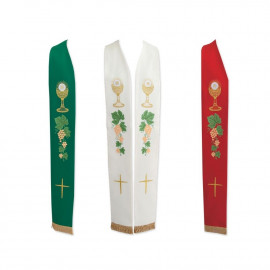
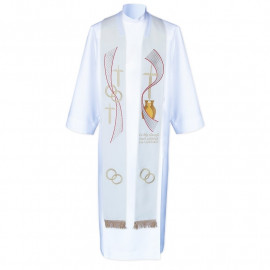
Walk into a Catholic church on any given Sunday and look at the priest's stole. The color tells you exactly where you are in the liturgical year. Green means Ordinary Time. Violet means we're in a penitential season. White or gold means we're celebrating something joyful. Red means the Holy Spirit or a martyr.
I've been asked more times than I can count: "What color stole should I wear for this feast?" The answer is always the same — it depends on the liturgical calendar. But the calendar can be confusing, so let me break it down for you in a way that's easy to remember.
What Is a Liturgical Stole?
A stole is a long, narrow band of fabric worn around the neck by ordained ministers — priests, deacons, and bishops. It's one of the oldest liturgical vestments, dating back to the early Church. The stole symbolizes the yoke of Christ and the authority of Holy Orders.
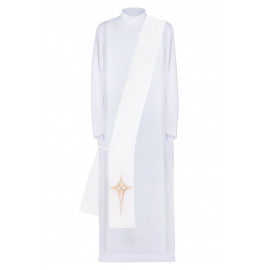
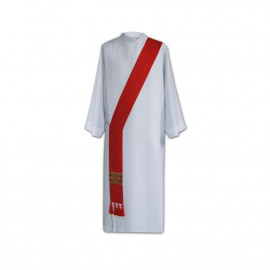
Priests wear the stole crossed over the chest. Deacons wear it diagonally across the body (from left shoulder to right hip). Bishops wear it uncrossed, hanging straight down. The color of the stole changes with the liturgical season, just like the chasuble.
The Five Liturgical Colors
There are five main colors used in the Roman Rite, each with its own meaning and season:
| Color | Meaning | When It's Used |
|---|---|---|
| Green | Hope, growth, ordinary life | Ordinary Time (most of the year) |
| Violet (Purple) | Penitence, preparation, sacrifice | Advent, Lent, Reconciliation services |
| White (or Gold) | Purity, joy, glory, Resurrection | Christmas, Easter, Marian feasts, All Saints |
| Red | Fire, blood, martyrdom, Holy Spirit | Pentecost, Good Friday, feasts of martyrs |
| Black | Mourning, death | Funerals, All Souls' Day (optional) |
Rose is also used on two specific Sundays: Gaudete Sunday (Third Sunday of Advent) and Laetare Sunday (Fourth Sunday of Lent). It's a lighter shade of violet, signaling a brief moment of joy in the middle of a penitential season.
At funerals, black (or violet) remains customary in many parishes. If you are attending a Catholic funeral, our guide to Catholic funeral and sympathy gifts explains what to bring or send.
Green: The Color of Ordinary Time
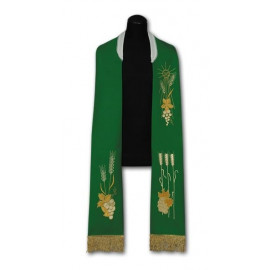
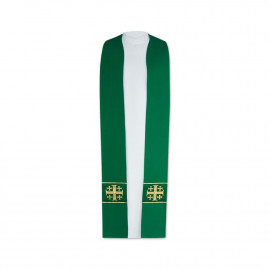
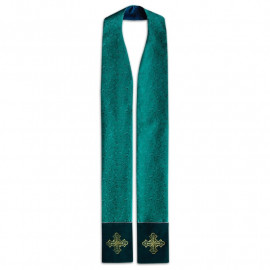
Green is the most common liturgical color because Ordinary Time makes up the bulk of the year — roughly 33-34 weeks. It symbolizes hope, growth, and the ongoing life of the Church. Think of it as the "default" color when there's no special feast or season.
If you're building a stole collection, green is the one you'll use most often. I always recommend starting with a good quality green stole — something durable and comfortable, since you'll be wearing it every week for months at a time.
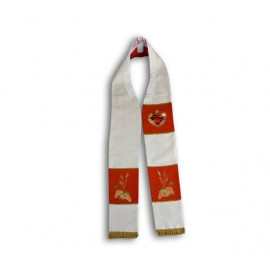
For a traditional tailored cut, see our Roman stoles in the main liturgical colours.
Violet: The Color of Preparation and Penance
Violet (or purple) is used during Advent and Lent — the two great penitential seasons of the Church. It's also used for the Sacrament of Reconciliation and for funerals (as an alternative to black).
Advent violet reminds us that we're preparing for the coming of Christ. Lent violet calls us to repentance and fasting. It's a somber color, but not a sad one — it's purposeful. The stole you choose for violet seasons should feel reflective and dignified.
White and Gold: The Colors of Joy
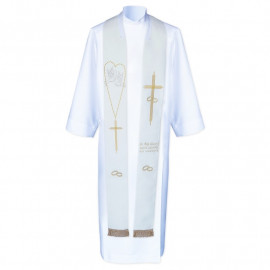
White (or gold) is used for the most joyful celebrations: Christmas, Easter, the feasts of Our Lord (except those related to His Passion), the feasts of the Blessed Virgin Mary, the angels, and the saints who weren't martyrs.
Gold is often used as a substitute for white on the most solemn occasions — Easter Sunday, Christmas Midnight Mass, Corpus Christi. A gold stole or a white stole with gold embroidery looks stunning on these feast days.
Red: The Color of Fire and Blood
Red is used on Pentecost Sunday (the fire of the Holy Spirit), Good Friday (the blood of Christ), and the feasts of the apostles and martyrs. It's a bold, dramatic color that demands attention.
If you're a priest, you'll wear red on Pentecost — the birthday of the Church. You'll also wear it on the feast of St. Peter and St. Paul, St. Stephen (the first martyr), and any other saint who died for the faith. A red stole with gold embroidery is a beautiful investment.
What I Recommend
Here's my practical advice for building a stole collection:
- Start with the basics: Green, violet, and white. These three cover 90% of the liturgical year.
- Add red next: You'll need it for Pentecost and several martyr feasts throughout the year.
- Consider black or rose: Black is optional (violet can be used for funerals). Rose is nice but not essential — violet works fine on Gaudete and Laetare Sundays.
- Match your chasubles: If possible, buy stoles from the same collection as your chasubles. The coordinated look is worth it.
Frequently Asked Questions
Q: Can I wear blue for Marian feasts?
A: Blue is not an official liturgical color in the Roman Rite, though it's traditionally associated with Our Lady. White is the proper color for Marian feasts. Some priests choose a white stole with blue embroidery as a compromise — it's not against the rules, and it honors the tradition.
Q: What color stole for a wedding?
A: Weddings can be celebrated in any color except violet or black (which are penitential or mournful). White or gold is most common, but green or red are also acceptable. The priest should coordinate with the couple and the liturgical calendar.
Q: What color for a funeral Mass?
A: Violet or white are both appropriate for funerals. Violet emphasizes the penitential aspect of praying for the deceased. White emphasizes the hope of the Resurrection. Black is also permitted but rarely used in modern practice.
Q: How many stoles should a priest own?
A: At minimum, three: green, violet, and white. Add red for a more complete collection. If budget allows, a second white (or gold) for solemn feasts and a rose stole for Gaudete and Laetare Sundays are nice additions.
Conclusion
The colors of the liturgical stole are a visual language — they tell the story of the Church year without a single word. Green for growth, violet for preparation, white for joy, red for fire and blood. Once you know the system, it's easy to remember, and it adds a layer of meaning to every celebration.
If you're looking for embroidered stoles in every liturgical color, take a look at our collection. We have options for every season and budget, and they're designed to match our chasuble lines for a coordinated look.
See our Marian stoles collection.
See our stoles with saints collection.