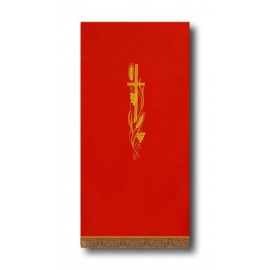


To choose a lectern or pulpit cover, work in this order: season and color, size and drop, fabric, embroidery, and budget. The color should match the vestments and altar frontal; the size should fit the furniture; the fabric should suit how often the cover is used; and the embroidery should be legible from the nave, not only from close range.
Start with the Season
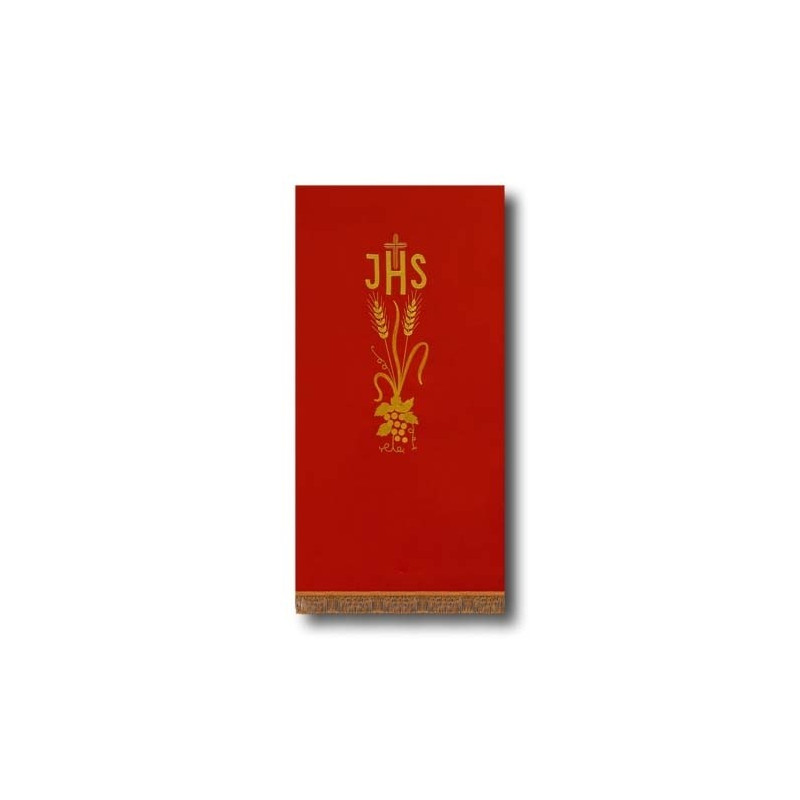
The first decision is the liturgical color. Green is the most useful first choice because it is used throughout Ordinary Time. Then add violet for Advent and Lent, white or gold for Christmas and Easter, and red for Pentecost, the Passion, and martyrs. Rose is a specialist color for Gaudete and Laetare Sunday; black is used for requiem Masses where customary.
If your parish already has a set of vestments and altar frontals, match the cover to the colors you use most often. The ambo should support the sanctuary, not compete with it. For a full explanation of the colors, see our guide to pulpit scarf colors and their meaning.
Choose the Size
Measure the width of the desk and the drop you want at the front. A cover that is too short looks incidental; one that is too long can hide the furniture or brush the floor. Our standard sizes are 50 × 160 cm, 58 × 180 cm, and 55 × 250 cm, with custom sizes for non-standard furniture. If you are unsure, measure twice and compare with the size chart in our guide to measuring a lectern or ambo for a cover.
Choose the Fabric
For weekly use, an 80% polyester / 20% wool blend is durable, drapes well, and resists creasing. A stain-resistant tablecloth fabric is easier to iron and is a practical choice for a busy sacristy. Both hold embroidery well; the right choice depends on how often the cover is used and how it is cleaned.
Consider the lighting, too. Gold embroidery can appear warm and bright in a traditional sanctuary; a more subtle design may suit a modern chapel with strong architectural lines. If the cover will be washed frequently, choose a fabric that can be ironed on the reverse without flattening the embroidery.
Choose the Embroidery
IHS, Alpha and Omega, and PAX are classic choices for the ambo because they are compact, legible, and suitable for many seasons. Marian symbols, Christmas motifs, Lenten crosses, the Easter Lamb, and the Holy Spirit dove are more specific and work best for their own seasons. A cross, chalice, grapes, or wheat motif is a safe choice for a Eucharistic sanctuary.
The embroidery should be readable from the congregation, not only from the first row. Dense, color-fast stitching keeps its shape; very fine detail can disappear at a distance. If the sanctuary is visually busy, choose a simpler motif; if it is plain, a richer design can help define the place of the Word.
Set a Budget
Our embroidered pulpit covers start at $70 and run to $188 for the largest lectern veils. Custom sizes are quoted individually. Orders over $100 ship free within the United States. A parish building a set should budget for the colors it uses most often first, then add the specialist pieces over time.
Price is not the only measure. A durable fabric that survives years of washing is usually a better investment than a cheaper cover that has to be replaced after a few seasons. The same is true of embroidery: a classic motif that works across the year is more useful than a highly specific design used once.
Custom vs. Standard
Standard sizes fit most parish ambos and lecterns. Custom sizes are the right choice for curved, slanted, very wide, or very narrow furniture, or when the cover must clear a microphone or book stand. Custom covers are made in Poland in the same fabrics and embroidery as our standard pieces; allow an additional 3–14 business days for production before dispatch.
If you are furnishing a new sanctuary, coordinate the cover with the altar tablecloths, chalice linen sets, and chasubles so the whole sanctuary reads as one design.
Frequently Asked Questions
Q: What is the best material for a lectern cover?
A: For weekly use, an 80% polyester / 20% wool blend is durable, drapes well, and resists creasing. A stain-resistant tablecloth fabric is easier to iron and is a practical choice for a busy sacristy.
Q: What color should I choose first?
A: Green is usually the most practical first choice because it is used throughout Ordinary Time. Then add violet, white, and red; rose and Marian designs come later.
Q: How much should a lectern cover cost?
A: Our embroidered covers start at $70 and run to $188 for the largest sizes. Custom covers are quoted individually. Orders over $100 ship free within the United States.
Q: Can I order a custom size?
A: Yes. Send us the width, the drop, the type of furniture, and a photo if possible. We will confirm the size before production.
Q: How do I know the embroidery will be visible?
A: Choose a dense, color-fast motif with clear shapes. IHS, Alpha and Omega, PAX, a cross, or a chalice are legible from the nave; very fine detail can disappear at a distance.
Q: Can the cover match my chasuble?
A: Yes. Match the color and, if possible, the embroidery family. The same design can run from the ambo to the altar with our altar tablecloths and chalice linens.
Related Reading
Continue with Pulpit Scarf Colors and Their Meaning and How to Measure a Lectern or Ambo for a Cover. Browse our embroidered lectern, pulpit, and ambo covers.