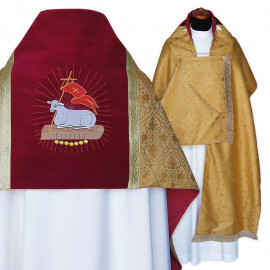
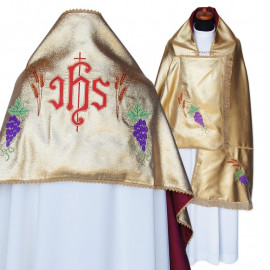
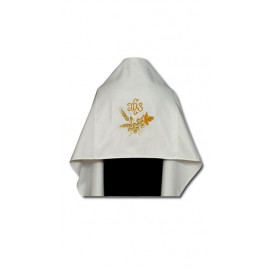
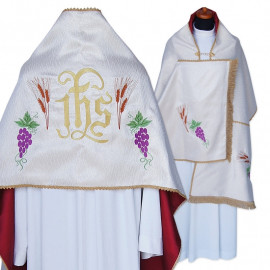
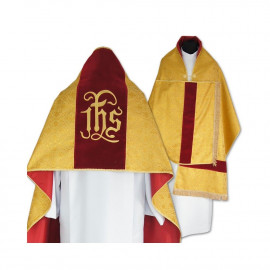

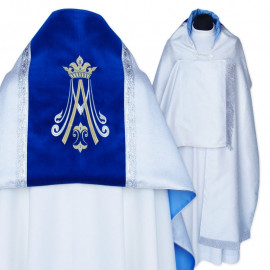
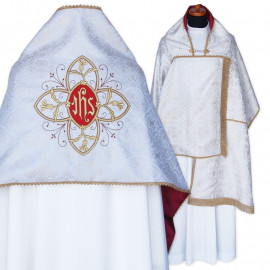
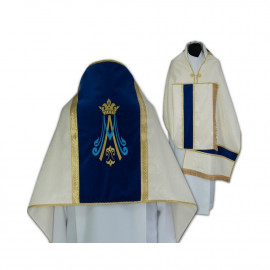
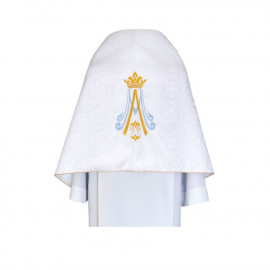
The humeral veil, the cope, and the vimpa are three different vestments. The cope is the full-length cloak worn by the celebrant; the humeral veil is the long rectangle worn over the shoulders to cover the hands when handling the Blessed Sacrament; the vimpa is a narrower veil used by altar servers when holding the bishop's mitre or crosier. They are related in appearance, but they are not interchangeable.
This guide compares them side by side, explains who wears each one, and shows how they work together at Benediction.
Quick Comparison
| Vestment | Worn by | Purpose | When |
|---|---|---|---|
| Humeral veil | Priest, deacon, bishop | Covers the hands or the sacred vessel | Benediction, Eucharistic processions, Viaticum |
| Cope | Priest or bishop | Outer cloak for solemn non-Mass rites | Benediction, processions, solemn blessings |
| Vimpa | Altar server | Covers the hands when holding the mitre or crosier | Pontifical Mass and bishop's ceremonies |
What Is a Humeral Veil?
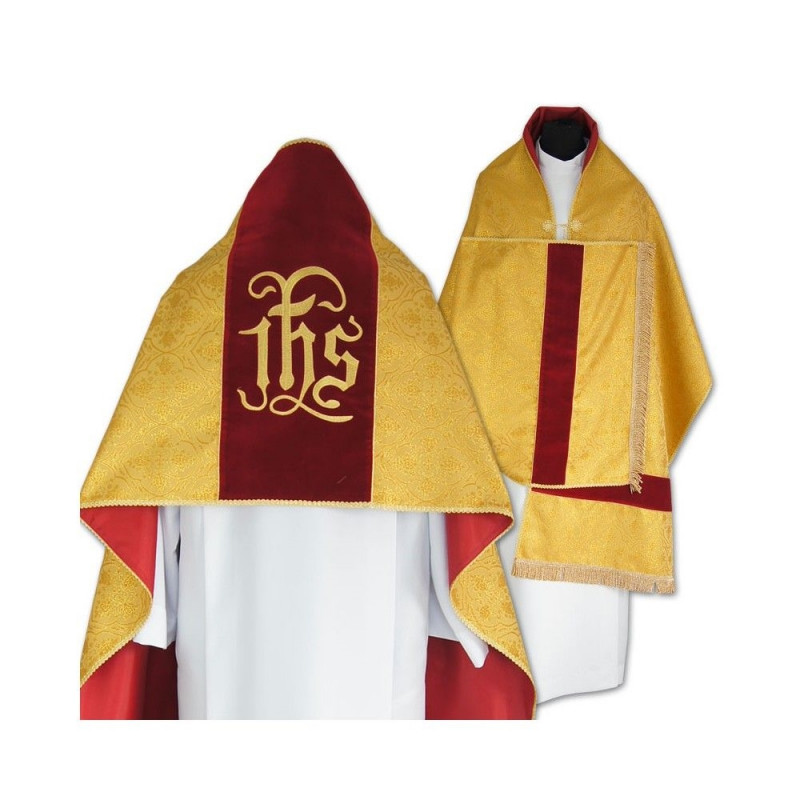
The humeral veil is a long, rectangular vestment worn over the shoulders. Its name comes from the Latin humerus (shoulder). The traditional dimensions are about 2.75 m long and 90 cm wide, with two ribbon ties or a clasp near the breast. The minister uses the ends to cover his hands when raising the monstrance or carrying the Blessed Sacrament.
Our humeral veils are 250–300 cm long and 50–60 cm wide, in brocade, velvet, satin, and damask. The veil normally follows the liturgical color of the day.
What Is a Cope?
The cope is a full-length outer cloak, open at the front and fastened at the breast with a clasp or morse. It is worn by the celebrant at Benediction, in Eucharistic processions, and at other solemn rites outside Mass. It is not a Mass vestment in the strict sense; the chasuble is worn for Mass.
The cope is usually made of the same fabric and color as the humeral veil, so that the set looks unified. See our Catholic clergy copes.
What Is a Vimpa?
The vimpa is a narrower shoulder veil used by altar servers. It is held over the hands when the server carries the bishop's mitre or crosier, symbolizing that the object does not belong to the server. It looks like a small humeral veil, but it is not worn by the ordained minister and it is not used for the Blessed Sacrament.
The vimpa is sometimes confused with the humeral veil because both are long strips of fabric worn over the shoulders. The difference is the width, the wearer, and the purpose.
How They Work Together at Benediction
At Benediction the celebrant normally wears an alb, a stole, a cope, and the humeral veil. The cope is the outer garment; the humeral veil is placed over it. The minister then takes the monstrance, covers his hands with the ends of the veil, and gives the blessing. The veil does not replace the cope, and the cope does not replace the veil.
If you are preparing a sacristy for Benediction, the usual set is a cope, a humeral veil, a stole, an alb, and the monstrance. Our guide to Benediction vestments lists everything, and the step-by-step guide explains the order of the rite.
Chalice Veil and Monstrance Veil Are Different Again
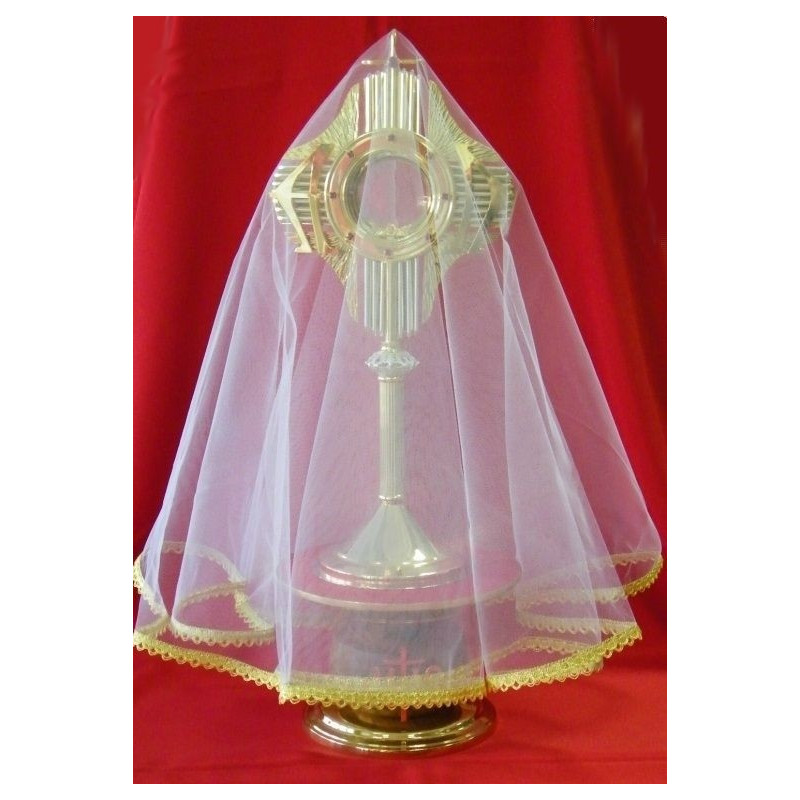
Two more veils are often confused with the humeral veil. The chalice veil is a square cover placed over the chalice before and after the preparation of the gifts; it is not worn on the shoulders. The monstrance veil is a decorative cover for the monstrance when it is reserved or carried; it is not worn by the minister. The ciborium veil covers the ciborium containing the consecrated hosts.
See our chalice veils, monstrance veils, and ciborium veils for the differences.
Common Mistakes to Avoid
One common mistake is ordering a vimpa for Benediction. A vimpa is made for a server carrying the mitre or crosier; it is too narrow and too short to cover the celebrant's hands around a monstrance. Another is treating the cope as a substitute for the humeral veil. The cope is the outer cloak, but it does not cover the hands, and the rubrics expect the veil when the Blessed Sacrament is handled.
A third mistake is matching only the color and ignoring the fabric. A lightweight satin veil can slide over a heavy brocade cope, while a stiff velvet veil may sit better on a plain one. If the set is bought piece by piece, compare the weight and the embroidery, not just the shade. Finally, avoid using a chalice veil or a monstrance cover as a shoulder veil; they are shaped and finished for a different purpose and will not hang correctly.
Humeral Veil vs Cope vs Vimpa FAQ
Q: Is a cope the same as a humeral veil?
A: No. The cope is the full-length outer cloak; the humeral veil is the long rectangle worn over the shoulders to cover the hands or the sacred vessel.
Q: Who wears a vimpa?
A: An altar server wears the vimpa when holding the bishop's mitre or crosier. It is not worn by the priest or deacon for the Blessed Sacrament.
Q: Does a deacon wear a cope at Benediction?
A: A deacon may wear a cope at Benediction, and he may also wear the humeral veil when handling the monstrance. The exact arrangement follows the local liturgical norms.
Q: Can an altar server wear a humeral veil?
A: Normally no. Altar servers use a vimpa; the humeral veil is reserved to the ordained minister who handles the Blessed Sacrament.
Q: Which vestment covers the chalice?
A: The chalice veil. It is a square cover placed over the chalice before and after the preparation of the gifts, not a shoulder veil.
Related reading: humeral veils · copes · chalice veils · monstrance veils.