


The short answer: hang the crucifix where the family will see it and pray before it — traditionally above the doorway and above the bed, and prominently in the prayer corner. There is no single rule; there is a long tradition with clear instincts, and this guide translates them into a room-by-room plan.
The Tradition of the Home Crucifix
In Catholic homes the crucifix has never been decor first. It marks the house as Christian, accompanies prayer, and serves as a reminder of the Passion at the two moments of the day when a person is most reflective: entering and leaving, and falling asleep. Old customs put a crucifix above the door — visitors blessed themselves on the threshold — and above the marriage bed. Missionary practice and home enthronement added a third anchor: the place of family prayer.
Room by Room
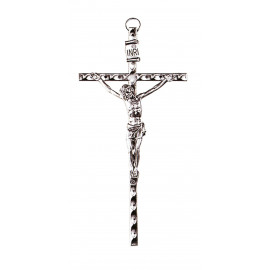
- Entryway / above the front door. The classic position. A 20–30 cm wall crucifix above or beside the main door blesses comings and goings and marks the home as Catholic at the threshold.
- Bedroom, above the bed. The second classic position, especially above the bed of a married couple. It is the last thing seen at night and the first at morning; a crucifix here turns the beginning and end of the day into prayer. Choose a light hanging crucifix if the wall behind the bed is plaster or drywall.
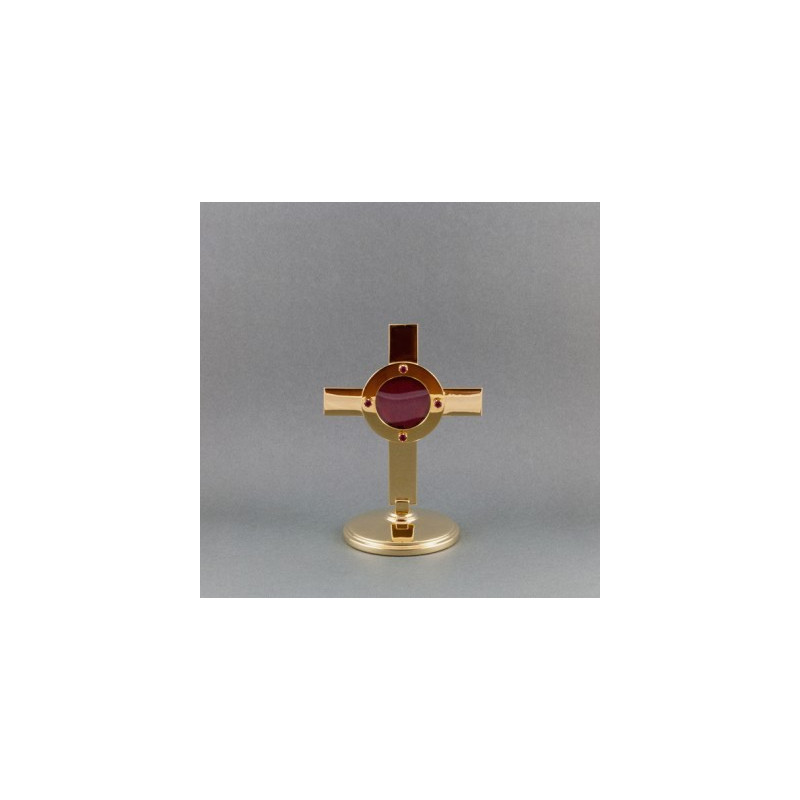
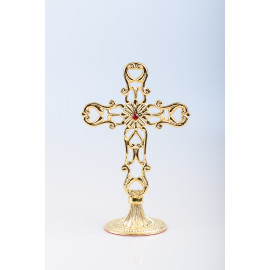
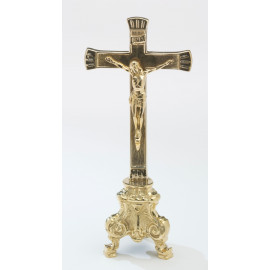
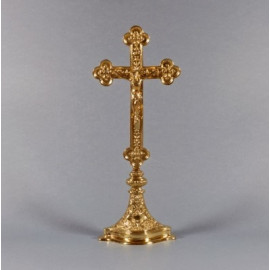
- Prayer corner or home altar. Here the crucifix should be the centerpiece, not an ornament: a standing crucifix on the table, or a hanging crucifix above it, with candles and a rosary arranged around. Our guide How to Set Up a Home Altar shows the full arrangement.
- Living room. A good place for a larger wall crucifix where the family actually spends time — one that can be seen while talking, reading, or watching TV is doing its job.
- Hallway and stairs. Small hook crucifixes (11–16.5 cm) turn a corridor into a litany: one per turn, or one per bedroom door for the children's rooms.
How High and How Big?
Practical rules that match the tradition:
- Height: center of the crucifix at or slightly above eye level — around 150–170 cm from the floor for adults, adjusted down in children's rooms. Above a door, mount it 10–15 cm above the frame.
- Size: 20–30 cm is the classic home size and reads well in a normal room. Use 11–16.5 cm small crucifixes for corridors and children's rooms; go 30 cm+ for a large living room wall.
- Weight: metal crucifixes over 500 g need a proper wall anchor; a 30 cm oxidized metal crucifix is heavier than it looks. For plasterboard, use a hollow-wall anchor rated above the piece's weight.
A Crucifix in Every Room?
Not required, and not the point. The tradition is about anchor points, not coverage: one at the threshold, one where you sleep, one where you pray. Two or three well-placed crucifixes shape the home more than a dozen scattered ones. If you want the practice spread through the house, small thong crucifixes on bedroom doors and a Tau or San Damiano cross in the study are gentle ways to do it.
Blessing and Care
Ask your priest to bless a new crucifix when you install it — a simple blessing of an object is enough, and many parishes do this after Sunday Mass. For care: dust weekly with a soft dry cloth; never polish a varnished or oxidized finish, and never let water sit on wood or brass. Full instructions in How to Clean and Care for a Brass Crucifix.
Frequently Asked Questions
Q: Is it okay to hang a crucifix in your house?
A: Not only okay — it is a long-standing Catholic custom. A crucifix marks the home as Christian and accompanies daily prayer; there is no rule restricting where it may hang.
Q: Where should a crucifix be placed in a home?
A: Traditionally above the front door and above the bed, and in the place of family prayer (prayer corner or home altar), where it should hold the most prominent position.
Q: How high should a crucifix hang?
A: At or slightly above eye level — roughly 150–170 cm to the center in adult rooms. Above a doorway, 10–15 cm above the frame works well.
Q: Should every Catholic home have a crucifix?
A: It is a strong custom rather than an obligation. A crucifix makes the home's faith visible and is a traditional gift for a new home or a newly married couple.
Q: Which way should a crucifix face?
A: There is no rule — but in practice the corpus should be visible to those who live and pray in the room. Above a bed, face it into the room; above a door, face the interior.
Q: Can a crucifix be hung in the kitchen or bathroom?
A: Nothing forbids it. The kitchen is a reasonable place for a small crucifix — it is often where the family gathers. Choose a piece that tolerates humidity (brass or varnished wood) and keep it clear of steam.