
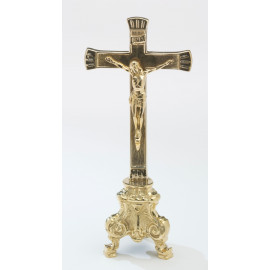

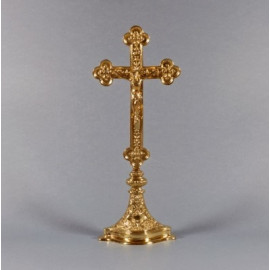
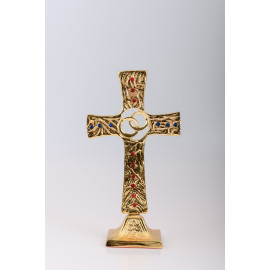
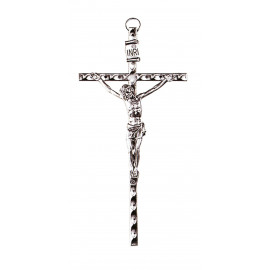
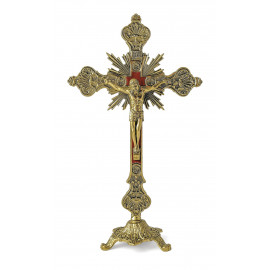

The safest way to clean a brass crucifix is almost always the gentlest one: dust with a soft, dry cloth, and wipe fingerprints with a cloth barely dampened in warm water with a drop of mild dish soap, then dry immediately. What damages crucifixes is rarely dirt — it is the wrong cleaner applied to the wrong finish. So before anything else, identify what you have.
Step One: Know Your Finish
- Polished or unlacquered brass. Bright gold color that slowly tarnishes toward brown. It can take a mild polish — occasionally.
- Varnished or lacquered brass. A clear coating seals the shine; common on crosses sold "maintenance-free." Never polish or scrub it — you will strip the coating and create a patchwork.
- Oxidized gold or silver. A deliberate, chemically aged finish (our 30–32 cm crucifixes use it). The darkness is the finish. Polish would erase the design; treat it like varnished brass: dust only.
- Wood with metal inlay. Two materials, two rules: keep water off the wood entirely, and clean the metal with a barely damp cloth.
Routine Care: The Weekly Dust
Once a week, dust the crucifix with a soft, dry microfiber cloth, working into the crevices around the corpus with a soft brush (a clean makeup brush works perfectly). Dust is harmless; dust plus moisture is what starts corrosion in tight corners. Two minutes a week prevents nearly every problem described below.
Fingerprints and Light Smudges
For a polished or varnished crucifix:
- Dampen a soft cloth with warm water and one drop of mild dish soap.
- Wring it out — the cloth should be barely damp, never wet.
- Wipe the surface gently; do not scrub details of the corpus.
- Dry immediately with a second, dry cloth. Water left standing on brass leaves spots.
What Never to Use on a Crucifix
- Abrasive polishes and pads (steel wool, scouring cream) — they scratch and strip finishes.
- Vinegar, lemon, ammonia, or bleach — acids and ammonia attack both brass and the clear coatings.
- Ultrasonic cleaners — fine for solid jewelry, risky for hollow castings, stone settings, and varnished surfaces.
- Dishwashers — never. Heat, water, and detergent together are the worst case.
- Silver dips on brass — they react differently and can leave a pink or patchy cast.
If Unlacquered Brass Has Tarnished
Only on bare, unlacquered brass: use a quality brass polish sparingly, following its instructions, on a small hidden area first. Work gently around the corpus; rinse residue with a damp cloth, dry, and consider applying a thin coat of museum wax to slow the return of tarnish. If the tarnish is beautiful — many people prefer the aged look — you can simply leave it: tarnish on brass is a stable patina, not damage.
Oxidized and Varnished Crucifixes
Dust only. If an oxidized crucifix looks dusty in the recesses, use a soft dry brush. If a varnished crucifix begins to peel or flake — usually after years of handling — the honest options are professional re-lacquering or acceptance of a naturally aging finish. Never "touch up" peeling varnish with polish.
Storing a Crucifix
Wrap in acid-free tissue or a soft cotton cloth, pad the corpus, and store flat away from damp. Do not seal in plastic: trapped moisture is worse than air. For a crucifix you rotate seasonally — a Lenten veil, for instance — a labeled cotton bag keeps it safe between uses. More seasonal practice in Why Are Crosses Veiled During Lent?
Frequently Asked Questions
Q: How do I clean a brass crucifix?
A: Dust with a soft dry cloth weekly; for fingerprints, wipe with a barely damp cloth and a drop of mild soap, then dry immediately. Identify the finish first — varnished and oxidized crucifixes should only be dusted.
Q: Can I use vinegar or lemon to clean brass?
A: No. Acids strip varnish, attack the metal, and leave streaks. Warm water with a drop of mild dish soap is enough for routine cleaning.
Q: How do I remove tarnish from a crucifix?
A: Only on bare, unlacquered brass, and only with a proper brass polish used sparingly. On varnished, lacquered, or oxidized crucifixes, tarnish is either the finish itself or protected by the coating — do not polish.
Q: How do I clean an oxidized gold or silver crucifix?
A: Dust only, with a soft dry cloth or brush. The darkness is a deliberate finish; cleaners and polishes would remove it.
Q: Should I polish a brass crucifix?
A: Only if it is bare, unlacquered brass and you want a bright look. If it is varnished or oxidized — the common case for new crucifixes — polishing damages the finish.
Q: How should I store a crucifix?
A: Wrap it in soft cotton or acid-free tissue, pad the corpus, keep it dry, and never seal it in plastic. A labeled cotton bag works well for seasonal pieces.