
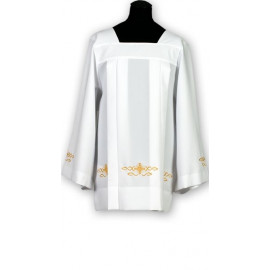
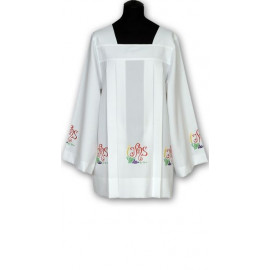


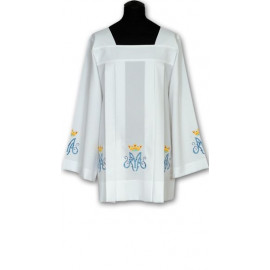
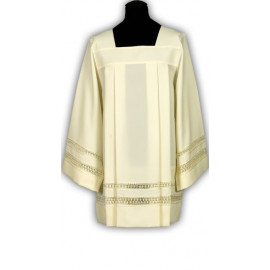

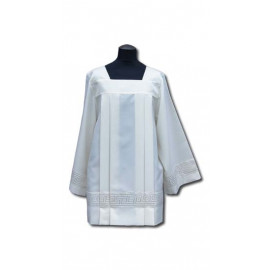
What Are Clergy Surplices?
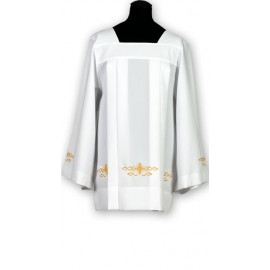
Clergy surplices are white, wide-sleeved vestments worn over a cassock or clergy shirt for non-Eucharistic services. The surplice is shorter than an alb and has a distinctive wide-sleeve design. Surplices are commonly worn by priests, deacons, and altar servers for services like Benediction, processions, and the Liturgy of the Hours.
The surplice has its origins in the medieval tunic. Unlike the alb, which is a full-length vestment, the surplice is typically knee-length or slightly longer. It is a versatile vestment that is appropriate for many liturgical occasions outside of Mass.
Every parish needs quality surplices for its clergy and altar servers. They are essential for non-Eucharistic liturgical celebrations and should be chosen for durability and appropriate appearance.
What Types of Surplices Are Available?
Surplices come in several styles to suit different liturgical traditions:
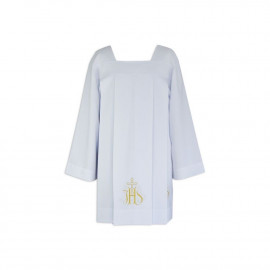
Traditional surplices — wide-sleeved, knee-length, usually made of cotton or linen. These are the most common and versatile option. Traditional surplices are appropriate for any non-Eucharistic service.
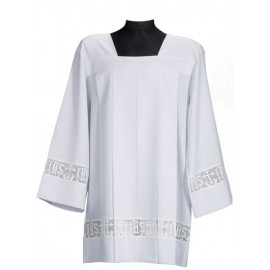
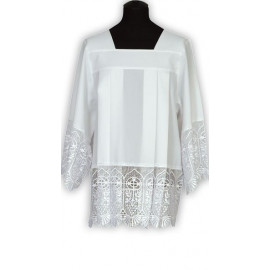
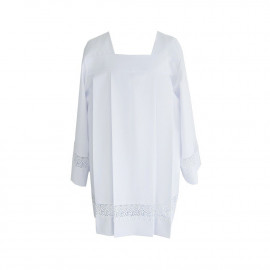
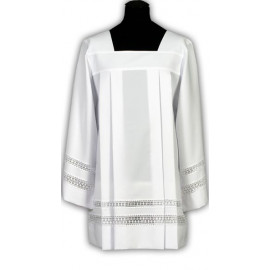
Lace surplices — feature decorative lace at the sleeves and hem. These are more ornate and appropriate for solemn occasions. Lace surplices add beauty and solemnity to the liturgy.
Cottas — a shorter, more fitted version of the surplice. Popular in some traditions, especially for altar servers. Cottas are easier for young servers to manage.
Anglican surplices — feature very wide sleeves and a more flowing cut. These are appropriate for parishes that follow the Anglican liturgical tradition.
How Do I Choose the Right Surplice?
- Consider the length. Surplices should fall at or below the knee. Make sure it is long enough for your height.
- Check the sleeve width. Traditional surplices have very wide sleeves. Cottas have narrower sleeves. Choose based on your tradition and preference.
- Think about the fabric. Cotton is easy to care for. Linen looks more elegant but needs more attention.
- Look for quality construction. Check the seams and any lace for durability. A well-made surplice will last for years.
| Style | Length | Best For | Price Range |
|---|---|---|---|
| Traditional surplice | Knee-length | Benediction, processions | $79–$149 |
| Lace surplice | Knee-length | Solemnities, cathedral use | $117–$165 |
| Cotta | Hip-length | Altar servers, choir | $22–$34 |
Who Wears a Surplice — and When?
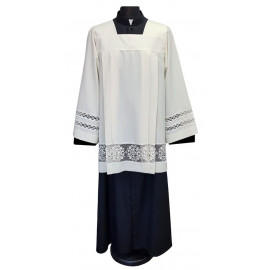
Who wears it: the surplice is worn by Catholic priests, deacons, altar servers, and choir members, always over a cassock or clerical clothing. Priests and deacons put it on for non-Eucharistic services, while altar servers and choirs wear surplices or cottas during Mass and other celebrations.
When it is worn: the surplice is the standard vestment for services outside Mass — Benediction of the Blessed Sacrament, processions, the Liturgy of the Hours, funerals, and choir offices. It is not worn over eucharistic vestments at Mass: there the priest wears the amice, alb, cincture, stole, and chasuble instead.
Across traditions: the surplice belongs to Western Christianity — especially Latin Catholicism, Anglicanism, and Evangelical-Lutheran churches. Anglican surplices keep the widest sleeves, while Catholic and Lutheran parishes usually prefer a moderate cut.
The surplice is always worn over a cassock or clerical clothing, never as the outermost garment for the Eucharist. For altar servers we stock dedicated server surplices and cottas in children's and adult sizes.
Surplice vs Alb vs Cotta: What's the Difference?
The three white vestments are easy to confuse. The alb is a full-length tunic reaching the ankles, worn at Mass under the stole and chasuble — see our clergy albs. The surplice is shorter (knee-length) with wide sleeves, worn over a cassock for non-Eucharistic services. The cotta is a shortened, more fitted surplice used mainly by altar servers.
In short: alb for Mass, surplice for the Liturgy of the Hours, Benediction, and processions, cotta for servers. Our guide Alb vs Surplice — what's the difference and when to wear each explains the full comparison with examples.
How Do You Care for a Surplice?
Most surplices can be machine washed on a gentle cycle. Hang to dry or tumble dry on low. Iron while slightly damp for best results. Store on hangers to prevent wrinkles. If your surplice has lace, handle it carefully to avoid snagging.
Our Surplice Collection: Fabrics, Styles, and Prices
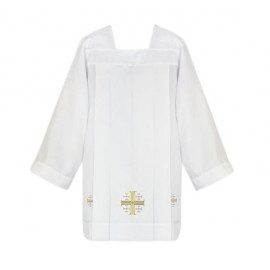
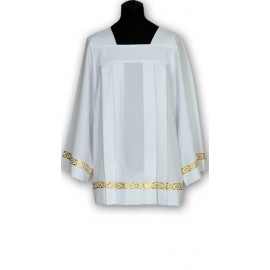
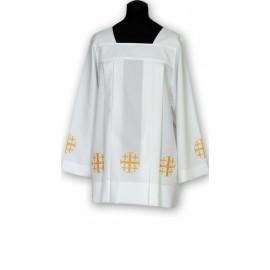
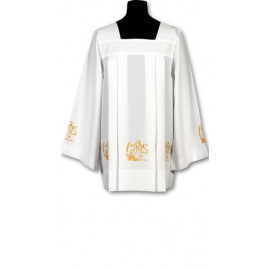
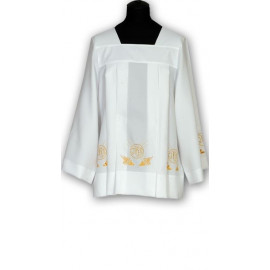
Our collection includes 37 clergy surplices priced from $79 to $332, in white and ecru. The most popular fabric is georgette — lightweight and wrinkle-resistant — followed by linen and cotton, including cotton lace and guipure lace styles. Decorative options include satin inserts, pressed pleats, hand-made hemstitch, and embroidery such as the IHS emblem and the Jerusalem Cross.
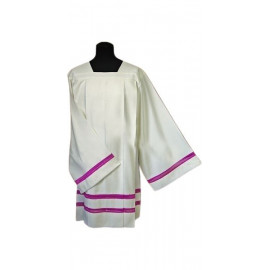
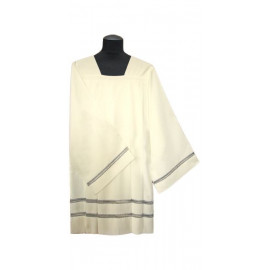
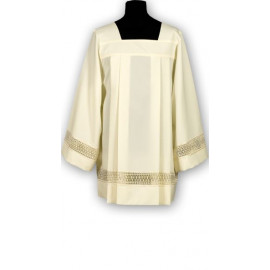
Examples from the collection: the ecru priestly georgette surplice ($80), the clergy surplice with wide guipure lace ($135), the canonical surplice with purple lining ($135), the priestly surplice with cotton lace ($149), and the white priest surplice with guipure and tabs ($165).
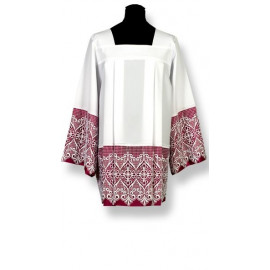
Priests, canons, and cathedral chapters will also find canonical surplices with colored lining, tropic-weight surplices for warm climates, and stretch fabrics with gold tape trim.
What Does the Surplice Symbolize?
The name comes from the Latin superpelliceum — "a garment worn over fur" — because in the Middle Ages the surplice was put on over the heavy fur-lined cassocks of the north. Its white color symbolizes baptismal purity and the joy of the Resurrection, which is why it is worn for celebrations outside the Eucharist.
Frequently Asked Questions About Surplices
Q: What is the difference between a surplice and an alb?
A: An alb is a full-length vestment worn at Mass. A surplice is shorter (knee-length) and worn over a cassock for non-Eucharistic services.
Q: Can altar servers wear surplices?
A: Yes, altar servers commonly wear surplices or cottas over their cassocks. Many churches have a supply of server surplices in various sizes.
Q: What is a priest's tunic called?
A: The priest's white, tunic-like vestment is the surplice, from the Latin superpelliceum. The full-length version worn at Mass is the alb; the shorter one worn over a cassock is the surplice.
Q: What is the difference between a surplice and a cotta?
A: A cotta is a shorter, more fitted version of the surplice, most often worn by altar servers. The surplice is longer (knee-length) with wider sleeves and is worn by priests, deacons, and choirs.
Q: How do you pronounce "surplice"?
A: It is pronounced SUR-pliss (/ˈsɜːrplɪs/) — the first syllable rhymes with "fur".
Browse Our Surplice Collection
View our selection of clergy surplices in traditional, lace, and cotta styles — available in sizes for priests, deacons, and altar servers. Find the right surplice for your ministry. We also offer albs, cassocks, and server surplices.