


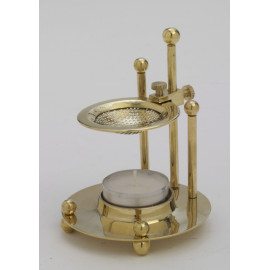


What Is a Thurible (Incense Burner)?
A thurible (also called a censer or incense burner) is a metal vessel used to burn incense during Catholic liturgical celebrations. It is suspended from chains and swung by the thurifer (the person carrying it) to distribute the incense smoke throughout the church. In everyday speech, the thurible is simply "the incense burner on a chain."
Incense has been part of worship since Old Testament times. The Book of Exodus describes God's instructions for making incense altars. In the Catholic Church, incense is used at Mass, processions, Benediction, funerals, and many other liturgical celebrations. The rising smoke symbolizes prayers ascending to heaven.
Every parish that uses incense needs a quality thurible. It should be durable, well-balanced, and beautiful.
What Types of Thuribles Are Available?
Thuribles come in different sizes and styles:
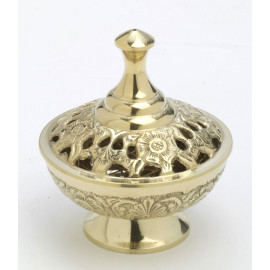
Brass thuribles — the most common type. Durable, attractive, and when gold-plated, they look beautiful during liturgical use. Most parishes use brass thuribles.
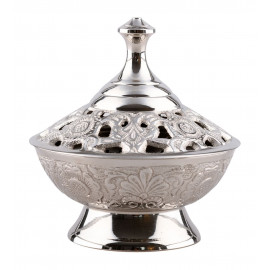
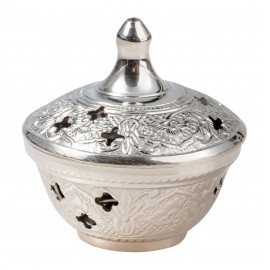
Silver thuribles — more ornate and expensive. Often chosen for cathedral churches or special occasions.
Chain count. Thuribles typically have 3 or 4 chains. Four-chain thuribles are more traditional; three-chain models are simpler and easier to use.
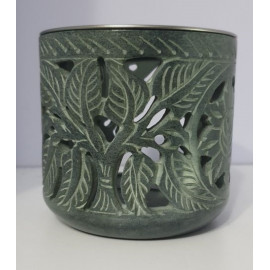
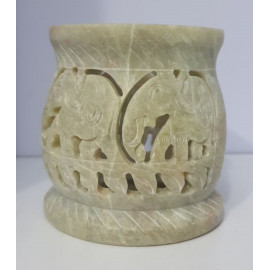
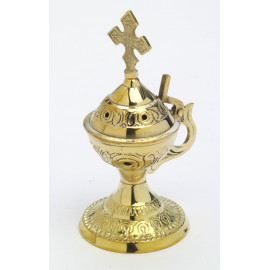
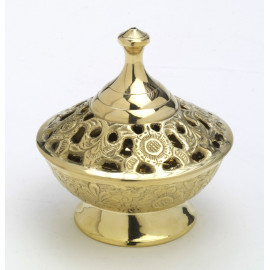
Byzantine-style and soapstone censers. Alongside classic brass and silver burners, our collection includes Byzantine-style brass censers — tall, lantern-like burners with decorative openings — and natural soapstone home burners, each cut from stone so the shade varies slightly from grey to pink-brown.
How Do I Choose the Right Thurible?
- Consider the weight. A thurible needs to be heavy enough to swing properly but not so heavy that it is tiring to use.
- Check the chain length. The chains should be long enough for comfortable swinging but not so long that they tangle.
- Look for a secure lid. The lid should close firmly to prevent hot coals from falling out.
- Think about the size. A larger thurible holds more incense and charcoal but is heavier to swing.
| Material | Chains | Best For | Price Range |
|---|---|---|---|
| Brass | 3 or 4 | Parish churches, regular use | $40–$120 |
| Silver-plated | 4 | Solemnities, cathedral use | $80–$250 |
| Ornate brass | 4 | Special occasions, processions | $100–$300+ |
Browse Our Thurible Collection
Explore our selection of thuribles and incense burners in brass and silver-plated finishes. Find the right thurible for your parish's liturgical needs. We also offer incense boats, incense charcoal, and aspergillums.
Learn more in our guides: How to Choose a Thurible: Brass, Silver, or Bronze?, How to Use a Thurible During Mass: Step-by-Step Guide, How to Clean and Maintain a Thurible, and The History of Incense in Catholic Worship.
Can Catholics Burn Incense at Home?
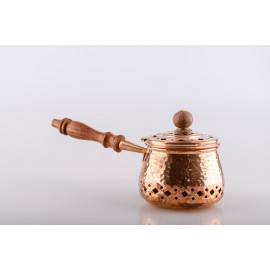
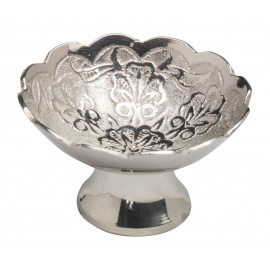
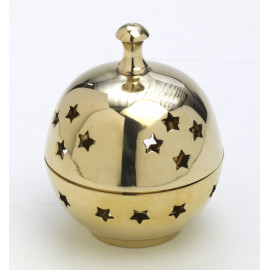
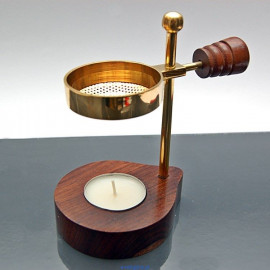
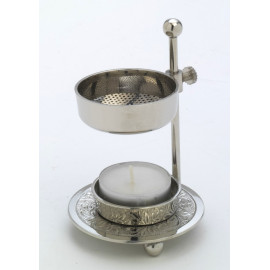
Yes. Burning incense at home is a private devotion open to every Catholic — it is not reserved to the liturgy. A home incense burner (also called a home censer) is a small metal vessel, typically 7–12 cm (3–5 inches) across, used on a home altar or in a prayer corner. Two heat sources are common: a tealight candle (gentle heat and a subtle scent) or a charcoal disc (the traditional method that produces the full fragrant smoke of church incense).
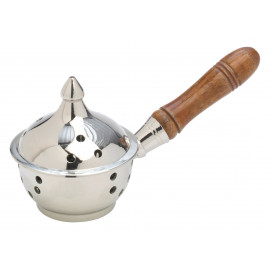
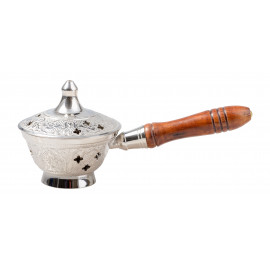
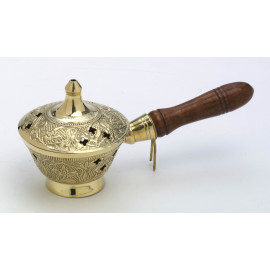
Place the burner on a heat-proof surface away from curtains and draughts, never leave it unattended while the charcoal is glowing, and let it cool completely before emptying the ash. For home use, a brass or silver-plated burner with a wooden handle is the most practical choice — it stays cool enough to carry. Pair it with incense charcoal and resin incense, or use stick incense in a covered burner.
What Incense Do Catholics Burn?
Catholic churches burn resin incense, not sticks — most often frankincense, frequently blended with myrrh and other aromatic resins. Blends such as "Three Kings" combine frankincense, myrrh and other resins, recalling the gifts of the Magi. The resin is sprinkled over a lit charcoal disc inside the censer, where it melts and releases fragrant smoke.
For home prayer, you can use the same resin incense on charcoal, or gentler alternatives such as frankincense sticks or incense cones in a covered burner. Keep a small spoon or tongs for placing the resin, and store incense in an airtight container — resins lose their fragrance when exposed to air.
What Is a Catholic Incense Burner Called?
The incense burner used in the Catholic Church is called a thurible — from the Latin turibulum — when it is suspended on chains and swung during the liturgy. The same vessel is also called a censer, and both words are often used interchangeably with "incense burner." The server who carries it is the thurifer.
Smaller vessels used for shorter rites — blessing the altar, a home, or a coffin — are called hand censers or hand incense burners; they have a wooden handle instead of chains and hold a single charcoal disc.
What Is the Difference Between a Censer and a Thurible?
A censer is any vessel made to burn incense — standing, hanging or hand-held. A thurible is specifically the censer that hangs on chains and is swung, which is why every thurible is a censer, but a tabletop or hand censer is not a thurible. In practice, parishes often say "thurible" for the swinging vessel and "censer" for everything else.
Which Incense Burner Hangs on a Chain?
The thurible is the incense burner that hangs on a chain. Thuribles for parish use have three or four chains (four is the more traditional pattern); single-chain censers are lighter, simpler alternatives for small churches and home use. If you are looking for a swinging censer for Mass, see our thuribles, boats and spoons collection; the small hanging burners on this page work well for blessing a room or a home prayer corner.
How to Burn Incense at Home (Step by Step)
Burning incense at home takes about two minutes. You need a burner, a charcoal disc, resin incense, and something to handle the hot coal — charcoal pliers or an incense spoon.
- Light the charcoal. Hold a charcoal disc with pliers and hold it over a flame until it glows and turns grey at the edges (about 30–60 seconds).
- Place it in the burner. Set the glowing disc in the centre of the bowl, on a heat-proof surface away from curtains and draughts.
- Add the incense. Sprinkle a small pinch of resin — frankincense, myrrh or a blend — over the disc with a spoon. A little goes a long way.
- Let it smoulder. The resin melts and releases fragrant smoke; one disc keeps burning for about 20–30 minutes.
A gentler alternative is a tealight burner: place the resin in the metal cup over a tealight candle for a softer scent without glowing coals. Whichever method you use, ventilate the room, never leave a burning censer unattended, and keep it away from children and pets. Pair your burner with incense and charcoal.
Catholic Incense Kit: What You Need to Get Started
A basic Catholic incense kit costs about $50–$100 and covers everything you need for daily home prayer:
- Incense burner — a small brass, silver-plated or soapstone censer with a lid, from $32.
- Resin incense — frankincense (olibanum) is the classic; a 20 g pack goes a long way for occasional home use, from $6.
- Charcoal discs — the traditional heat source for resin incense; a roll of ten is a good starting supply.
- Charcoal pliers or an incense spoon — for handling the hot disc and placing the resin safely, about $10 each.
For serving at church, the kit grows into a full set: a thurible with chains, an incense boat and a spoon. Browse incense and charcoal to complete your kit.
Home Incense Burners vs Church Censers
Home incense burners and church censers do the same job at different scales. A home burner is small — 7 to 12 cm (3–5 inches) across, or up to 14.5 cm for tall Byzantine-style models — with a lid or a wooden handle, made to hold one charcoal disc or a tealight on a home altar or prayer corner. A church censer (thurible) is larger, suspended on three or four chains, and swung by a thurifer during Mass, processions and Benediction, working together with a boat and spoon for loading incense. If you are equipping a parish, choose from our thurible collection; for prayer at home, the lidded burners on this page are the practical choice.
How Much Does a Catholic Incense Burner Cost?
At Best Catholic Shop, incense burners cost between $32 and $67. Small brass and silver censers start at $32; soapstone home incense burners are $48–$52; larger brass models with lids and nickel-plated censers run up to $67. Shipping is free on US orders over $100. Parish thuribles with chains are sold separately in our thurible collection.
How Do You Clean an Incense Burner?
Let the burner cool completely, tip out the ash, then wash the bowl in warm water with a little mild dish soap. For burnt-on resin, soak the bowl in hot water for ten minutes or wipe it with isopropyl alcohol; a soft cloth is enough — abrasive pads scratch brass and silver plating. Dry the burner immediately and thoroughly, because trapped moisture causes tarnish and verdigris. Chains and hinges need only a dry wipe. Our full step-by-step method is in How to Clean and Maintain a Thurible.
What Is a Thurifer?
A thurifer (from the Latin thus, "incense", and ferre, "to carry") is the altar server — sometimes a deacon or priest — who carries the thurible and presents it for incensation during Mass, processions and Benediction. The thurifer also manages the charcoal and the incense boat. If you are training one, start with our guide How to Train a New Thurifer.
What Is the Smoke Thing in a Catholic Church Called?
The "smoke thing" you see in a Catholic church is a censer or thurible — a metal vessel on chains in which incense, usually frankincense resin, is burned on glowing charcoal. The rising smoke symbolizes prayers ascending to God (Psalm 141:2). The small version for private prayer is simply called a home incense burner or hand censer.
Are Incense Burners Safe Around Pets?
Used occasionally with ventilation, church-style incense is generally fine for pets, but the smoke can irritate birds and small animals with sensitive respiratory systems. Keep the burner on a stable, heat-proof surface out of reach, never leave glowing charcoal unattended, and air the room afterwards. If your pet has asthma or breathing problems, choose a tealight burner with a gentle resin, or burn incense when the pet is in another room.
What Does Incense Symbolize in the Catholic Church?
Incense symbolizes prayer rising to God — Psalm 141:2 compares prayer to incense — and marks the reverence due to the Blessed Sacrament and the altar. Its use in worship goes back to the Temple of Jerusalem (Exodus 30), and in the Catholic Church it is burned at solemn Masses, processions, Benediction, funerals and blessings.
Related Reading
For solemn processions and Benediction, pair incense with a cope from our collection.
