
The smell of incense in a Catholic church is unmistakable. It's ancient, mysterious, and deeply atmospheric. But where did this practice come from, and why do we still use incense today?
Incense in the Old Testament
Incense has been part of worship since the beginning of recorded religion. In the Old Testament, God commanded Moses to build a golden altar of incense in the Tabernacle (Exodus 30:1-10). The priests burned incense morning and evening — a perpetual offering that rose like prayer before God.
The incense was a specific blend of frankincense, galbanum, onycha, and stacte — a recipe that was sacred and not to be replicated for personal use (Exodus 30:37-38).
Incense in the Early Church
Interestingly, the early Christians didn't use incense in their liturgies. The practice was associated with pagan Roman religion and emperor worship, so Christians avoided it. It wasn't until the 4th century — after Constantine's conversion — that incense began to appear in Christian worship.
By the 5th century, incense was a regular part of the Roman liturgy. It was used at the entrance procession, the Gospel, the offertory, and the consecration — much as it is today.
The Symbolism of Incense
Incense carries rich theological meaning:
- Prayer rising to God: "Let my prayer be counted as incense before you" (Psalm 141:2)
- The presence of the Holy: The smoke marks the space as sacred
- Honor and reverence: Incensing the altar, the Gospel, and the congregation shows respect for what is holy
- The sweetness of Christ: The fragrance symbolizes the "aroma of Christ" (2 Corinthians 2:15)
Incense Today
Incense remains optional in the Ordinary Form of the Roman Rite. Some parishes use it every Sunday; others only on solemnities; some not at all. It's a matter of local custom and the priest's preference.
What I Recommend
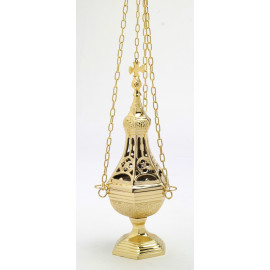
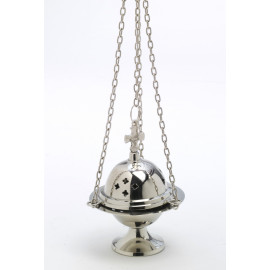
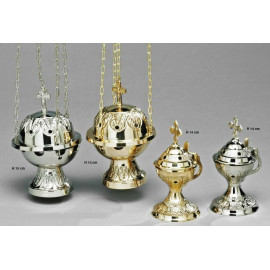
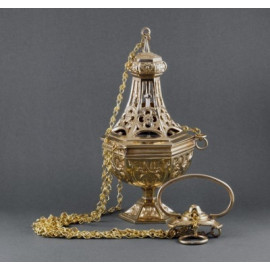
If your parish doesn't currently use incense, consider introducing it on solemnities and feast days. The sensory experience adds a layer of solemnity that words alone cannot achieve. Start with a simple brass thurible and quality frankincense — you don't need the most expensive setup to begin.
Frequently Asked Questions
Q: Is incense required at Mass?
A: No, incense is permitted but not required in the Ordinary Form. It's more commonly used in the Extraordinary Form and in Eastern Catholic Churches.
Q: What kind of incense should I use?
A: Frankincense is the traditional choice and the most widely used. Blends that include myrrh, copal, or other resins are also popular. Avoid synthetic incense — it doesn't burn as cleanly or smell as natural. Browse our selection of liturgical incense and charcoal.
Conclusion
Incense connects us to the Temple of Jerusalem, to the early Church, and to the heavenly liturgy described in the Book of Revelation. When the smoke rises, we join our prayers to the prayers of the saints and angels.
Shop Related Products
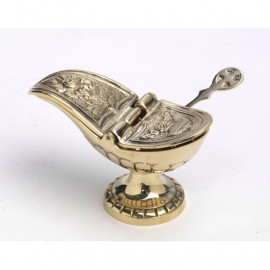
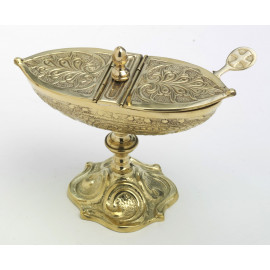
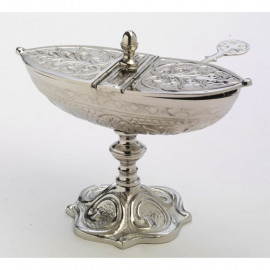
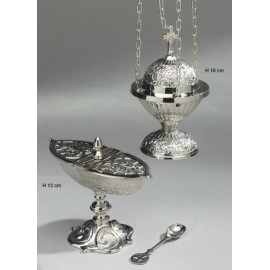
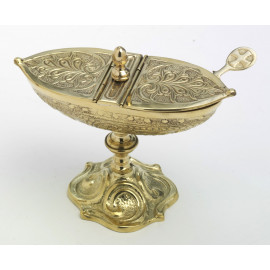
- Liturgical Thuribles & Incense Boats — complete thurible sets with boat and spoon
- Incense Burners — traditional brass designs
- Liturgical Incense & Charcoal — quality frankincense and quick-light charcoal
- Liturgical Sprinkler Aspergillum — for holy water rites