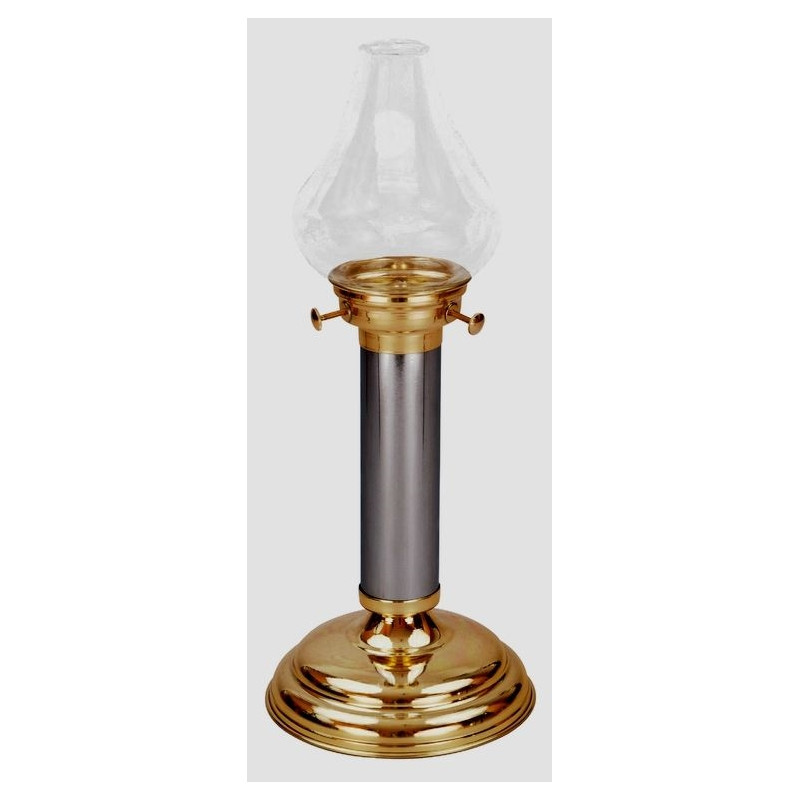
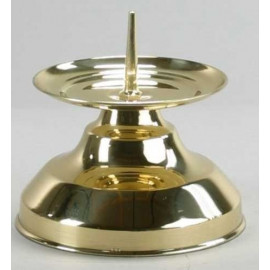
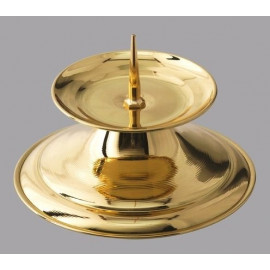
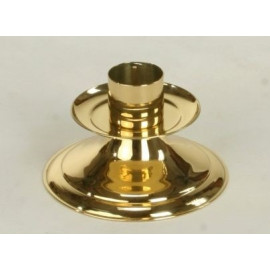
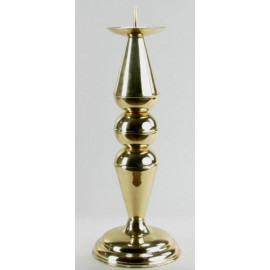
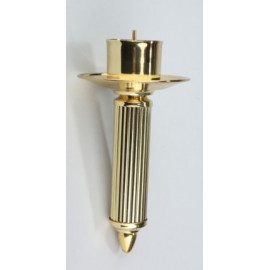
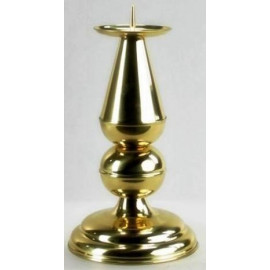
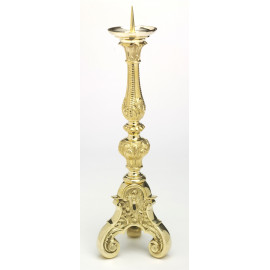
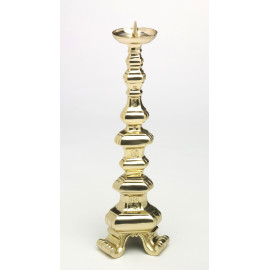
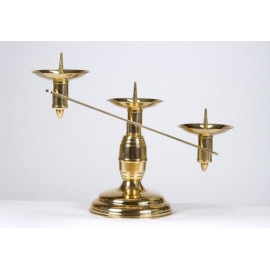
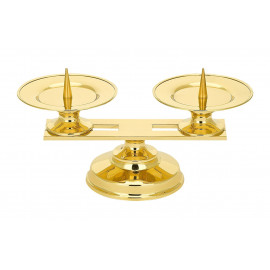
Acolyte candlesticks are the tall candlesticks carried by altar servers in processions. They are not the same as the candlesticks on the altar: they are lighter, designed to be carried, and often fitted with an oil insert rather than a wax candle. In a solemn procession, the acolytes with candles lead the way and frame the cross or the Gospel book.
What Acolytes Carry
An acolyte may carry a processional cross, a candle, the Gospel book, the incense boat or the thurible. When carrying candles, the server holds the candlestick upright with both hands, keeps the flame away from vestments and walks in step with the other server. The candlesticks are usually carried in pairs, one on each side of the cross or the procession.
Acolyte vs Altar Candlestick
| Acolyte candlestick | Altar candlestick | |
|---|---|---|
| Purpose | Carried in procession | Stands on or near the altar |
| Weight | Lighter, balanced for carrying | Heavier, weighted base |
| Height | Usually 40–50 cm | 4–55 cm depending on the altar |
| Candle | Wax candle or oil insert | Wax candle in a socket or on a pricket |
Oil Inserts and Shades
Some acolyte candlesticks use an oil insert instead of a wax candle. The insert holds liquid wax or oil and burns with a steady flame; a glass or metal shade protects the flame and gives the candlestick its finished height. Our 44 cm acolyte candlestick has a 180 ml oil insert and a 16 cm lamp shade. It is sold as a single piece, so order two for a procession.
Height and Handling
Acolyte candlesticks are usually 40–50 cm high. The height should let the server carry the candle comfortably without blocking the view of the sanctuary. The base should be wide enough to steady the piece, and the stem should be easy to grip. Before the procession, check that the insert is filled, the shade is secure and the flame is protected.
Processions and Ceremonies
Acolyte candlesticks are used at the entrance procession, the Gospel procession, the presentation of the gifts and other solemn processions. They are also used at Benediction and in the Easter Vigil. In some parishes they are carried at funerals and weddings. The number of candles depends on the ceremony and the local custom; two is the minimum for a procession.
Safety
Carry the candlestick upright and away from vestments, banners and hair. Do not run. Keep the flame away from drafts and from the priest's chasuble. If the candlestick has an oil insert, check that the cap is secure and that the insert is not overfilled. At the end of the procession, extinguish the candle with a snuffer rather than blowing it out.
Frequently Asked Questions
Q: What are acolyte candlesticks?
A: Acolyte candlesticks are the tall candlesticks carried by altar servers in processions. They are lighter than altar candlesticks and may use a wax candle or an oil insert. They are usually carried in pairs.
Q: What do acolytes carry?
A: An acolyte may carry a processional cross, a candle, the Gospel book, the incense boat or the thurible. The duties depend on the ceremony and the local custom.
Q: How tall is an acolyte candlestick?
A: Most acolyte candlesticks are 40–50 cm high. Our 44 cm model has a 180 ml oil insert and a 16 cm shade, and it stands 44 cm high with the shade.
Q: What is the difference between a processional candlestick and an acolyte candlestick?
A: The terms overlap. A processional candlestick is any candlestick designed to be carried in procession; an acolyte candlestick is the type carried by an altar server. Both are lighter and more portable than altar candlesticks.
Q: Can acolyte candlesticks use wax candles?
A: Yes. Some models have a socket for a wax candle; others use an oil insert. Check the product description for the fitting and the candle size before ordering.
Q: How many acolyte candlesticks do we need?
A: At least two for a procession, one on each side of the cross or the Gospel book. Some ceremonies use four or more. The number depends on the local custom and the size of the procession.
Related Reading
Browse our altar candlesticks and acolyte candlesticks and read the guide to the GIRM. For processions, see the role of processions in Catholic worship.