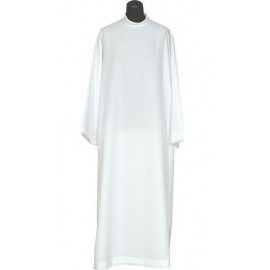
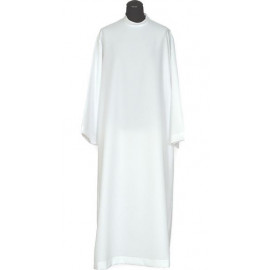
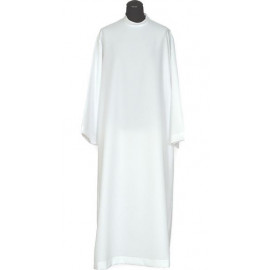
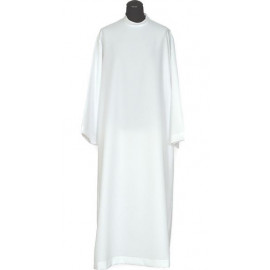
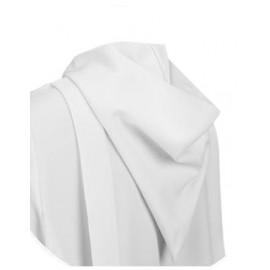
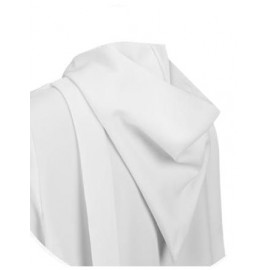
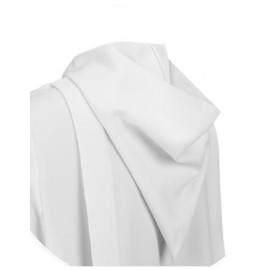
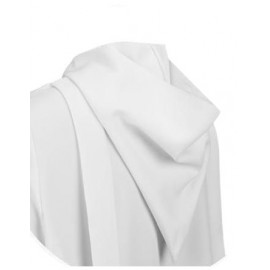
An altar server alb is the full-length white tunic that altar servers, lectors, and acolytes wear over their everyday clothing at Mass. It reaches the ankles, is tied at the waist with a cincture, and carries a meaning far older than the garment itself: it is the white robe of Baptism, worn again at the altar.
If you have ever wondered why servers dress the way they do — or you are vesting a new team and need to get the details right — this guide covers what the alb is, where the name comes from, what it symbolizes, and who wears it.
Where the Word “Alb” Comes From
The name is beautifully simple. Alb comes from the Latin alba — “white” — and from the tunica alba, the white linen tunic worn by citizens of ancient Rome. When the Church adopted the garment for liturgy, she kept both the shape and the name: the white tunic, worn long, under the other vestments. In French it is the aube, in Italian the alba, in Polish the alba as well — the same word in every language, always meaning the same thing: white.
What the Alb Symbolizes
The alb is not just a uniform. The white color recalls the garment given at Baptism, and the Church has kept that connection alive since the earliest centuries: the newly baptized wore their white robes from Holy Saturday until the following Sunday, which became known as Dominica in albis — “the Sunday in white.” The Book of Revelation describes the redeemed standing before the throne “wearing white robes” (Revelation 7:9), and Saint Paul reminds the baptized that they “have clothed yourselves with Christ” (Galatians 3:27).
When a server puts on an alb, all of that is present: purity of heart, new life in Christ, and the truth that everyone at the altar — priest, deacon, server, or lector — serves the same Lord. That is also why the GIRM (General Instruction of the Roman Missal, no. 336) calls the alb the vestment common to ministers of every rank.
Who Wears an Alb?
In practice, almost everyone who serves at the altar may wear an alb:
- Altar servers — the most visible wearers; the alb is the standard server vestment in most parishes.
- Lectors — readers of the Word often wear an alb or another suitable vesture.
- Acolytes — installed or commissioned acolytes wear the alb for their ministry at the altar.
- Priests and deacons — the alb is the base vestment under the stole and chasuble at Mass.
- Other lay ministers — sacristans, masters of ceremonies, and any baptized person entrusted with a liturgical role.
The USCCB’s guidelines for altar servers summarize the practice plainly: acolytes, altar servers, readers, and other lay ministers may wear the alb or other suitable vesture. It is not reserved to the clergy.
When Is the Alb Worn?
The alb belongs to the liturgy of the altar. It is worn at Mass, at Benediction of the Blessed Sacrament, at processions, and at other services where ministers serve at the altar or handle the sacred vessels. For services outside Mass — the Liturgy of the Hours, funerals outside Mass, choir duties — the traditional garment is the surplice worn over a cassock, which developed as a shortened form of the alb.
Alb, Cassock, Surplice: A One-Line Comparison
If the names blur together, here is the short version: the alb is a full-length white tunic for Mass; the cassock is the long robe (usually black) worn underneath; and the surplice is the shorter white garment worn over the cassock for non-Eucharistic services. For the full comparison, including the modern cassock-alb, see our guides Alb vs Surplice and Alb vs Cassock vs Cassock-Alb.
Choosing an Alb for Your Parish
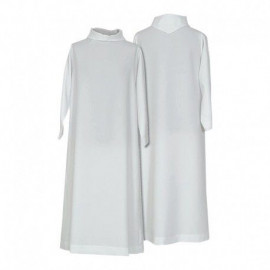
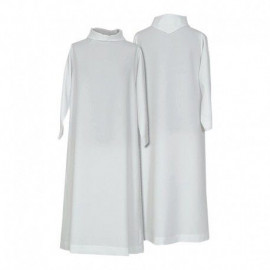
When you vest a team, three decisions matter most: the style, the fabric, and the size. Server albs typically come in three cuts — a stand-up collar, a hooded top (capuche), or a turtleneck that forms a triangle at the back — in easy-care fabrics such as georgette, jersey stretch, and polyester-stretch. Sizes follow the wearer’s height rather than chest measurements, so measure each server standing in shoes.
Our altar server albs collection gathers all of these styles in one place — 15 white albs in sizes from 164 to 188 cm, from $44 — and pairs with our cinctures, surplices, and cassocks for the rest of the team’s wardrobe.
Frequently Asked Questions
Q: What is an altar server alb?
A: It is a full-length white tunic worn over clothing by altar servers, lectors, and acolytes at Mass. The name comes from the Latin alba (white), and the GIRM calls it the vestment common to ministers of every rank, normally tied at the waist with a cincture.
Q: Why do altar servers wear white albs?
A: White recalls the garment given at Baptism. The early Church dressed the newly baptized in white from Holy Saturday until the “Sunday in white” (Dominica in albis), and the alb keeps that symbolism of purity and new life in Christ.
Q: Who can wear an alb?
A: Any baptized person serving at the altar may wear one — altar servers, lectors, acolytes, and other lay ministers, as well as priests and deacons. The alb is not reserved to the clergy.
Q: What is the difference between an alb and a cassock?
A: The cassock is a long, close-fitting robe (usually black) that serves as ordinary clerical dress and the garment worn under vestments. The alb is the white liturgical vestment worn on top for Mass.
Q: How do I choose the right alb size?
A: Alb sizes follow the wearer’s height. Measure the person standing in shoes and match the size to their total height — for example, 164 cm (64.6 in) or 176 cm (69.3 in). When between sizes, choose the larger one. See our size guide for the full chart.
Ready to vest your team? Browse the altar server albs we stock — all sizes ship within 72 hours.