



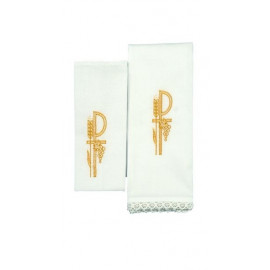


Liturgical linens — corporals, purificators, palls, altar cloths — need special care because they come into contact with the Eucharist. You can't just throw them in with the regular laundry.
Here's the proper way to wash them with reverence and effectiveness.
The First Rinse (Most Important Step)
Before any washing, liturgical linens must be rinsed to remove any traces of the consecrated species. This is done in a bowl of water (not under a running tap). The rinse water is then poured into the sacrarium (the special sacristy sink that drains directly into the earth) or consumed.
This step is non-negotiable. It shows reverence for the Real Presence and ensures that no particles of the consecrated host remain in the fabric.
Washing
After the first rinse, the linens can be washed normally. Here's what I recommend:
- Water temperature: Warm (not hot) water is best for linen. Hot water can shrink and damage the fabric.
- Detergent: Use a mild, unscented detergent. Avoid bleach unless the linens are heavily stained — and even then, use it sparingly.
- Machine or hand: Most modern linens can be machine-washed on a gentle cycle. Hand-washing is gentler but more time-consuming.
- Separate: Wash liturgical linens separately from other laundry.
Drying and Ironing
Air drying is best — lay the linens flat or hang them on a line. Avoid the dryer, which can shrink linen and damage delicate embroidery.
Iron while the linens are still slightly damp. Use a medium-hot iron and iron on the reverse side if there's any embroidery. Starch lightly for a crisp finish.
Washing Instructions by Linen Type
| Linen | Washing Method | Notes |
|---|---|---|
| Corporals | Hand wash or gentle machine cycle | Keep folded to trap particles |
| Purificators | Machine wash, warm water | May need extra rinsing |
| Palls | Remove cardboard insert first | Wash cover only, air dry |
| Altar cloths | Machine wash, warm water | Iron while damp for best results |
| Lavabo towels | Machine wash, warm water | Replace when frayed |
| Burses | Hand wash recommended | Press flat after drying |
What I Recommend
For most parishes, I recommend washing linens weekly (after Sunday Mass) and having enough sets to last between washes. A minimum of 6-8 corporals and 12-16 purificators is a good starting point for a typical parish.
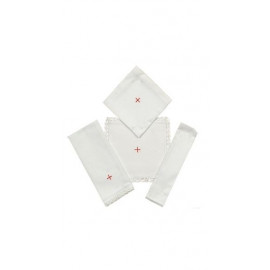
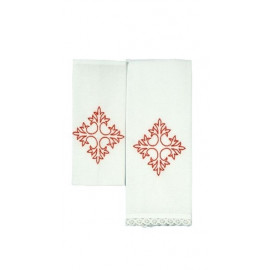
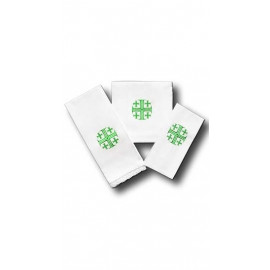
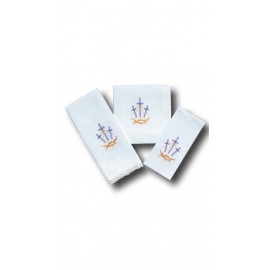
Consider investing in matching chalice linen sets — they include corporals, purificators, and palls in coordinated designs, making it easy to keep your altar linens looking uniform and beautiful.
Frequently Asked Questions
Q: Can I use fabric softener?
A: No. Fabric softener leaves a residue that can affect the absorbency of the linen and may cause discoloration over time.
Q: How often should linens be replaced?
A: With proper care, good quality linens should last 2-3 years. Replace them when the fabric becomes thin, stained beyond cleaning, or frayed at the edges.
Q: Can I use bleach on white linens?
A: Bleach is permitted for white linens but should be used sparingly. It weakens the fabric over time. Try oxygen-based bleach first.
Related Products
Keep your sacristy well-stocked with these essential linens:
- Embroidered Corporals — for the altar during Mass
- Embroidered Purificators — for wiping sacred vessels
- Embroidered Palls — to cover the chalice
- Embroidered Lavabo Towels — for the priest's hand washing
- Embroidered Burses — to carry the corporal
- Embroidered Chalice Cover Veils — to protect the chalice
- Complete Chalice Linen Sets — coordinated sets for a unified look
Conclusion
Washing liturgical linens is a ministry of reverence and care. Do it properly, and your linens will serve your parish beautifully for years.
Browse our full collection of liturgical linens and textiles — corporals, purificators, palls, altar cloths, and more in every size and design.
See our ecru chalice palls collection.