They hang side by side in every sacristy, and they are easy to mix up: the alb, the cassock, and the cassock-alb. All three are long garments worn by ministers of the liturgy, but they come from different centuries and do different jobs. This guide explains each one — and ends with a simple rule of thumb for telling them apart.
The Alb: The White Tunic of the Altar
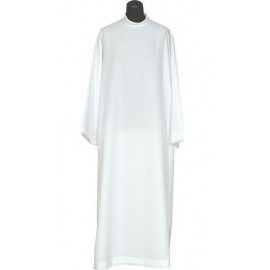
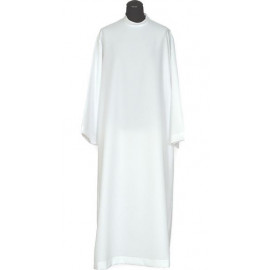
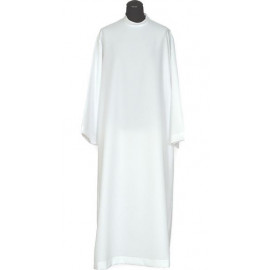
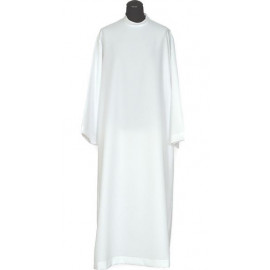
The alb is a full-length white tunic worn over everyday clothing, tied at the waist with a cincture. Its name comes from the Latin alba (“white”) and from the Roman tunica alba. The GIRM (no. 336) calls it the vestment common to ministers of every rank — it is worn by priests, deacons, altar servers, lectors, and acolytes alike at Mass.
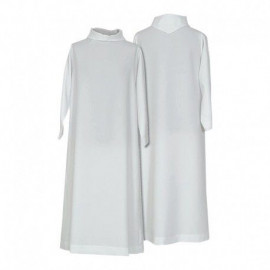
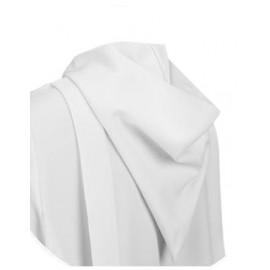
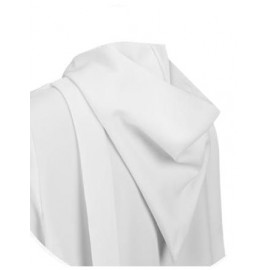
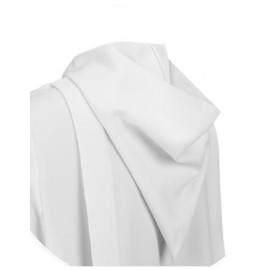
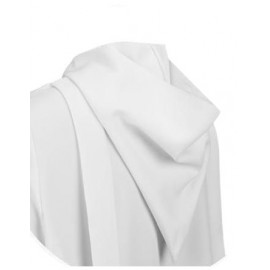
Because it is worn over clothing, the alb is cut generously and sized by the wearer’s height rather than the chest. Server albs typically reach the ankles and come in easy-care fabrics; our altar server albs include stretch jersey, georgette, and hooded styles in sizes from 164 to 188 cm.
The Cassock: The Long Robe Underneath
The cassock is a long, close-fitting robe — usually black for priests and servers, with other colors marking particular ranks and occasions — that functions as ordinary clerical dress. It is the garment worn under liturgical vestments: the priest’s alb goes over the cassock, and in the traditional “cassock and surplice” arrangement, servers wear a white surplice over the black cassock.
The cassock is also a vestment of its own in certain contexts — choir dress, processions, and non-liturgical functions. Our altar server cassocks come in a range of sizes for parish teams.
The Cassock-Alb: The Modern Hybrid
The cassock-alb is the youngest of the three: a twentieth-century garment that combines the shape of the cassock with the white color and collar of the alb, worn on its own without a surplice. It was developed as a convenient single garment for clergy and lay ministers — one piece instead of two — and today it is common in Anglican, Episcopal, and increasingly Catholic settings for services where a full set of vestments is not required. If you hear “cassalb,” it is the same garment.
Side by Side: The Differences at a Glance
| Alb | Cassock | Cassock-Alb | |
|---|---|---|---|
| Color | White | Usually black (colored for ranks/occasions) | White |
| Worn | Over clothing, for Mass | As base garment / clerical dress | On its own, for services |
| Cincture | Normally tied with one | Not used | Usually not needed |
| Worn with | Stole and chasuble (clergy); on its own (servers) | Under the alb, or under a surplice | Stole for clergy; on its own for lay ministers |
| Origin | Ancient Roman tunic | Medieval lay and clerical dress | 20th-century hybrid |
Which One Should Your Parish Choose?
For Mass, the answer is the alb: it is the vestment the Church’s rubrics expect for ministers of every rank, and it is the simplest to stock across a whole team of servers. The cassock with surplice remains a beloved tradition in many parishes, especially for choir and non-Eucharistic services. The cassock-alb is a practical choice for clergy and ministers who serve frequently and want one well-fitting garment — but it is not a substitute for the alb at Mass where the parish’s tradition calls for one.
Whatever you choose, keep the team consistent: a sacristy that mixes three systems looks accidental, while one clear system looks deliberate. For the white garments themselves, start with the altar server albs and surplices; for the base layers, see the cassocks.
Frequently Asked Questions
Q: What is the difference between a cassock and an alb?
A: The cassock is a long, close-fitting robe — usually black — that is ordinary clerical dress and the garment worn under vestments. The alb is a white liturgical vestment worn on top for Mass. In short: black underneath, white on top.
Q: What is a cassock-alb?
A: A modern garment combining the cassock’s shape with the alb’s white color and collar, worn on its own. It became popular in the twentieth century as a convenient single garment for clergy and lay ministers.
Q: Can altar servers wear cassock-albs?
A: They can, and some parishes use them for convenience, but most still vest servers in albs, or in the traditional cassock with surplice. Check your parish’s practice and diocesan norms first.
Q: Why do some parishes use cassocks and others albs?
A: It is a matter of tradition rather than doctrine. The alb is the standard vestment of Mass for all ministers (GIRM 336); the cassock and surplice tradition, especially strong in English-speaking countries, grew from choir and non-Eucharistic practice.
Q: Is a surplice the same as an alb?
A: No. The surplice is a shorter, wide-sleeved garment worn over the cassock for services outside Mass; it developed as a shortened form of the alb. For the full comparison, read Alb vs Surplice.
Shop the white garments: altar server albs · surplices · cassocks · cinctures.