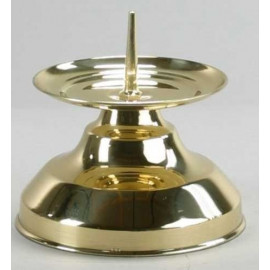
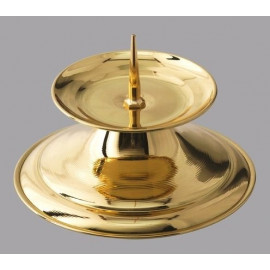
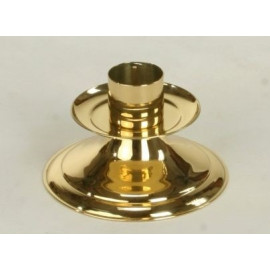
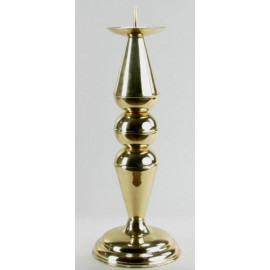
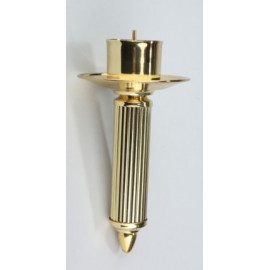
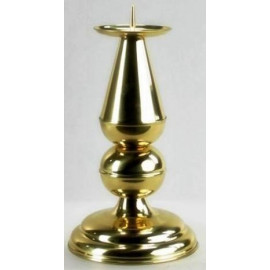
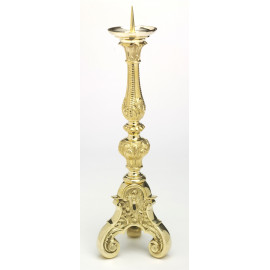
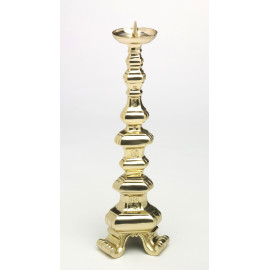
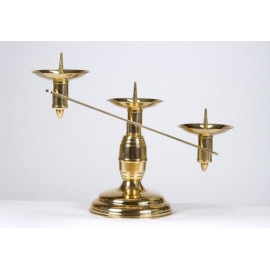
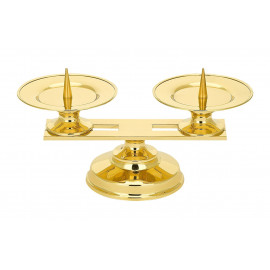
An altar candlestick is a liturgical candle holder made to stand on or near the altar during Mass. Choosing the right one comes down to five decisions: the type, the height, the socket size, the material and the number of candles. Get those right and the candlesticks will serve the parish for decades; get them wrong and you will be replacing candles, inserts and damaged holders within a year.
This guide walks through the choices in the order a sacristan or parish buyer actually makes them, using the real range in our collection: 49 altar candlesticks from 4 cm to 55 cm, priced from $32 to $406.
1. Choose the Type
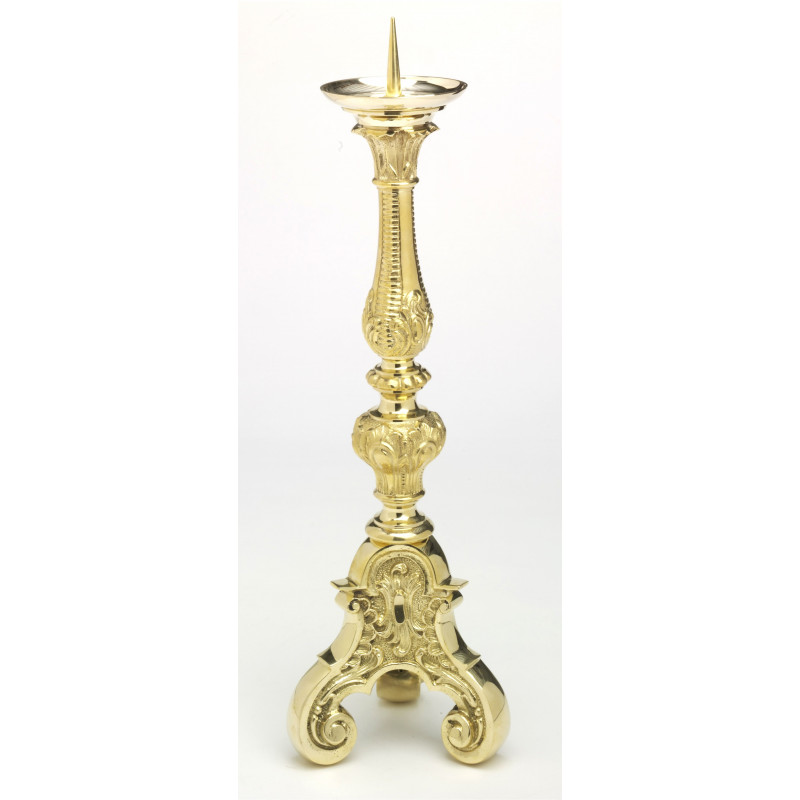
Altar candlestick. A single candle in a socket. This is the standard on the altar itself and the type most parishes buy in sets of two, four or six.
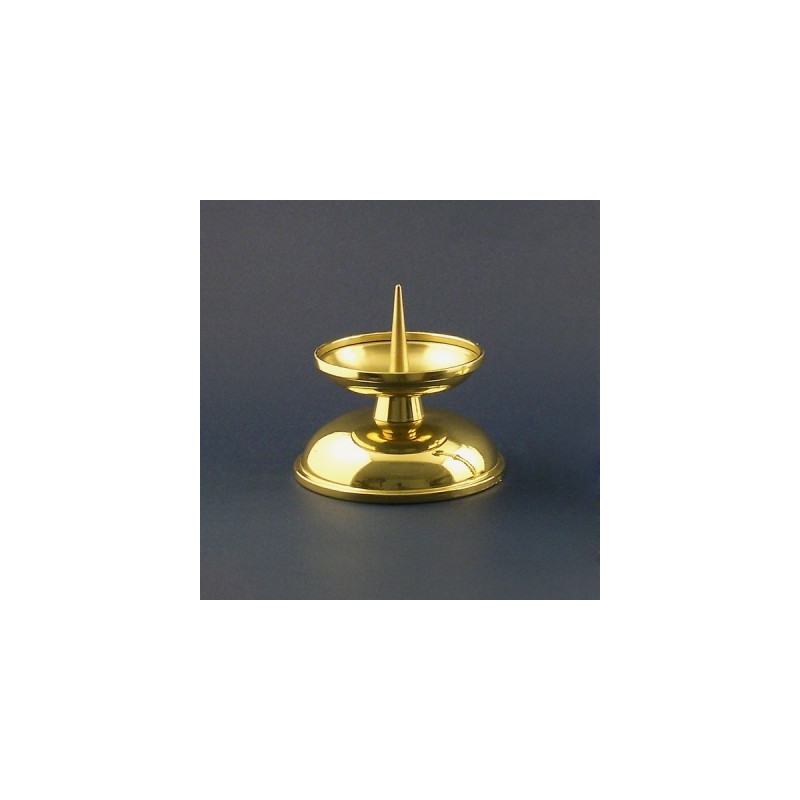
Pricket. A spike instead of a socket, used for taper candles. Simple, stable and ideal for slim candles, side altars and home altars.
Candelabra. A branched holder for two or more candles on one base. Used for High Mass, Benediction, adoration and processions.
Acolyte candlestick. A tall, portable candlestick carried by an altar server. Some models use an oil insert.
Paschal candlestick. A tall stand for the Paschal candle, used at the Easter Vigil and throughout Eastertide.
2. Choose the Height
Height is a matter of proportion. On a parish altar, 15–30 cm is the common working size; on a high altar or cathedral, 30–55 cm. Small candlesticks (4–15 cm) suit side altars, home altars and slim candles. The candlesticks should be tall enough to be seen from the nave but not so tall that they hide the crucifix.
| Size | Best for | Price range |
|---|---|---|
| Small: 4–15 cm | Side altars, home altars, Advent wreaths, slim candles | $32–$379 |
| Medium: 16–30 cm | Parish altars, chapels, pairs and sets | $77–$363 |
| Large: 31–55 cm | Cathedrals, high altars, solemn Mass | $222–$406 |
3. Match the Socket to the Candle
The socket is the cup at the top of the candlestick. Its inner diameter must match the candle diameter. Common liturgical sockets are 7/8 inch (about 2.2 cm), 1½ inch (about 3.8 cm), 2 inch (about 5 cm) and 3 inch (about 7.6 cm). Some of our candlesticks use a 4 cm socket; others use a pricket for taper candles.
Measure the inside of the socket, not the outside, and compare it with the candles you already use. If the candle is slightly narrow, a candle follower or a socket insert can take up the slack. If it is too wide, the candle will sit unstable and drip. When in doubt, choose a pricket or ask before ordering.
4. Choose the Material and Finish
Brass sheet is the workhorse: lighter, less expensive and available in large sets. Cast brass gives more detail and a solid feel. Solid brass is heavier and more stable, and it is the usual choice for large candlesticks. Bronze is darker and heavier. Gold plating gives a bright liturgical finish; nickel or chrome plating gives a silver look; silver plate is traditional for the finest pieces. Wood is lighter and quieter, and it suits chapels and home altars.
Most of our brass candlesticks are polished, lacquered and heat-baked. The lacquer protects the finish and means the piece needs only dusting and occasional wiping. Do not use abrasive polish on lacquered or gold-plated surfaces.
5. Decide How Many Candles
GIRM 117 requires at least two candles for any Mass; four or six are customary for Sunday Mass and solemnities, and seven may be used when the diocesan bishop celebrates. Buy in sets: two for a side altar, four or six for a parish altar. Pairs and sets should be equal in height and design; a mismatch is immediately visible.
6. Check Stability and Safety
A wide, weighted base matters more than ornament. A tall candlestick with a small base is a safety risk. Check that the piece does not rock, that the socket holds the candle vertically, and that the candle cannot fall out when it burns down. Solid brass models at 2–4 kg are the most stable; sheet-brass models are lighter, so check the base diameter.
7. Plan the Care
Lacquered brass needs dusting and occasional wiping. Unlacquered brass needs occasional polishing. Gold-plated and silver-plated pieces should be cleaned only with products made for those finishes. Remove wax after it cools with a plastic scraper, never a knife. Store spare candlesticks wrapped in soft cloth.
8. Set a Realistic Budget
In our collection, small candlesticks run from $32 to $379, medium from $77 to $363, and large solid brass candlesticks from $222 to $406. The price reflects the material, weight, finish and amount of handwork. For parish use, the heavier piece is usually the better long-term buy because it is more stable and more resistant to dents.
Frequently Asked Questions
Q: What is the best material for altar candlesticks?
A: Brass is the best all-round material for parish use: durable, repairable and available in a range of finishes. Solid brass is the best choice for large candlesticks because its weight makes them stable. Bronze is a good option for a darker, more monumental look.
Q: How do I know which candle fits my candlestick?
A: Measure the inside diameter of the socket and match it to the candle diameter. Common sizes are 7/8 inch, 1½ inch, 2 inch and 3 inch; some holders use a 4 cm socket or a pricket. If the candle is slightly narrow, a candle follower or insert can help.
Q: How many altar candlesticks should I buy?
A: At least two for any Mass, four or six for Sunday Mass and solemnities. A side altar needs two; a parish altar usually needs four or six. Buy matching pieces so the set looks correct and replacement is simple.
Q: Are pricket candlesticks better than socket candlesticks?
A: Neither is better in general. A pricket is simpler and works with a range of taper diameters; a socket gives a more formal, upright hold for a specific candle size. Choose according to the candles you use and the look you want.
Q: How much should a parish spend on altar candlesticks?
A: A usable small pair can cost under $200; a set of four or six medium candlesticks typically runs from a few hundred to about $1,500 depending on the material and finish. Large solid brass candlesticks cost more per piece, but they last for decades.
Q: Do I need a Paschal candlestick too?
A: Yes, if your parish celebrates the Easter Vigil. The Paschal candle is much larger than an altar candle and needs a tall, stable stand. It is a separate piece from the altar candlesticks.
Related Reading
Browse the altar candlestick collection, the small candlesticks, the medium candlesticks and the large candlesticks. For the Easter candle, see the Paschal Candle guide.