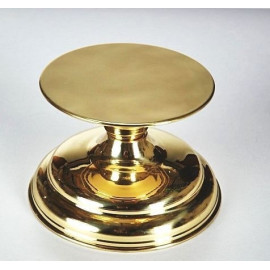
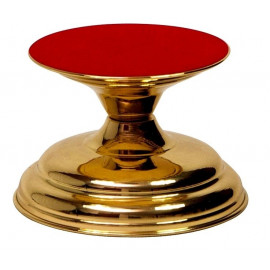
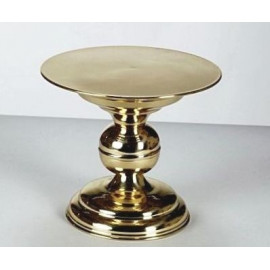
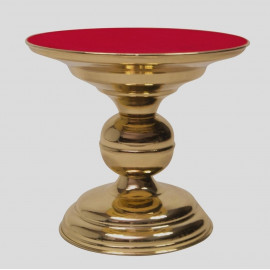
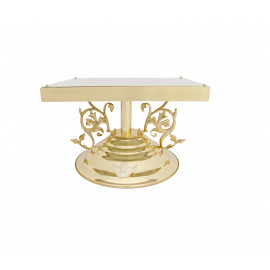
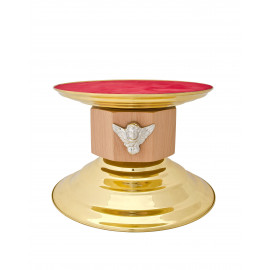

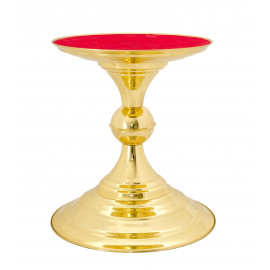
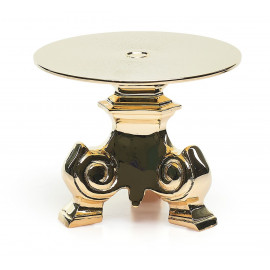
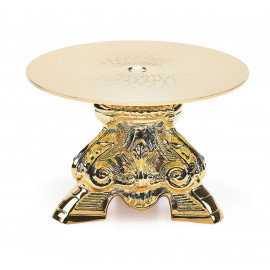
Brass, wood, and marble are the three materials most often used for a monstrance stand. Each has a different weight, finish, and maintenance profile. The right choice depends on the monstrance, the altar, and how the stand will be used.
Our collection of monstrance stands and thabors is made of brass, with gold-plated, gilded, painted, and lacquered finishes. Wood and marble appear in other church furniture, but they are less common in this specific collection. The comparison below explains what each material offers.
Brass Tabors
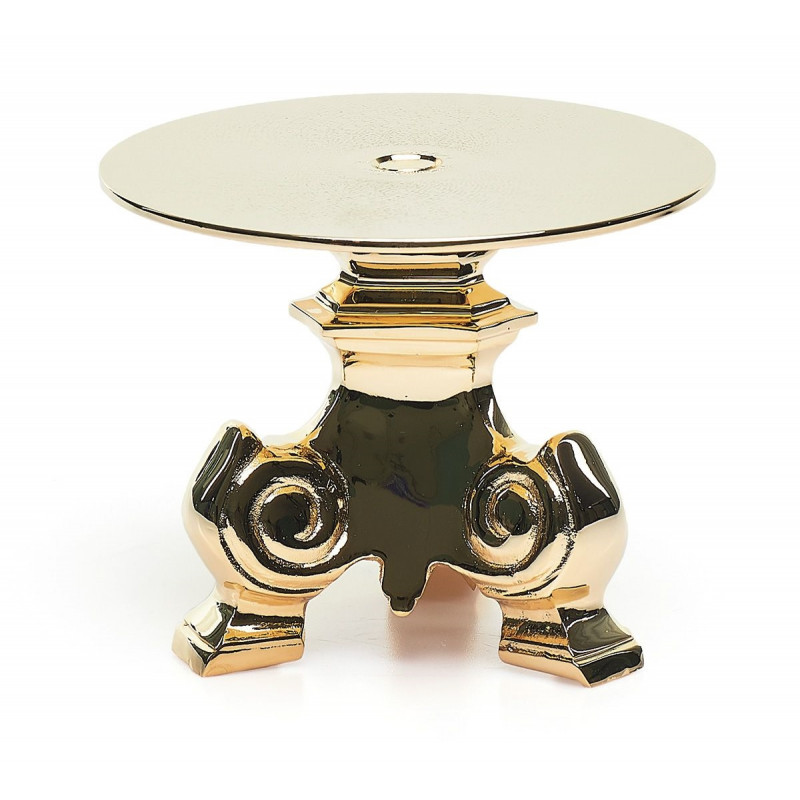
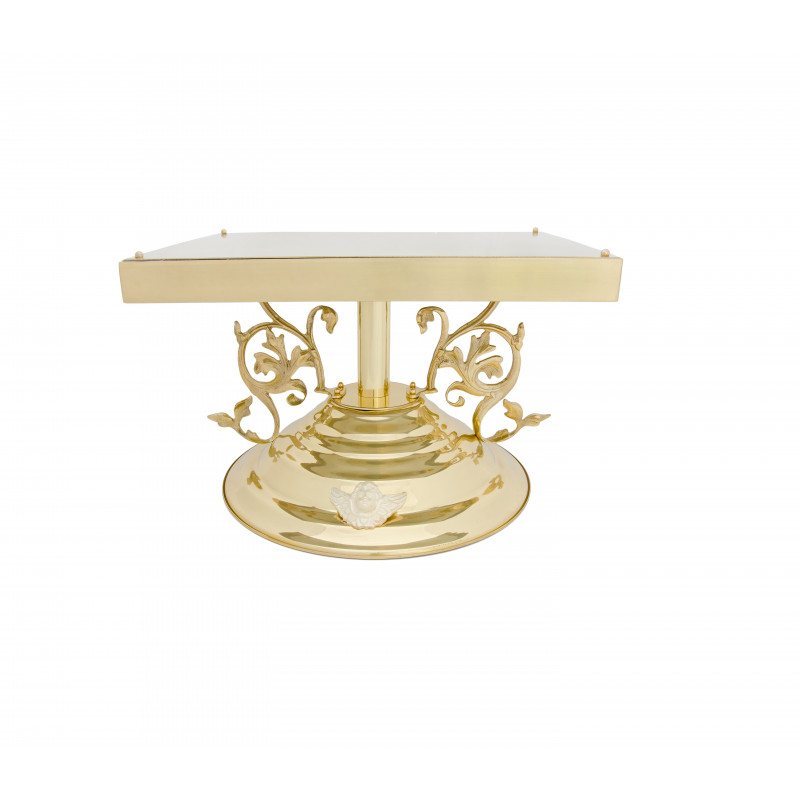
Brass is the traditional material for tabors and monstrance thrones. It is strong, repairable, and takes a warm gold finish. Cast brass can be shaped into decorative bases, nodes, and top plates without losing stability. A lacquered brass stand is easy to dust and resists fingerprints.
Brass is also heavy enough to stay in place during incensation and Benediction. The main drawback is that gold-plated and gilded surfaces need care: avoid abrasive cleaners and silver polish, which can dull the finish. For most churches, brass is the best balance of durability, appearance, and maintenance.
Wood Tabors
Wood is warmer in appearance and lighter than brass. A wooden monstrance stand (a wooden tabor) can be a good match for a wooden altar, a simple chapel, or a home oratory. It is also easier to repair and refinish locally than a gilded metal piece.
The drawback is stability. A light wooden stand may move more easily than a heavy brass one, especially if the monstrance is tall. Wood also reacts to changes in humidity, so it needs a stable, dry environment. If you choose wood, look for a broad base and a top plate that supports the full monstrance base.
Marble Tabors
Marble is the heaviest of the three materials. A marble stand is extremely stable and can be very beautiful in a traditional sanctuary. It is often used for permanent fixtures where the stand will not be moved.
The drawbacks are weight, cost, and fragility. Marble can chip if it is struck, and a large piece may require structural support. It is also difficult to modify if the monstrance changes. Marble is best for a permanent, carefully planned installation, not for a stand that needs to be moved between altars.
Comparison Table
| Material | Stability | Weight | Finish | Care | Best for |
|---|---|---|---|---|---|
| Brass | High | Medium–heavy | Gold, gilded, lacquered, painted | Dust; avoid abrasives | Most churches and chapels |
| Wood | Medium | Light–medium | Natural, stained, painted | Dry cloth; avoid humidity | Wooden altars, simple chapels, home oratories |
| Marble | Very high | Heavy | Polished stone | Soft cloth; avoid acids | Permanent sanctuary installations |
Which Material Should You Choose?
For a parish church with a typical monstrance, brass is the safest choice. It is stable, repairable, and available in finishes that match most altars. For a wooden chapel or a home oratory, a wooden stand may be more harmonious, provided the base is wide enough. For a permanent, monumental installation, marble offers the greatest stability.
Whatever the material, measure the monstrance base first. The top plate must be at least as wide as the base, and the stand must be stable enough that the monstrance does not shift. The material affects the look and the maintenance, but the measurements determine the fit.
Care by Material
Brass: dust with a soft dry cloth. For fingerprints, use a barely damp cloth and dry immediately. Avoid abrasive powders, scouring pads, ammonia, and silver polish on gold plate.
Wood: dust with a soft cloth and keep away from water and direct heat. Avoid silicone polishes that can build up on the surface. Check the joints periodically for looseness.
Marble: wipe with a soft damp cloth and dry immediately. Avoid acidic cleaners, vinegar, and abrasive pads. Use coasters or felt pads under metal objects to prevent scratches.
Frequently Asked Questions
Q: Is brass the best material for a monstrance stand?
A: For most churches, yes. Brass is strong, repairable, stable, and available in gold, gilded, lacquered, and painted finishes. It is the traditional material for tabors and thrones.
Q: Is a wooden tabor stable enough?
A: A well-made wooden tabor with a broad base can be stable, but it is lighter than brass. If the monstrance is tall or top-heavy, choose a heavier stand or add weight to the base.
Q: Is marble better than brass?
A: Marble is heavier and very stable, but it is also heavy, costly, and prone to chipping. It is best for a permanent installation where the stand will not be moved.
Q: Can I paint a brass tabor?
A: A brass tabor can be painted, and some pieces in our collection have a painted finish. Use a finish designed for metal and avoid harsh solvents that could damage the surface.
Q: Which material is easiest to clean?
A: Lacquered brass is the easiest to dust and keep clean. Wood and marble need more careful cleaning, and gilded brass needs protection from abrasives.
Compare the brass pieces in our monstrance stands and thabors collection, or read What Is a Tabor? and How to Measure a Tabor.