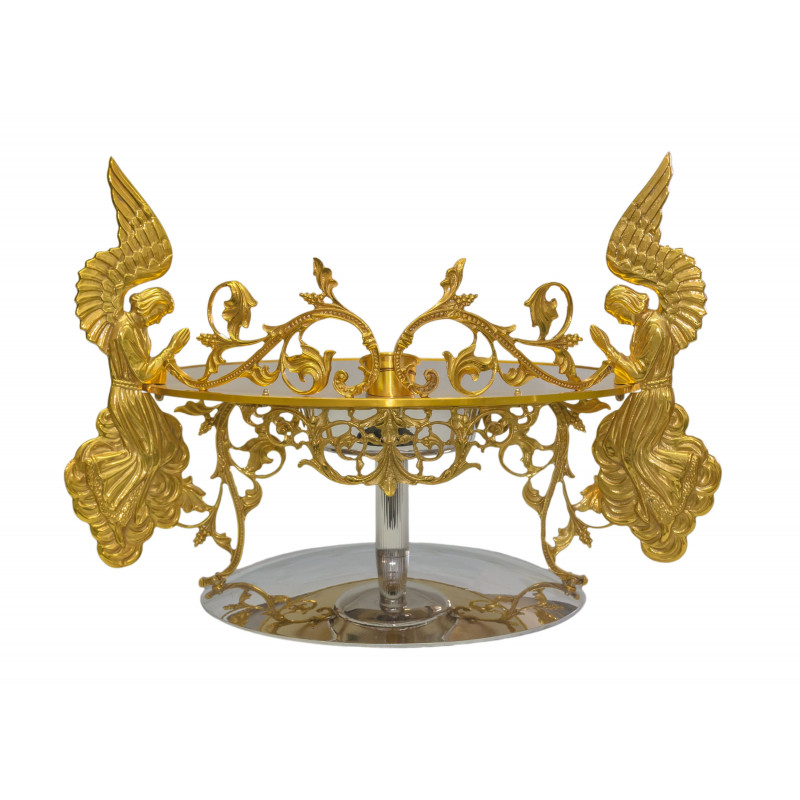
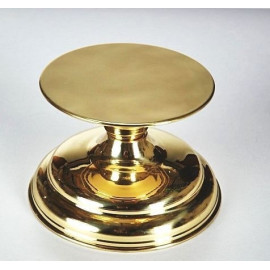
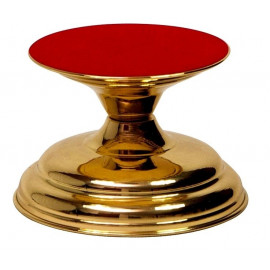
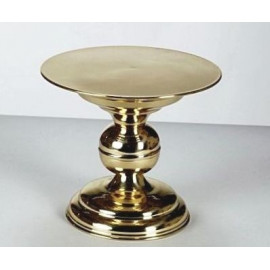
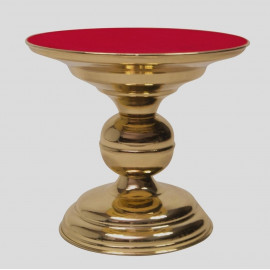
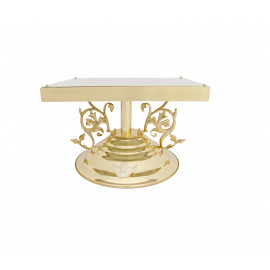
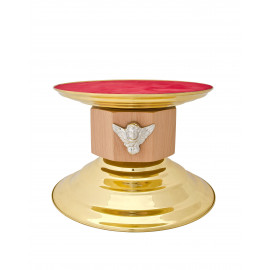

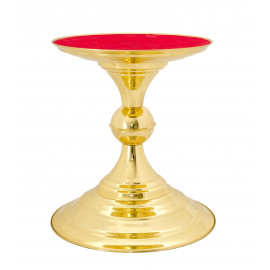
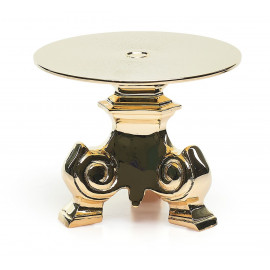
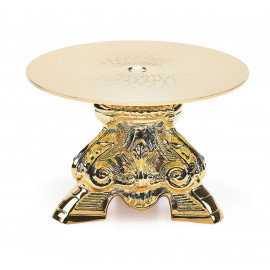
Most tabor problems start with a missing measurement. A stand that looks right in a catalogue photo can be too low, too narrow, or too tall for the monstrance in your sacristy. The fix is simple: measure the monstrance base, the top plate, the height, and the footprint before you order.
This guide uses the 11 pieces in our monstrance stands and thabors collection as examples. The same steps work for any stand, whether it is called a tabor, thabor, monstrance throne, or pedestal.
Step 1: Measure the Monstrance Base
Turn the monstrance upside down and measure the widest part of the base. If the base is circular, measure the diameter. If it is rectangular or cross-shaped, measure both dimensions. Write the numbers down; do not rely on memory.
The top plate of the tabor should be at least as wide as the base. A plate that is exactly the same width can work, but a little extra room is safer. If the base overhangs the plate, the monstrance can tip when it is incensed or when someone brushes against the altar.
Step 2: Match the Top Plate
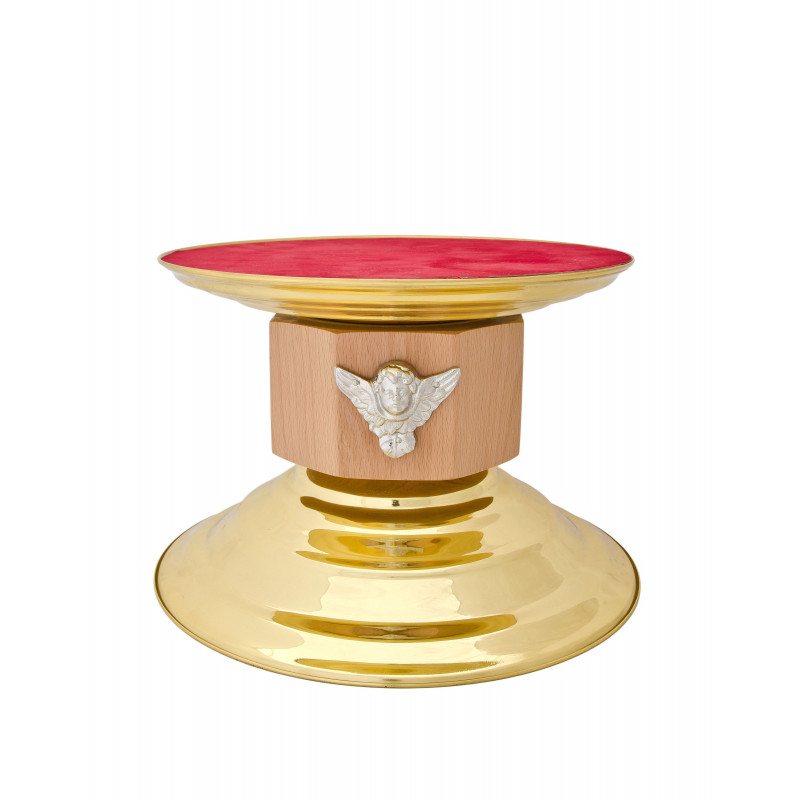
The top plate is the surface that receives the monstrance. In our collection, the plates range from 14.5 cm to 35 cm, including a rectangular 35 × 25 cm top. A 14.5 cm plate is best for a compact chapel monstrance. A 20–27 cm plate suits a larger vessel. A 35 × 25 cm plate supports a broad or cross-shaped base.
If the monstrance base is rectangular, measure both the long and short sides. A round plate can still support a rectangular base if the plate is wide enough, but the corners must not overhang. A rectangular plate is the safer choice for a broad, cross-shaped foot.
Step 3: Choose the Height
Height is about visibility, not prestige. A 12–13 cm stand is a low pedestal for a small monstrance or a tabernacle throne. A 21–27 cm stand raises the monstrance above the altar line. A 32–35 cm throne is a substantial piece for a large sanctuary or a prominent place of exposition.
Test the height from the back of the nave, not from the front pew. If the monstrance will be seen from a distance, choose more height. If the altar cross or the priest’s movements would be blocked, choose less. The right height is the one that keeps the host visible without disrupting the liturgy.
Step 4: Check the Footprint and Weight
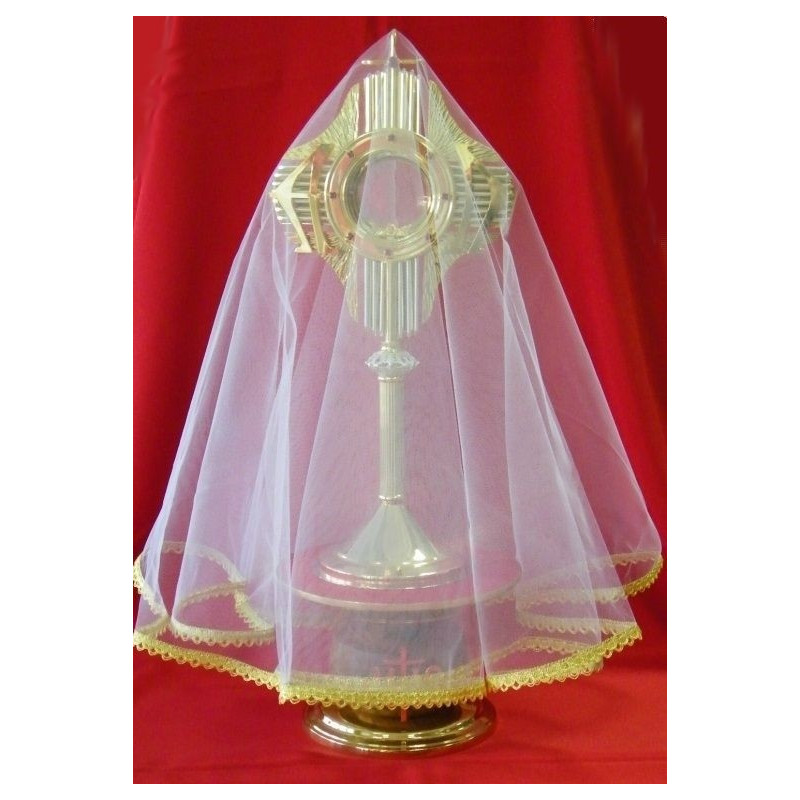
A wide base is more stable than a narrow one. A heavier casting is more resistant to accidental contact. If the monstrance is tall or top-heavy, choose a throne with a broad base and a top plate that supports the full base of the vessel.
Also check the surface where the stand will sit. A deep altar, a tabernacle throne, and a wooden pedestal may have different space limits. Measure the available depth and width before ordering a large throne.
Step 5: Confirm the Material and Finish
Brass is the traditional material because it is strong, repairable, and takes a warm gold finish. Gold-plated and 24-karat gilded surfaces are appropriate for solemn exposition. Lacquered and painted finishes are practical where the stand is handled often. Wooden hexagons and silvery figures add contrast but do not change the measurements.
Size Table for Our Collection
| Piece | Height | Top plate | Price |
|---|---|---|---|
| Brass Tabor for Monstrance — 12 cm | 12 cm | 14.5 cm | $262 |
| Brass Tabor with Red Cloth — 12 cm | 12 cm | 14.5 cm | $274 |
| Brass Tabor for Monstrance — 21 cm | 21 cm | 24 cm | $322 |
| Brass Tabor with Red Cloth — 21 cm | 21 cm | 24 cm | $342 |
| Baroque Brass Monstrance Throne — 12 cm | 12 cm | 15 cm | $328 |
| Brass Monstrance Throne with Wooden Hexagon — 27 cm | 27 cm | 27 cm | $424 |
| Brass Monstrance Throne — 32 cm, 27 cm Top | 32 cm | 27 cm | $484 |
| Round Brass Monstrance Throne with Wooden Hexagon — 27 cm | 27 cm | 27 cm | $512 |
| Rococo Brass Monstrance Throne — 13 cm | 13 cm | 20 cm | $552 |
| Gilded Monstrance Throne — 23 cm, 24k Gold | 23 cm | 35 × 25 cm | $803 |
| Brass Monstrance Throne with Evangelist Base — 35 cm | 35 cm | — | $1,117 |
Use the table as a starting point, then measure your monstrance. The best fit is the smallest stand that still supports the base and keeps the host visible.
Frequently Asked Questions
Q: How do I measure a monstrance base?
A: Turn the monstrance upside down and measure the widest part of the base. Measure the diameter for a round base, or both dimensions for a rectangular or cross-shaped base.
Q: What top plate size do I need?
A: The top plate should be at least as wide as the monstrance base, preferably slightly wider. A 14.5–15 cm plate suits a compact monstrance; 20–27 cm suits a larger one; a 35 × 25 cm plate supports a broad or cross-shaped base.
Q: How tall should a monstrance stand be?
A: A 12–13 cm stand is a low pedestal. A 21–27 cm stand raises the monstrance above the altar line. A 32–35 cm throne is for a large sanctuary. Test visibility from the back of the nave.
Q: Can I use a top plate that is smaller than the monstrance base?
A: No. A plate that is smaller than the base lets the monstrance overhang and become unstable. Choose a plate that is at least as wide, preferably wider.
Q: Does the weight of the stand matter?
A: Yes. A heavier, wider base is more resistant to accidental contact. If the monstrance is tall or top-heavy, choose a throne with a broad base.
For the terminology, read Tabor vs Thabor vs Monstrance Stand. For the definition and history, read What Is a Tabor?. To compare the pieces, see monstrance stands and thabors.