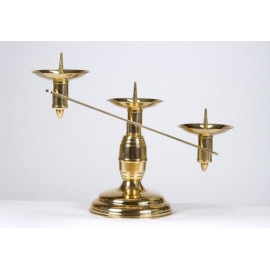
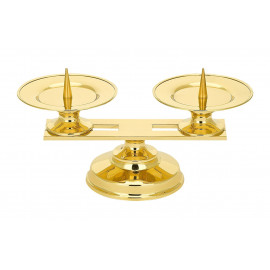
A candlestick holds one candle. A candelabra holds two or more candles on a single base. That is the short answer. The longer answer matters for sacristies: the two objects are used in different places, for different ceremonies, and they are not interchangeable in the liturgy.
The Difference in One Table
| Candlestick | Candelabra | |
|---|---|---|
| Number of candles | One | Two or more |
| Typical place | On or near the altar | High altar, Benediction, adoration, processions |
| Typical use | Mass, side altars, chapels | More light, solemn display, exposition |
| Base | Single socket or pricket | Branched arms on one base |
| Word | Altar candlestick | Candelabra; plural candelabra, Latin singular candelabrum |
What Is a Candlestick?
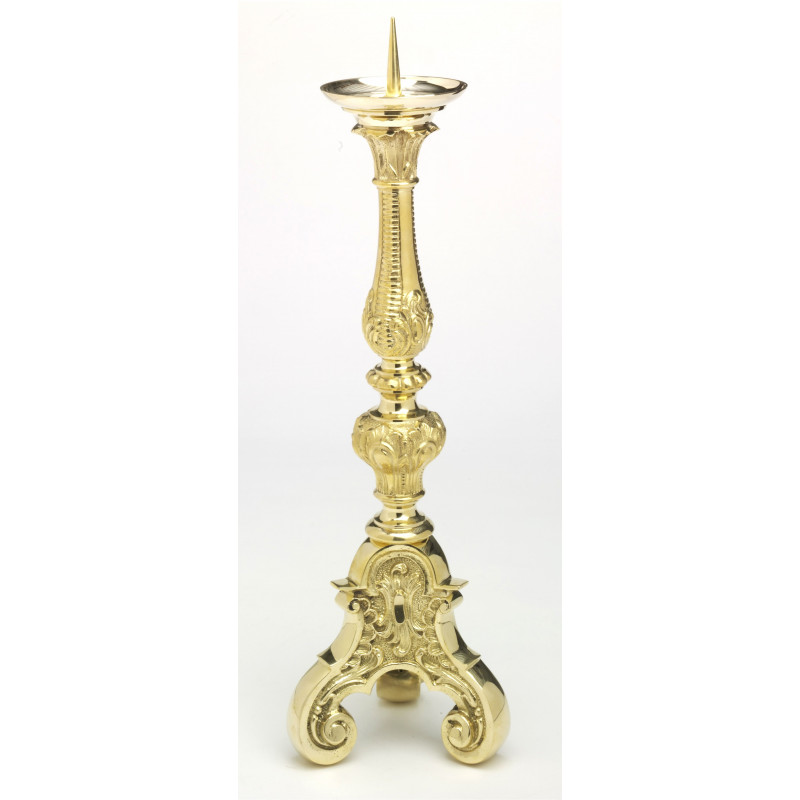
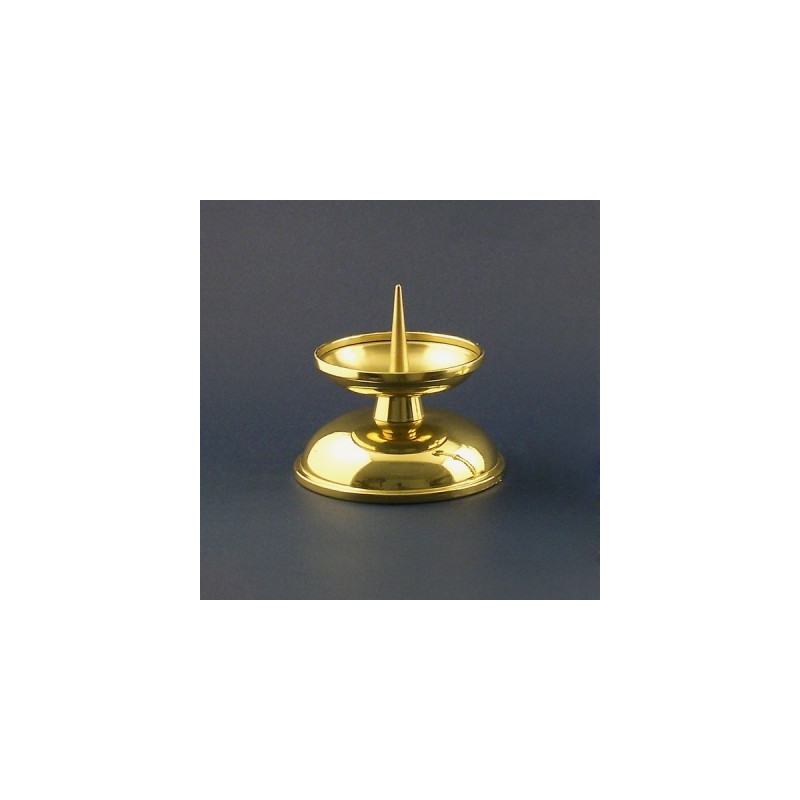
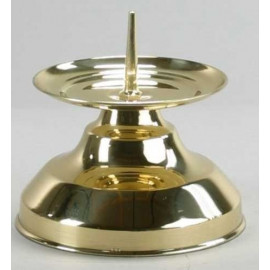
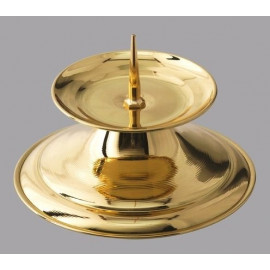
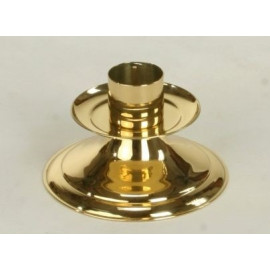
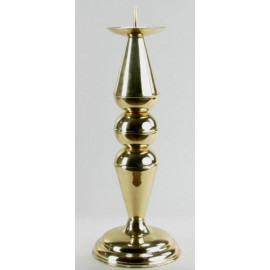
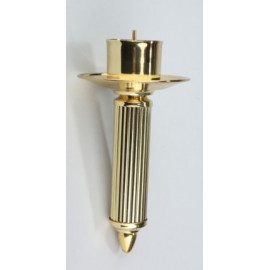
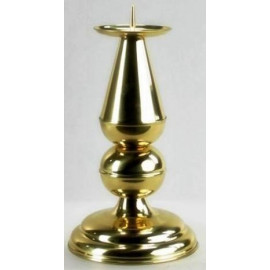
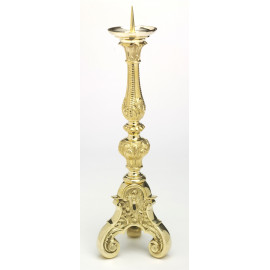
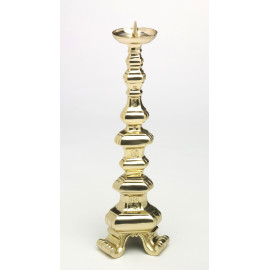
A candlestick is a holder for a single candle. In a Catholic church it is usually called an altar candlestick when it stands on or near the altar. It may have a socket for a specific candle diameter or a pricket for a taper. Altar candlesticks are normally bought in pairs or sets of four or six, because the liturgy requires at least two candles at Mass and the set should be symmetrical.
What Is a Candelabra?
A candelabra is a branched holder that carries two or more candles on one base. It is used where more light or a more solemn display is wanted: High Mass, Benediction of the Blessed Sacrament, Eucharistic adoration and processions. The word comes from the Latin candelabrum; in English, candelabra is often used for the object itself and for the plural.
When to Use Each
Use candlesticks on the altar for Mass. They are the standard, and the number (two, four, six or seven) is governed by the celebration. A pair of candlesticks is also the right choice for a side altar, a chapel or a home altar.
Use a candelabra when you need more light or a more solemn display, especially at Benediction, adoration or a procession. A candelabra is also useful where floor space is limited: one base carries several candles.
How to Choose
Start with the ceremony, not the catalogue. If you are furnishing an altar for Mass, buy candlesticks in a set. If you are preparing Benediction or adoration, consider a candelabra in addition to the altar set. If you are buying for a procession, look for an acolyte candlestick or a processional candelabra designed to be carried.
Check the height, the socket size and the stability. A candelabra with several candles is heavier and needs a wide base. A candlestick should be stable enough that a candle can be inserted without the piece tipping.
Frequently Asked Questions
Q: What is the difference between a candlestick and a candelabra?
A: A candlestick holds one candle; a candelabra holds two or more candles on one base. The candlestick is the standard on the altar; the candelabra is used where more light or a more solemn display is wanted.
Q: Is it candelabra or candelabrum?
A: Candelabrum is the Latin singular; candelabra is the plural in Latin and the common English word for the object. In practice, both are used for a branched candle holder.
Q: Can a candelabra be used at Mass?
A: Yes, where more light or a more solemn display is appropriate, but the altar itself normally has candlesticks. The candelabra is especially associated with Benediction, adoration and processions.
Q: How many candles should a candelabra hold?
A: Two, three, five or seven are common. The choice depends on the ceremony and the size of the sanctuary. For Benediction and adoration, a larger arrangement is customary where the space allows it.
Q: What is a candelabra called in a church?
A: It is usually called a candelabra or a branched candlestick. A large standing candelabra is sometimes called a floor candelabrum; a small one on the altar is an altar candelabra.
Related Reading
Browse our altar candlesticks and candelabra and read the guide to the GIRM. For the Easter candle, see the Paschal Candle guide.