

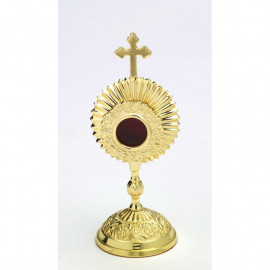
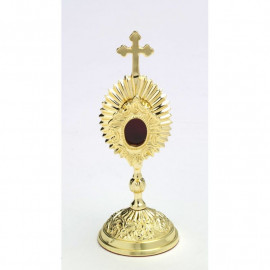
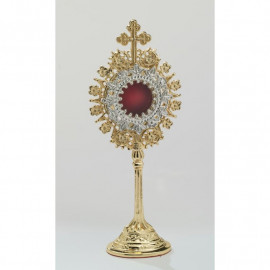
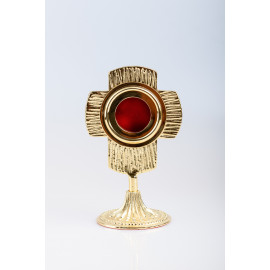
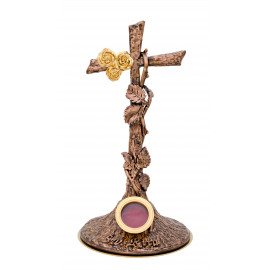
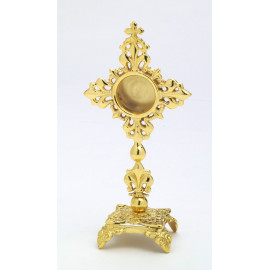
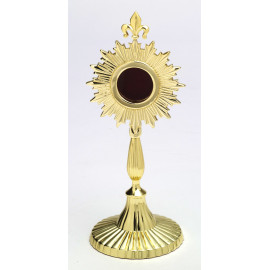
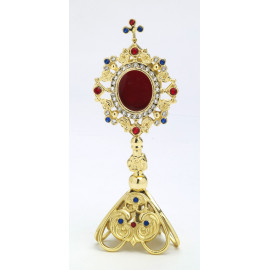
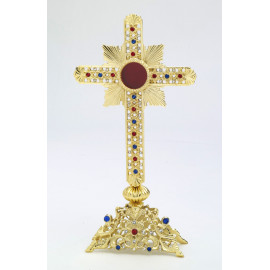
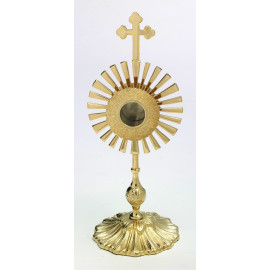
The short answer: a new Catholic reliquary usually costs between $80 and $1,200, with most parish altar reliquaries falling between $240 and $650. Small brass relic capsules start at about $80; large gilded display reliquaries can reach $1,200 or more. Antique and museum pieces are a separate market and can cost from a few hundred to tens of thousands of dollars.
This guide breaks down the real price bands, explains what drives the cost, and shows how to compare a quote for a parish, a chapel or a home.
What Drives the Price of a Reliquary?
Five factors explain most of the difference between an $80 capsule and a $1,000 display piece:
- Size. A larger vessel needs more metal, more casting, a bigger glass window and a heavier base. A 30 cm reliquary can use several times the material of a 10 cm one.
- Material. Brass is the standard. Bronze is heavier and more expensive to cast. Copper can be patinated for a sculptural look. Silver-plated and gold-plated finishes add cost, especially when the plating is thick or the piece is gilded by hand.
- Handwork. Openwork filigree, cast scrollwork, stone setting and hand-finished gilding all take time. A simple sunburst is cheaper than a rococo frame with dozens of pierced details.
- Stones and decoration. Coloured stones, rubies and decorative medallions add material and labour. They also change the care requirements.
- Quantity and origin. A workshop that makes the same design in batches can keep the price lower than a one-off commission. Imported pieces may be cheaper, but the finish and the documentation are often weaker.
New Reliquary Price Bands
In our current collection of 98 Catholic reliquaries, the distribution is roughly:
| Price band | What it buys | Typical use |
|---|---|---|
| Under $150 | Relic capsules and small boxes, 4–8 cm | Storage, transfer, a single small relic |
| $150–$299 | Small to medium reliquaries, 9.5–22 cm, brass and gilded | Home altar, small chapel, gifts |
| $300–$599 | Altar reliquaries, 20–35 cm, often with stones or a gothic form | Parish altar, side chapel, shrine |
| $600 and above | Large display and sculptural reliquaries, 26–40 cm | Cathedral, major shrine, major relic |
Concrete examples: a 4 cm brass relic capsule is $80; a 17 cm round capsule reliquary is $134; a 22 cm gilded reliquary is $242; a 13 cm brass reliquary with gold plating is $351; a 32 cm brass reliquary, gold-plated, is $540; and the largest sculptural pieces reach $1,085–$1,178.
What a Parish Should Budget
For a parish that needs a vessel for the altar, a realistic budget is $250–$650. That range covers a solid brass or gilded reliquary with a glass window, a stable base and a cavity large enough for a sealed theca. A side chapel or a shrine may justify $600–$1,200 for a larger display piece. A sacristy capsule for storage or transfer is usually $80–$150.
Do not forget the extras: a certificate holder, a secure display plinth, and — if the relic is not already sealed — the diocesan procedure for sealing it. Those costs are small compared with the vessel, but they matter for the long-term care of the relic.
Antique and Museum Reliquaries
Antique reliquaries are priced as art and provenance, not as church supplies. A 19th-century gilded chasse may cost a few hundred dollars; a medieval arm reliquary can cost tens of thousands. The price depends on age, maker, condition, materials, the presence of the original seal and the documentation. For a parish that needs a reliable vessel for liturgical use, a new reliquary is usually the better purchase: it is sound, replaceable and specified.
How to Compare Quotes
When you compare two reliquaries at the same price, compare the specification, not the photograph:
- Material and finish: solid brass, brass with gold plating, bronze, copper, nickel or silver plate.
- Dimensions: outside height and width, plus the internal capsule diameter and depth.
- Glass: thickness, fit and replaceability.
- Base: weighted or hollow, stable on an altar, felt or protective underside.
- Closure: screw, hinged or sealed; whether a wax seal can be applied.
- Documentation: what is supplied with the vessel, and whether the relic’s certificate can be stored with it.
A cheaper reliquary with a thin base, poorly fitted glass or a shallow capsule often costs more in the long run. A well-made vessel can serve a parish for decades.
Frequently Asked Questions
Q: How much does a Catholic reliquary cost?
A: A new Catholic reliquary usually costs $80–$1,200. Small relic capsules start at about $80, most altar reliquaries fall between $240 and $650, and large display reliquaries reach $1,000–$1,200 or more. Antique and museum pieces are priced separately as art and provenance.
Q: Why are some reliquaries so expensive?
A: Size, material, handwork, gilding and stone setting drive the price. A large cast bronze or gilded reliquary with openwork, stones and a hand-finished surface takes far more material and labour than a small brass capsule. Antique pieces add age, maker and provenance to the price.
Q: Can I buy a reliquary for under $100?
A: Yes. Small brass relic capsules and simple boxes start at about $80. They are intended for storing or transferring a single relic, not for public display on an altar. If you need a display reliquary for a church, expect to spend at least $240–$350.
Q: Are antique reliquaries more valuable?
A: They can be, but value depends on age, maker, condition, materials and provenance. An antique reliquary may also have a damaged seal, thin glass or lead paint, which matters for liturgical use. For a parish, a new vessel is usually safer and easier to maintain.
Q: Does a reliquary include the relic?
A: No. A reliquary is the vessel; the relic is obtained separately through a diocese, a religious order or a shrine, with an authenticity certificate. Canon 1190 forbids the sale of sacred relics, so a reputable seller offers the vessel, not the relic.
Related Reading
See the full collection of Catholic reliquaries, and read What Are Catholic Relics? for the classes of relics and the rules that govern them.

