
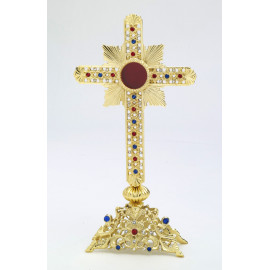
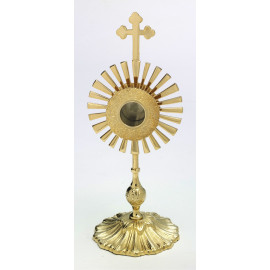
Catholic relics are the physical remains or personal belongings of saints and blesseds, honored by the Church since the earliest centuries of Christianity. They are kept and displayed in vessels called reliquaries — from small brass capsules and pendant thecae to gilded chasses and altar reliquaries. This guide explains the three classes of relics, what the Church teaches about venerating them, and how to choose, display, and care for a reliquary.
What Are the Three Classes of Relics?
Relics are grouped into three classes. A first-class relic is a part of a saint's body — a fragment of bone, hair, or blood. A second-class relic is an item the saint owned or used: a piece of clothing, a book, a rosary, or furniture. A third-class relic is any object touched to a first-class relic, a practice that lets everyday devotional items share in the honor given to the saint.
The custom reaches back to Scripture. In 2 Kings 13:21, a dead man came to life after touching the bones of the prophet Elisha; in Acts 19:12, cloths that had touched St. Paul healed the sick. Early Christians celebrated Mass on the tombs of the martyrs in the catacombs, and from the fourth century churches were built over their graves. The Council of Trent (1563) confirmed the ancient practice, and the Code of Canon Law (Canon 1237) still requires that every altar contain a relic, normally sealed in the altar stone.
Why Does the Catholic Church Venerate Relics?
Catholics venerate relics because the body of a saint was a temple of the Holy Spirit (1 Corinthians 6:19) and will rise again on the last day. Honoring a relic is not worship — worship (latria) belongs to God alone, while the honor shown to saints and their remains (dulia) is a way of praising God for his grace at work in them. St. Jerome summed up the practice: "We do not worship the relics of the martyrs, but we honor the martyrs whose relics they are."
Relics also express the communion of saints: the bond between the Church on earth and the Church in heaven. A parish that keeps a relic of its patron saint has a tangible link to that saint's life and intercession, and a home altar with a relic extends the same devotion into the family's daily prayer.
What Is a Reliquary?
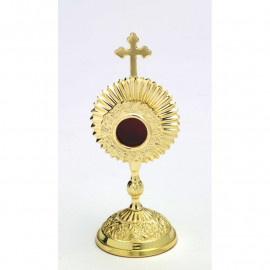
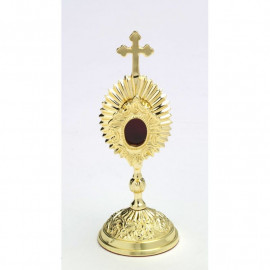
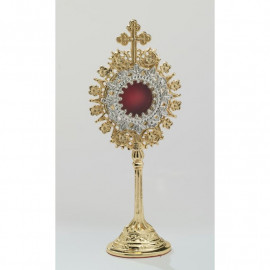
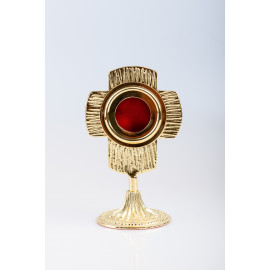
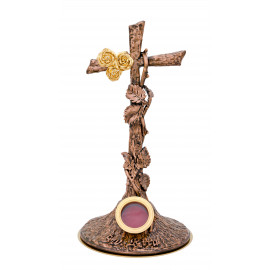
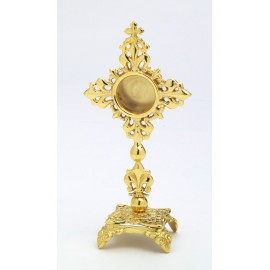
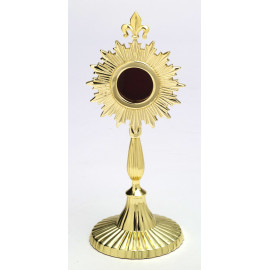
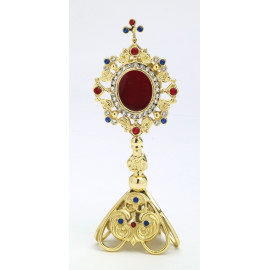
A reliquary is a container made to hold and protect a relic, and its name comes from the Latin reliquiae, "remains." Reliquaries take many shapes. A theca is a small, brooch-like vessel worn on the breast or sewn into a vestment for a tiny fragment. A chasse is a box reliquary shaped like a house, with a sloping roof and a glass front — the classic medieval form. A feretory is a portable shrine carried in procession, or the chapel where relics are kept. For parish use, the most common form is a brass or silver-plated reliquary with a glass window and a secure closure, made so the relic can be seen without being touched. Our liturgical reliquaries cover all of these uses, in brass, gold-plated, silver-plated, and patinated copper finishes.
Types of Reliquaries and What They Cost
Reliquaries are priced by size, material, and the amount of handwork. Our current collection of 98 reliquaries ranges from $80 to $1,178, in sizes from 4 cm capsules to 40 cm display vessels. As a rule of thumb:
| Type | Typical size | Best for | Price range |
|---|---|---|---|
| Capsule / relic box | 1.6–3.1 in (4–8 cm) | Storing or transferring a single relic | $80–$143 |
| Personal & small brass reliquary | 3.7–8 in (9.5–20 cm) | Home altar, private devotion, gifts | $117–$353 |
| Altar reliquary | 8–12 in (20–30 cm) | Church altar, side chapel | $242–$653 |
| Ornate display reliquary | 12–16 in (30–40 cm) | Cathedral, shrine, major relic | $540–$1,178 |
How to Choose a Reliquary
Start with the relic itself. First-class relics are usually small fragments, so even a compact reliquary can hold one securely — but if the relic is to be displayed, make sure the glass window and the interior cavity are large enough for it to be seen clearly. Then match the reliquary to its setting:
- Display location. An altar or side-chapel reliquary should be large enough to be visible and dignified; a personal reliquary can be small and portable for a home altar.
- Closure. A screw-top or sealed closure protects the relic better than a loose hinged lid.
- Glass. The window should be clear and well fitted; cloudy or poorly set glass diminishes the devotional value of the vessel.
- Material. Polished brass and gold-plated finishes suit traditional sanctuaries; silver-plated and patinated copper give a quieter, antique look.
- Documentation. Every relic should come with an authenticity certificate from the issuing authority — keep it with the reliquary.
How Should Relics and Reliquaries Be Cared For?
Reliquaries need very little maintenance, but they should be treated as sacred vessels. Keep them in a clean, dry place and dust them with a soft cloth. Clean the glass gently — never let chemical cleaners touch the metal, and never immerse the reliquary in water. Do not open a sealed theca or remove authentication seals; if a relic must be transferred, have a priest or sacristan do it with the proper documentation. Store a reliquary that is not on display in a secure, dry cabinet — our guide on how to store sacred vessels covers the full routine.
Common Questions About Relics and Reliquaries
What is the most powerful relic in the Catholic Church?
The Church does not rank relics, but the most revered include the Shroud of Turin, the relics of the Passion kept in Rome (the True Cross, the nails, and the Crown of Thorns), and the tomb of St. Peter under the high altar of St. Peter's Basilica. Their power is not in the object itself but in God, who honors the faith of those who venerate the saints.
What happens if you touch a rosary to a first-class relic?
The rosary becomes a third-class relic. Touching an object of devotion to a first-class relic — or to its reliquary — is an old practice that ties everyday prayer to the saint's memory. The relic itself is never handled; it stays sealed inside its reliquary or theca.
Does every Catholic church have a reliquary?
Every altar contains a relic sealed in the altar stone, so in that sense every church has a relic. A visible, freestanding reliquary is common but not universal: many parishes keep one for a patron saint or a side chapel, while shrines display relics of major saints.
Can you buy a relic?
No. Buying or selling relics is simony, and canon law absolutely forbids it (Canon 1190 §1). You buy the reliquary — never the relic. Relics are given freely by shrines, religious orders, or dioceses, and always with documentation.
What is the difference between a relic and a reliquary?
A relic is the holy object itself — the remains or belongings of a saint. A reliquary is the vessel made to hold, protect, and display it. One is the treasure; the other is the shrine built around it.
How do you obtain a relic for a new church or altar?
For a church dedication, the relic is normally requested through the diocese, which works with the shrine or religious order that safeguards the saint's relics. The relic is placed in the altar stone during the dedication rite and sealed by the bishop. Every relic should arrive with an authenticity certificate, which stays with the church's records.
Whether you are furnishing a new altar, replacing a worn vessel, or starting a home altar, our collection of Catholic reliquaries — brass, gold-plated, silver-plated, and patinated copper, from $80 — is made for exactly this purpose. Pair a reliquary with the right Catholic altar vessels for the sanctuary, and keep everything in good order with our guide on how to store sacred vessels.