


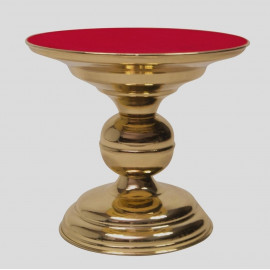
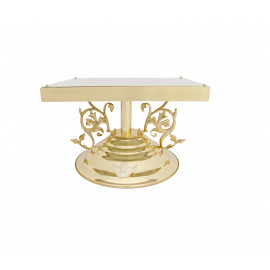
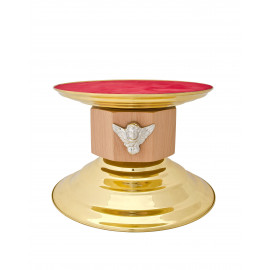

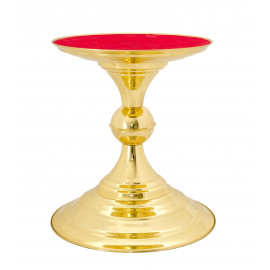
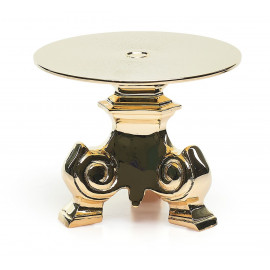
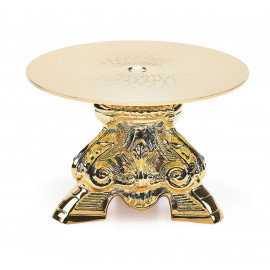
A tabor cover and a monstrance veil are not the same thing. The cover is made for the stand; the veil is made for the monstrance. Using one in place of the other can look wrong, fit poorly, or fail to protect the vessel.
The confusion is common because both objects are fabric, both are used around Eucharistic exposition, and both are sometimes called “covers.” The difference is what they cover and when they are used.
What Is a Tabor Cover?
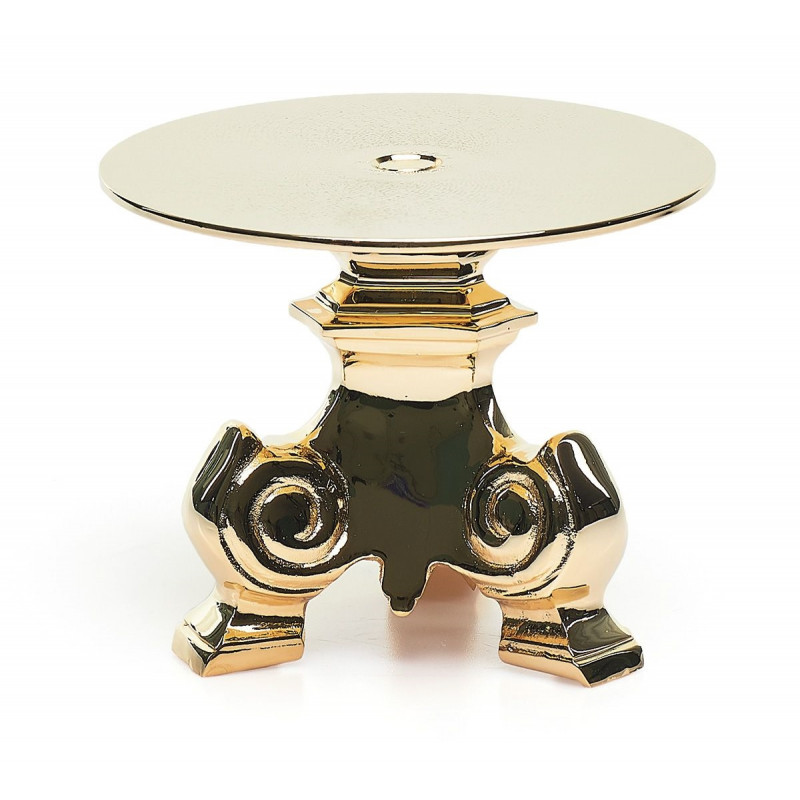
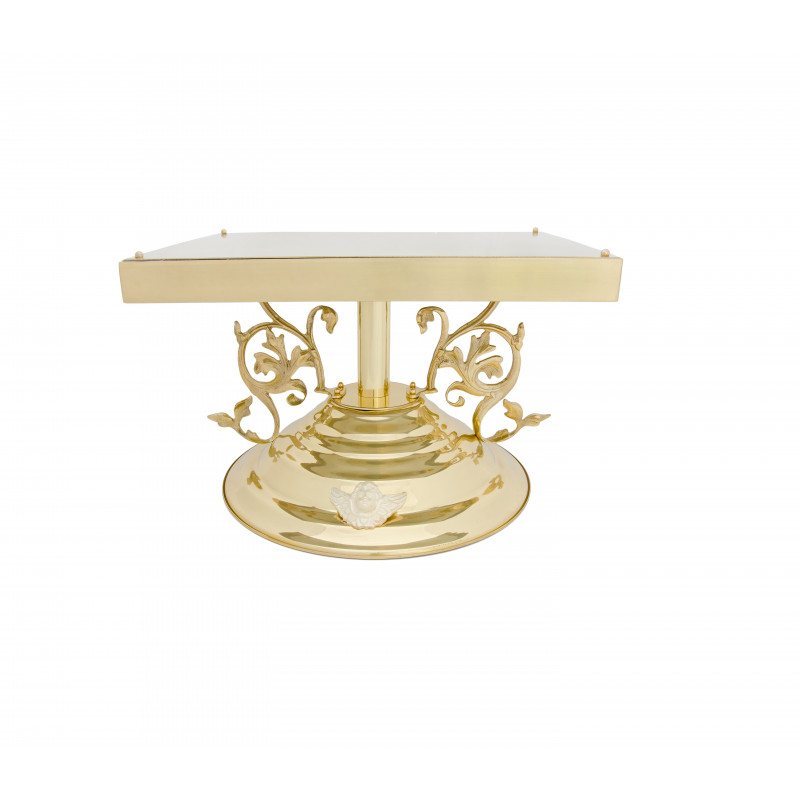
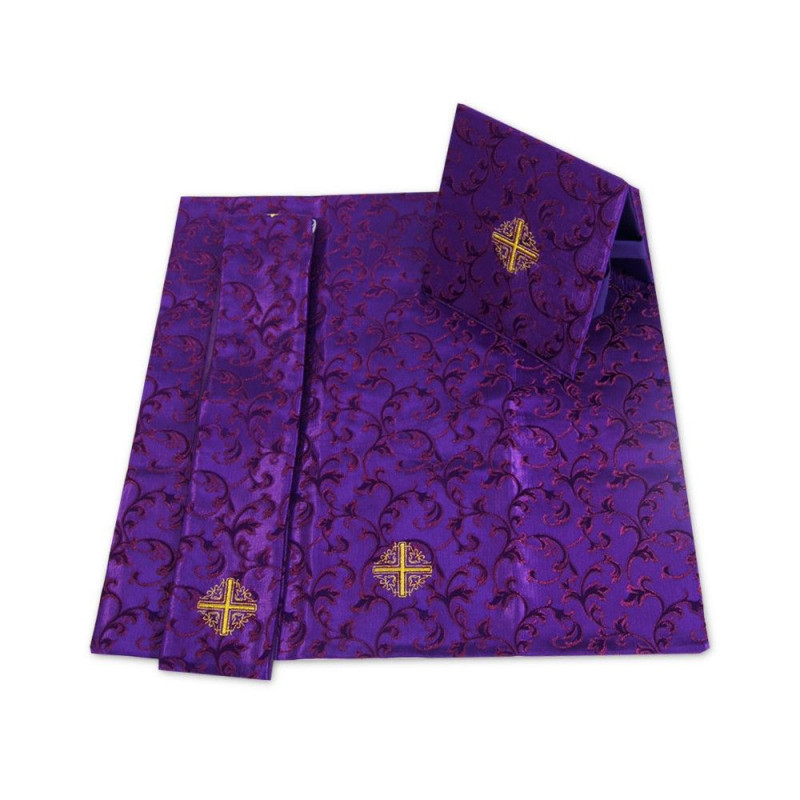
A tabor cover is a fabric cover made to fit over the tabor or monstrance stand. It protects the stand from dust when it is not in use and gives the sanctuary a cleaner look during seasons when the monstrance is not exposed. It may be a simple slipcover or a custom-made piece with a decorative hem.
A tabor cover is not used to wrap the monstrance. It covers the stand, not the Blessed Sacrament. If the monstrance is on the stand, the cover is not placed over the vessel.
What Is a Monstrance Veil?
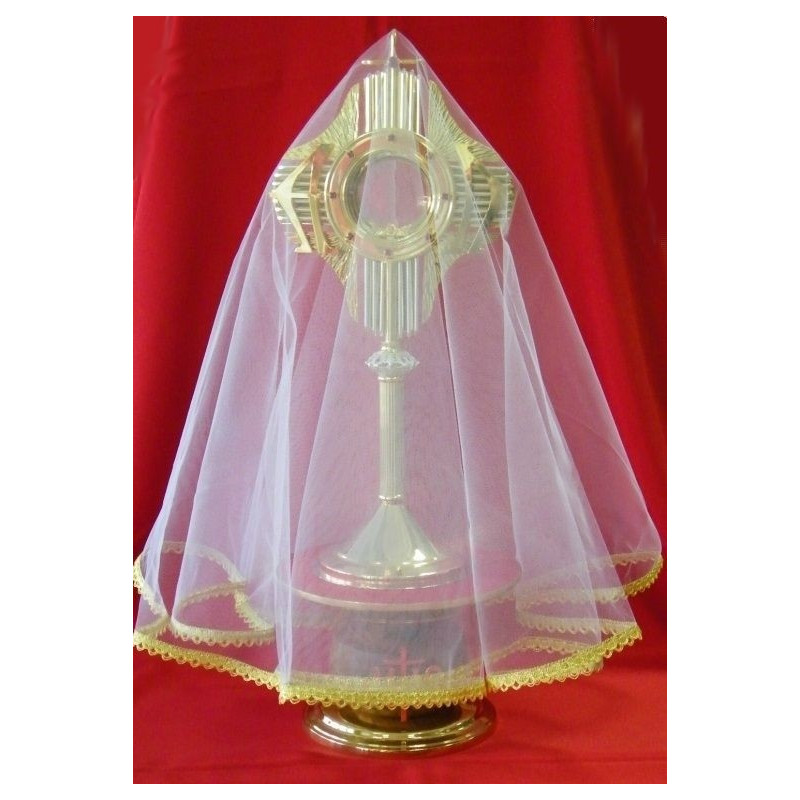
A monstrance veil is a fabric veil draped over the monstrance when the Blessed Sacrament is not exposed. It is usually made of tulle or embroidered fabric and may be white, gold, or another liturgical color. The veil covers the vessel, not the stand.
In our collection, embroidered monstrance veils range from 90 cm to 140 cm, with white, gold, and silver options. The size is chosen for the monstrance and the way it is displayed, not for the tabor.
What Goes on the Stand?
The monstrance sits on the top plate of the tabor. The veil, if used, is draped over the monstrance. The tabor cover, if used, is placed over the stand when the stand is empty or when the monstrance has been removed. The three objects have three different jobs:
- Tabor — supports the monstrance.
- Monstrance veil — covers the monstrance when it is not exposed.
- Tabor cover — covers the stand when it is not in use.
Can a Monstrance Veil Be Used as a Tabor Cover?
Usually no. A monstrance veil is shaped and sized for the vessel. A tabor cover is shaped and sized for the stand. A veil draped over a stand may be too long, too narrow, or too decorative for the purpose. A cover placed over a monstrance may not fit the vessel and may not be made of the right fabric.
If you need a cover for the stand, look for a tabor cover or a custom fabric cover made to the stand’s dimensions. If you need a veil for the monstrance, choose a monstrance veil in the right size and color.
Materials and Care
Tabor covers are often made of a durable fabric that can be brushed or vacuumed. Monstrance veils are usually lighter and more decorative, often tulle or embroidered fabric. Follow the care instructions for each piece: dust the stand and cover regularly, and store the veil flat or rolled to avoid creases.
For more on veils, read Monstrance Cover vs Veil vs Tabor and our monstrance veil size guide.
Frequently Asked Questions
Q: What is a tabor cover?
A: A tabor cover is a fabric cover made to fit over the monstrance stand. It protects the stand from dust when it is not in use. It is not used to wrap the monstrance.
Q: What is a monstrance veil?
A: A monstrance veil is a fabric veil draped over the monstrance when the Blessed Sacrament is not exposed. It covers the vessel, not the stand.
Q: Can I use a monstrance veil as a tabor cover?
A: Usually no. The veil is shaped for the monstrance, and the cover is shaped for the stand. A veil may be too long or too narrow for the stand, and a cover may not fit the vessel.
Q: Does a tabor cover cover the monstrance?
A: No. The tabor cover covers the stand, not the monstrance. The Blessed Sacrament is covered by the monstrance veil when it is not exposed.
Q: Where can I find a monstrance veil?
A: See our embroidered monstrance veils. For the stand, see our monstrance stands and thabors.
If you are setting up a place of exposition, start with the stand: measure the monstrance base and choose a tabor or monstrance throne that fits. Then choose the veil and any cover for the stand.