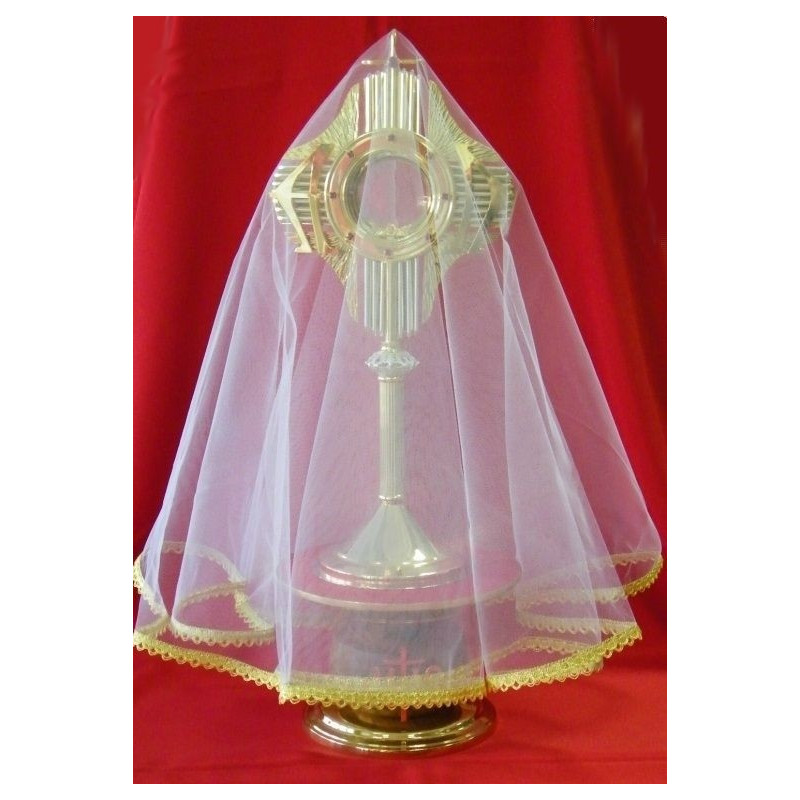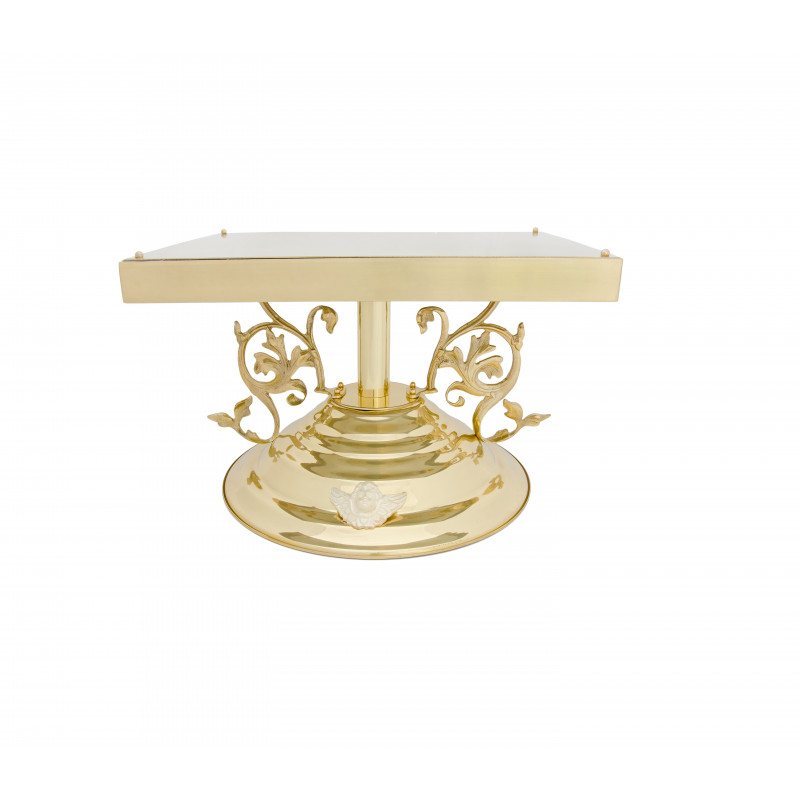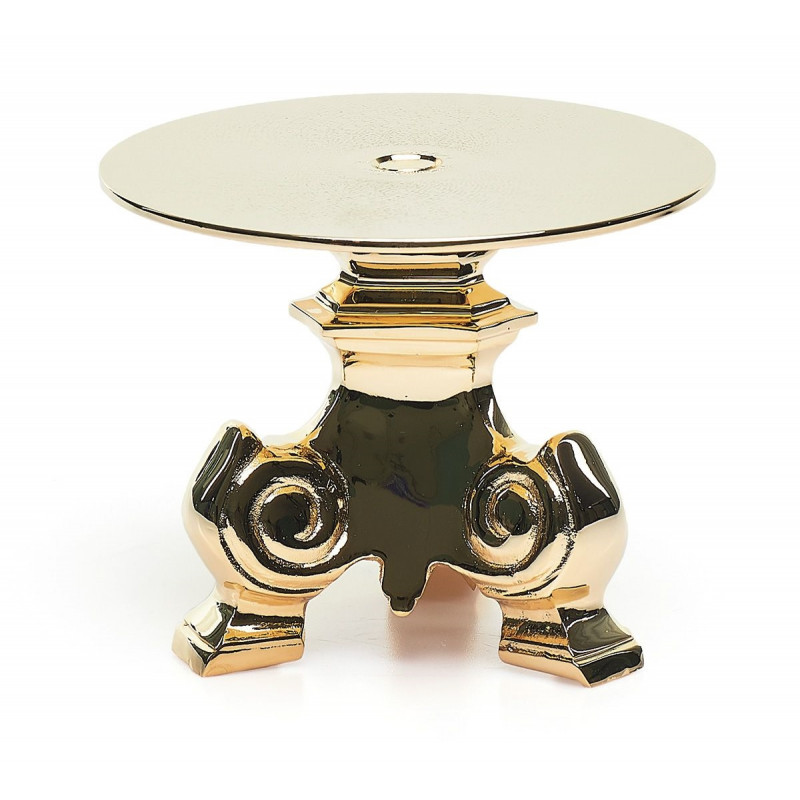
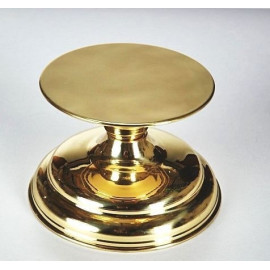
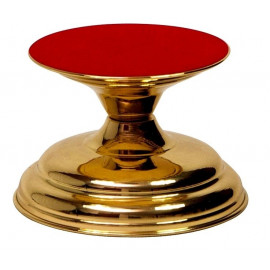
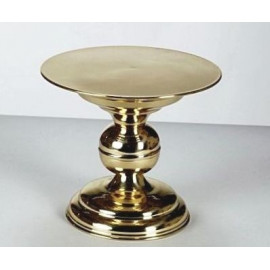
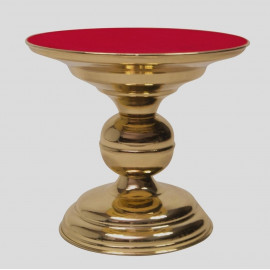
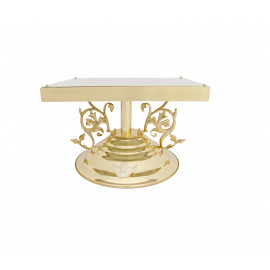
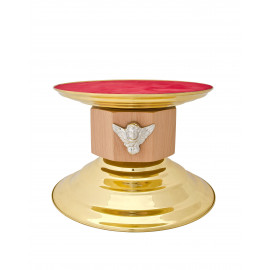

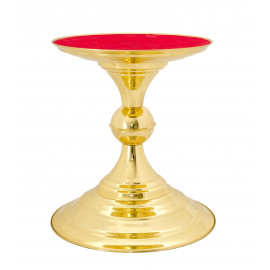
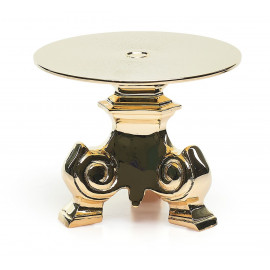
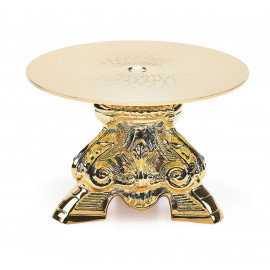
Tabor, thabor, monstrance stand, and monstrance throne are four names for the same liturgical object: the support that holds the monstrance during Eucharistic exposition. The differences are mostly linguistic and stylistic, not functional. A parish that needs a stand can use any of the four terms when searching or asking a supplier.
The confusion matters because the words are often used as if they described different products. They do not. A thabor is not a larger tabor, and a monstrance throne is not a different category from a monstrance stand. The real differences are in height, top plate size, base footprint, material, and finish.
Where the Four Names Come From
Tabor is the shorter English spelling. Thabor follows an older transliteration and appears frequently in Italian, Spanish, and older English catalogues. Both refer to Mount Tabor, the mountain traditionally associated with the Transfiguration.
Monstrance stand is the plain descriptive term. It is the easiest phrase for a parish volunteer or a sacristan to understand. Monstrance throne is more ceremonial. Suppliers often use “throne” for a large or ornate piece and “stand” for a simple pedestal.
What the Words Do Not Tell You
The label does not tell you whether the piece will fit your monstrance. A “throne” can be small, and a “stand” can be tall. A “tabor” can be a low brass pedestal or a 35 cm throne with evangelist figures. The name is not a specification.
Four measurements matter more than the name:
- Height — how far the monstrance is raised above the altar or tabernacle surface.
- Top plate — the diameter or dimensions of the surface that receives the monstrance base.
- Base footprint — how much floor or altar space the stand occupies and how stable it is.
- Weight — how resistant the stand is to accidental contact.
Tabor vs Thabor: Is There a Difference?
No. Tabor and thabor are spelling variants. If a catalogue lists a “thabor” and another lists a “tabor,” compare the measurements and the finish, not the spelling. The same workshop may use both spellings in different markets.
Monstrance Stand vs Monstrance Throne
“Stand” is the generic term. “Throne” usually implies a more substantial, more ornamental piece, often with a wider top plate and a taller height. But the distinction is not regulated. A supplier may call a 12 cm pedestal a throne if it has decorative detail, or a 27 cm piece a stand if it is plain.
For buying purposes, treat the words as synonyms and use the measurements to decide. In our monstrance stands and thabors collection, the pieces range from a 12 cm baroque pedestal to a 35 cm throne with a silvery evangelist base.
Four Measurements That Decide the Fit
1. The monstrance base
Measure the widest part of the monstrance base. If the base is circular, measure the diameter. If it is rectangular or cross-shaped, measure both dimensions. The top plate should be at least as wide as the base, and preferably slightly wider.
2. The top plate
Top plates in our collection range from 14.5 cm to 35 cm, including a rectangular 35 × 25 cm top. A 14.5 cm plate suits a compact chapel monstrance. A 20–27 cm plate suits a larger vessel. A 35 × 25 cm plate supports a broad or cross-shaped base.
3. The height
A 12–13 cm stand is a low pedestal. A 21–27 cm stand raises the monstrance above the altar line. A 32–35 cm throne is a substantial piece for a large sanctuary. Choose the height by testing visibility from the back of the nave.
4. The base footprint and weight
A wider, heavier base is more stable. If the monstrance is tall or top-heavy, a narrow stand is a risk. Choose a throne with a broad base and a top plate that supports the full base of the vessel.
Common Buying Mistakes
The most common mistake is buying by height alone. A tall stand with a small top plate can be less useful than a shorter stand with a wide plate. The second mistake is assuming that a “throne” is always larger than a “stand.” The third is ignoring the monstrance base shape: a rectangular base on a small round plate is unstable.
Measure the vessel first, then compare the stand. If you are unsure, choose a top plate that is slightly larger than the base rather than slightly smaller.
Frequently Asked Questions
Q: Is a thabor the same as a tabor?
A: Yes. Tabor and thabor are two spellings of the same word. Both refer to the stand or throne that holds the monstrance during exposition.
Q: Is a monstrance throne different from a monstrance stand?
A: Not functionally. “Throne” usually suggests a larger or more ornamental piece, while “stand” is the generic term. The measurements, not the label, determine whether the piece fits your monstrance.
Q: What is the most important measurement?
A: The top plate. It must be at least as wide as the monstrance base, preferably slightly wider. A plate that is too small makes the vessel unstable.
Q: Can a tabor be used for a tabernacle?
A: A tabor is a stand for the monstrance during exposition. A tabernacle is the locked receptacle that reserves the Blessed Sacrament. Some tabernacles have a throne or niche for the monstrance, but the tabor and the tabernacle are different objects.
Q: Where can I compare sizes?
A: See our monstrance stands and thabors collection. The product pages list height, top plate, material, and price for each piece.
For the definition and history, read What Is a Tabor? For a step-by-step measuring guide, read How to Measure a Tabor. For the vessel itself, see Catholic monstrances and ostensoria.