




If you're new to the Catholic Church — or even if you've been attending Mass for years — the variety of vestments worn by priests, deacons, and altar servers can be overwhelming. Chasubles, stoles, dalmatics, albs, copes, cinctures, birettas... the list goes on. I've spent years helping priests and parishes navigate this world, and I can tell you: it's not as complicated as it looks.
This is the most comprehensive guide to Catholic liturgical vestments you'll find online. I'll cover every major vestment, explain what it means, who wears it, when it's worn, and how to choose the right one. Whether you're a priest outfitting your wardrobe, a sacristan managing the parish vestments, or just a curious Catholic — this guide is for you.
Why Do Priests Wear Vestments?
Liturgical vestments aren't just decorative. They serve several important purposes:
- They set the minister apart. Vestments signal that the person wearing them is acting in the person of Christ (in persona Christi) during the liturgy.
- They connect us to tradition. Many vestments have been worn for over a thousand years, linking us to the early Church.
- They symbolize spiritual realities. Each vestment has a meaning — the alb represents baptism, the stole represents Holy Orders, the chasuble represents charity.
- They unify the liturgy. When everyone is properly vested, the liturgy looks cohesive and dignified.
The Complete List of Liturgical Vestments
1. The Alb
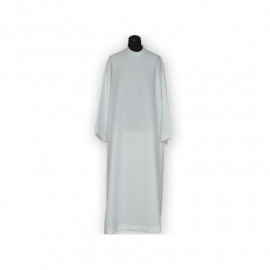
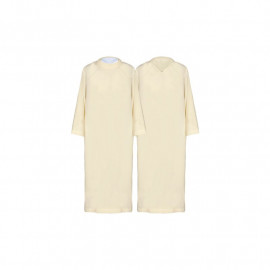
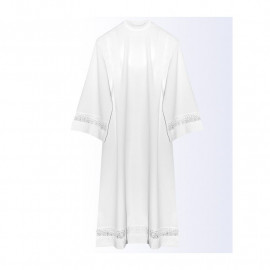
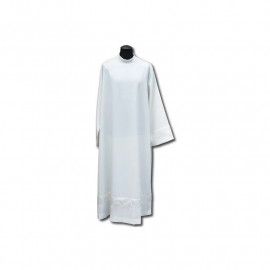
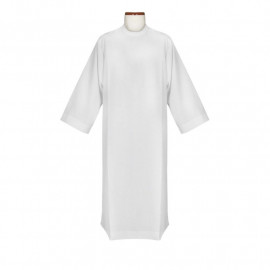
The alb is the foundational vestment — a long, white tunic that reaches from the neck to the ankles. It's worn by priests, deacons, and altar servers under their other vestments. The alb represents the white garment given at baptism.
Who wears it: Priests, deacons, altar servers
When: Every Mass and many other liturgical functions
Material: Linen (traditional), cotton, or polyester blends
2. The Stole
The stole is a long, narrow band of fabric worn around the neck. It's the symbol of Holy Orders and is worn by priests, deacons, and bishops. Priests wear it crossed over the chest; deacons wear it diagonally; bishops wear it uncrossed.
Worn diagonally across the body, it is a deacon stole — the form proper to the diaconate.
Who wears it: Priests, deacons, bishops
When: Every sacrament and liturgical function
Color: Matches the liturgical season (green, violet, white, red, black, rose)
3. The Chasuble
The chasuble is the outermost vestment worn by priests during Mass. It's sleeveless and drapes over the shoulders like a poncho. The chasuble symbolizes charity and the yoke of Christ.
Who wears it: Priests and bishops
When: Every Mass
Styles: Roman (stiff, minimal draping), Gothic (full, flowing), Semi-Gothic (in between)
Color: Matches the liturgical season
4. The Dalmatic
The dalmatic is a tunic with wide sleeves worn by deacons during Mass. It matches the chasuble in color and style, creating visual unity between the priest and deacon at the altar.
Who wears it: Deacons
When: Mass and other liturgical functions
Material: Same as the chasuble
5. The Cope
The cope is a long, flowing mantle worn over the shoulders and fastened at the chest with a clasp (called a morse). It's worn for processions, Benediction, and other non-Eucharistic liturgies.
Who wears it: Priests and deacons
When: Processions, Benediction, Liturgy of the Hours
Color: Matches the liturgical season
6. The Cincture
The cincture is a rope or fabric belt worn around the waist to secure the alb. It's usually white but can match the liturgical color.
Who wears it: Priests, deacons, altar servers
When: Whenever the alb is worn
7. The Biretta
The biretta is a stiff, square cap with three or four ridges. It's worn by clergy outside of liturgical functions. The color indicates rank: black for priests, purple for monsignors and bishops, red for cardinals.
Who wears it: Clergy
When: Non-liturgical occasions (not worn during Mass)
Vestments at a Glance
| Vestment | Worn By | When | Color |
|---|---|---|---|
| Alb | Priests, deacons, servers | Every Mass | White |
| Stole | Priests, deacons, bishops | Every sacrament | Liturgical color |
| Chasuble | Priests, bishops | Every Mass | Liturgical color |
| Dalmatic | Deacons | Mass | Liturgical color |
| Cope | Priests, deacons | Processions, Benediction | Liturgical color |
| Cincture | Priests, deacons, servers | With alb | White or liturgical color |
| Biretta | Clergy | Non-liturgical | Black, purple, or red |
The Liturgical Colors
The color of the vestments changes with the liturgical season. Here's the complete guide:
| Color | Meaning | When Used |
|---|---|---|
| Green | Hope, growth | Ordinary Time |
| Violet | Penitence, preparation | Advent, Lent |
| White/Gold | Joy, purity, glory | Christmas, Easter, Marian feasts |
| Red | Fire, blood, martyrdom | Pentecost, Good Friday, martyrs' feasts |
| Black | Mourning | Funerals, All Souls (optional) |
| Rose | Joy in penitence | Gaudete Sunday, Laetare Sunday |
How to Build a Vestment Wardrobe
If you're a priest starting from scratch, here's what I recommend:
Phase 1: The Essentials
- 1 alb (well-fitted, ankle-length)
- 3 stoles (green, violet, white)
- 3 chasubles (green, violet, white)
- 1 cincture (white)
Phase 2: The Complete Set
- Add a red stole and chasuble (for Pentecost and martyrs)
- Add a dalmatic (if you have a deacon)
- Add a cope (for processions and Benediction)
- Add a second white/gold chasuble for solemn feasts
Phase 3: The Full Wardrobe
- Add seasonal chasubles (Advent, Lent, Easter, Christmas)
- Add a Marian chasuble (for feasts of Our Lady)
- Add a black chasuble (for funerals)
- Add a rose chasuble (for Gaudete and Laetare Sundays)
- Add a biretta (for non-liturgical wear)
What I Recommend
For most priests, the sweet spot is Phase 2 — a complete set that covers every liturgical season without breaking the bank. Invest in quality over quantity. One well-made chasuble in each color will serve you better than five cheap ones that fall apart.
For materials, I recommend wool or wool blends for regular use — they're durable, hold embroidery well, and look dignified. Save the silk for solemn feasts. Synthetic blends are fine for daily Mass and are much easier to care for.
For embroidery, look for clean stitching, symmetrical design, and colors that won't bleed when cleaned. Gold thread should be actual metallic thread or high-quality synthetic — not just yellow cotton.
Frequently Asked Questions
Q: Can a priest wear a stole without a chasuble?
A: Yes, for sacraments outside of Mass (like Confession or Anointing of the Sick), the priest wears just the stole over his cassock or clerical clothing. The chasuble is only required for Mass.
Q: Do altar servers need to wear albs?
A: The alb is the proper vestment for altar servers at Mass (GIRM 336). Some parishes use surplices over cassocks out of tradition, but the alb is the norm and creates a more unified look at the altar.
Q: How much does a full set of vestments cost?
A: A basic set (alb, 3 stoles, 3 chasubles) starts around $600-$900. A complete set with red, a cope, and a dalmatic runs $1,200-$2,000. High-end silk or hand-embroidered sets can cost $3,000 and up.
Q: How do I care for my vestments?
A: Most vestments should be dry-cleaned, especially embroidered ones. Simple albs and cinctures can be machine-washed. Store vestments on hangers in a cool, dry place. Use garment bags for protection.
Conclusion
Liturgical vestments are more than clothing — they're a visible sign of the sacred mysteries being celebrated. Each vestment has a meaning, a history, and a purpose. Understanding them deepens your appreciation for the liturgy and helps you serve with greater reverence.
If you're building your vestment wardrobe or outfitting your parish, browse our collection. We have chasubles, stoles, dalmatics, albs, copes, and more — all crafted to meet the Church's standards and available in every liturgical color.
See our wedding chasubles collection.