
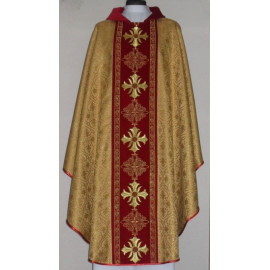
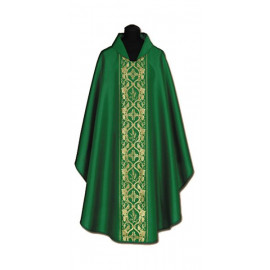
If you're a priest or sacristan, you know the chasuble isn't just another piece of clothing. It's the outermost liturgical vestment worn during Mass, and it carries deep symbolic meaning. I've helped hundreds of priests find the right chasuble over the years, and here's what I've learned — choosing one isn't complicated once you know what to look for.
Here's the thing: the right chasuble should feel comfortable during the entire celebration, look dignified, and match the liturgical season. But with so many styles, materials, and price points available, it's easy to get overwhelmed. That's why I put together this guide — to help you make a confident choice.
What Is a Chasuble and Why Does It Matter?
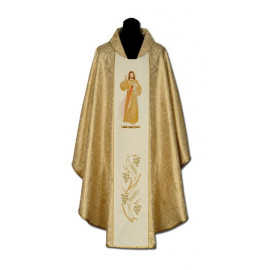
A chasuble is the sleeveless outer vestment worn by priests during the celebration of the Eucharist. It symbolizes charity and the yoke of Christ — "For my yoke is easy, and my burden is light" (Matthew 11:30). The word itself comes from the Latin "casula," meaning "little house," because in its early form it was essentially a full oval of fabric that covered the entire body.
The chasuble is considered the primary Eucharistic vestment. Unlike the stole, which is worn at nearly every sacrament, the chasuble is specifically reserved for Mass. This makes it one of the most important investments a priest or parish can make.
What Are the Main Types of Chasubles?
There are three main styles of chasubles you'll find today, and each has its own character.
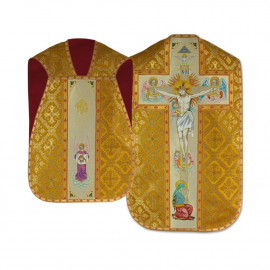
Roman Chasubles are the most traditional form. They're relatively stiff and hold their shape with minimal draping. If you've seen photos of Pope Benedict XVI celebrating Mass, you've seen the Roman style. Browse our Gothic chasubles for traditional options. Some priests love the formality and tradition. Others find it restrictive — it really depends on your personal preference and how you move at the altar.
Gothic Chasubles are fuller and drape more naturally. They have more fabric and create elegant folds when worn. This is probably the most common style you'll see in parishes today because it's comfortable and looks dignified without being overly formal.
Semi-Gothic Chasubles sit right in the middle. They have the comfort of the gothic style but with a slightly more structured cut. In my experience, this is what most priests end up choosing when they try all three. Check out our semi-gothic chasubles collection. — it gives you the best of both worlds.
How Do I Pick the Right Material?
The material affects everything — how the chasuble looks, how it feels, how long it lasts, and how much care it needs.
Silk and silk blends look absolutely stunning. They have a natural sheen that catches the light beautifully during the consecration. The downside? They're delicate and need professional cleaning. I usually recommend these for special feast days rather than daily Mass.
Wool and wool blends are the workhorses. They're durable, hold embroidery well, and keep their shape for years. Most of the chasubles you'll see in regular parish use are wool or a wool-polyester blend. They're warm in winter but can be a bit heavy in summer.
Synthetic blends (polyester, acetate) are budget-friendly and easy to care for. You can often clean them yourself, which saves money over time. The quality has improved dramatically — modern synthetic chasubles can look very dignified. I recommend these for daily Mass, especially if you're celebrating multiple times per week.
Linen chasubles are light and breathable, perfect for hot climates. They have a more rustic, natural look. Some priests love them for outdoor Masses or summer celebrations.
What About the Color?
The color of your chasuble must follow the liturgical calendar. Here's a quick reference:
| Season | Color | When to Wear |
|---|---|---|
| Advent | Violet (or purple) | First Sunday of Advent through December 24 |
| Christmas | White (or gold) | December 25 through Baptism of the Lord |
| Lent | Violet (or purple) | Ash Wednesday through Holy Saturday |
| Easter | White (or gold) | Easter Sunday through Pentecost |
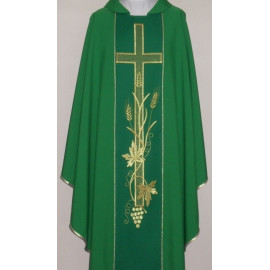
| Ordinary Time | Green | The rest of the year |
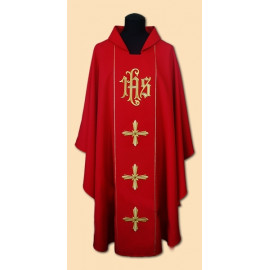
| Feasts of Martyrs | Red | Specific feast days |
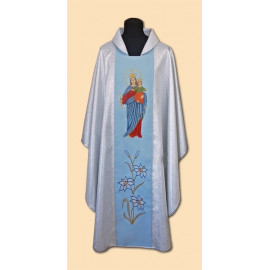
| Marian Feasts | White or blue | Specific feast days |
Most priests start with a set of five chasubles: violet, white, red, green, and one additional (usually a Marian chasuble in blue or a second white for busy feast days). If budget is tight, you can begin with three: violet (covers Advent and Lent), white (covers Christmas and Easter), and green (covers Ordinary Time). You'll add red for Pentecost and martyrs' feasts when you can.
How Should a Chasuble Fit?
Fit is personal, but there are some general guidelines. The chasuble should fall to about mid-calf or slightly above the ankle. If it's dragging on the floor, it's too long and you'll trip on the altar steps. If it's above the knee, it looks awkward and loses its dignity.
The neck opening should sit comfortably without being too tight. Most chasubles come with a cord or button closure at the neck, which helps adjust the fit. Some priests prefer a slightly looser fit for comfort during longer celebrations.
If you're buying online (which most people do these days), check the measurements carefully. Standard sizes range from about 50 inches to 60 inches in length. Taller priests generally need the longer sizes.
What Details Should I Look For?
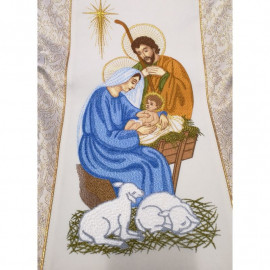
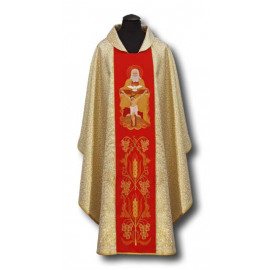
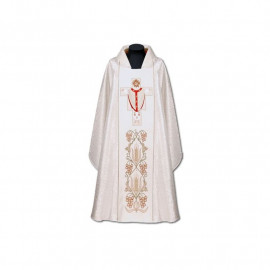
The orphrey is the decorative band that runs down the front and back of the chasuble. This is where most of the embroidery happens. A well-made orphrey should have clean stitching, symmetrical design, and colors that won't bleed when cleaned.
The lining matters more than you'd think. A good lining helps the chasuble hang properly and protects the outer fabric. Cheap linings will bunch up, tear, and make the chasuble look messy after a few months.
The embroidery should be tight and even. Loose threads or gaps are signs of poor quality. Gold thread work should be actual metallic thread or high-quality synthetic — not just yellow cotton.
What I Recommend
After years of working with priests and parishes, here's what I tell people: start with quality over quantity. One well-made chasuble in each liturgical color will serve you better than five cheap ones that fall apart.
If you're just starting out, I'd suggest:
- A good semi-gothic chasuble in green for Ordinary Time (you'll wear this most often)
- A white or gold chasuble for Christmas and Easter
- A violet chasuble for Advent and Lent
Add red and any special colors (like Marian blue) as your budget allows.
For daily Mass, look at synthetic blends — they're practical and hold up well to frequent use. For Sundays and feast days, invest in wool or silk for a more dignified appearance.
Frequently Asked Questions
Q: How much should I expect to spend on a good chasuble?
A: Entry-level chasubles start around $120-$150. Mid-range options with better embroidery and materials run $200-$350. High-end silk or fully hand-embroidered chasubles can cost $500 and up. For most priests, the $200-$300 range offers the best balance of quality and value.
Q: Can I machine wash my chasuble?
A: Only if the care label specifically says so. Most embroidered chasubles need dry cleaning to protect the stitching and fabric. Simple synthetic chasubles without heavy embroidery can sometimes be hand-washed gently. When in doubt, dry clean.
Q: What's the difference between a chasuble and a cope?
A: A chasuble is worn during Mass, while a cope is worn for processions, benediction, and other non-Eucharistic liturgies. The cope is open at the front and fastened with a morse (clasp), while the chasuble is a single garment worn over the head.
Q: Do deacons wear chasubles?
A: No, deacons wear the dalmatic (a tunic with sleeves) over the alb and stole. The chasuble is reserved for priests and bishops. However, in some traditions, deacons may wear a simpler version called a tunicle.
Q: How long does a chasuble typically last?
A: With proper care, a quality chasuble should last 10-15 years or more. Synthetic chasubles used daily might show wear after 5-7 years. The key factors are material quality, frequency of use, and how well you follow care instructions.
Conclusion
Choosing a chasuble doesn't have to be complicated. Focus on the right style for your movement at the altar, pick materials that match your usage, and invest in colors that cover the liturgical year. A well-chosen chasuble will serve you for years and help you celebrate Mass with dignity and comfort.
If you're ready to browse, take a look at our collection of embroidered chasubles. We've got options for every budget and liturgical season, and I'm always happy to answer questions if you need help deciding.
See our chasubles with saints collection.