


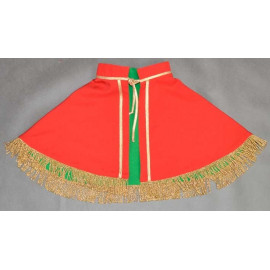
A pellegrina is an open-front shoulder cape worn by altar servers over the surplice; a mozzetta is a buttoned shoulder cape worn by bishops, canons and the Pope. The two look similar in photographs, which is why the names are often confused, but the cut, the closure and the wearer are different.
Quick Answer
If the cape is open down the front and is worn by a server, it is a pellegrina (or pelerine). If it is buttoned across the chest and is worn by a cleric, it is a mozzetta. If it is full-length with a hood and is worn for processions, it is a cope. The three garments belong to different levels of liturgical dress.
Side-by-Side Comparison
| Feature | Pellegrina | Mozzetta |
|---|---|---|
| Closure | Open in front | Buttoned across the chest |
| Length | To about the elbow | To about the elbow |
| Wearer | Altar servers, lectors, choir | Bishops, canons, the Pope |
| Worn over | Surplice or alb | Rochet or choir dress |
| Color | Liturgical colors | Usually violet, red or white by rank |
What Is a Pellegrina?
The pellegrina is the server's cape. It is cut short, opens down the front, and is put on over the surplice. In English it is also called a pelerine or a short altar server cape. It is not a clerical garment and does not indicate rank; it is a uniform that gives the server a clean, finished look and carries the liturgical color of the day.
Our altar server shoulder capes are one-sided pellegrinas in red, white, violet and green, finished with a gold ribbon trim.
What Is a Mozzetta?
The mozzetta is a clerical cape. It is buttoned across the chest, covers the shoulders, and is worn over the rochet or choir dress. Its color and trimming follow the rank of the wearer: the Pope's mozzetta is traditionally red or white, a bishop's is usually violet, and canons wear the color of their chapter. It is not normally worn by altar servers.
What Is a Cope?
The cope is a full-length processional cloak with a hood and a clasp at the chest. It is worn by priests and deacons for processions, Benediction and other solemn functions. It is much longer than either a pellegrina or a mozzetta and is made of the same fabric as the vestments it matches.
Who Wears What
Servers wear the pellegrina. Bishops, canons and the Pope wear the mozzetta. Priests and deacons wear the cope. A parish sacristy may own all three, but they are stored and issued separately because they belong to different people and different functions.
How to Choose
If you are dressing altar servers, choose a pellegrina: it is open in front, easy to put on over a surplice, and available in the four liturgical colors. If you are dressing a bishop or a canon, the mozzetta is the correct garment, and it should be sourced from a clerical tailor rather than a server vestment supplier. If you need a processional cloak for a priest, look for a cope.
The practical test is the closure. Open front: pellegrina. Buttons: mozzetta. Full length with a hood: cope.
Frequently Asked Questions
Q: Can an altar server wear a mozzetta?
A: No. The mozzetta is part of clerical dress for bishops, canons and the Pope. Servers wear the pellegrina, which is open in front and made for wearing over the surplice.
Q: Is a pellegrina the same as a pelerine?
A: Yes. "Pellegrina" is Italian, "pelerine" is French and English, and both describe the same short, open-front cape.
Q: What is the difference between a mozzetta and a cope?
A: A mozzetta is a short, buttoned shoulder cape worn by clergy. A cope is a full-length processional cloak with a hood, worn by priests and deacons.
Q: Do all parishes use pellegrinas?
A: No. It is optional. It is most common in traditional parishes and at solemn functions, but any parish can introduce it for its servers.
Q: Which colors are available?
A: Our pellegrinas come in red, white, violet and green. These four cover the main liturgical seasons.
Read next: what is a pellegrina, or browse altar server vestments and clergy copes.
