
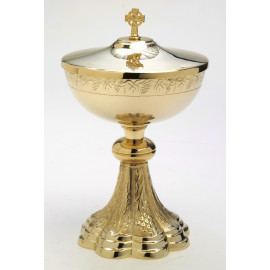
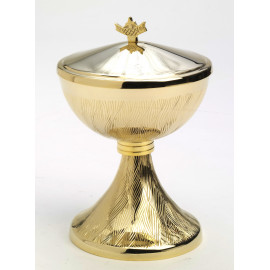
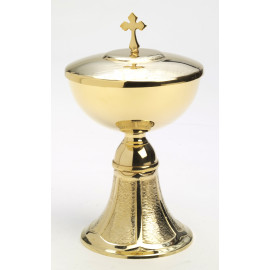
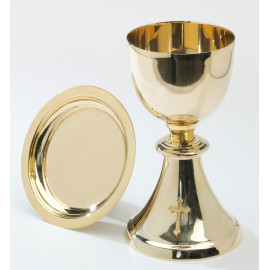
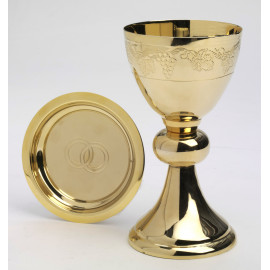
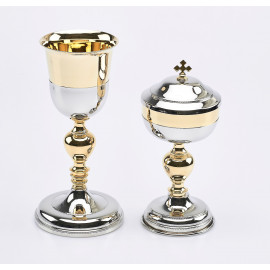
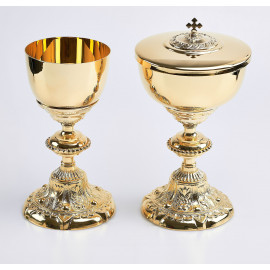
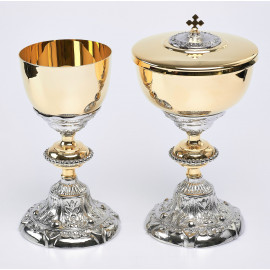
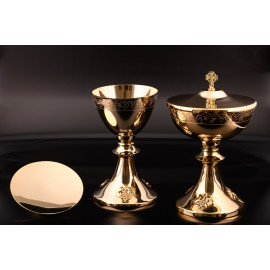
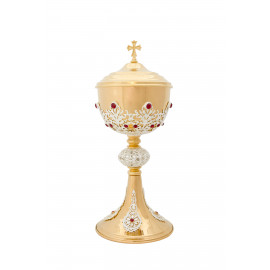
Altar vessels are the sacred containers and implements used during the celebration of the Eucharist. They are among the most important items in any church sacristy. Here's the complete guide to every vessel you need to know about.
The Essential Vessels
| Vessel | Purpose | Material |
|---|---|---|
| Chalice | Holds the wine (Blood of Christ) | Precious metal, gold-plated interior |
| Paten | Holds the large host | Same as chalice |
| Ciborium | Holds consecrated hosts for distribution | Precious metal, with lid |
| Monstrance | Displays the Blessed Sacrament for adoration | Precious metal, with glass lunette |
| Pyx | Carries Communion to the sick | Precious metal, small container |
| Custody | Small tabernacle for the altar | Precious metal |
| Reliquary | Holds relics of saints | Precious metal, with glass |
| Holy Oil Stocks | Stores the holy oils | Metal, with secure lids |
Material Requirements
Canon law and the GIRM require that vessels which hold the Eucharist be made of precious metal or at least lined with precious metal on the interior. Gold is the standard for the interior of chalices because it doesn't tarnish or react with wine.
What I Recommend
For a new parish, start with the essentials: one chalice, one paten, one ciborium, and one pyx. Add a monstrance and additional vessels as your parish grows and your budget allows.
Frequently Asked Questions
Q: Can altar vessels be made of glass or ceramic?
A: The GIRM (328) permits vessels made of "other solid materials which are considered noble in the common estimation of the region." Glass and ceramic are permitted in some regions, but precious metal remains the standard and preferred choice.
Conclusion
Altar vessels are essential to the celebration of the Eucharist. Choose quality materials, maintain them properly, and treat them with the reverence they deserve as sacred objects.
Browse our complete collection of altar vessels — chalices, ciboria, monstrances, pyxes, and more.
See our white chalice palls collection.