
If you've ever been to Eucharistic adoration, you've seen the monstrance — that beautiful, sunburst-shaped vessel holding the consecrated host. But what exactly is it, where did it come from, and how is it used?
Let me walk you through everything you need to know about the monstrance and its role in Catholic devotion.
What Is a Monstrance?
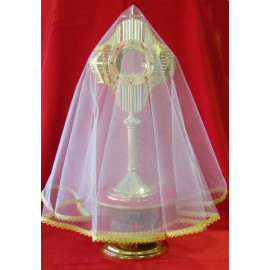
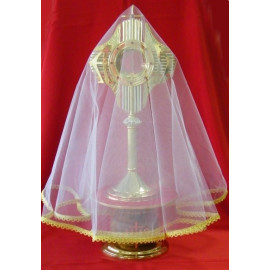
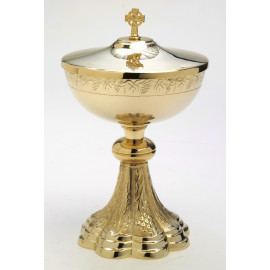
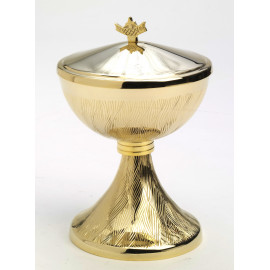
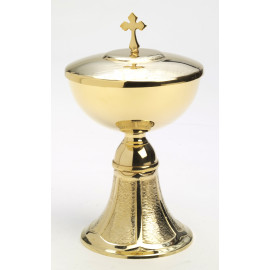
A monstrance (from the Latin "monstrare," meaning "to show") is a sacred vessel used to display the consecrated host for Eucharistic adoration and Benediction. It typically consists of a base, a stem, and a glass window (called a lunette) that holds the host visible for veneration. It is not the same vessel as a ciborium, which holds many hosts for Holy Communion, or a tabernacle, which reserves the Blessed Sacrament between liturgies.
The most common design is the "sunburst" style — a circular glass center surrounded by radiating rays, symbolizing the light of Christ. But monstrances come in many styles, from simple and modern to ornate and baroque.
When Is the Monstrance Used?
The monstrance is used during:
- Eucharistic adoration: The consecrated host is placed in the monstrance and set on the altar for the faithful to pray before.
- Benediction: The priest or deacon blesses the congregation with the Blessed Sacrament exposed in the monstrance.
- Corpus Christi processions: The monstrance is carried in procession through the streets or around the church.
- Forty Hours devotion: Extended Eucharistic adoration lasting approximately 40 hours.
The monstrance is not used during Mass. It's specifically for devotions outside of the Eucharistic celebration.
Parts of a Monstrance
| Part | Description |
|---|---|
| Base | The foot that supports the entire vessel |
| Stem (node) | The column connecting the base to the display area |
| Lunette (luna) | The glass window that holds the host |
| Rays (sunburst) | Decorative rays surrounding the lunette |
| Crown/cross | Decorative element at the top |
| Glass cover | Protective glass over the host |
Smaller custodia vessels of the same family — mini monstrances for exposing or carrying a single host — are available in our liturgical custody collection.
How to Choose a Monstrance
Here's what to look for:
Size: Our monstrances range from 17 cm (7 in) chapel models to 52 cm (20 in) church pieces. For a parish chapel, 30–40 cm is the most common size; larger ones are better for church-wide visibility.
Material: Brass with gold plating is the most common and affordable. Silver-plated and solid silver monstrances are more expensive but stunning. Choose based on your parish's aesthetic and budget.
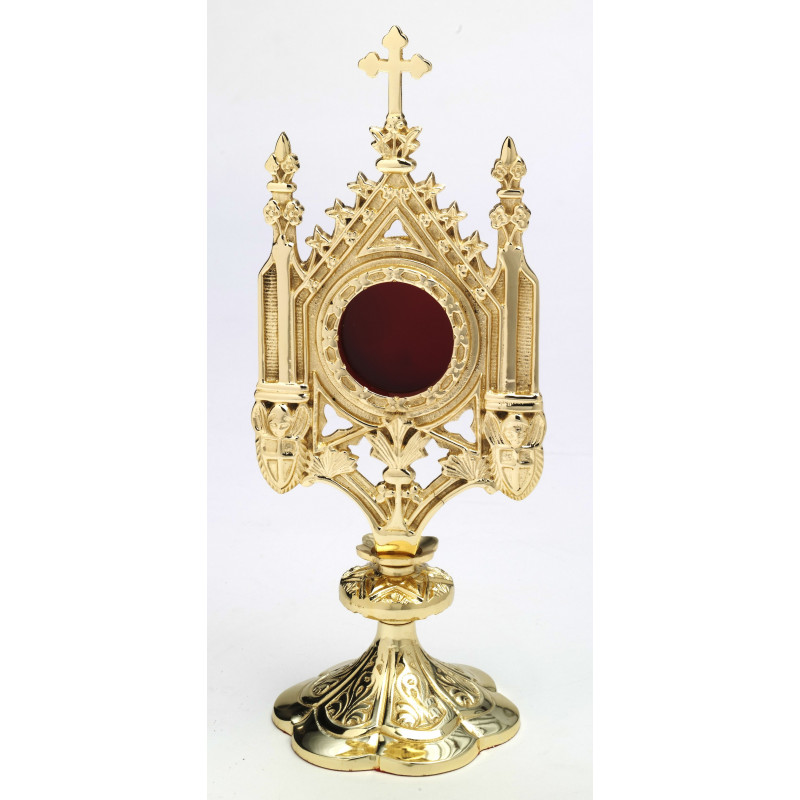
Lunette size: The lunette should match your host: most of our models take a traditional host, two are built for large hosts of 12.5 cm and 14.5 cm, and the Neo-Gothic model takes hosts up to Ø 3 cm.
How to Care for a Monstrance
The monstrance should be treated with the utmost reverence. Here's how to care for it:
- Clean the glass regularly with a soft, lint-free cloth and glass cleaner. Fingerprints and dust obscure the host.
- Polish the metal according to the material (silver polish for silver, brass polish for brass).
- Store in a secure location — the sacristy safe or a locked cabinet. The monstrance is a valuable and sacred object.
- Handle with clean hands or gloves. The lunette should be handled carefully to avoid breaking the glass.
For long-term storage of monstrances together with chalices and ciboria, see our guide: How to Store Sacred Vessels Safely.
What I Recommend
For most parishes, I recommend a brass monstrance with gold plating, 18-24 inches tall, with a clear glass lunette. It's beautiful, durable, and affordable. If your parish has the budget, a silver-plated monstrance is a stunning investment that will last generations.
Frequently Asked Questions
Q: Can a layperson touch the monstrance?
A: The consecrated host is placed in and removed from the monstrance only by a priest or deacon. However, laypeople may handle the monstrance itself (for cleaning, storage, etc.) with proper reverence and clean hands.
Q: How often should the lunette be replaced?
A: The lunette (the glass holder) should be replaced if it becomes cracked or cloudy. Most lunettes last many years with proper care.
Conclusion
The monstrance is one of the most beautiful vessels in the Catholic Church. It allows us to gaze upon the Real Presence of Christ in the Eucharist — a privilege that never gets old. Whether your parish has adoration weekly, monthly, or just on special occasions, a good monstrance is an essential investment.
Browse our collection of chapel monstrances and ostensoria — brass, silver, and gold-plated, in every size and style — or explore monstrance tabors and stands for permanent exposition.
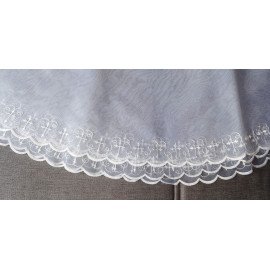
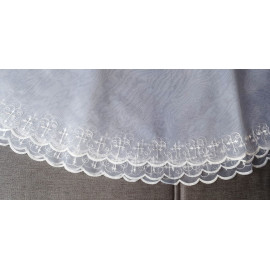
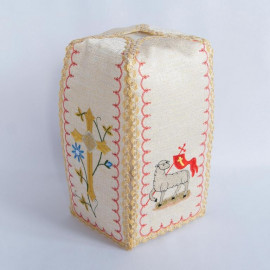
See our collection of embroidered monstrance veils.
For the vessels that hold the relics of saints, see our Catholic reliquaries.