







Altar bells come in several varieties, each suited to different church sizes and liturgical needs. Here's a guide to the types available and when to use each one.
Types of Altar Bells
| Type | Description | Best For |
|---|---|---|
| Single bell | One bell on a handle | Small chapels, simple Masses |
| Triple bell | Three bells on a single handle | Most parishes, standard use |
| Four-tone set | Four bells on one handle | Cathedrals, solemn liturgies |
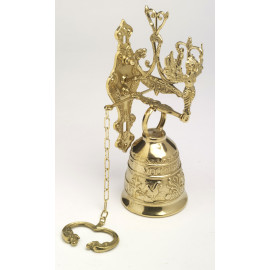
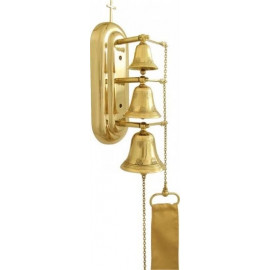
| Wall-mounted sanctuary bell | Mounted on a backplate, rung by a pull chain or sash | Large churches, traditional settings |
| Bell and gong set | Hand bells paired with a struck gong | Large sanctuaries, Eastern Catholic churches |
| Electric bell | Battery or plug-in bell | Accessibility needs, hearing-impaired |
When to Ring the Bells
The GIRM (150) says bells should be rung "a little before the consecration" as a signal to the faithful. Traditionally, they are rung three times at the elevation of the host and three times at the elevation of the chalice. For the full step-by-step, see when to ring the bells at Mass.
How to Choose
For most parishes, a triple bell on a handle is the most practical choice. It produces a clear, pleasant sound and is easy for servers to use. In larger churches, consider adding a wall-mounted bell or a gong for greater audibility. Prices at Best Catholic Shop run from $133 for a single hand bell to $806 for a four-tone set — browse the full range in our sanctuary bells collection.
Frequently Asked Questions
Q: Are altar bells required?
A: The GIRM says bells should be rung "when appropriate." They are recommended but not strictly required. Most parishes use them as a matter of tradition and practicality.
Q: How many times are the altar bells rung during Mass?
A: The usual pattern is three rings at the elevation of the host and three at the elevation of the chalice, plus a single signal before the consecration in many parishes. The exact number is a matter of local custom.
Q: What is the difference between altar bells and a gong?
A: A bell rings when its internal clapper strikes the bell wall, producing a bright, clear note. A gong is struck from the outside with a wooden mallet and sounds deeper and longer — which is why larger churches often choose a gong.
Conclusion
Altar bells are a small but meaningful part of the liturgy. Choose the right type for your church, train your servers properly, and let the bells draw attention to the most sacred moment of the Mass.
Browse our collection of altar bells — single, triple, and four-tone sets.