
If you are a priest, deacon, or seminarian, you know that what you wear outside of Mass matters too. The clergy shirt is the most visible piece of daily clerical attire — and there is more to choose from than you might think. This guide walks through the styles, collar systems, colors, and fit rules so you can dress with confidence and dignity.
What Is a Clergy Shirt?
A clergy shirt (also called a clerical shirt, Roman shirt, or priest shirt) is a button-down shirt designed to be worn with a clerical collar — the white collar that marks the wearer as an ordained minister or someone in formation. It is the standard daily wear for Catholic priests, deacons, and seminarians, and for clergy of many Protestant churches as well.
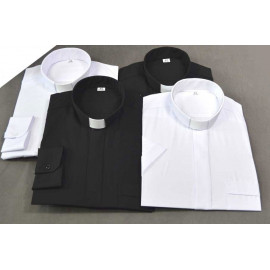
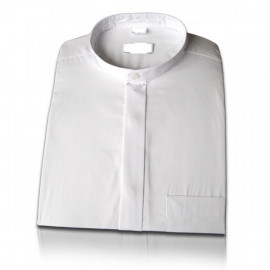
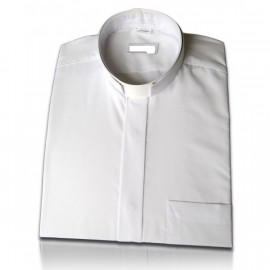
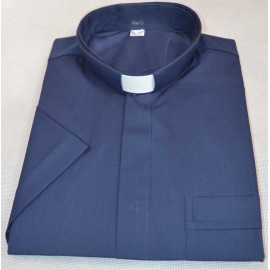
The shirt itself is usually black, but grey, navy, blue, beige, and brown versions are common alternatives, and white shirts are worn under vestments and by altar servers. Our collection of clergy shirts for priests covers all of these options, in short and long sleeve, slim and tall cuts, and every collar system.
For a guide on the traditional cassock, see our article on how to choose a cassock.
Styles of Clergy Shirts
| Style | Description | Best For |
|---|---|---|
| Short-sleeve | Tab or insert collar; from $52 | Warm weather, daily wear |
| Long-sleeve | Tab or insert collar; from $60 | Cool weather, formal occasions |
| Slim / tall cut | Closer or longer fit; $68 | Taller or slimmer builds |
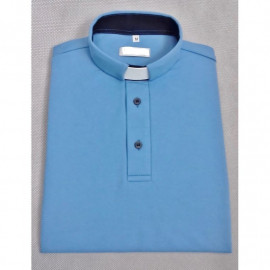
| Polo style | Collar stand with tab; $66 | Casual ministry, outdoor events |
| Bishop's shirt | Banded, pins, or buttons; $117 | Bishops, formal occasions |
Collar Systems: Tab, Insert, and Banded
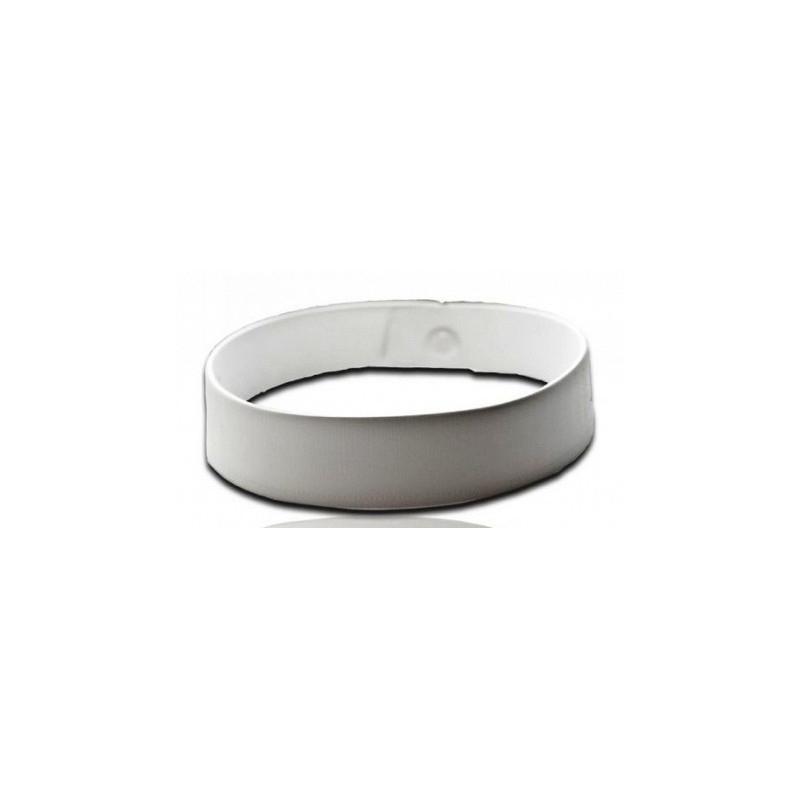
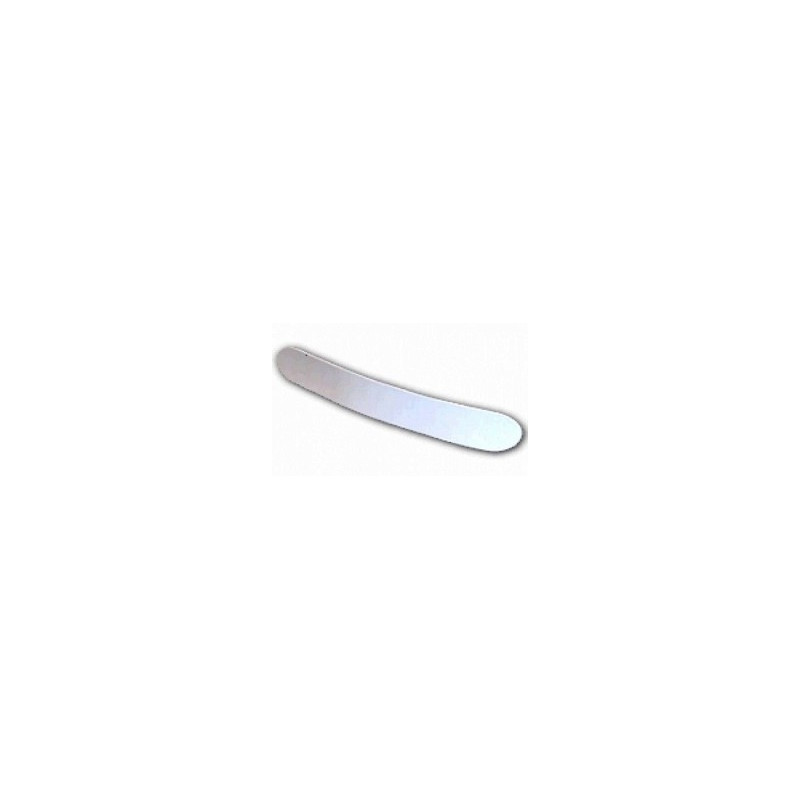
The collar system is the most practical choice you will make. Tab collars — a white tab fastened with studs, pins, or buttons — are the American standard: quick to attach and easy to replace. Insert collars (tunnel or grille shirts) hold a white insert in a fabric stand — the European standard, and the flattest, most unobtrusive fit. Banded (full) collars close at the back of the neck and are traditional among Anglican and Episcopal clergy. Each system works with the same white collar sizes, and most priests keep two or three spare collars in rotation. For the full comparison, read our guide to clerical collar types.
Colors and What They Mean
Black is the standard color for priests and deacons. It is simple, dignified, and immediately recognizable — the safe choice for daily ministry and formal occasions.
Purple (or violet) is worn by monsignors, bishops, and abbots — on their shirts as purple piping or on the cassock. If you are a priest, stick with black.
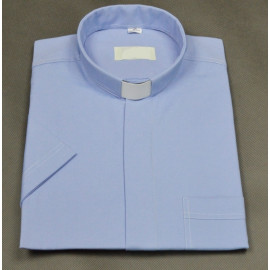
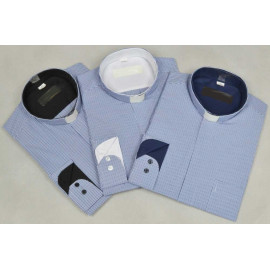
Grey, navy, and blue shirts are popular alternatives for priests who want a softer look; blue is often associated with Marian devotion. Our collection includes a blue clergy shirt, a grey shirt with black insert, and a navy blue shirt.
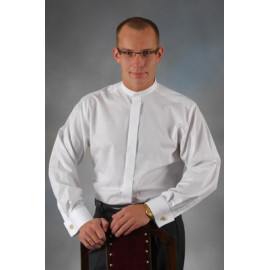
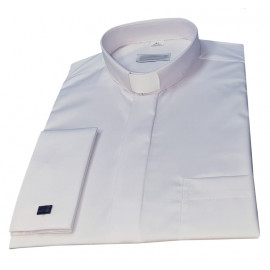
White clergy shirts are worn under vestments and by altar servers, and they are common in tropical climates. (The all-white cassock is reserved to the Pope.)
Beige and brown shirts work well for outdoor ministry, travel, and informal settings — see our beige 70% cotton shirt.
How to Choose the Right Fit
A clergy shirt should fit like a dress shirt — not too tight, not too loose. The collar band should sit snugly around your neck without pressing on the throat, the sleeves should reach the wrist bone, and the body should allow free movement without billowing. Our shirts are sized by height (164–188 cm / about 5'5"–6'2") and collar size, with slim and tall cuts for closer or longer fits.
If you are between sizes, size up. A slightly loose shirt is more comfortable than one that is too tight, especially during long days of ministry. Full measuring instructions are in our size guide, and our clergy shirt fit guide walks through collar, sleeve, and length.
Fabric: Cotton, Cotton Blends, and Easy-Care Weaves
Fabric decides how the shirt feels on the longest days. 100% cotton breathes beautifully and softens with every wash — see the 100% cotton clergy shirt. Cotton-rich blends such as elanocotton keep the feel of cotton with fewer wrinkles. 60/40 cotton-polyester weaves are the workhorses of clerical wear: easy to iron, quick to dry, and comfortable under a robe.
What We Recommend
For everyday wear, we recommend a black tab-collar clergy shirt in a cotton-polyester blend. It is comfortable, breathable, and easy to care for. Have at least 3–4 shirts in rotation so you always have a clean one ready.
For warm climates, consider a neckband (Roman) style — it is cooler and more comfortable in hot weather.
For a complete clerical wardrobe, pair your clergy shirts with a clerical cloak for outdoor wear, and consider a collarette or collar for additional options. For formal occasions, you may also want a biretta.
How to Care for Clergy Shirts
Machine wash on a gentle cycle, removing the collar or insert first. Tumble dry on low or hang to dry, and iron the collar stand while it is still slightly damp so the collar sits crisp. Replace collars every three to six months with daily wear — the collar is the most visible part of the outfit, so replace it the moment it starts to look tired.
Frequently Asked Questions
Q: Do I have to wear a clergy shirt every day?
A: Canon law (284) requires clerics to wear "suitable ecclesiastical garb" according to the norms of the bishops' conference and legitimate local customs. In most places, this means a clergy shirt with collar. Check with your diocese for specific requirements.
Q: Can I wear a clergy shirt with jeans?
A: It depends on local custom. In some places, a clergy shirt with neat, dark jeans is acceptable for casual settings. In others, dress pants are expected. When in doubt, err on the side of formality.
Q: How many clergy shirts should I own?
A: Most priests keep five to seven shirts for a weekly rotation, plus two or three spare collars. That guarantees a clean shirt is always available — even during a busy parish week.
Q: What is the difference between a tab collar and an insert collar?
A: A tab collar is fastened at the front with studs, pins, or buttons and is the American standard; an insert collar slides into a fabric tunnel built into the shirt's stand and is the European standard. Tab collars are quicker to attach; insert collars sit flatter and are easier to replace.
Q: Do clergy shirts come with a collar?
A: It depends on the shirt — some include a matching collar, others are sold ready for the collar of your choice. Replacement collars, inserts, and dickies are available in our collars and collarettes collection.
Q: What color clergy shirt should a priest wear?
A: Black is the standard daily color for priests and deacons. Purple is worn by bishops and monsignors, white shirts are worn under vestments and by altar servers, and grey, navy, or blue are acceptable softer alternatives. When in doubt, black is always correct.
Related Products
Complete your clerical wardrobe:
- Clergy Shirts for Priest — our full collection
- Collarettes and Collars — for additional options
- Clergy Cloaks for Priest — for outdoor wear
- Birettas for Priest — for formal occasions
- Clergy Albs — for Mass
Conclusion
Your clergy shirt is a visible sign of your vocation. Choose quality, maintain it well, and wear it with pride. It is not just clothing — it is a witness to the world.
Browse our collection of clergy shirts, collars, and daily wear — quality garments for every priest and deacon. For more on clerical attire, see our guides to clerical collar types and what Catholic priests wear.