
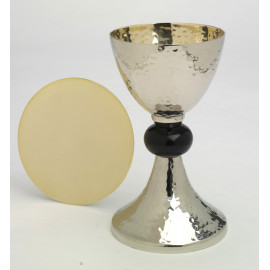
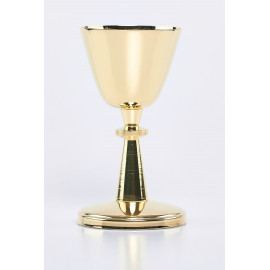
Used and antique chalices can cost significantly less than new ones — but they come with three questions every buyer should answer first: is the gilding inside the cup intact, is the metal sound, and can you establish where the chalice has been? Get those right and an older chalice can serve a parish beautifully for decades. Get them wrong and you may inherit a repair bill — or a vessel that cannot lawfully be used.
Why Buyers Consider Antique and Used Chalices
There are three honest reasons to shop the second-hand market. Price is the first: a used chalice often sells for a fraction of its original cost, especially at estate sales and parish surplus sales. Craftsmanship is the second: many pre-1960s chalices were made by silversmiths whose handwork would be expensive to reproduce today. History is the third: an antique chalice carries decades of Masses, and for some priests and parishes that continuity is part of the appeal.
What the second-hand market does not offer is certainty. A new chalice from a liturgical supplier arrives with a known material spec and a guarantee that the cup interior meets the Church's requirement. A used chalice must be inspected, and that inspection is the buyer's job.
What to Check Before You Buy a Used Chalice
Work through this checklist before money changes hands:
- The gilding inside the cup. This is the requirement that matters most: the inside of the cup — the surface that touches the Precious Blood — must be precious metal. Wear, flaking, or a stripped interior means the chalice needs re-gilding by a specialist before use. Look closely in good light.
- Dents, cracks, and splits. Small dents in the cup can often be raised by a silversmith; cracks and splits in the bowl usually cannot be repaired invisibly. Run a finger around the rim and inside the bowl.
- The stem and node. Check for wobble between the cup, stem, and base — a loose joint is a common failure point and a repair risk. The chalice should feel rigid in the hand.
- The foot. It should sit flat without rocking. A warped base means the chalice was dropped or stored badly.
- Hallmarks and maker's marks. Stamps on the base identify the silversmith, the metal, and sometimes the year. They help establish both quality and provenance.
- Old repairs. Different-colored solder, mismatched plating, or crude seams suggest a hard life. A professional restoration is possible, but factor its cost into the price.
- Size and capacity. Older chalices are often smaller than modern parish chalices. Measure the cup height and check that the capacity suits your Communion distribution.
- Provenance. A chalice from a church or a priest's estate is straightforward. A piece of unknown origin needs a priest's judgment before it is put to liturgical use.
The Blessing and Restoration Questions
A chalice is set apart for sacred use by blessing, and a used chalice that will serve at Mass should be presented to a priest or bishop for blessing before its first liturgical use — a vessel that has passed through unknown hands should not simply be placed on the altar.
Restoration is the other question. Re-gilding the cup interior, raising dents, and re-tightening a stem are routine work for a liturgical silversmith. But a chalice whose cup is cracked, or whose gilding cannot be restored, should be retired from liturgical use rather than patched. If you are unsure, have the piece examined by a silversmith who works with churches before you buy — not after.
Where Used Chalices Are Sold
The market is spread across several channels: antique dealers and antique fairs, estate sales, online marketplaces, and parish or diocesan surplus sales when churches consolidate or close. Each channel has its own risk profile — estate sales are cheapest but least documented; specialist dealers charge more but can often tell you the maker and the metal. Whatever the channel, insist on clear, close-up photographs of the cup interior before committing, and ask directly whether the chalice has been repaired.
New Chalices as an Alternative
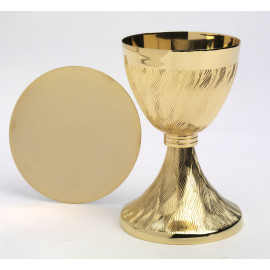
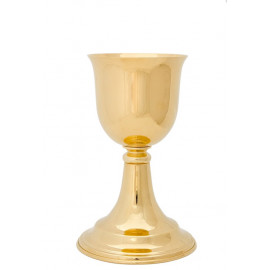
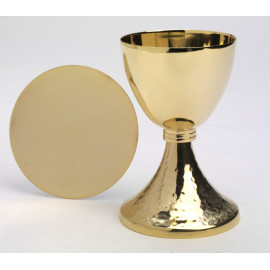
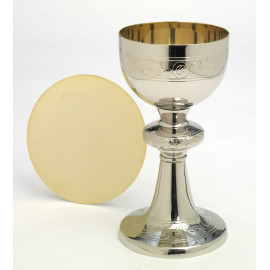
For many parishes, the comparison ends simply: a new chalice removes every uncertainty on this page. Our collection of Catholic chalices starts at $129 for a 13 cm mini chalice, and every chalice we sell — including the entry-level models — has a cup interior that meets the Church's requirement. A new chalice arrives ready for blessing, with matching patens, chalice cases, and palls available in the same finish.
If you are weighing both routes, our guide to chalice prices lays out the real numbers for new chalices by tier — the gap with the used market is often smaller than buyers expect once restoration costs are counted.
Frequently Asked Questions
Q: Are Catholics allowed to use used chalices?
A: Yes. Nothing forbids a previously owned chalice — many parishes use vessels inherited from earlier generations. The requirements are the same as for a new chalice: the cup must be of precious metal or gilded inside, the vessel must be in sound condition, and it should be blessed before liturgical use.
Q: How much do antique chalices cost?
A: Antique chalices typically sell from under $100 at estate sales to several thousand dollars at specialist dealers, depending on age, metal, maker, and condition. Sterling silver pieces and documented makers command the highest prices; pieces needing restoration sell at steep discounts.
Q: Can a damaged chalice be repaired?
A: Often, yes — silversmiths who serve churches routinely re-gild cup interiors, raise dents, and re-tighten stems and bases. But cracks in the cup bowl and failed old repairs are usually disqualifying. Have any significant damage assessed before purchase.
Q: Does a used chalice need to be blessed again?
A: A used chalice that will serve at Mass should be blessed before its first liturgical use, especially when its history is unknown. Present the chalice to a priest or bishop, who will use the approved rite to set it apart for sacred use.
Conclusion
An antique or used chalice can be a beautiful, economical choice — if you inspect it like a silversmith: gilding, metal, joints, provenance. When any of those checks is uncertain, compare against the new market, where a fully compliant chalice starts at $129 and arrives ready for blessing. Either way, the goal is the same: a worthy vessel for the Precious Blood. Browse our liturgical chalices to see the new alternatives by price tier.
